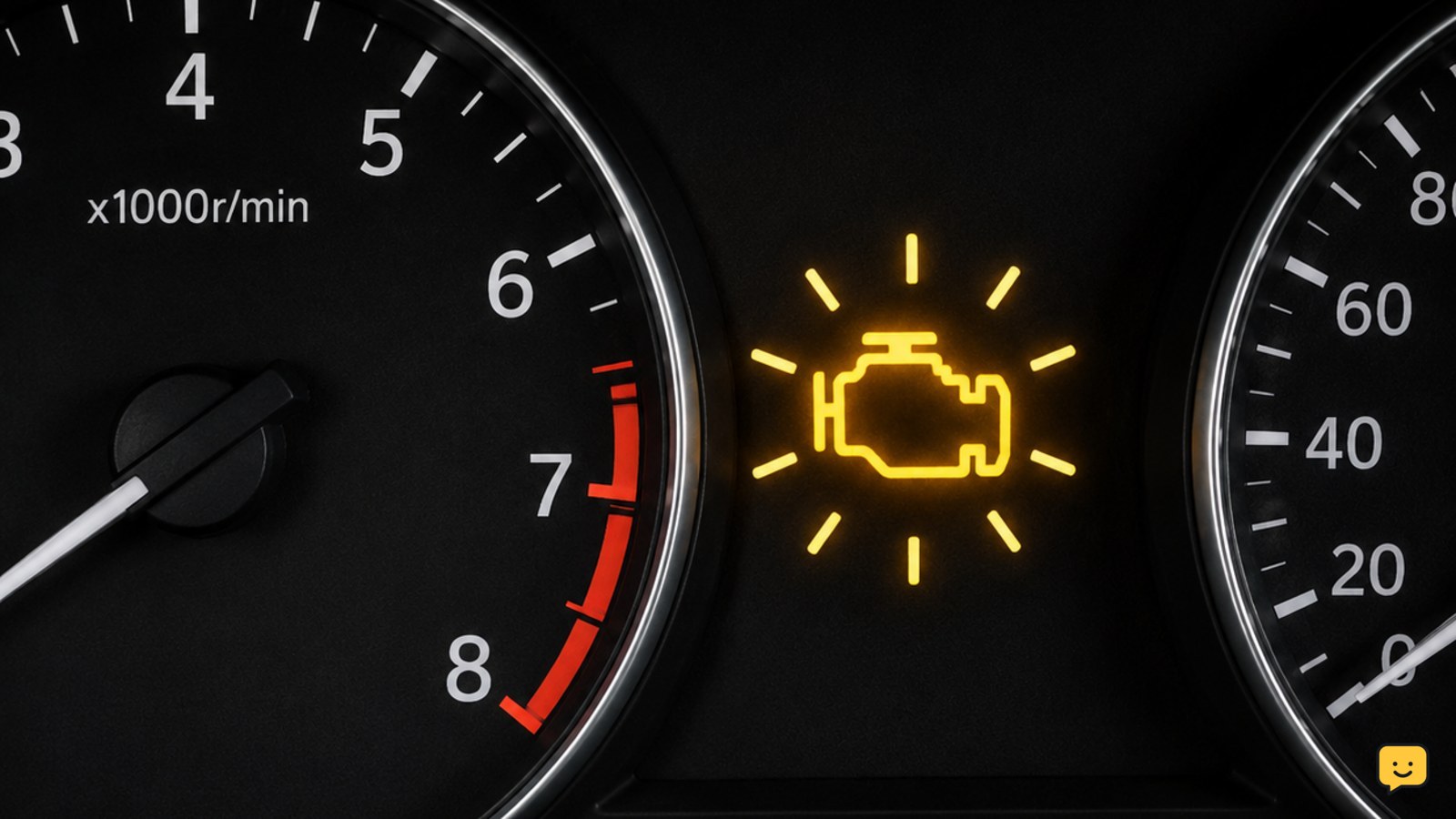
A flashing check engine light usually means the engine is misfiring actively, allowing unburned fuel to reach the exhaust system and potentially cause expensive damage. Reduce speed, avoid hard acceleration, and pull over safely. Stop driving and arrange roadside assistance if the light keeps flashing, the engine shakes, power drops, or you notice smoke, overheating, or unusual smells.
Treat a flashing light as an active misfire warning
A flashing malfunction indicator is more urgent than a steady check engine light. The available evidence identifies flashing behavior with an active engine misfire, where unburned fuel can enter the exhaust system. That can raise the risk of damage if you continue driving.
For the related task, Check Engine Light On covers the next checks separately.
Reduce speed smoothly, avoid heavy throttle, and switch off unnecessary loads such as the air conditioner if the vehicle is struggling. Your immediate goal is to reach a safe stopping place, not to complete the trip.
Decide whether the car can move to a safe place
Use the vehicle’s behavior to make the next decision:
- Light flashing but the engine feels normal: Drive only far enough to leave immediate danger, using gentle acceleration and low speed. Stop if the flashing continues.
- Engine shaking, stumbling, or losing power: Stop as soon as safely possible. A rough-running engine supports the possibility of an active misfire.
- Smoke, steam, high temperature, fuel odor, or exhaust odor: Turn the engine off and leave the vehicle if necessary. Arrange roadside assistance rather than continuing.
- Light stops flashing and becomes steady: Do not assume the problem is fixed. Arrange a diagnostic check promptly, especially if the engine still runs unevenly.
Check only safe, visible conditions after parking
Once parked with the engine off and the vehicle cool enough to inspect, look for obvious signs that change the urgency. Check beneath the car for fresh fluid, look for smoke or steam, and note any strong fuel or exhaust smell. Do not reach near belts, fans, hot exhaust parts, or ignition components.
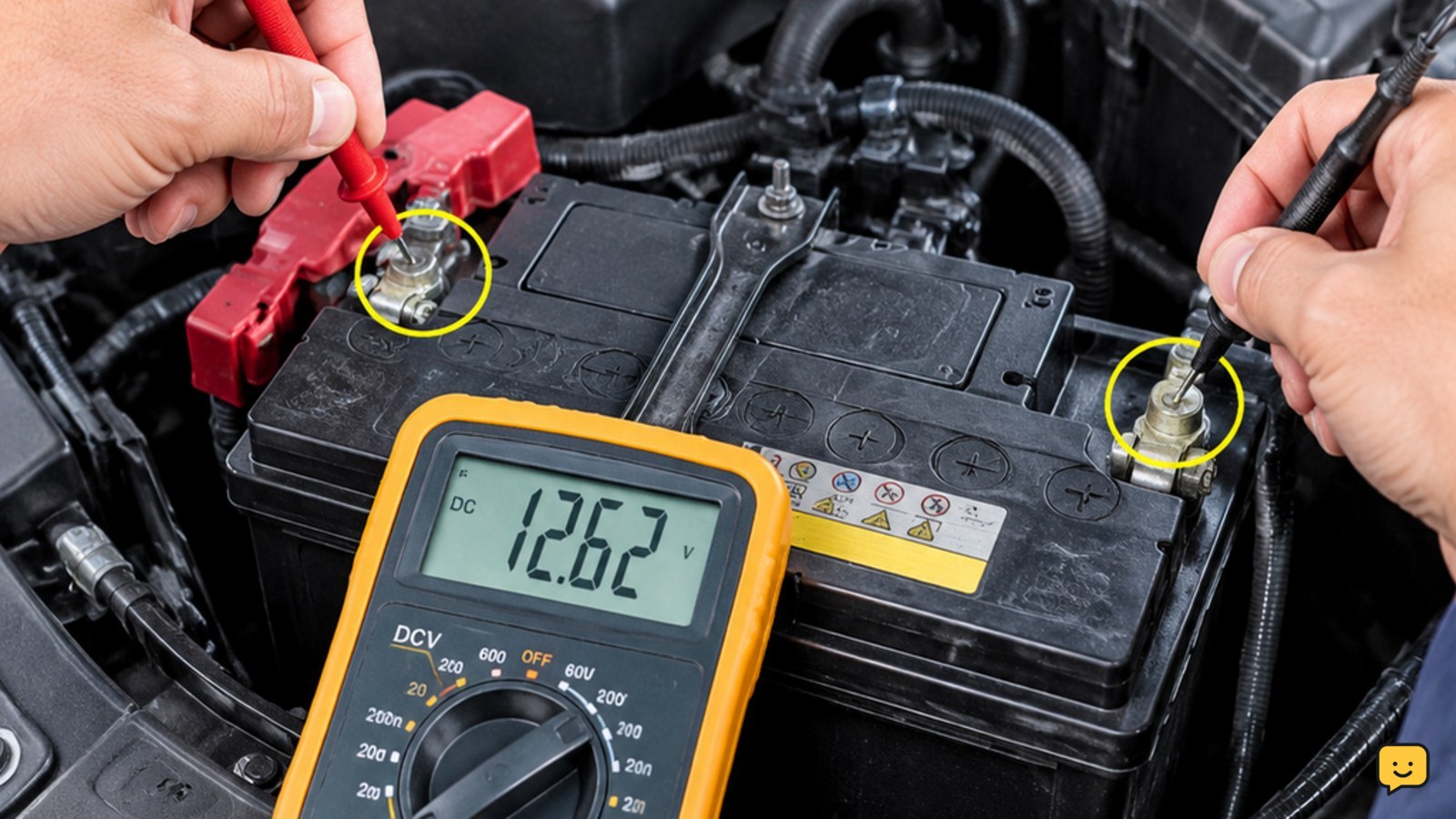
Record what happened before the light began flashing: hard acceleration, a cold start, refueling, recent maintenance, rough running, or reduced power. This information can help a technician narrow the diagnosis. Do not disconnect the battery or erase fault codes before the vehicle is scanned, because that can remove useful diagnostic information.
Verify the warning after a safe restart
A restart is a verification step, not a repair. Attempt it only when the vehicle is parked safely and there are no signs of overheating, smoke, leaking fuel, or severe mechanical noise.
- Turn the engine off and wait briefly.
- Restart without pressing the accelerator.
- Observe the light and listen for rough running.
If the light flashes again, the engine shakes, or power is reduced, switch the engine off and arrange towing or professional diagnosis. If the light becomes steady or goes out, drive only as needed for service and avoid hard acceleration. A warning that disappears can still represent a stored fault.
Arrange a diagnostic scan instead of guessing
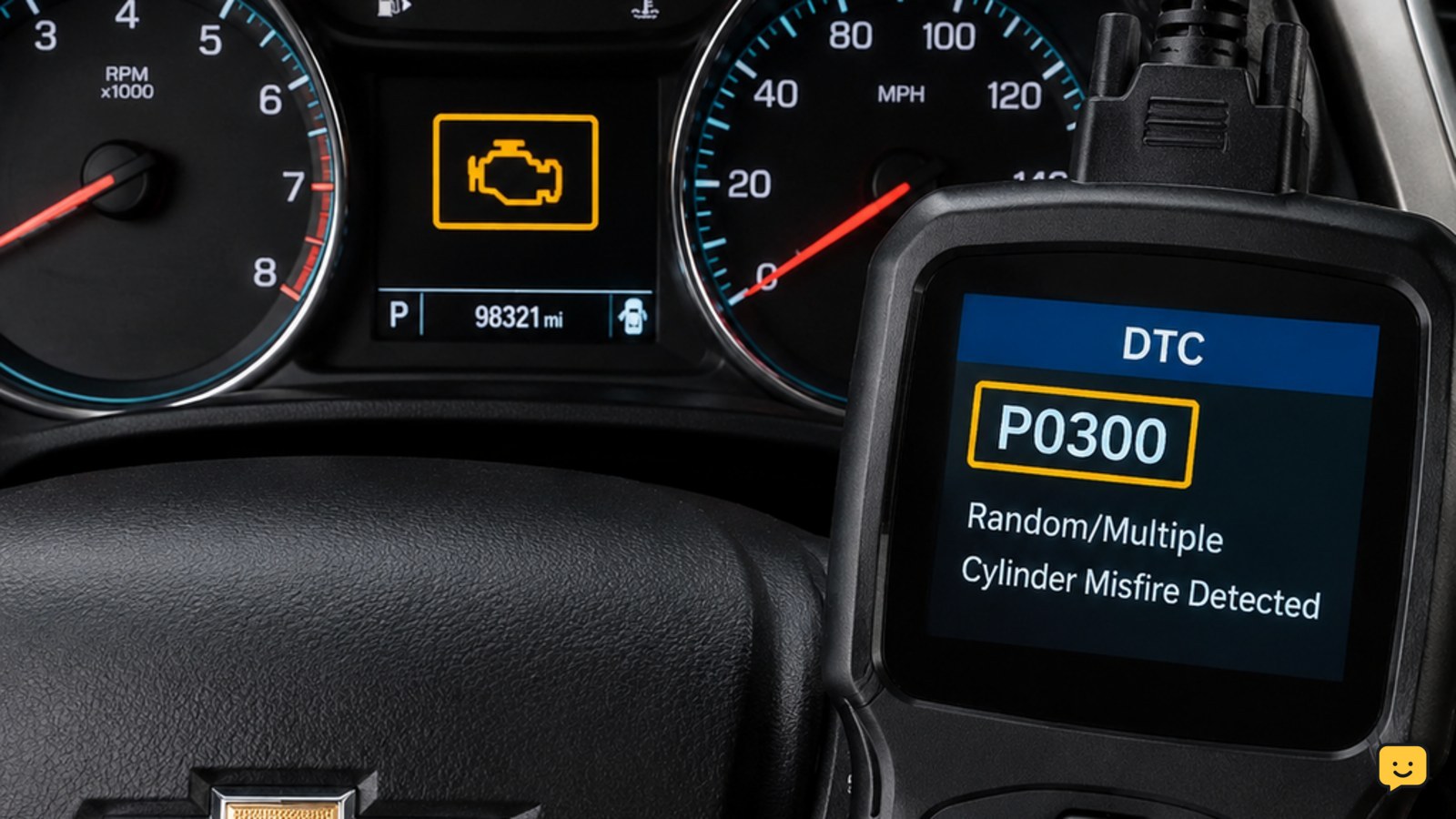
The light alone does not identify the failed part. A repair shop or qualified technician should read the vehicle’s diagnostic trouble codes and inspect the cause of the misfire. Tell them whether the light flashed continuously or intermittently, whether the engine shook, and whether the symptom appeared during starting, acceleration, or cruising.
Do not treat replacing spark plugs, adding fuel-system cleaner, or tightening the fuel cap as a confirmed fix for a flashing light. Those actions may not address an active misfire, and repeated driving while testing random fixes can increase damage risk.
Know when a flashing light is not safe to drive
Stop driving when the warning is accompanied by rough running, a loss of power, stalling, overheating, smoke, or strong fuel or exhaust odors. These symptoms increase the chance that the vehicle is unsafe or that continued operation could worsen the fault.
If the vehicle must be left at the roadside, use hazard lights when appropriate, move away from traffic, and follow local roadside-safety guidance. The correct endpoint is a diagnostic inspection or tow, not repeated short trips until the light disappears.
Frequently asked questions
Can I drive with a flashing check engine light?
Only far enough to reach a safe stopping place if the car is operating normally. If the light keeps flashing, the engine shakes, power drops, or the vehicle overheats, stop driving and arrange a tow or roadside assistance.
Is a flashing check engine light worse than a steady one?
Usually, yes. Flashing behavior commonly indicates an active misfire, while a steady light can indicate a fault that may be less immediately severe. Either warning needs diagnosis, but a flashing light calls for faster action.
What should I do if the light stops flashing?
Treat the change as useful information, not proof of a repair. If the light becomes steady or turns off, note the symptoms and arrange a diagnostic scan. Avoid hard acceleration until the cause is identified.
Should I disconnect the battery to reset the flashing light?
No. Disconnecting the battery can erase stored diagnostic information and does not correct the underlying fault. Keep the vehicle’s codes available for the technician and stop driving if the warning returns or the engine runs roughly.
Browse more Maintenance & Repair guides for help with this topic.