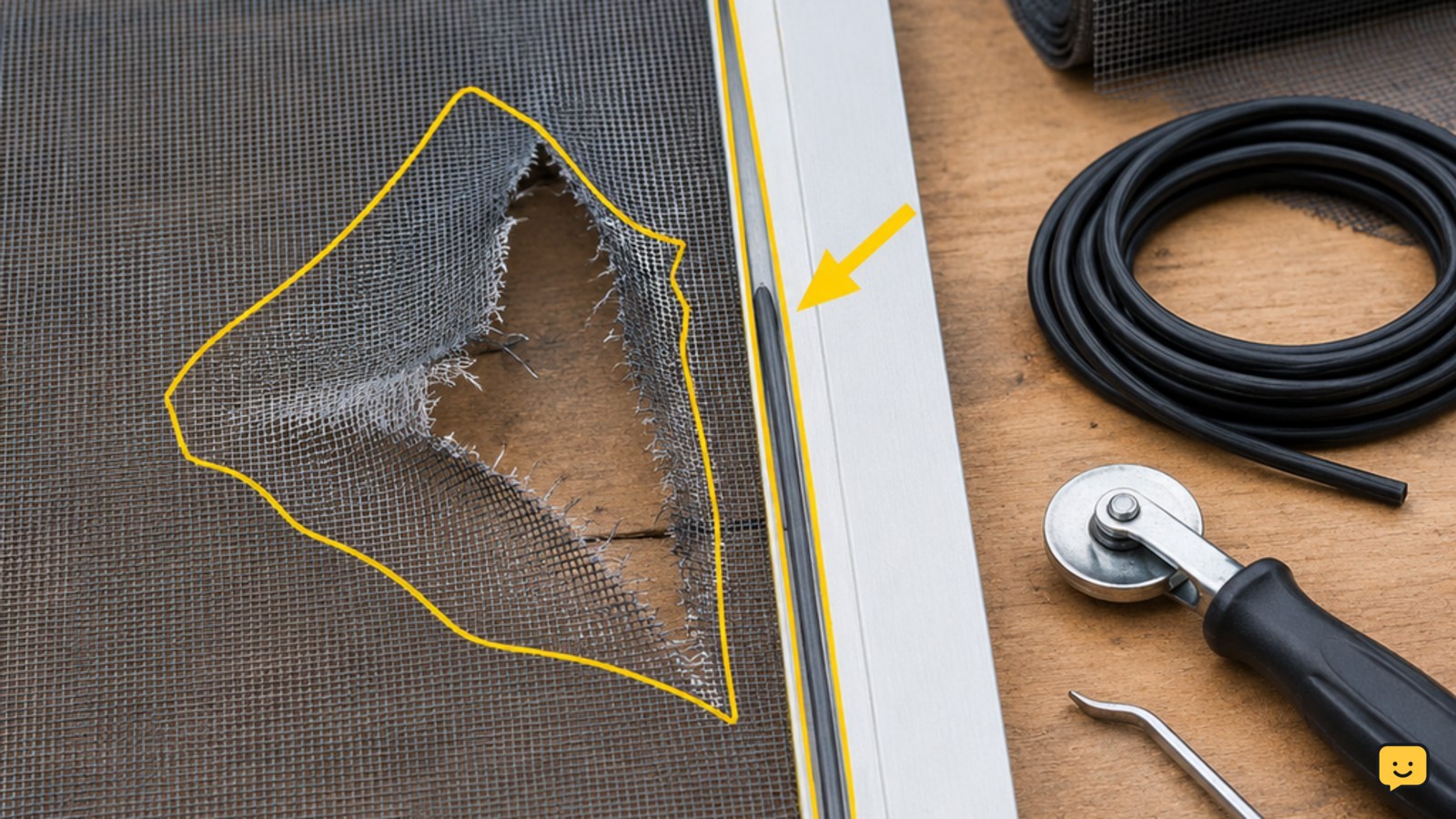
To repair a screen door, first identify whether the problem is torn mesh, loose spline, damaged hardware, or a misaligned frame. Patch a small hole; replace the entire screen for widespread damage. For replacement, remove the door, pull out the old spline and mesh, roll new screen into the groove, install new spline, trim the excess, and verify that the door closes and latches freely.
For more help with this topic, use the Home Maintenance guides.
Identify the screen door problem before buying parts
A screen door with one small puncture needs a patch, while a door with brittle, sagging, or widely torn mesh needs a full rescreen. Press lightly near the damage: if the surrounding fabric stretches or pulls away from the frame, replacement will last longer than a patch.
Check the other failure points before removing anything. A loose strip around the edge usually means the spline has lifted from its groove. A door that closes but will not latch may have loose hinges, rollers, a handle, or a frame that has shifted. A screen that rubs only at one corner points toward alignment rather than mesh damage.
Photograph the corner profile and note which side faces outside. This prevents installing the panel backward, especially when the handle, latch, or sweep is not centered. The DIY Playbook’s replacement sequence also starts by removing the door, old spline, and old screen before installing the new material.
Patch a small hole without replacing the whole screen
A small, isolated tear can be repaired with a screen patch, provided the surrounding mesh remains firmly attached and the hole is not beside the frame or latch.
- Clean dust from the area and trim loose threads with scissors. Do not enlarge the opening while cutting.
- Cut a patch large enough to extend beyond the damaged area on every side. A piece of matching screen is preferable to tape because it keeps the mesh pattern and airflow closer to the original.
- Secure the patch according to its material. Adhesive patches should cover clean, dry mesh; metal or fiberglass patches may be pressed into the surrounding strands or attached with a compatible screen-repair product.
- Run a finger around the patch edge while wearing gloves. If an edge lifts, the hole is spreading, or the repair catches on clothing, replace the full panel instead.
Verify the patch by closing the door several times and viewing it from both sides. It should stay flat, leave no sharp edge, and not interfere with the latch or weather seal.
Replace torn screen and spline in the frame
A full rescreen is the most reliable repair when the mesh is torn in several places or the old spline has hardened. Remove the screen door from its track or hinges and place it flat with the outside-facing side marked.
- Use a screwdriver or pliers to lift one end of the old spline from its channel. Pull it out around the frame, then remove the old screen.
- Lay the replacement mesh over the opening with several inches of excess on every side. Keep the weave straight with the frame rather than pulling it tightly by hand.
- Starting at one corner, press the spline and mesh into the groove with a spline roller. Work along one side, then the opposite side, followed by the remaining edges. Moderate tension is enough; excessive stretching can make the screen distort when the door is upright.
- Trim the excess mesh with a sharp utility knife held against the outside edge of the groove. Keep fingers behind the cutting path and make controlled cuts away from your body.
- Inspect the spline channel for gaps. If the spline rises out of the groove, remove that section and roll it in again rather than hammering it flat.
The finished screen should be smooth without large wrinkles, but minor movement in the mesh is normal. If the panel bows, the weave angles sharply, or one corner pulls inward, remove and reinstall the affected section before trimming more material.
Tighten hardware and correct a door that will not close
A screen door that will not close smoothly needs an alignment check before the mesh is replaced. Tighten loose hinge, handle, latch, or track fasteners with the correct screwdriver. Do not overtighten into thin aluminum, because stripped threads can leave the hardware looser.
For a hinged door, open and close it slowly while watching the gap along the latch side. An even gap with a latch that misses the strike usually indicates hardware alignment. A door that drops toward the handle or rubs at the top corner may have loose hinge screws or a shifted frame. The same initial checks used for a sagging residential door—checking hinge screws and alignment before moving the strike—can help here; see how to fix a sagging door for the related hinge sequence.
For a sliding screen panel, remove dirt from the track and check whether the rollers sit evenly. Turn an accessible roller adjustment screw only a small amount, then test the panel. If the roller is cracked, seized, or missing, replace the matching roller rather than forcing the door along the track.
Verify the repair by opening the door fully, closing it without pushing the frame, and checking that the latch engages. The panel should not scrape, spring open, or require excessive force.
For hinge alignment that resembles a dropped household door, use how to fix a sagging door as a related reference.
What to do if the repair still fails
If the new screen wrinkles, the likely causes are uneven tension, a spline that is too large or too small, or a frame that is not square. Remove only the nearest side of spline and reset that section. Do not keep stretching the mesh after it has been trimmed.
If the spline will not stay in the channel, compare its diameter with the removed piece and check that the groove is free of old material. A mismatch can make the entire edge release. If the groove is crushed or cracked, a new spline will not provide a dependable hold.
If the door still drags after hardware adjustment, place it on a flat surface and compare opposite corners. A visibly twisted or bent frame is beyond a simple mesh repair. Replace the panel or have a qualified repairer assess it, particularly if the door is needed to keep children, pets, or insects safely separated.
Final verification is simple: the mesh is fully retained, no cut wire or fastener is exposed, the door moves through its full travel, the latch holds, and the repaired area remains secure after several open-and-close cycles.
If a damaged fastener blocks the repair, see remove a stripped screw for safer removal options.
Frequently asked questions
Can you repair a screen door without removing it?
Yes, a small patch can usually be applied while the door remains installed. Full mesh replacement is easier and more reliable with the panel removed and laid flat, because the mesh must be held evenly while the spline is rolled into its groove.
How do you know what size screen door spline to buy?
Remove a short piece of the old spline and compare its diameter with replacement samples. The spline must fit firmly into the existing channel without splitting the frame or lifting out during normal door movement.
Why does a new screen door mesh look loose?
Loose mesh usually results from insufficient tension, uneven spline installation, or a frame that is not square. Remove the spline from the affected side, straighten the mesh, and roll that edge in again before trimming more material.
Is it better to patch or replace a screen door?
Patch one small, isolated hole when the surrounding mesh is strong. Replace the screen when tears are widespread, the fabric is brittle, the edge has pulled loose, or multiple patches would overlap.