To organize a bathroom cabinet, remove everything, wipe the shelves, discard empty or unwanted products, and group the rest by use. Keep daily items at eye level, occasional items higher or farther back, and small products in labeled bins. Add shelf risers or dividers only where they improve visibility, then check that doors close and leaks are easy to spot.
For more help with this topic, use the Home Maintenance guides.
Empty the cabinet and check its condition
Emptying the bathroom cabinet first reveals what you own and whether the storage area needs attention before organizing. Put every item on a clean towel or counter, including products hidden at the back.
- Remove shelf liners, loose packaging, and anything that is empty or clearly unwanted.
- Wipe shelves, corners, hinges, and the cabinet floor with a suitable household cleaner.
- Let the surfaces dry fully before returning products.
Check for water marks, swollen particleboard, peeling edges, loose hardware, or a musty smell. These signs can point to a plumbing or condensation problem rather than ordinary clutter. Fix the moisture source before storing products again.
Sort products into practical bathroom categories
Grouping bathroom products by use makes the cabinet easier to search and helps prevent duplicate purchases. Create categories that match your routine rather than copying a fixed storage system.
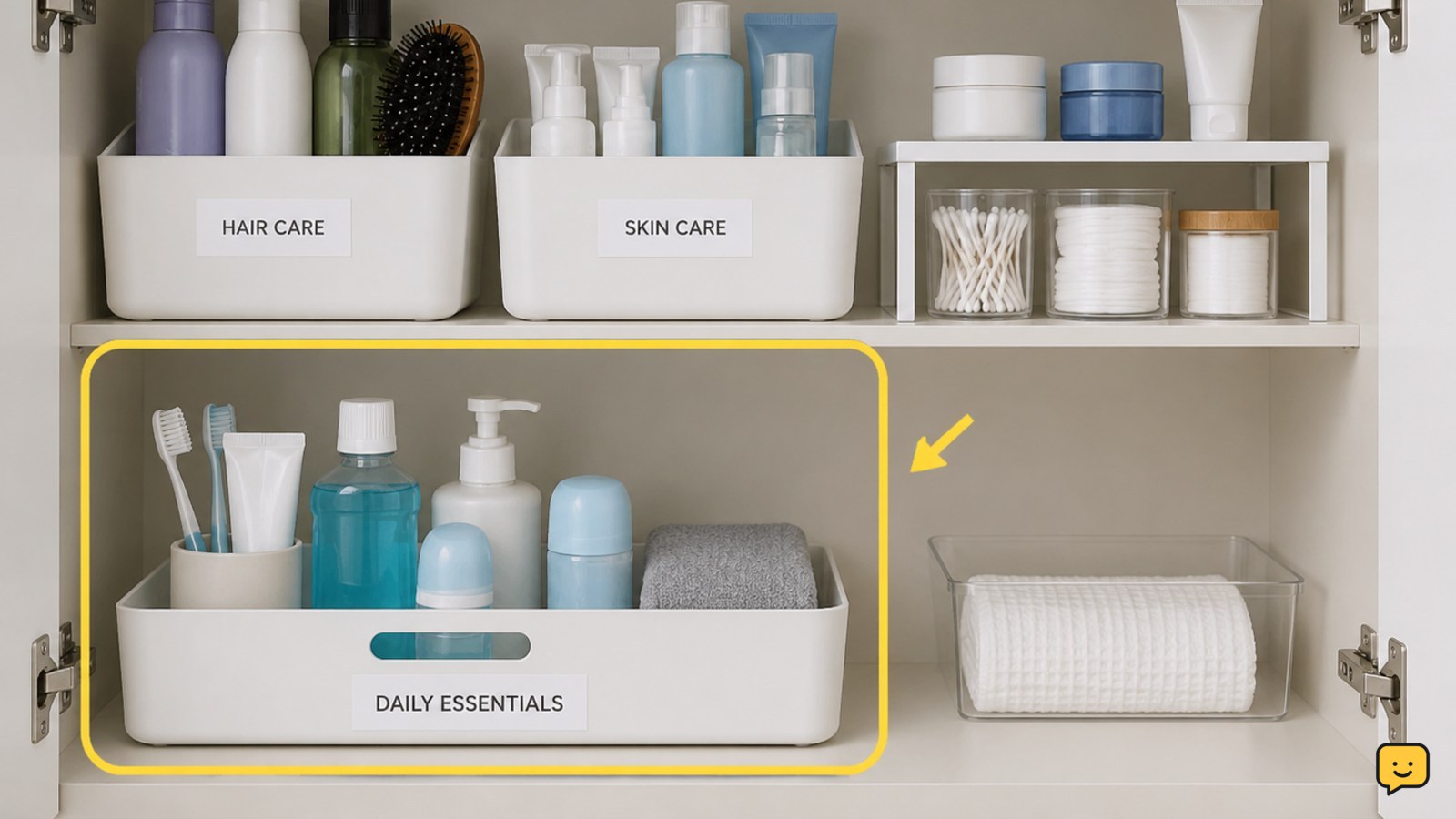
- Daily care: toothpaste, deodorant, skincare, hairbrushes, and other items used every day.
- Hair care: shampoo, styling products, clips, brushes, and accessories.
- First aid and personal care: bandages, cotton products, nail care, and grooming tools.
- Occasional use: travel bottles, spare toiletries, seasonal products, and backup supplies.
- Cleaning supplies: keep these contained and separate from personal-care products.
Remove duplicates you will not use, empty containers, and products that no longer suit your household. The Happy Housie also recommends taking everything out and sorting items into logical groups before choosing containers.
Choose storage by frequency and product size
Place the products you use most often in the easiest-to-reach area, while less-used items can go higher, farther back, or into a clearly labeled bin.
- Reserve the front of the main shelf or the top drawer for daily essentials.
- Use a small tray for loose items such as hair ties, razors, nail tools, or cosmetics.
- Use bins for grouped backups and occasional products, but avoid filling them so tightly that items disappear.
- Add a shelf riser when shorter containers are hidden behind taller bottles.
- Use dividers for drawers so small products stay separated instead of shifting into one pile.
Measure the cabinet width, depth, and shelf clearance before buying organizers. A container that fits the shelf but blocks the door or plumbing access is not a useful solution. Designer storage guidance commonly recommends risers, stackable organizers, and drawer dividers when they improve vertical space and visibility.
Assign each item a visible storage zone
Each product should have one obvious home, with the label facing outward when possible. Keep daily items together so the cabinet supports the routine instead of adding extra steps.
For a shared cabinet, assign one shelf, tray, or bin to each person or product type. Keep heavier bottles on a lower shelf where they are less likely to fall. Store small items in shallow containers rather than deep boxes, because deep storage encourages forgotten products at the back.
Leave a little open space around bottles. This makes spills easier to notice and lets you remove one item without unloading the entire shelf. If children can reach the cabinet, move medicines, sharp tools, and hazardous products to secure storage that follows the product label and your household safety needs.
Verify the cabinet is easy to use and maintain
A bathroom cabinet is organized when every category is visible, stable, and quick to return after use. Test the arrangement before treating the job as finished.
- Open and close the door several times to confirm that bins, bottles, and risers do not catch.
- Remove the most-used items without moving other products.
- Check that tall bottles stand upright and that small containers cannot roll behind the shelf.
- Confirm that cleaning supplies are contained and separated from products used on the body.
- Look at the back corners for leaks or dampness after the sink and plumbing have been used.
If a category is difficult to reach, move it forward or reduce the number of items in that zone. If the cabinet becomes cluttered again, use a one-in, one-out rule for backups and repeat the sort before adding more containers.
What to do if the cabinet is too small
If the cabinet cannot hold daily products without stacking or hiding items, reduce the contents before adding more storage. Keep only current products inside and move sealed backups to a dry, clearly labeled location elsewhere in the home.
Use a narrow vertical organizer, an over-door holder designed for the cabinet, or a separate drawer tray only when the hardware is compatible and does not overload the door. Do not store products around exposed plumbing, in a damp cabinet base, or where a leak would spread into paper goods and personal-care items.
Frequently asked questions
What should go in the most accessible part of a bathroom cabinet?
Daily-use products should go in the most accessible area, such as the front of the main shelf or the top drawer. Group them by routine, keep labels visible, and leave enough space to remove one item without disturbing the others.
Are bathroom cabinet organizers worth using?
Yes, when they solve a specific problem such as hidden bottles, loose small items, or wasted vertical space. Use trays, bins, risers, or dividers that fit the cabinet and remain easy to clean. Avoid organizers that create cramped layers or block plumbing access.
How do you organize a small bathroom cabinet?
Keep only current and frequently used products inside, then use shallow bins, a shelf riser, or drawer dividers to make categories visible. Store backups elsewhere in a dry location. Measure the cabinet first so added storage does not prevent the door from closing.
How often should a bathroom cabinet be reorganized?
Check it whenever products run out, spill, or become difficult to reach, and perform a fuller sort when clutter returns. A quick wipe and category check during regular bathroom cleaning can prevent small items from becoming a larger pile.