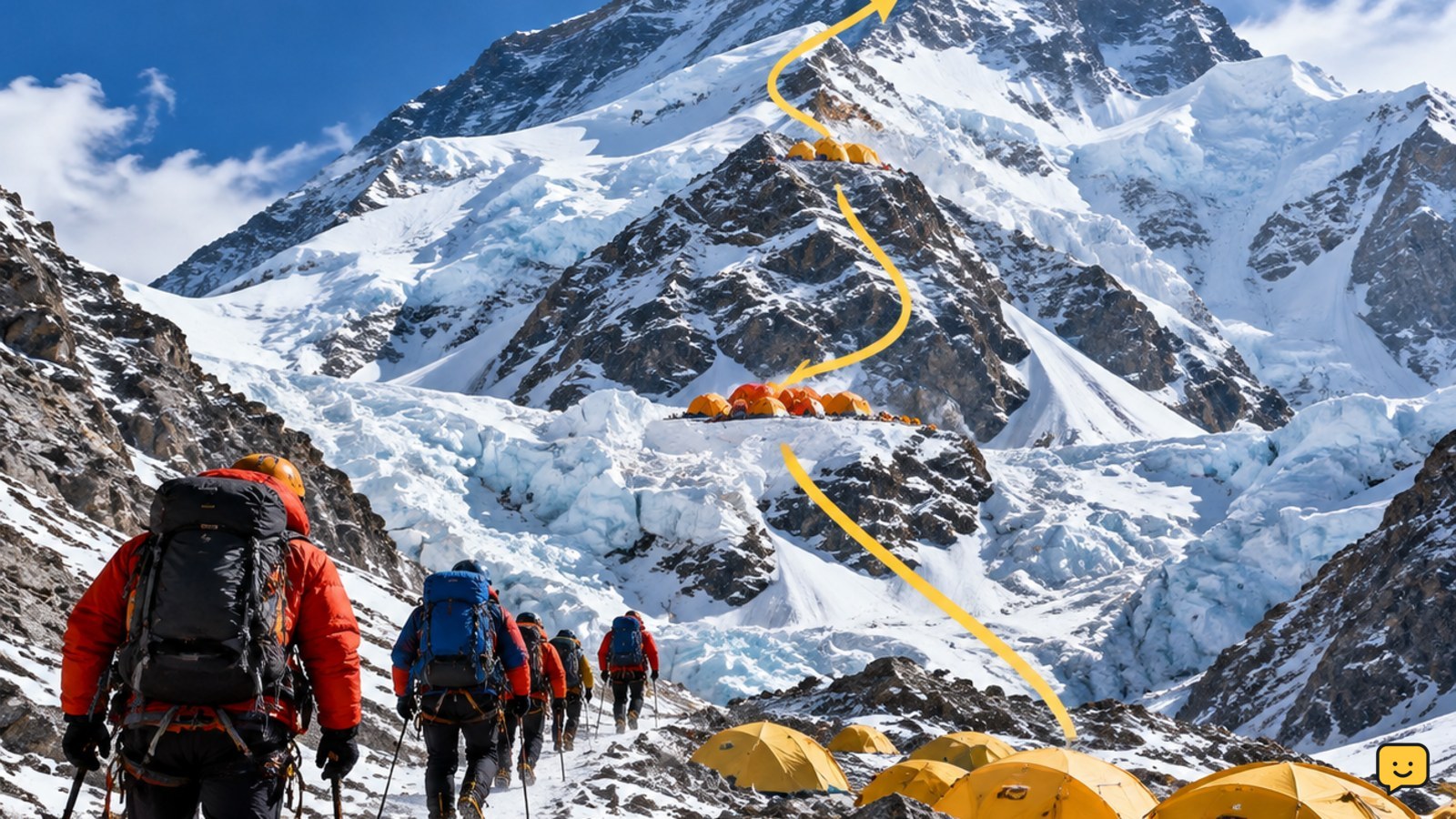
A typical Mount Everest expedition takes roughly six to eight weeks from arrival in Nepal through the summit attempt and return to base camp. The schedule includes acclimatization, movement between camps, weather delays and the summit attempt itself. It can take longer when conditions, health, route logistics or team readiness require a pause or retreat.
For more help with this topic, use the Camping Outdoors guides.
Use six to eight weeks as the planning range
A full Mount Everest expedition usually takes about six to eight weeks from arrival in Nepal to the summit attempt and return to base camp. Furtenbach Adventures gives this range for a typical expedition, which makes it the most useful starting point for calendar planning.
This estimate covers far more than the final climb. It allows time for the approach, acclimatization, camp movements, rest periods, route logistics and weather windows. A shorter itinerary may appear attractive, but removing recovery or acclimatization days does not make the mountain predictable.
Success is not simply reaching the summit. A realistic plan also includes a safe return to base camp and enough flexibility to respond to changing conditions.
Separate the expedition length from the summit attempt
The summit attempt is one phase inside the six-to-eight-week expedition, not the whole time spent on Everest. Before that push, climbers must reach the mountain, adjust to altitude, move through the planned camps and wait for a suitable opportunity.
When comparing itineraries, check exactly what the quoted duration includes. An operator may describe the period from arrival in Nepal, from arrival at base camp or only the summit push. These are different measurements and can make two apparently similar schedules difficult to compare.
Verify the start and end points in writing. A useful itinerary states whether transport, approach days, acclimatization rotations, summit operations, weather buffers and the return to base camp are included.
Allow extra time for weather and route conditions
Weather and route conditions can extend an Everest schedule beyond the usual estimate. High winds, poor visibility, unstable snow or a damaged route can prevent a safe move even when the published itinerary says it should happen.
Ask the operator how many reserve days are built into the plan and what happens if the summit window closes. The safer response to a delay is to wait, change the plan or descend—not to compress rest periods or move upward in unsafe conditions.
Before departure, verify the operator’s current communications process, weather-forecast source, turnaround policy and evacuation plan. During the expedition, a changed departure time or closed route is a stop signal until the leader confirms that travel can resume.
Check whether your schedule includes acclimatization
Acclimatization is a major reason an Everest expedition lasts weeks rather than days. The body needs time to respond to increasing altitude, and the itinerary must allow rest, observation and decisions based on how the team is functioning.
Do not judge readiness by the calendar alone. Your guide team should assess symptoms, sleep, hydration, coordination, breathing and overall performance before approving the next move. Feeling strong at a lower camp does not guarantee that the next altitude is safe.
If symptoms worsen, do not wait for the schedule to catch up. Tell the expedition leader immediately, stop gaining altitude and follow the medical or descent plan. Severe headache, confusion, poor coordination, breathlessness at rest or repeated vomiting requires urgent professional assessment at altitude.
Build a decision-ready Everest timetable
A useful Everest timetable has a target duration, a delay allowance and a clear retreat rule. Start with the six-to-eight-week estimate, then identify which days are flexible and which bookings cannot move.
- Confirm the scope: write down whether the quoted period runs from arrival in Nepal to return to base camp.
- Review the buffers: identify planned rest, acclimatization and weather-delay days rather than counting only climbing days.
- Set the turnaround rule: agree on the time or conditions that require the team to abandon the summit attempt.
- Protect the return: leave practical space after the expected return because a delayed summit window can change transport and accommodation plans.
The schedule is working when everyone knows the expected range, the included phases, the delay response and the conditions that end the attempt. If an itinerary cannot explain those points, ask for clarification before committing.
Frequently asked questions
Can you climb Mount Everest in a few days?
No. A few days is not a realistic full-expedition schedule. The typical estimate is roughly six to eight weeks from arrival in Nepal through the summit attempt and return to base camp because the plan must include acclimatization, logistics, weather delays and recovery.
Why does climbing Everest take so long?
Everest takes weeks because the expedition must include an approach, acclimatization, movement between camps, rest, route management and a suitable weather window. The final summit attempt is only one part of the schedule, and a safe return is also part of completing the climb.
What can make an Everest expedition take longer?
Weather, route damage, high winds, poor visibility, health concerns, delayed logistics and limited summit conditions can all extend the timetable. A responsible team waits, changes plans or descends when conditions are unsafe instead of rushing to preserve the original schedule.
Should I book travel immediately after the expected Everest return?
No. Leave flexibility after the planned return to base camp. The six-to-eight-week estimate is a planning range, not a guarantee, and weather or route delays can affect the summit window and the journey back.