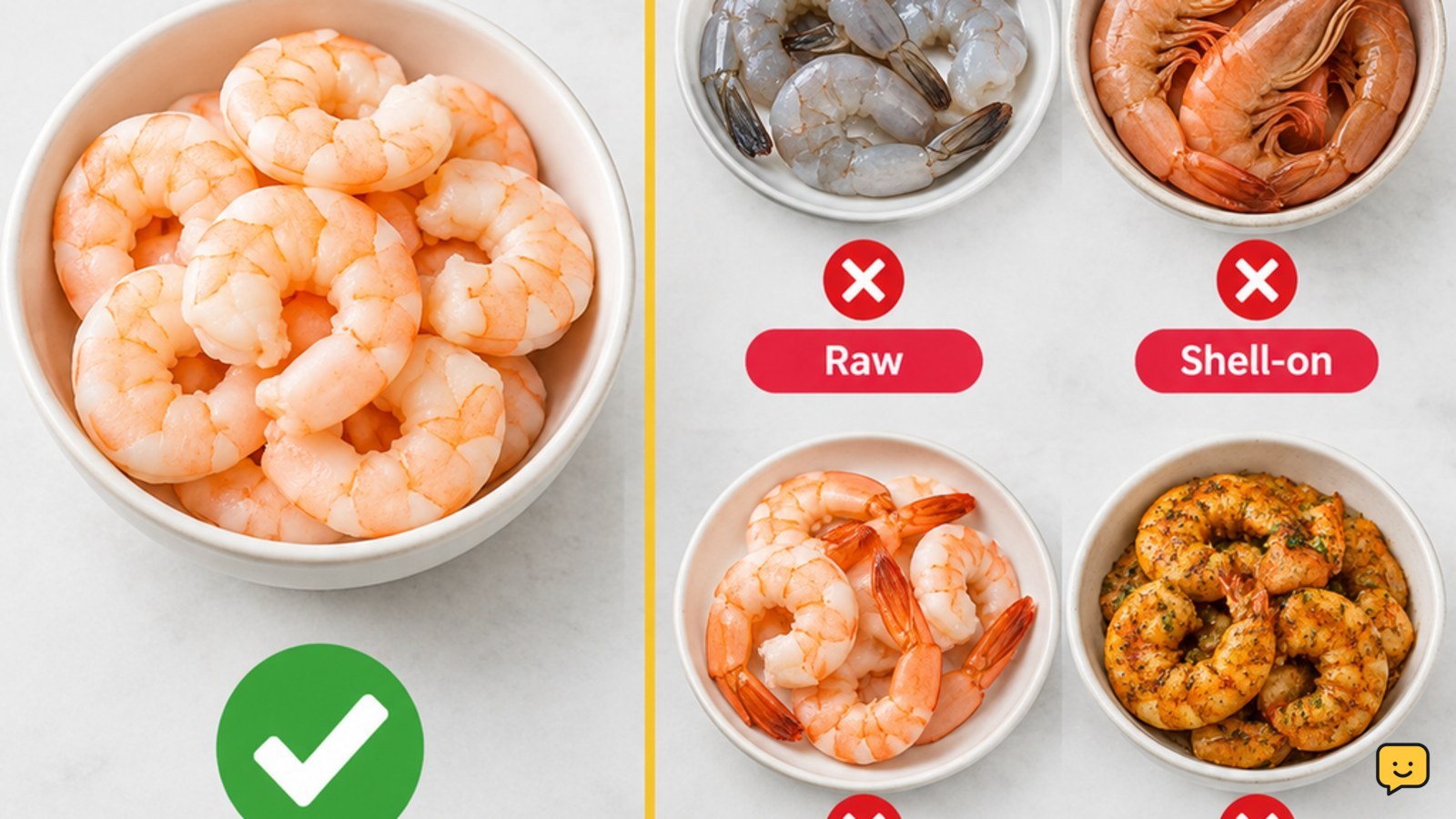
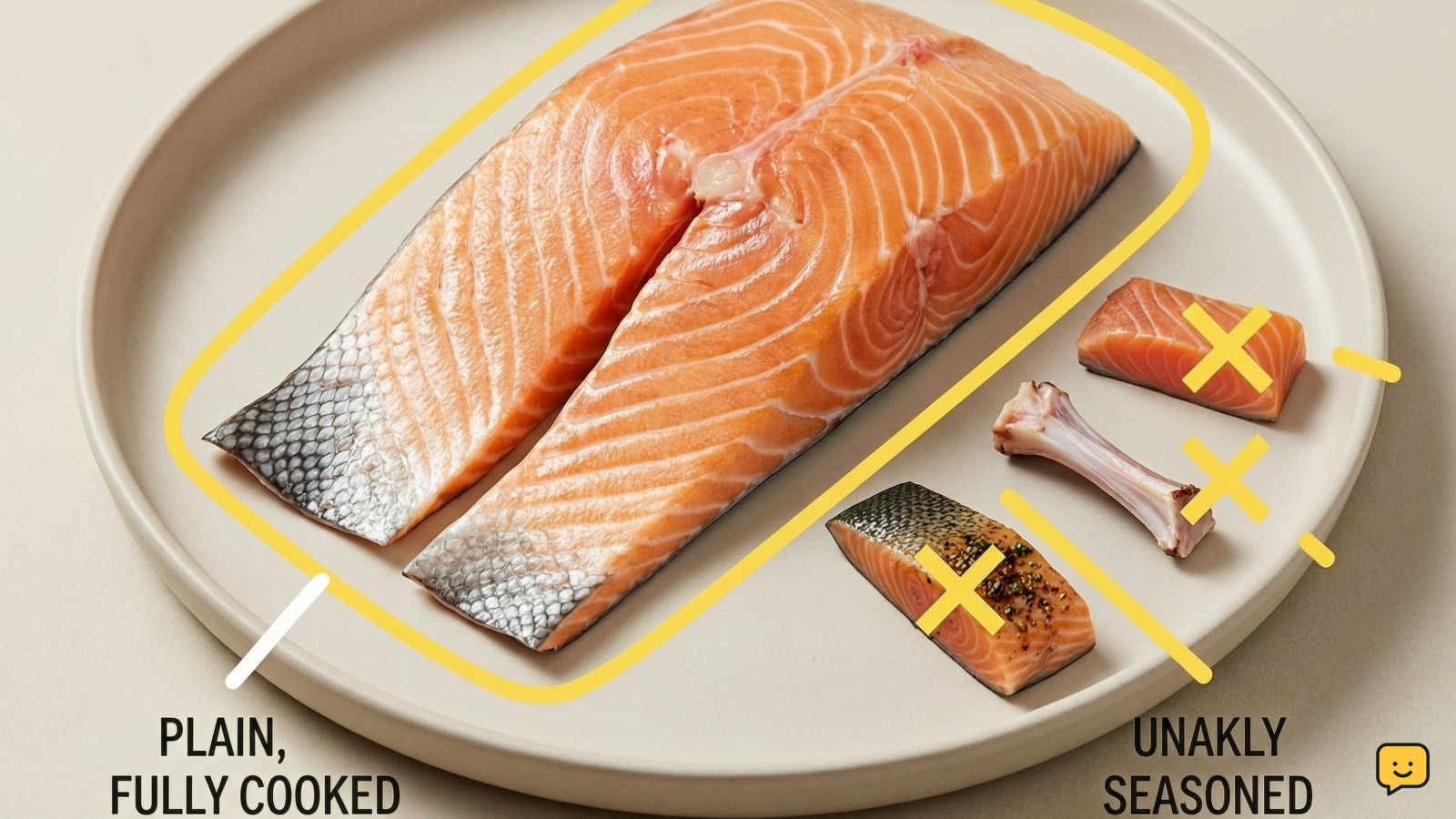
Yes, many dogs can eat a small amount of plain, fully cooked salmon skin as an occasional treat, provided every bone is removed and the fish has no salt, garlic, onion, sauces, or other seasonings. Avoid raw or undercooked salmon, smoked or cured products, and large portions. Contact a veterinarian promptly after bone ingestion, toxic additives, or concerning symptoms.
For more help with this topic, use the Everyday Pet Care guides.
Give only plain, fully cooked, boneless salmon skin
Plain, fully cooked, boneless salmon skin can be an occasional treat for many otherwise healthy dogs. Remove the skin from a thoroughly cooked fillet, inspect it under good light for small bones, and offer only a little alongside the dog’s normal food. The skin is not essential to a balanced canine diet, so treat it as an optional extra rather than a routine meal ingredient.
Cooking matters because raw or undercooked fish can carry bacteria and parasites. The FDA warns that raw pet-food ingredients can expose pets and people to disease-causing germs, while veterinary guidance on salmon poisoning disease warns that raw salmon from some regions can seriously affect dogs. Fully cooked fish is the safer form, but cooking does not make bones or toxic seasonings safe.
Remove bones and reject unsafe preparations
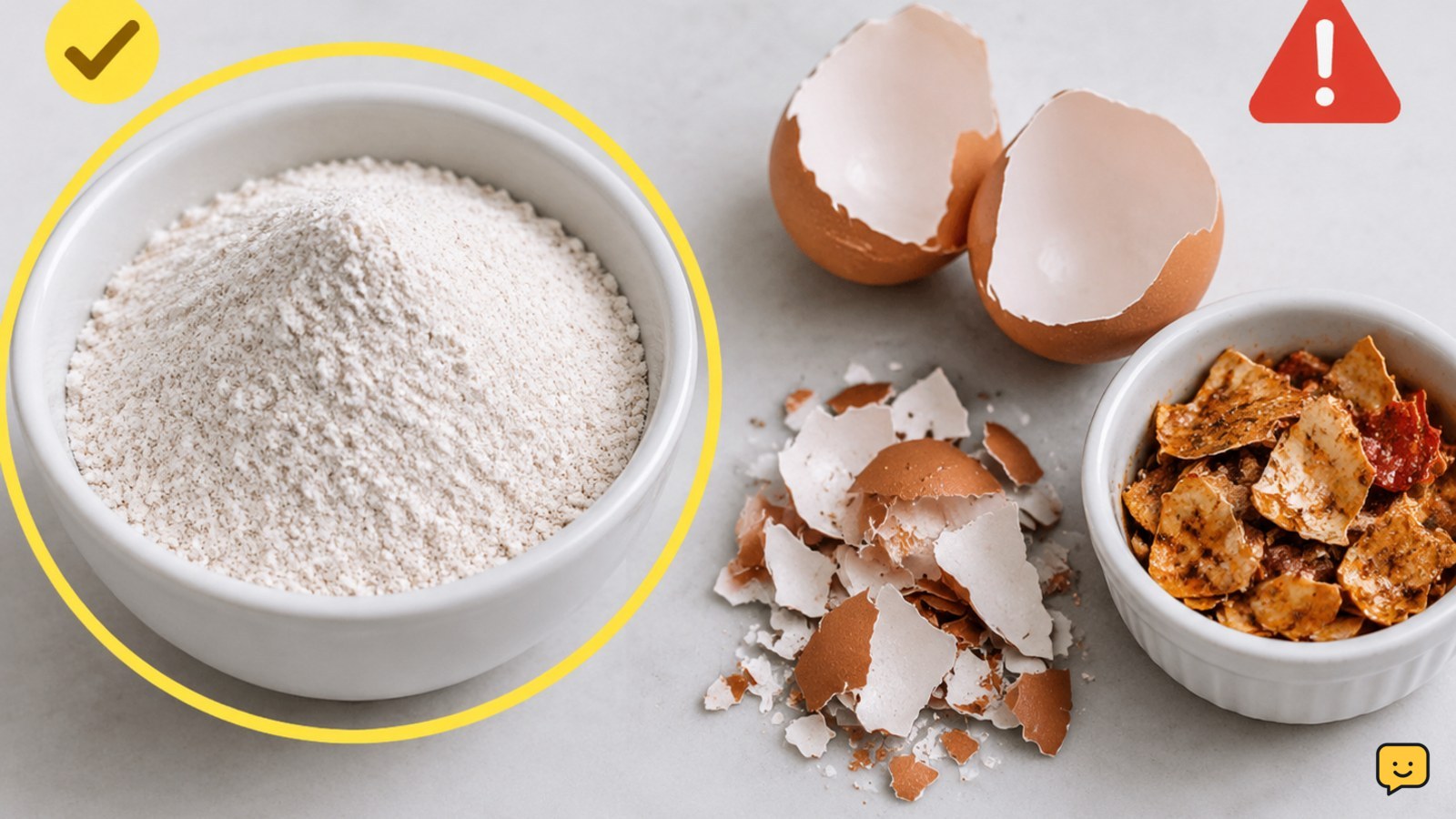
Salmon skin is only the lower-risk choice when the fish is plain, cooked, and free of bones. Do not share a piece if you can feel pin bones, see a bone fragment, or cannot confidently inspect it. Bones can cause choking, mouth or throat injury, or gastrointestinal obstruction. Do not induce vomiting or give a home antidote after a bone is swallowed; call a veterinarian for specific guidance.
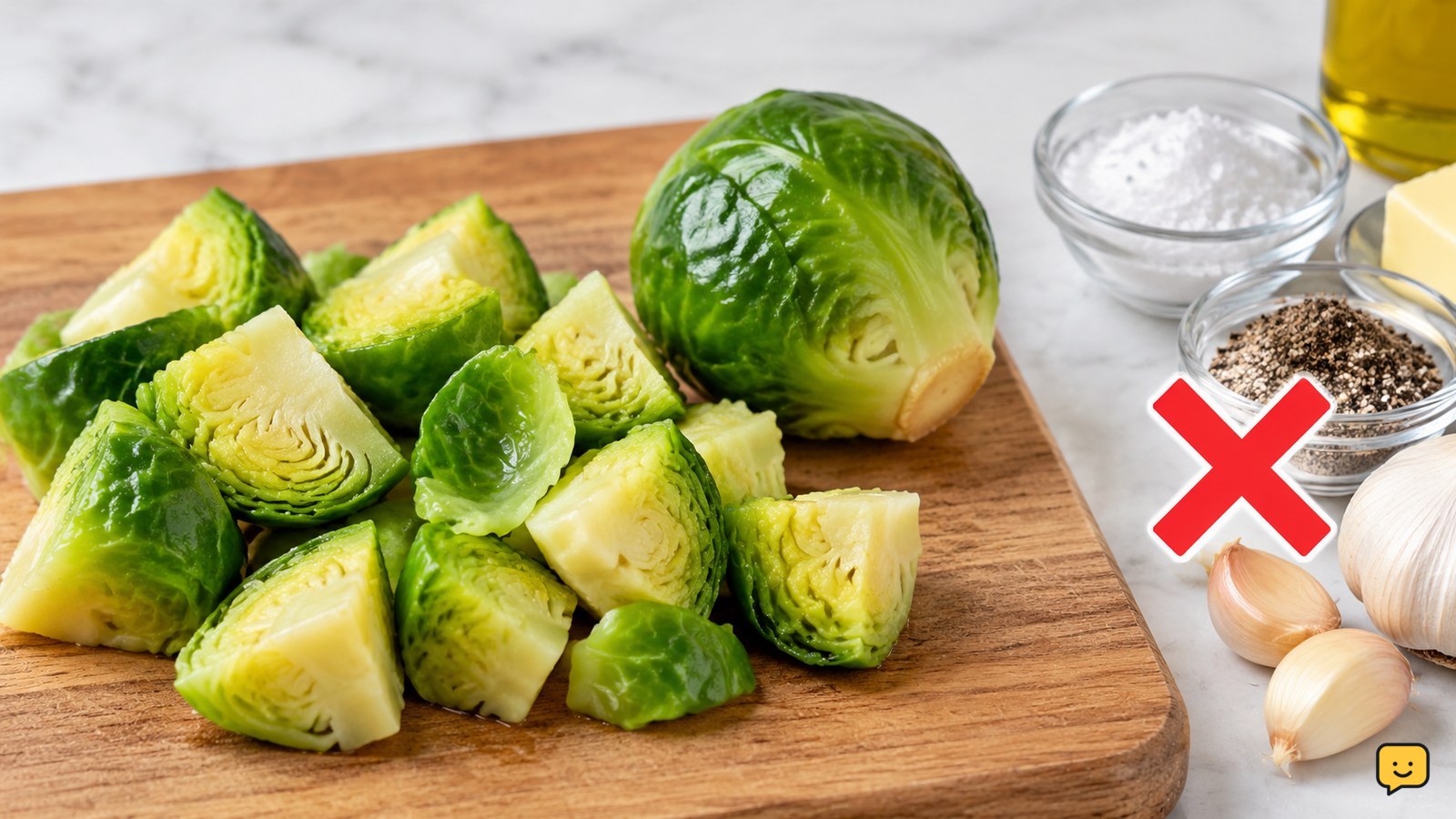
Avoid smoked, cured, brined, salted, or heavily seasoned salmon. These products can contain excessive salt, oils, sauces, or concentrated flavorings. Never share salmon prepared with onion, garlic, chives, or leeks; Pet Poison Helpline identifies allium ingredients as potentially poisonous to dogs. Avoid marinades and packaged products when the ingredient list is missing or unclear.
Do not rely on rinsing or scraping to make an unsafe product suitable. Salt and seasonings may remain in the flesh or skin, and a bone can be hidden beneath the surface. If the preparation is uncertain, discard the portion and use a plain dog-safe treat instead.
Our guide to seasoned foods dogs should avoid seasoned foods dogs should avoid explains why brines, flavorings, and hidden ingredients deserve caution.
Keep the treat small and watch the first serving
A small piece is a reasonable treat context for a dog that has previously tolerated fish, but there is no universal safe portion for every dog. A dog’s size, health, usual diet, and sensitivity to rich foods matter. Dogs with a history of pancreatitis, food intolerance, or a veterinary-prescribed diet should not receive salmon skin unless their veterinarian approves it.
After a first serving, check for vomiting, diarrhea, excessive gas, reduced appetite, unusual tiredness, or apparent abdominal discomfort. Mild digestive changes still mean salmon skin should be stopped and your veterinarian should be contacted if they persist or are significant. Never increase the amount just because the first bite caused no immediate reaction; delayed digestive signs can occur.
For another plain-food option, compare these plain dog-safe treat ideas plain dog-safe treat ideas before adding extras to your dog’s diet.
Check what your dog swallowed before choosing the next step
If your dog ate plain cooked salmon skin and is acting normally, remove the remaining food, note roughly what was eaten, and monitor closely. Save the packaging or recipe if the salmon was prepared commercially. This situation is different from eating a cooked bone, raw salmon, smoked salmon, or a sauce containing toxic ingredients.
If a bone was swallowed, call your veterinarian promptly even if your dog currently seems comfortable. Call an animal poison service or your veterinarian without waiting for symptoms when the food contained onion, garlic, an unknown seasoning, or a large amount of salt. Have the product name, ingredients, estimated amount, and time of ingestion ready.
Treat choking, illness, or collapse as an emergency
Breathing difficulty, choking, repeated retching, collapse, severe weakness, bloody vomit or stool, or intense abdominal pain requires urgent veterinary care. Do not wait to see whether these signs pass, and do not administer medication unless a veterinarian directs you to do so. Transport your dog safely while calling the clinic for instructions.
Raw salmon ingestion also deserves a prompt veterinary call, especially if the fish came from an area where salmon poisoning disease occurs. VCA Hospitals describes salmon poisoning disease as a potentially life-threatening illness in dogs. A veterinarian can decide whether the exposure, symptoms, and local risk require examination or testing.
Frequently asked questions
Can dogs eat salmon skin from a cooked fillet?
Yes, a small amount may be okay if the fillet is fully cooked, plain, and carefully checked for bones. Remove skin from salmon cooked with salt, garlic, onion, sauces, or heavy oil. Stop if your dog develops digestive symptoms, and ask a veterinarian before offering it to a dog with pancreatitis, food intolerance, or a prescribed diet.
Can dogs eat raw salmon skin?
No, raw salmon skin is not the safer choice for dogs. Raw or undercooked salmon can carry bacteria and parasites, and some regional salmon exposures can cause salmon poisoning disease. If your dog ate raw salmon, call your veterinarian promptly and provide the fish’s source, amount, and time of ingestion.
What should I do if my dog ate salmon bones?
Call your veterinarian promptly, even if your dog appears normal. Salmon bones can choke, injure the mouth or throat, or become lodged in the digestive tract. Seek emergency care for choking, breathing trouble, repeated retching, collapse, severe pain, or marked weakness. Do not induce vomiting or use a home antidote.
Is smoked salmon safe for dogs?
Smoked salmon is best avoided because it is commonly salty, cured, or flavored. Check the ingredient list for onion, garlic, chives, leeks, sauces, and other additives. If your dog ate smoked salmon, contact your veterinarian or an animal poison service when the amount or ingredients are uncertain, especially if symptoms appear.