To fix a sagging door, tighten every hinge screw, then replace one loose top-hinge screw with a longer screw that reaches the framing. If the door still drops, support it, shim the hinge, or adjust the strike plate. Stop if the frame is cracked, the hinges are bent, or the door remains misaligned after reinforcement.
For more help with this topic, use the Home Maintenance guides.
Check where the door is rubbing
A sagging door usually shows a gap that narrows at the top on the latch side, or it rubs against the upper corner of the frame. Open and close the door slowly, then inspect the hinge-side gaps. A loose top hinge is a common cause because it allows the door’s outer corner to drop.
Mark the rubbing point with painter’s tape. If the door rubs along the threshold instead, the problem may involve a swollen door, a settled frame, or a damaged jamb rather than loose hinges. Do not remove material until the hinge alignment has been checked.
Tighten and reinforce the hinge screws
Tightening the hinge screws is the first repair because a loose hinge can let the door move out of alignment without damaging the door itself.
- Close the door and tighten the screws on all hinge leaves. Work carefully so the screw head does not strip or the hinge leaf does not pull into a new position.
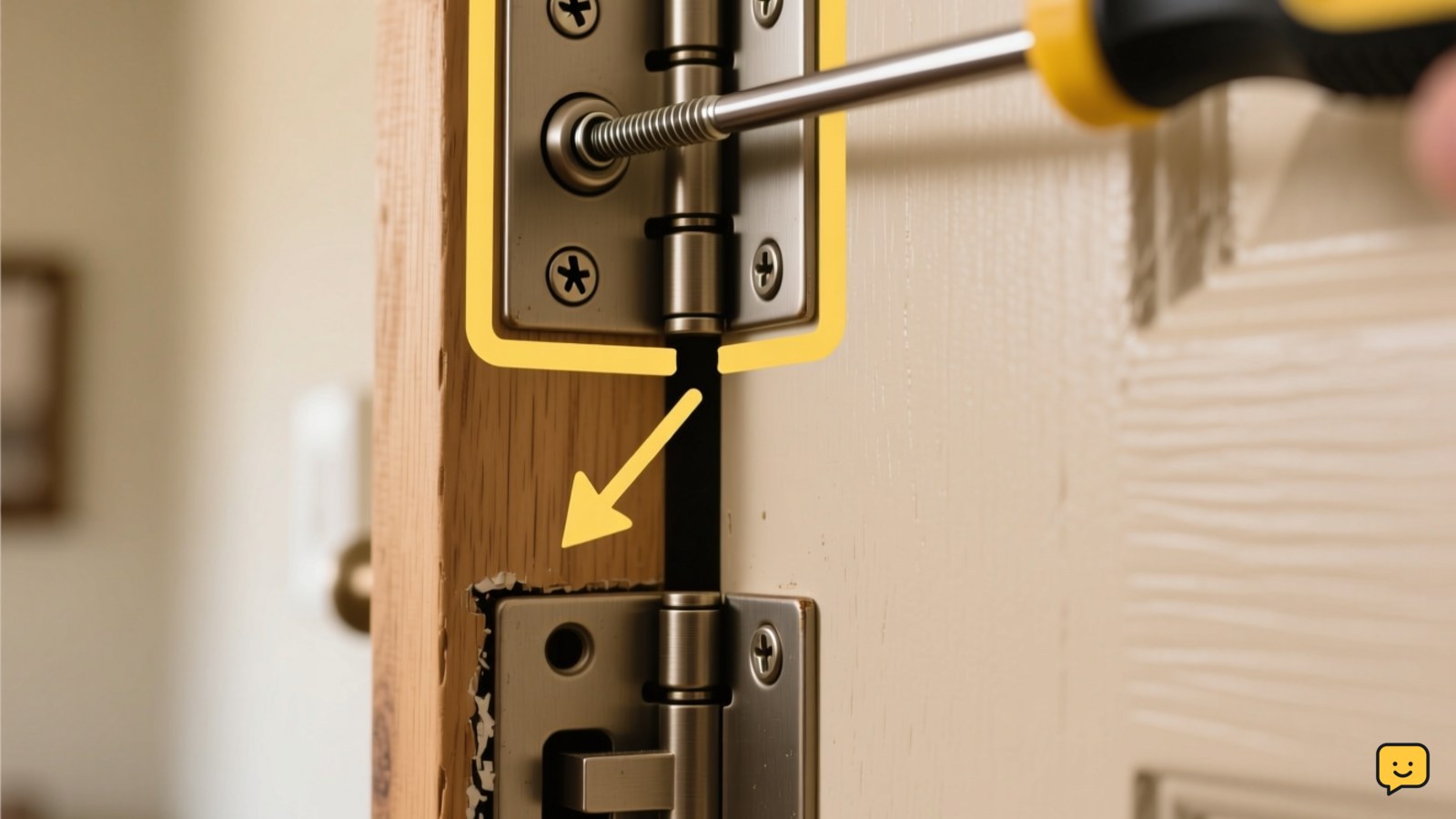
- Test the door. If the top hinge screws turn freely or no longer hold, remove one screw at a time and replace it with a longer screw that reaches solid framing. The Spruce identifies a 3-inch screw at the top hinge as an effective way to pull a sagging door back toward the frame.
- Drive the longer screw through the hinge leaf without overtightening. Recheck the gap before replacing additional screws.
The door should move more evenly and the latch should sit closer to the strike opening. If the hinge side shifts but the latch still misses, continue to the hinge-shim adjustment rather than forcing the latch.
Shim the hinge to correct the door position
Shimming changes the hinge position when tightening or longer screws do not correct the drop. Support the door before loosening hinge screws, especially on a solid-core or exterior door.
- Place a wood shim under the latch-side edge to support the door at its normal height.
- Loosen the hinge screws slightly, not all at once. Insert a thin shim behind the hinge leaf where the hinge meets the jamb, then retighten the screws.
- Remove the support slowly and check the door gap. Add or remove shim thickness in small amounts until the door swings without rubbing.
A shim that is too thick can twist the hinge or create a new gap. Best Pick Reports also lists hinge shimming as a realignment method, alongside tightening or replacing loose hinges. If the hinge will not sit flat or the screw holes are split, stop rather than adding more force.
Adjust the strike plate only after alignment
Adjust the strike plate only when the door now hangs squarely but the latch still misses its opening. Moving the plate cannot repair a door that is still sagging.
- Close the door gently and mark where the latch contacts the strike plate.
- Remove the plate and reposition it only as far as needed for the latch to enter cleanly.
- Drive the screws into sound wood and test the latch several times with the door handle.
The latch should engage fully without lifting, pushing, or slamming the door. If the plate has no useful adjustment left, the jamb may be out of square or the latch may need separate repair.
Verify the repair and handle failed fixes
A repaired door should swing through its full range, maintain a reasonably even gap, latch without pressure, and stay in position when released partway open. Check each hinge for movement while opening and closing the door several times.
If the door drops again, inspect the longer screw for a stripped hole and check whether the frame is split. For damaged screw heads, use the methods in safe stripped-screw removal before attempting another repair. If the screws hold but the gap changes with weather, swelling or frame movement may be the underlying issue.
Do not plane or sand the door as the first response. That removes material without correcting a loose hinge or shifting frame, and it can leave an excessive gap after the door settles.
For damaged screw heads, use safe stripped-screw removal before attempting another repair.
Frequently asked questions
Can I fix a sagging door without removing it?
Yes. Start by tightening the existing hinge screws and replacing one top-hinge screw at a time with a longer screw. If the hinges need shimming, support the door from below and loosen only the screws needed for that hinge. A helper is safer for a heavy exterior or solid-core door.
Why does my door rub at the top corner?
A top-corner rub often means the latch-side edge has dropped because the top hinge or its screw holes are loose. Tighten the hinges first, then reinforce the top hinge if necessary. If the frame is cracked or the rubbing returns quickly, the jamb may be shifting.
Should I adjust the strike plate or the hinges first?
Adjust the hinges first. The strike plate only controls where the latch enters the frame; it does not correct a door that hangs low or rubs. Move the plate after the door swings freely and the latch is consistently aligned with the opening.
When should I replace a door hinge?
Replace a hinge when its leaves are bent, its pin is damaged, or it will not sit flat after the screws are tightened. Matching the original hinge size and screw-hole spacing helps prevent a new alignment problem. If the jamb or frame is damaged, hinge replacement alone may not solve the issue.