To grow tomatoes in pots, choose a container tomato variety, use the largest pot you can manage with drainage holes, fill it with quality potting mix, and place it in a sunny spot. Water when the surface begins to dry, feed according to the product label, and add support before the plant becomes top-heavy.
For more help with this topic, use the Gardening guides.
Choose a tomato variety that fits the pot
Tomato variety determines how much container space and support the plant will need. Choose a compact, patio, dwarf or determinate variety when the pot and growing area are limited. Indeterminate varieties continue producing and growing for longer, so they need a larger container, stronger support and more room.
Read the plant label for mature size, growth habit and recommended spacing. A small plant is not proof that it will stay small. If the label gives no useful size information, choose a compact variety rather than guessing.
For a first container, one plant per pot is the safer choice. Crowding makes watering, feeding and disease checks harder, and it can hide dry or damaged leaves.
Select a container with drainage and enough volume
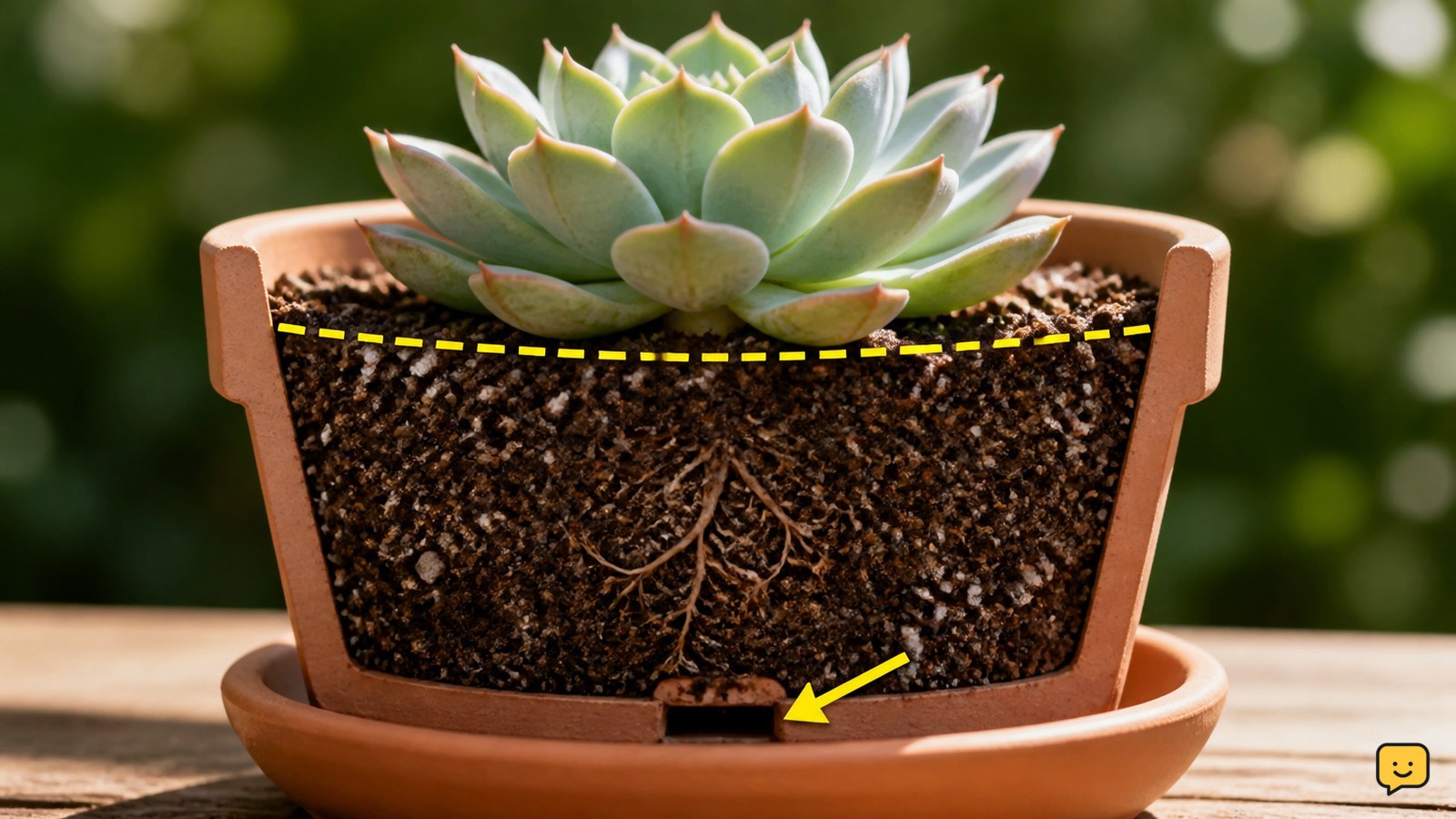
A suitable tomato pot is wide and stable, has an unobstructed drainage hole, and holds enough mix for the selected variety. Bonnie Plants identifies container size, tomato choice, watering and soil as key container-growing decisions; its guidance also recommends starting with a good location and a quality potting medium.
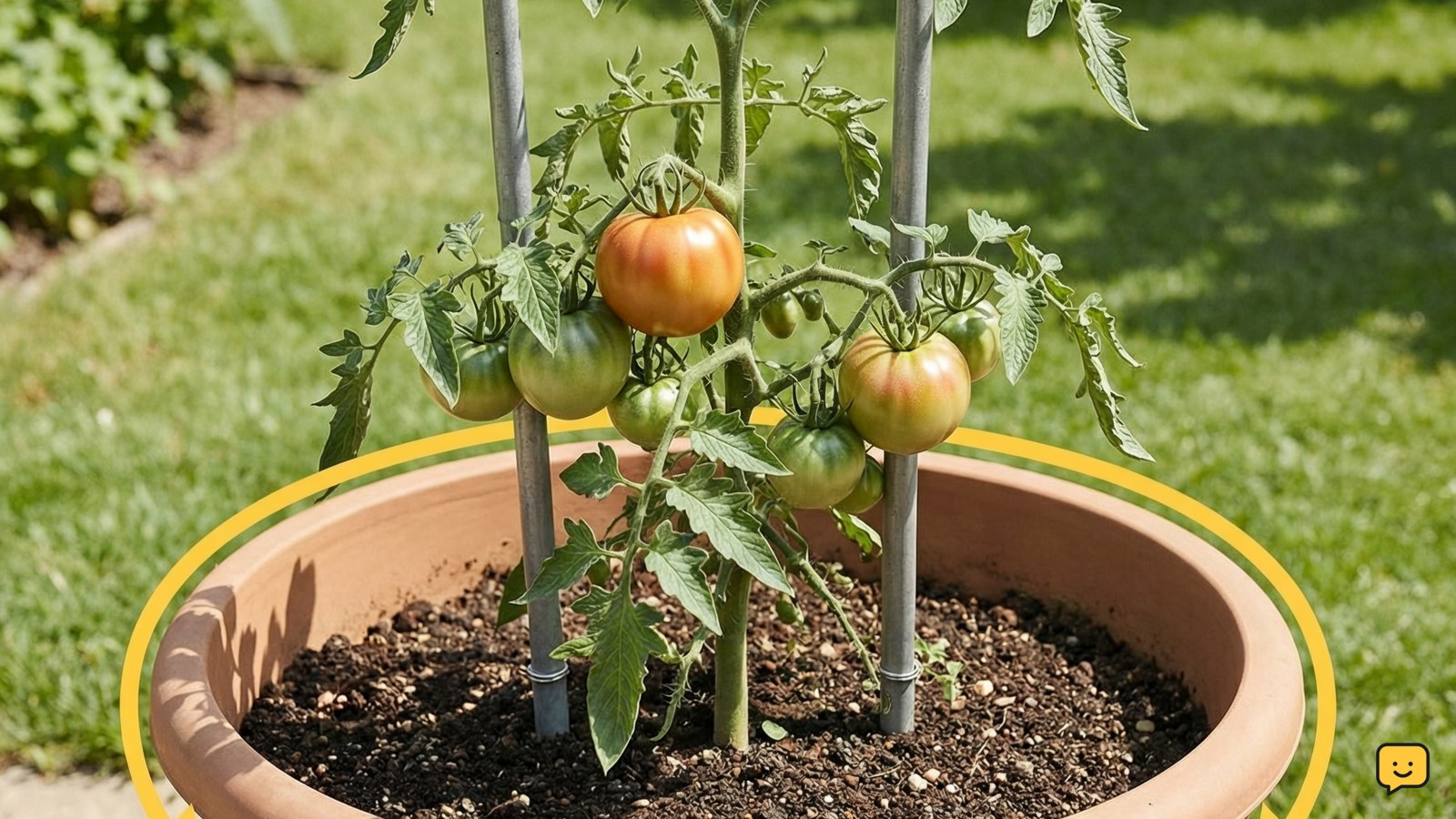
Use the largest manageable container that matches the label. A small pot dries quickly and may become unstable as the plant grows. A large tub can work if it drains freely and can support the plant’s eventual height.
Before filling the pot, place it where you intend to grow the tomato if it will be too heavy to move later. Set it on a firm, level surface, and confirm that runoff will not damage a wall, deck or neighboring plant.
If water drains slowly, do not compensate by watering less often. Clear the blocked hole or replace the container. Persistent saturation can damage roots.
Fill the pot with quality potting mix
Use a commercial potting mix intended for containers rather than ordinary garden soil alone. Potting mix is designed to balance moisture retention and drainage in a confined container. The supplied container-growing guidance from Bonnie Plants and The Maker Makes both treats the growing medium as a central success factor.
Fill the container nearly to the top, leaving enough space to water without washing mix over the rim. Firm the mix lightly around the plant, but do not compress it into a hard layer.
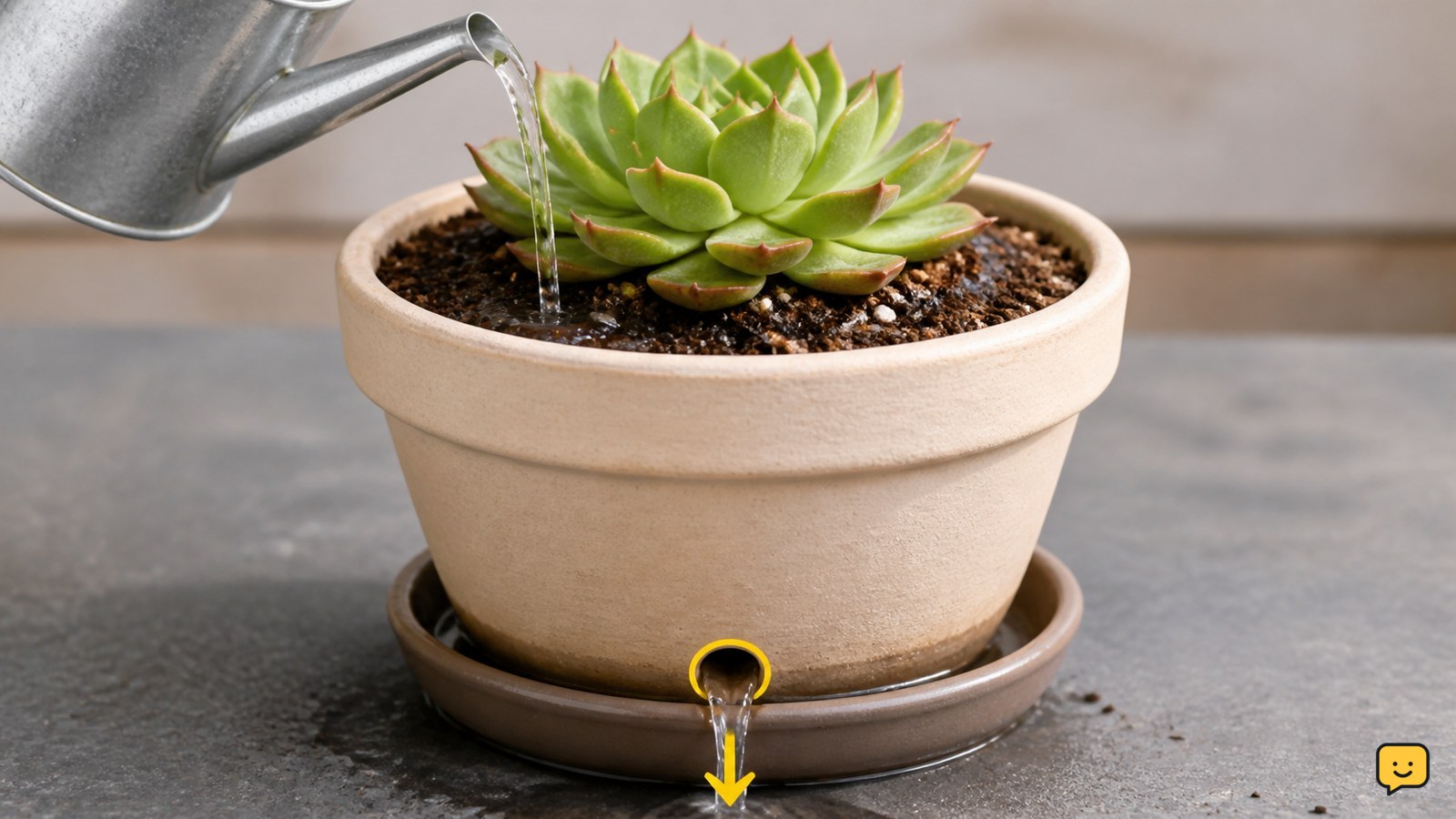
Plant a nursery tomato at the depth recommended on its label, then water slowly until excess water exits the drainage hole. If the mix settles substantially, add more potting mix around the plant rather than leaving roots exposed.
Place the pot in strong sunlight and add support
Tomatoes need a bright, sunny growing position to produce well. Choose the sunniest practical location, while allowing enough clearance for the plant and support. Rotate the pot only if its shape or surroundings cause uneven growth; avoid moving a tall, wet plant where it could tip.
Install a cage, stake or trellis when planting, not after branches have become heavy. The support should be firmly anchored in the pot or positioned so it cannot pull the container over. Match the support to the variety’s mature size.
When planting a seedling, handle the root ball gently and check that the stem is upright. Remove damaged leaves with clean tools. Do not place the pot against a hot reflective surface if the container overheats or the plant repeatedly wilts.
For the safest outdoor planting window, check this local frost and temperature guide: local frost and temperature guide
Water and feed by checking the plant and soil
Container tomatoes need consistent moisture, but the correct schedule changes with pot size, heat, wind, plant size and rainfall. Check the surface of the mix and the container’s weight before watering. If the surface is beginning to dry and the pot feels noticeably lighter, water slowly at the soil line until some water drains below.
Do not water automatically on a fixed calendar. If the mix is still wet, wait and check again; if the plant wilts while the mix is wet, investigate blocked drainage or damaged roots instead of adding more water. Watering only the leaves can leave the root zone dry and keep foliage damp.
Feed with a fertilizer labeled for tomatoes or vegetables, following its label rate and interval. More fertilizer is not a shortcut to more fruit. Stop and reassess if leaf tips burn, white crust builds on the mix, or growth becomes unusually soft and leafy.
Routine plant care also depends on drainage, light and seasonal adjustments. Use the broader checks in simple plant-care checks when conditions change.
Routine plant care also depends on drainage, light and seasonal adjustments; use these simple plant-care checks: simple plant-care checks
Verify growth and respond to common failures
A well-set container tomato shows firm, upright growth, evenly colored leaves and new growth that does not collapse between checks. Fruit production depends on variety and conditions, so judge the plant first by its steady growth and healthy root-zone moisture.
- Leaves wilt and the mix is dry: Water deeply at the soil line and check the pot again later. If it dries repeatedly, the container may be too small, the plant may need shade during extreme heat, or wind may be increasing water loss.
- Leaves wilt but the mix is wet: Stop watering and inspect the drainage hole. Move the pot only if necessary, and do not add fertilizer until the root-zone problem is corrected.
- The plant leans or branches break: Add or reposition support immediately. If the pot is unstable, move it before the plant grows taller, using help for a heavy container.
- Growth is weak or fruit is scarce: Recheck sunlight, variety, pot size, watering consistency and fertilizer use. Do not assume that adding more feed will correct inadequate light or root stress.
Inspect stems, leaves and the underside of foliage during watering. Remove clearly damaged material with clean tools, keep fallen leaves off the potting mix, and ask a local extension service or garden professional when symptoms spread quickly or the cause is unclear.
Frequently asked questions
Can you grow tomatoes in any pot?
You can grow tomatoes in many containers, but the pot must have effective drainage and enough volume for the variety’s mature size. A compact tomato is more forgiving in a smaller container, while an indeterminate plant needs substantially more room and stronger support. Avoid shallow, unstable or sealed containers.
How often should tomatoes in pots be watered?
Check the pot and soil rather than following a fixed schedule. Water when the surface begins to dry and the container feels lighter, applying water slowly until some drains from the bottom. Hot, windy weather may require more frequent checks. If the soil stays saturated, stop watering and correct drainage.
Do potted tomatoes need a cage or stake?
Most potted tomatoes benefit from support, especially as fruit and stems become heavy. Add a cage, stake or trellis at planting so roots are not disturbed later. Choose support based on the variety’s expected height and anchor it securely enough that the container will not tip.
Why are my potted tomato leaves wilting?
Dry mix, excessive heat, wind, a small container and poor drainage can all cause wilting. Check the soil first. Dry soil calls for thorough watering; wet soil calls for a drainage inspection rather than more water. Persistent wilting with wet soil may indicate root damage and needs local diagnosis.