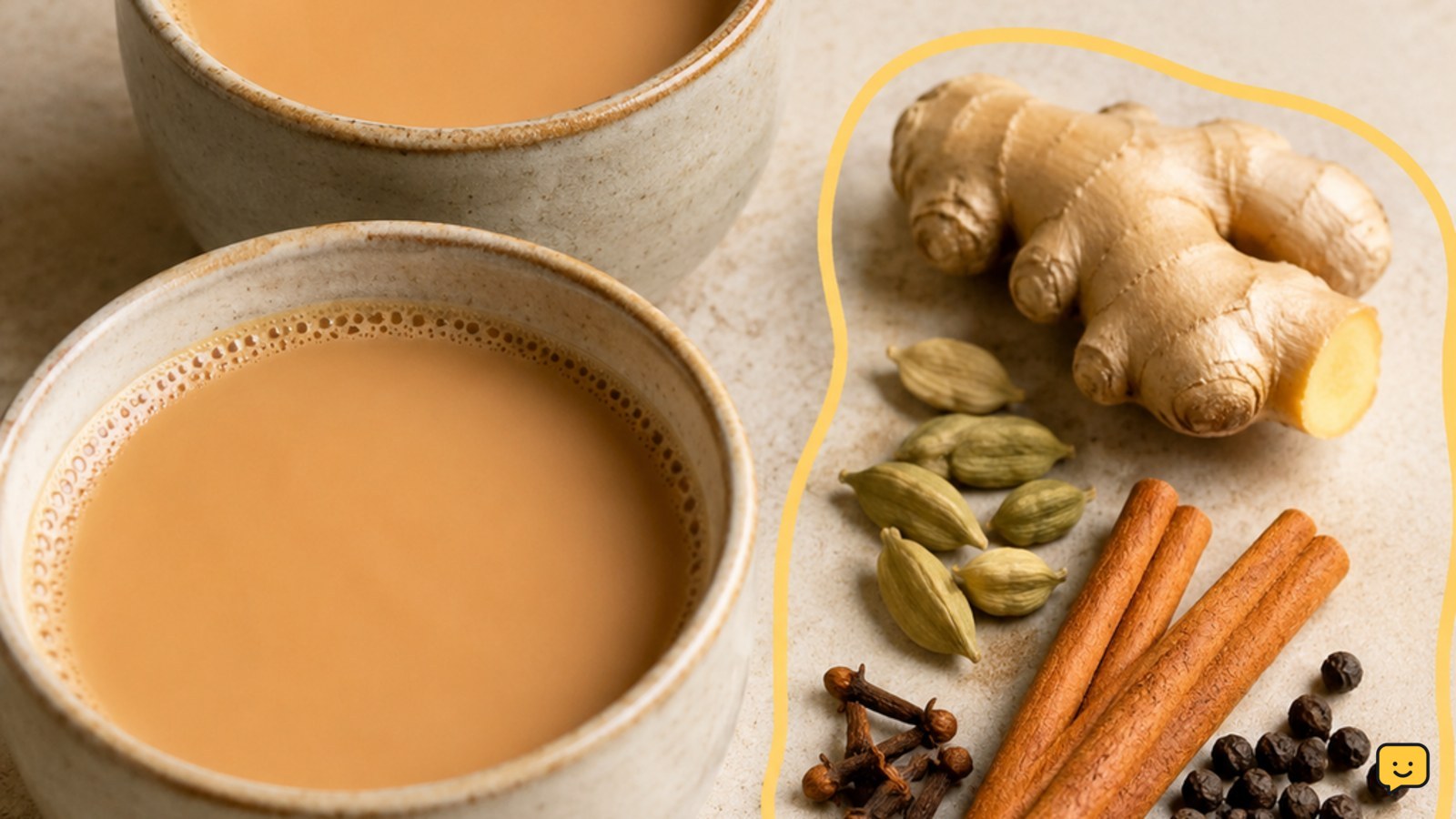
To make chai tea, simmer water with crushed cardamom, cinnamon, cloves, peppercorns and fresh ginger, then add black tea and milk. Strain the drink into cups and sweeten to taste. Keep the mixture below a hard boil after adding milk, and stop if it smells sour, looks curdled or has been left at room temperature for more than two hours.
For more help with this topic, use the Drinks guides.
Gather the chai ingredients and tools
Chai tea starts with black tea, milk, ginger, sugar and a group of whole spices: cardamom, cinnamon, cloves and peppercorns. Sencha Tea Bar’s scratch chai method also uses this five-spice profile and lists milk and sugar as core ingredients.
For two generous cups, measure 2 cups water and 1 cup milk. Use 2 black tea bags or 2 teaspoons loose black tea. Lightly crush the cardamom pods with the side of a knife, but leave the cinnamon stick, cloves and peppercorns whole. Slice the ginger thinly so it releases flavor quickly.
Put the saucepan, strainer and cups within reach before heating. A fine-mesh strainer catches both the tea leaves and the small spice pieces.
Simmer the spices before adding tea
Simmering the spices in water first extracts their flavor before the milk and tea are added. Add the water, cardamom, cinnamon, cloves, peppercorns and ginger to the saucepan.
- Bring the water and spices to a gentle simmer over medium heat.
- Reduce the heat if the water is rapidly boiling. You should see small, steady bubbles rather than vigorous churning.
- Simmer for about 5 minutes, or until the water smells clearly spiced.
If the aroma is faint after 5 minutes, continue for another 2 to 3 minutes. If the ginger or pepper becomes sharply dominant, move to the next step instead of concentrating the spices further.
Add black tea for a balanced base
Add the black tea after the spice water is fragrant, then steep it briefly so the chai remains bold without becoming harsh.
- Add the tea bags or loose black tea to the simmering spiced water.
- Steep for 3 to 5 minutes. Use the shorter time for a lighter drink and the longer time for a stronger tea base.
- Remove the tea bags or lift out the loose tea with a spoon before adding milk if the color and aroma are already strong.
For general guidance on water, tea type and steeping adjustments, see {link} before changing the black tea strength.
If the tea tastes weak, steep the next batch longer or use more tea. Do not compensate by boiling the tea aggressively, which can make the drink taste bitter.
For general guidance on water, tea type and steeping adjustments, see general tea steeping basics before changing the black tea strength.
Add milk and sweeten without boiling over
Adding milk over low heat turns the spiced tea into creamy chai while protecting the milk from scorching and overflow.
- Pour in the milk and stir in 1 tablespoon sugar.
- Keep the heat at low or medium-low and warm the chai until it is steaming and hot.
- Stir occasionally, especially across the bottom of the pan.
- Taste a cooled spoonful, then add more sugar if needed.
The chai is ready when the milk is hot, the color is a warm tan, and the tea and spice aromas are noticeable together. A hard boil is not required. If a skin forms on top, stir it back in or remove it before straining.
Strain, taste and serve the chai
Straining the hot chai removes whole spices, ginger fibers and loose tea leaves before the drink reaches the cup.
- Set a fine-mesh strainer over a heat-safe jug or directly over the cups.
- Pour the chai through the strainer slowly, leaving the spent spices behind.
- Cool one spoonful and check the flavor before serving.
A balanced cup should taste like black tea first, followed by warm spice, with enough milk to soften the edges. Add sugar for more sweetness, a splash of hot water if it is too strong, or a little warm milk if the spice or tea is too concentrated.
Serve immediately. The strained spices can be discarded rather than reused because most of their flavor has already moved into the liquid.
Fix weak, bitter or gritty chai
The fastest chai fix depends on the symptom: adjust dilution for strength, milk or sugar for harshness, and straining for grit.
| What you notice | Likely cause | Next action |
|---|---|---|
| Weak color or tea flavor | Too little black tea or too short a steep | Steep the tea longer next time, or add one more tea bag to the next batch. |
| Bitter or astringent taste | Tea steeped too long or the mixture boiled hard | Dilute with hot milk or water. For the next batch, remove the tea earlier and keep the heat gentle. |
| Too spicy | Spices simmered too long or were heavily crushed | Add warm milk and a small amount of sugar. Use fewer peppercorns or less ginger next time. |
| Gritty texture | Ground spices or fine tea particles passed through | Pour the chai through a finer strainer. Use whole spices for the next batch. |
| Scorched flavor | Milk caught on the bottom of the pan | Do not scrape the browned layer into the drink. Transfer only the unscorched liquid to a clean pan, if the flavor is still acceptable. |
Cool and store leftover chai safely
Leftover chai should be cooled promptly, covered and refrigerated rather than kept on the counter.
- Pour the remaining chai into a clean, shallow container or covered jar.
- Let steam escape briefly, then cover and refrigerate it within two hours.
- Reheat only the portion you plan to drink, warming it gently until hot without a hard boil.
Discard refrigerated chai if it develops a sour smell, curdled appearance, mold or an unusual taste. When any safety check is uncertain, do not serve it.
Frequently asked questions
Can you make chai tea with tea bags?
Yes. Use black tea bags in the spiced water for about 3 to 5 minutes, then remove them before adding milk if the tea is strong enough. Tea bags make straining easier, while loose black tea gives you more control over the amount. Avoid squeezing the bags aggressively if the drink already tastes bitter.
What milk works best for chai tea?
Dairy milk, oat milk, soy milk and other unsweetened plant-based milks can work. Choose a milk whose flavor you enjoy and adjust the sugar because some packaged milks are already sweetened. Heat the milk gently after adding it to the spiced tea, and remove the pan if it starts to boil over.
How do you make chai tea less spicy?
Make chai less spicy by adding more warm milk or a little hot water, then adjusting the sugar. For the next batch, reduce the ginger or peppercorns and shorten the spice simmer. Do not keep boiling the finished chai to soften the flavor; prolonged heating can intensify bitterness and increase the chance of scorching.
Can chai tea be made without sugar?
Yes. Leave out the sugar or sweeten each cup separately. Without sugar, the tea and spices will taste more prominent, so you may prefer a little extra milk or a shorter tea steep. Taste only after cooling a spoonful, since hot chai can make it difficult to judge the balance accurately.