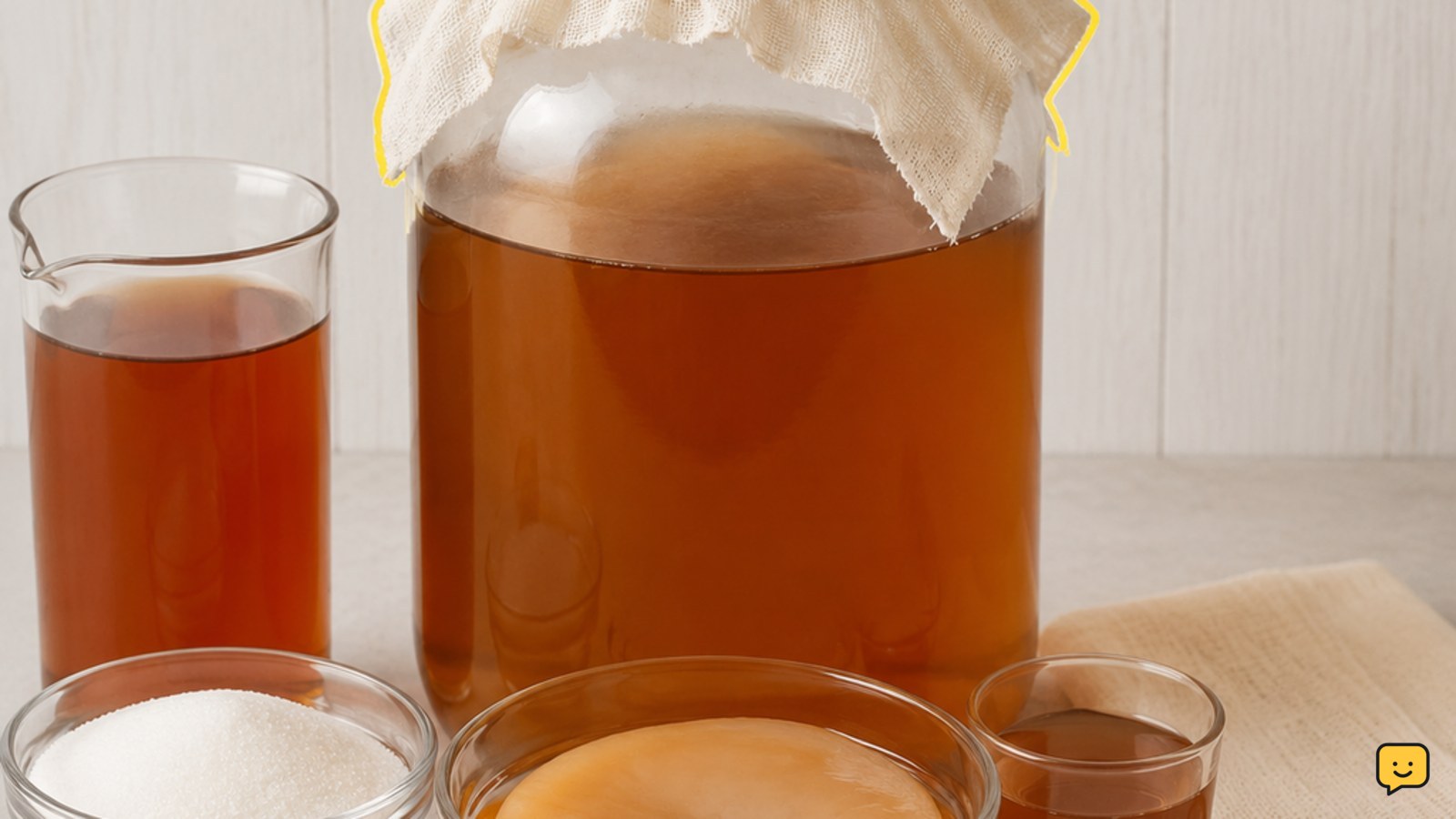
To brew kombucha, dissolve sugar in freshly brewed black tea, cool it completely, and add strong unflavored starter kombucha and a SCOBY. Cover the jar with tightly woven cloth and ferment it at room temperature for about 7 to 14 days. Taste from day 7, refrigerate when pleasantly tart, and discard the batch if fuzzy mold appears.
For more help with this topic, use the Drinks guides.
Measure the one-gallon ingredients
A dependable one-gallon kombucha batch starts with measured tea, sugar and enough acidic starter liquid.
- 13-14 cups fresh water
- 6-9 plain black or green tea bags, or 2-3 tablespoons loose-leaf tea
- 3/4-1 cup plain white cane sugar
- 2 cups strong, unflavored starter kombucha
- 1 healthy SCOBY
The You Brew Kombucha first-fermentation guide recommends these ranges and cautions against skimping on starter liquid. Starter kombucha acidifies the sweet tea and establishes the culture; vinegar is not a substitute.
Plain black tea is the simplest choice for a first batch. Green tea or a blend of true teas can also work. Avoid herbal-only tea and tea containing flavoring oils until you have a reliable culture and a recipe designed for those ingredients.
Brew and sweeten the tea concentrate
The tea concentrate supplies the dissolved sugar and brewed tea that the kombucha culture needs.
- Bring 3-4 cups of the water just to a boil.
- Remove the water from the heat and add the tea.
- Steep for 10-15 minutes, then remove the bags or strain out the leaves.
- Stir in the sugar while the tea is still hot. Continue stirring until no sugar crystals remain.
Do not reduce the sugar simply to make a lower-sugar drink. It is part of the fermentation formula, and the finished amount changes as the culture ferments the tea.
Cool the sweet tea completely
The sweet tea must reach room temperature before it touches the SCOBY or starter liquid.
- Pour the hot concentrate into the clean glass jar.
- Add the remaining cool water, leaving space for the starter liquid and a small amount of headroom.
- Check the tea with a clean thermometer or wait until the jar no longer feels warm.
If the tea is still warm, stop and let it cool naturally. Do not put the SCOBY into hot tea. Also avoid adding ice of uncertain cleanliness because it can dilute the measured recipe or introduce unwanted organisms.
Add the starter liquid and SCOBY
Room-temperature sweet tea is ready to inoculate when the sugar is dissolved and the jar has enough space for 2 cups of starter kombucha.
- Pour in the starter liquid and stir gently with a clean utensil.
- Place the SCOBY on the liquid with clean hands.
- Leave the SCOBY where it settles; it may float, sink or rest at an angle.
A SCOBY sinking is not evidence of failure. A fresh pale layer may gradually form across the surface during fermentation, independently of where the original culture sits.
If you have less than 2 cups of starter, make a proportionally smaller batch instead of filling the gallon jar with extra sweet tea. The You Brew Kombucha guide also identifies plain, raw store-bought kombucha as a possible top-up when suitable starter is unavailable.
Cover and place the fermentation jar
Kombucha needs airflow during its first fermentation while remaining protected from insects and debris.
- Cover the jar opening with tightly woven clean cloth or a paper coffee filter.
- Secure the cover firmly with a rubber band.
- Place the jar out of direct sunlight where it will not be moved frequently.
- Keep it away from fruit bowls, trash bins, cooking steam and strong household odors.
The cited first-fermentation method gives a working range of 65-85 degrees F and identifies the mid-70s as preferable. A cooler room generally means slower fermentation. Do not seal the jar with a solid lid during this stage.
Check progress without disturbing the surface
Healthy kombucha usually becomes less sweet, more tart and more aromatic as fermentation progresses.
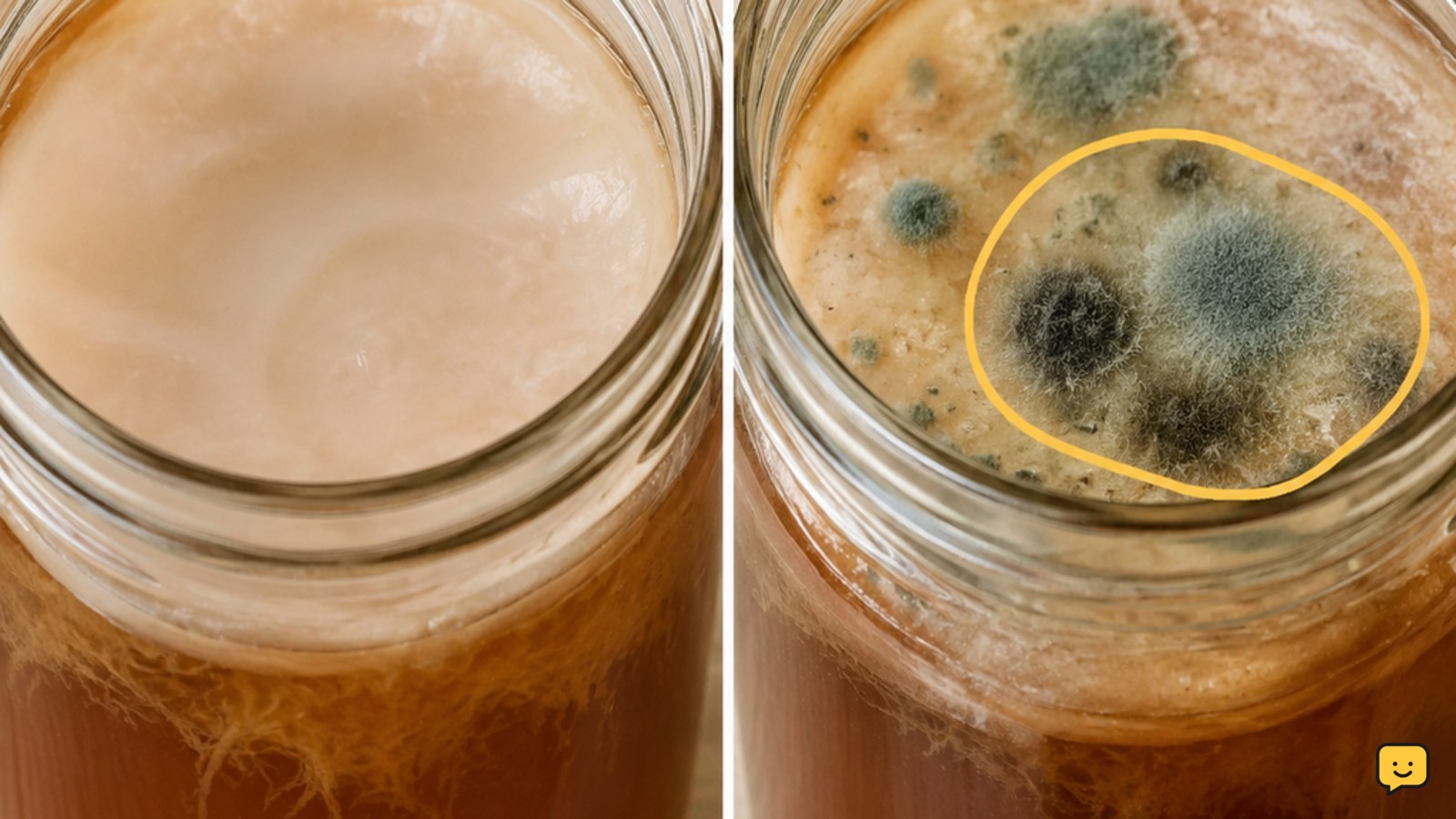
Small bubbles, brown yeast strands and a smooth cream-colored layer at the surface can occur in an active batch. These states differ from mold, which typically looks dry and fuzzy and forms distinct raised patches on top of the liquid.
Leave the jar undisturbed for the first several days. Beginning around day 7, use a clean straw or spoon to remove a small sample from below the surface. The kombucha is ready when it tastes pleasantly sweet-tart rather than like plain sweet tea. If it is still too sweet and has no contamination signs, replace the cover and check again in one or two days.
Recognize contamination and discard safely
A kombucha batch with fuzzy surface growth or a rotten odor should be discarded completely.
Do not scrape mold away, save liquid from underneath it or retain the SCOBY for another batch. Do not taste a questionable brew to identify contamination. Empty it, dispose of the SCOBY, and thoroughly clean the jar before starting with a fresh culture and starter liquid.
A sharp, tart, yeasty or vinegar-like aroma by itself is not the same as a rotten smell. Brown strings and sediment are also commonly associated with yeast. When the appearance remains uncertain, the safest action is to discard the batch rather than consume it.
Harvest the kombucha and reserve starter
Finished kombucha can be refrigerated as soon as its sweet-tart balance suits you.
- With clean hands, move the SCOBY to a clean bowl or jar.
- Reserve 2 cups of the strongest plain kombucha for the next batch and keep it with the SCOBY.
- Pour the remaining kombucha into clean bottles or a covered pitcher.
- Refrigerate promptly to slow fermentation.
For still kombucha, refrigeration completes the process. Flavor individual servings after fermentation if you want an easy option without building pressure in sealed bottles.
Add carbonation only with suitable bottles
Carbonated kombucha requires pressure-rated bottles and closer monitoring than the open first fermentation.
Transfer finished kombucha to bottles designed for carbonated drinks, leaving some headroom, and add only a modest amount of juice or other fermentable flavoring. Keep the bottles at room temperature briefly, then refrigerate before opening. Carbonation speed varies with temperature, residual sugar and added ingredients.
Do not use thin decorative glass, chipped bottles or containers not designed to hold pressure. If a bottle becomes unusually firm, leaks, bulges at the cap or releases liquid around the closure, refrigerate it and do not shake it. Open a chilled bottle slowly over a sink, keeping it pointed away from faces and breakable objects.
Frequently asked questions
Can I brew kombucha without a SCOBY?
A visible SCOBY is not the only part of the culture, but beginners should use a supplied SCOBY and the full amount of strong starter kombucha. Starter liquid contains the active culture and provides initial acidity. Without dependable starter, do not proceed with a full batch; obtain a fresh culture or reduce the recipe to match the starter available.
Why is my kombucha still sweet after seven days?
The fermentation may simply be progressing slowly. Keep the covered jar within the recommended 65-85 degrees F range, avoid moving it, and taste again after one or two days. If there is no tart aroma, no flavor change, or the batch develops fuzzy growth or a spoiled odor, stop and discard it.
Does a sunken SCOBY mean the kombucha failed?
No. A SCOBY may float, sink or sit sideways without preventing fermentation. Check the liquid instead: it should gradually become less sweet and more tart, and a new smooth layer may develop at the surface. Dry fuzzy patches or a rotten odor are reasons to discard the batch.
Can I use honey or artificial sweetener in kombucha?
Use plain white cane sugar for this beginner method. Honey, sugar substitutes and other sweeteners behave differently and are not direct one-for-one replacements in the supplied recipe. Changing the sugar source can make fermentation less predictable, so use a separately established formula if you want an alternative sweetener.
How should finished kombucha be stored?
Store finished kombucha covered in the refrigerator. Cold storage slows continued fermentation but does not necessarily stop it completely. Keep carbonated bottles upright, open them only when chilled, and discard any drink that develops fuzzy growth, a rotten odor, a damaged container or an unsafe buildup of pressure.