To freshen a car interior, remove trash and odor sources first, vacuum thoroughly, clean hard surfaces and upholstery with material-safe products, inspect the cabin air filter, and dry the cabin completely. Only then use a mild fragrance. If the smell returns quickly, smells musty after climate use, or suggests fuel, exhaust, mold, or burning, stop masking it and arrange an inspection.
For more help with this topic, use the Maintenance Repair guides.
Remove the odor source before cleaning
A car interior becomes fresher only when the material causing the odor is removed or cleaned; fragrance alone usually covers the smell temporarily.
- Empty door pockets, cup holders, the glove box, trunk, and under-seat areas.
- Look for spilled drinks, damp clothing, food, pet bedding, wet floor mats, and mold-like spotting.
- Remove any contaminated item from the vehicle. Wash reusable mats or liners separately according to their care instructions.
Smell the front footwells, rear footwells, cargo area, and seat belt webbing separately. A strong localized smell is more useful than treating the whole cabin at once.
Vacuum the surfaces that hold stale odors
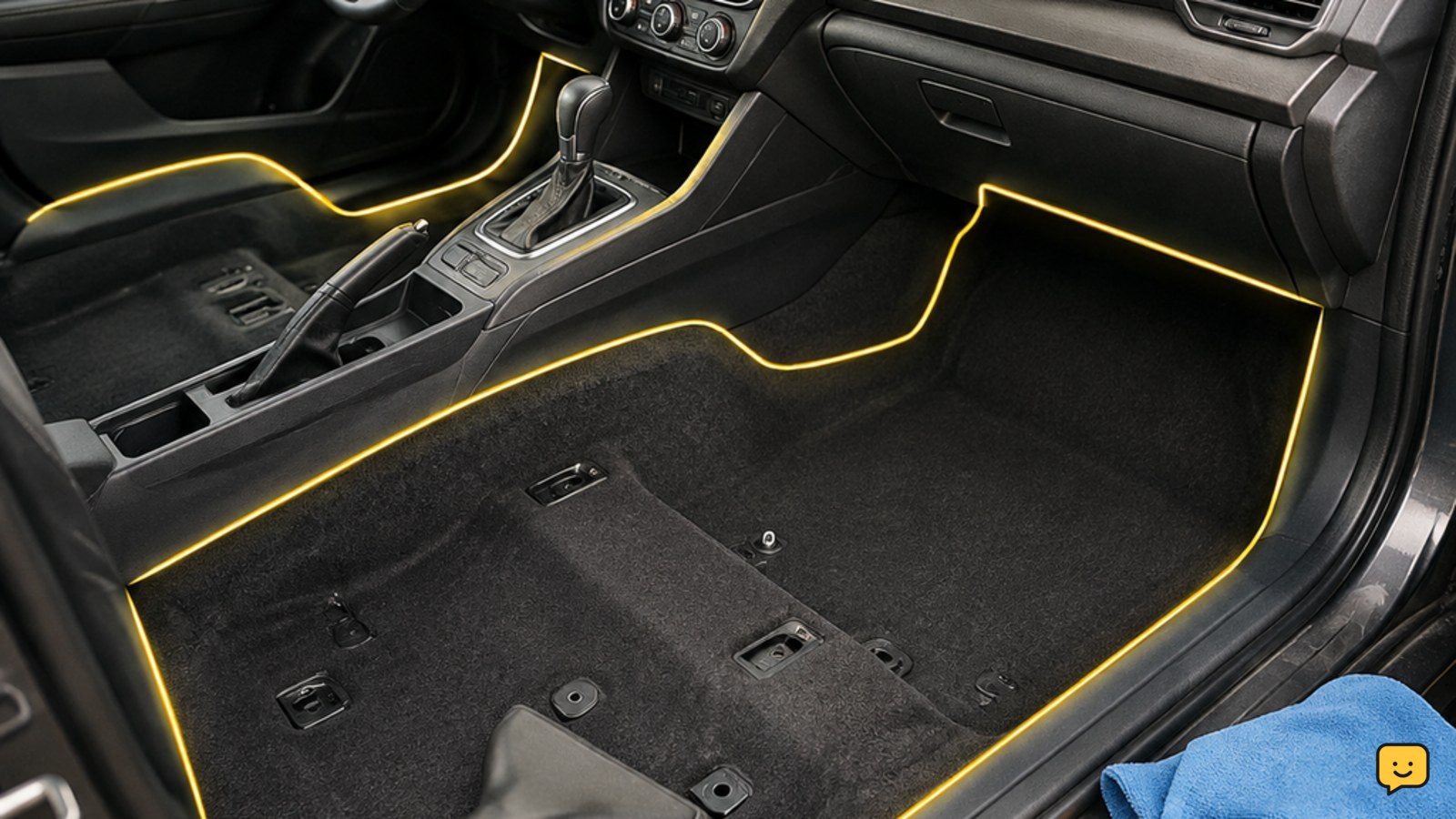
Vacuuming the passenger car interior removes crumbs, hair, dust, and loose particles that can retain odor in fabric and carpet.
- Vacuum carpets, seat seams, under the seats, the cargo floor, floor-mat undersides, and the gap around the spare-wheel well.
- Use a soft brush attachment around vents, stitching, switches, and delicate trim.
- Move the seats through their normal travel range only when the ignition is off and no objects can enter the seat tracks.
Check the result by running a clean hand over the carpet and seams. If grit or hair still lifts, repeat vacuuming before applying liquid cleaner.
Clean hard trim without soaking electronics
Hard trim, steering-wheel surfaces, cup holders, and touch points need controlled damp cleaning rather than heavy spraying.
- Spray a small amount of material-safe cleaner onto a microfiber cloth, never directly onto screens, buttons, vents, speaker grilles, or switch gaps.
- Wipe the dashboard, center console, door pulls, armrests, cup holders, and other high-contact areas.
- Use a separate lightly damp cloth to remove cleaner residue, then dry with a clean microfiber cloth.
Consumer Reports recommends deep cleaning as part of odor removal and identifies smoke, mold, and other absorbed contaminants as causes that may require more than an air freshener. If a surface remains oily or tacky, stop adding product and wipe it with a clean, slightly damp cloth.
Treat fabric and carpets, then dry them fully
Fabric seats, carpets, and floor mats should be cleaned with the least moisture that removes the stain or odor, followed by complete drying.
- Spot-test the upholstery cleaner on a hidden section.
- Apply the product to a cloth or the affected area as its label directs. Work from the outside of a spot toward the center to limit spreading.
- Blot rather than saturate the seat cushion or carpet backing.
- Open the doors or windows in a safe, dry location and use airflow until the fabric feels dry and no damp smell remains.
Do not use this method on leather, suede, heated-seat controls, or specialized trim unless the owner’s manual and product label allow it. For leather, use a cleaner made for that finish and keep liquid away from perforations and electrical controls.
Check the cabin air filter and climate system
A cabin air filter can contribute to stale or musty air, so inspect or replace it only where the vehicle manual permits.
Find the filter location and replacement interval in the owner’s manual; many vehicles place it behind the glove box or near the HVAC housing, but fitment and access vary by model. Check the removed filter for heavy dust, leaves, dampness, or mold-like contamination.
After cleaning the cabin, run the climate system briefly and compare the smell from the vents with the smell of the parked interior. If the odor appears mainly when the fan or air conditioning starts, or returns quickly after a filter change, stop masking it and have the HVAC system and possible water entry checked.
Add a light finishing treatment only after drying
A fragrance or odor absorber is a finishing step for a clean, dry car interior, not a substitute for removing the source.
Choose a low-residue product and follow its label. An open box or pouch of baking soda can absorb some everyday odors, but keep loose powder away from vents, switches, screens, and seat tracks. Avoid placing products where they can obstruct the driver’s view, interfere with pedals, or become a projectile.
Turtle Wax similarly emphasizes removing the cause and cleaning affected interior areas so freshness lasts longer. Use the smallest amount that produces a neutral smell; a strong fragrance that causes irritation is a failed result, not a better one.
Verify the interior is fresh and safe to use
A freshened car interior should smell neutral or mildly clean, feel dry, and show no cleaner film or new irritation.
- Inspect carpets, seat seams, mats, and the cargo area for remaining dampness or visible residue.
- Run the fan and air conditioning briefly with the vehicle stationary, then check whether the odor returns from the vents.
- Take a short drive with normal ventilation and confirm that the smell does not worsen when the climate controls operate.
If the odor is gone and the materials are dry, reinstall the mats and other removed items. If it returns within a day or two, repeat source inspection rather than adding more fragrance. A recurring musty, fuel, exhaust, burning, or electrical smell needs diagnosis.
Frequently asked questions
How do I freshen a car interior without air freshener?
Remove rubbish and damp items, vacuum the cabin, clean hard surfaces, wash or replace floor mats, and dry fabric completely. A small baking-soda odor absorber may help with mild residual smells, but it should not be loose near vents, controls, pedals, or the driver’s view. Persistent or localized odors need source inspection.
Why does my car smell musty when the air conditioning is on?
A musty smell that appears when the fan or air conditioning starts can come from the cabin air filter, moisture in the HVAC area, a blocked drain, or water entering the cabin. Check the filter if the manual allows it. If the smell remains after replacement or returns quickly, stop masking it and arrange an HVAC inspection.
How can I remove smoke smell from a car interior?
Smoke odor can remain in upholstery, carpet, headliner, trim, and the ventilation system. Remove all loose sources, vacuum thoroughly, clean each material with an approved product, and ventilate until dry. Consumer Reports advises deep cleaning for absorbed odors. Strong or persistent smoke odor may require professional detailing and HVAC cleaning.
Can I spray cleaner directly on the dashboard or vents?
No. Apply a small amount to a microfiber cloth instead, then wipe the surface. Direct spraying can send liquid into screens, switches, vent openings, speaker grilles, and electrical components. Use the vehicle manual and cleaner label for material restrictions, and stop if the surface becomes discolored, sticky, or damaged.