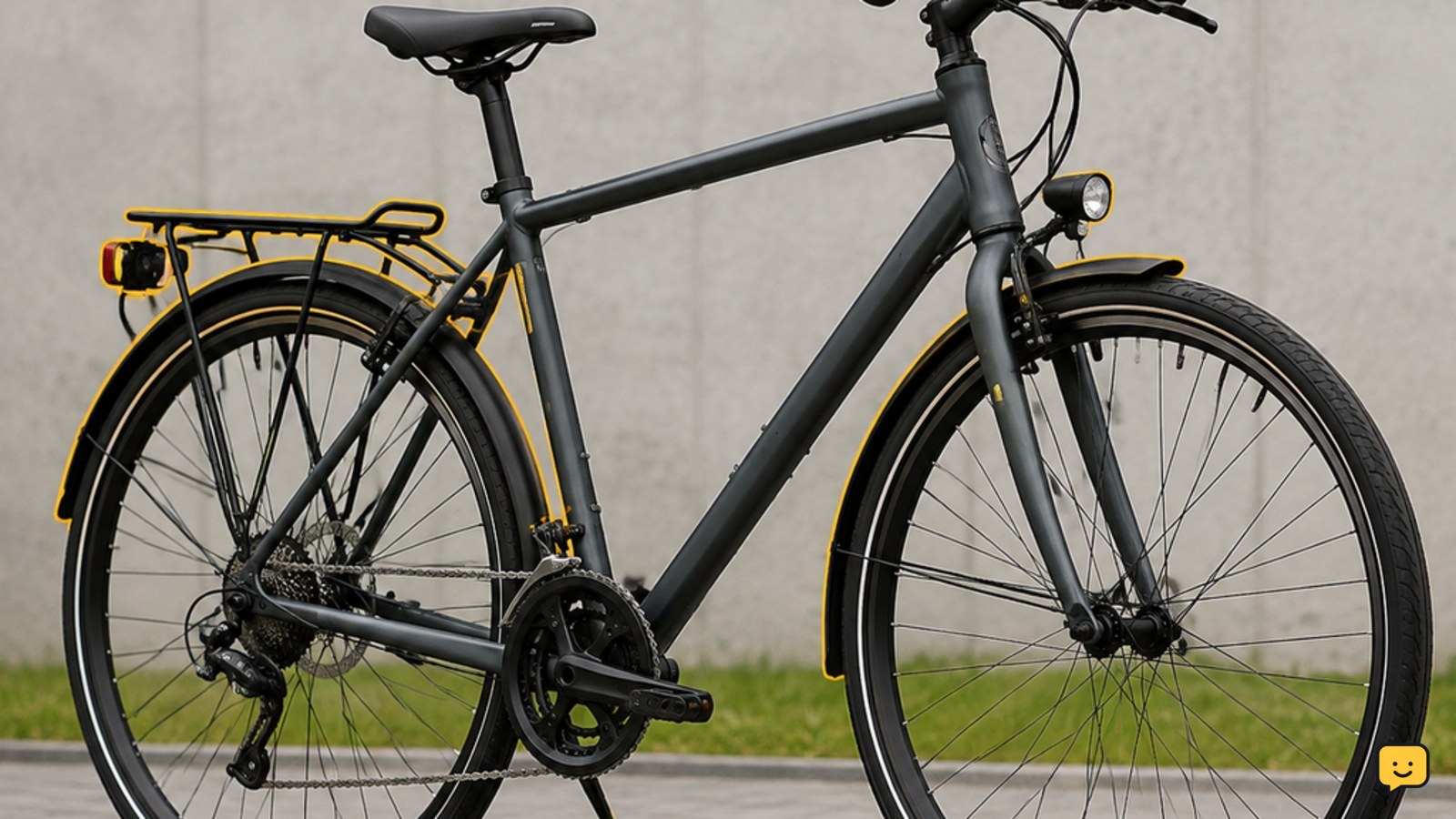
A commuter bike is a bicycle designed for regular trips such as riding to work, school, shops or public transport. It typically prioritizes a comfortable riding position, dependable components, practical gearing and compatibility with racks, fenders or lights. It is a use category rather than one strict frame design, so city bikes, hybrids and some flat-bar road bikes can all serve as commuters.
For more help with this topic, use the Camping Outdoors guides.
Check what makes a bike suitable for commuting
A commuter bike suits regular transportation when it gives you controlled handling, a sustainable riding position and enough durability for repeated everyday use.
There is no single specification that makes a bicycle a commuter bike. Schwinn describes commuter models as transportation-focused bicycles that may use one speed and often include racks or carriers. Other commuter designs have multiple gears, drop bars, suspension forks or step-through frames.
Look for features that match your route rather than a label on the frame:
- Comfort: an upright or moderately forward position that lets you see traffic and ride in ordinary clothing.
- Control: tires and handlebars suited to your roads, paths and weather.
- Practicality: mounts or included equipment for a rear rack, fenders, bottle cages and lights.
- Reliability: serviceable brakes, wheels, drivetrain and contact points that can tolerate frequent use.
The correct result is a bike you can control easily, carry what you need on and maintain at a reasonable cost.
Match the bike to distance, hills and cargo
A commuter bike should be chosen from the route first: distance, gradient, surface and cargo determine which design is appropriate.
| Typical use | Useful starting point | Check before choosing |
|---|---|---|
| Short, flat trips | Single-speed or internally geared city bike | Confirm the gearing is comfortable from a standing start and on the steepest return route. |
| Rolling or hilly roads | Multi-speed city bike or hybrid | Test the lowest gear on a hill; you should be able to pedal without grinding or losing control. |
| Longer paved commutes | Hybrid or flat-bar road bike | Check that the riding position remains comfortable and that fenders or a light rack can be fitted. |
| Work gear, groceries or equipment | Bike with rack mounts, panniers or a stable basket | Check the permitted load and whether the cargo stays clear of your heels and wheel. |
These are selection examples, not fixed distance rules. Commute PA describes a commuter bike as a daily-use bicycle where comfort and durability matter, while the Brooklyn Bicycle Co. guide emphasizes terrain, fit, gearing and carrying needs as the practical decision points.
Choose between commuter bike designs
A commuter bike can use several common designs, and each is better suited to a different combination of speed, comfort, carrying and access.
- City or utility bike: usually favors an upright position, stable handling and integrated or compatible practical accessories. Choose it when relaxed control and errands matter more than low weight.
- Hybrid bike: combines a relatively efficient position with flat handlebars and versatile tires. It can suit longer paved routes, mixed paths and riders who want one bike for commuting and recreation.
- Flat-bar road or fitness bike: can feel quicker on paved commutes while remaining easier to control than a drop-bar road bike for some riders. Check accessory mounts and tire clearance.
- Step-through bike: makes mounting and dismounting easier, especially when wearing work clothes or carrying cargo. A diamond-frame bike may feel lighter or stiffer, but fit and control decide the outcome.
- Single-speed bike: has a simpler drivetrain and can work well on flat routes. It is a poor match when your commute includes steep hills or a heavy load unless you can comfortably produce the needed effort.
A mountain bike is not automatically a better commuter. Its wide, knobby tires and suspension may add rolling resistance and maintenance on smooth roads; select it when rough surfaces genuinely require those features.
Verify fit and controls before the first commute
A commuter bike is ready for a trial route only when its fit, controls and carrying setup remain predictable while you ride.
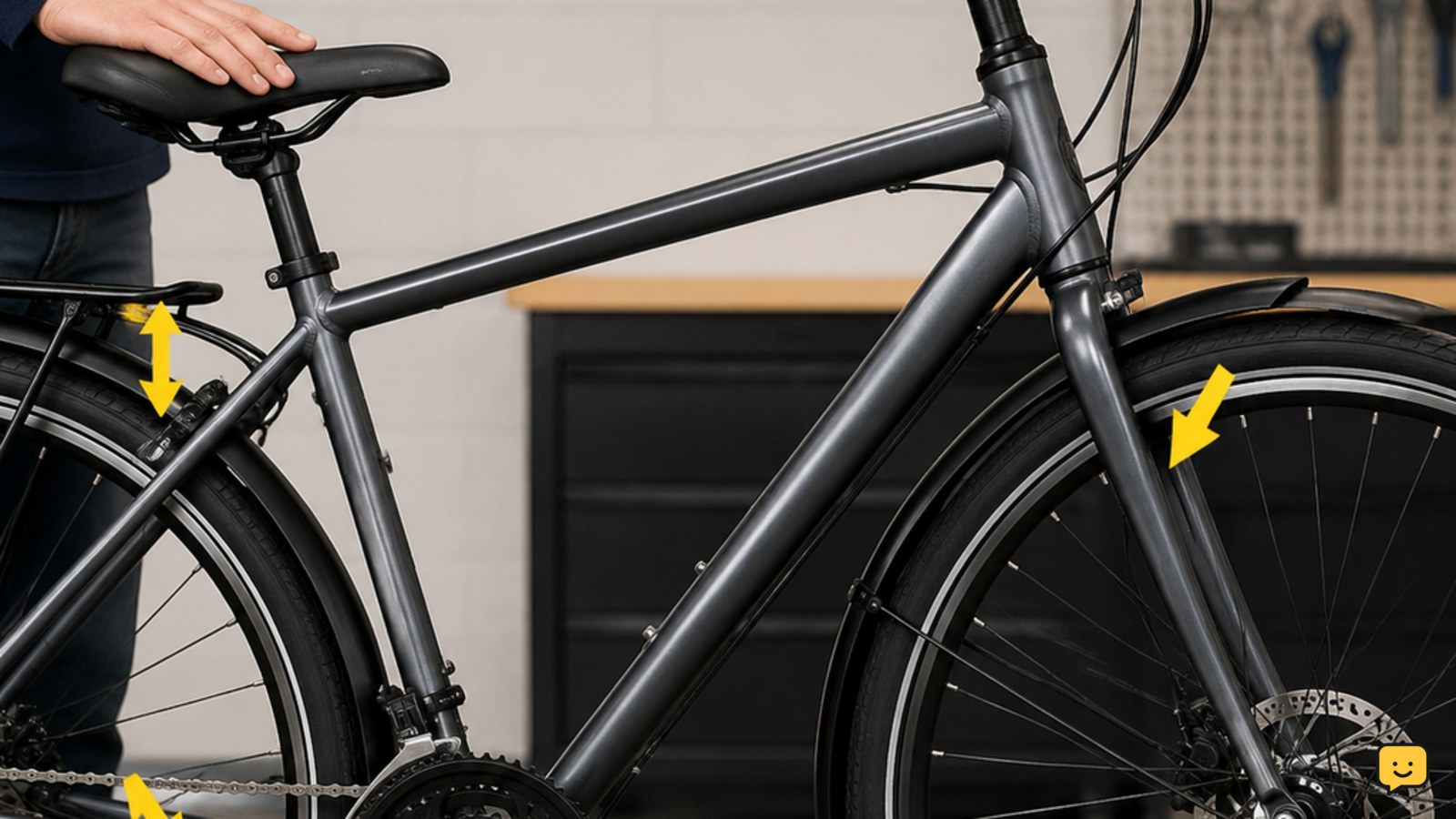
- Set the saddle so your leg is nearly extended at the bottom of the pedal stroke without your hips rocking.
- Check that you can reach both brake levers without stretching and that the handlebar position lets you look ahead comfortably.
- Squeeze each brake while the bike is stationary. The levers should feel firm, and neither wheel should move when its brake is applied.
- Spin both wheels and watch for rubbing, a side-to-side wobble or a loose axle. Stop if you see any of these conditions.
- Shift through the available gears in a quiet, safe area. The chain should move cleanly without skipping, and the pedals should not bind.
- Load your bag, panniers or basket as you intend to use them. Ride slowly and confirm that the load does not swing, touch the wheel or interfere with braking.
Take a short test ride before committing to the full journey. Success means you can start, stop, turn, shift and look over your shoulder without the bike or cargo feeling unstable. If the bike feels too stretched, cramped or difficult to control, stop and adjust the fit or ask a qualified bicycle technician to check the size.
Add equipment for weather, visibility and carrying
A commuter bike becomes more useful when its accessories address the actual conditions on your route.
- Rear rack and panniers: keep heavier items low and close to the bike instead of placing them loosely on the handlebar.
- Fenders: reduce spray from wet roads when the frame and fork provide enough clearance.
- Lights and reflectors: help you be seen in low light; use equipment appropriate to your local road rules and keep lenses unobstructed.
- Lock: choose a secure locking method and use a fixed parking point in a well-used location.
- Bell or audible warning: can help communicate with people on shared paths where permitted.
Install each accessory so it cannot touch a tire, brake rotor, chain or moving pedal. After fitting a rack or fender, turn the wheel by hand and operate the brakes before riding. If anything rubs, shifts or blocks a control, remove the accessory and correct the installation before use.
Maintain the parts that affect daily reliability
A commuter bike needs repeated basic checks because dirt, water, low tire pressure and loose hardware can change how it brakes and handles.
Before each ride, inspect tire condition, wheel security, brake operation, handlebar and saddle tightness, and the visibility of lights or reflectors. After wet or dirty rides, dry the bike and pay particular attention to the chain and drivetrain. For the cleaning sequence, use ShowU’s bike chain cleaning guide.
Follow the component maker’s lubrication and adjustment instructions. Do not spray lubricant onto brake pads, brake rotors or rim braking surfaces. If braking remains weak after cleaning, a wheel stays loose, gears skip repeatedly or a part needs torque beyond your tools, stop riding and use a bicycle shop.
Know when another bike type is a better fit
A commuter bike is the wrong choice when its design cannot safely or comfortably handle the route you actually ride.
- Choose a touring or cargo-oriented bicycle when you regularly carry substantial loads and need a frame, rack and wheel system designed around that use.
- Consider an electric bicycle when hills, distance or arrival effort are the main barriers, while checking local rules, charging needs and the bike’s total weight.
- Consider a folding bike when storage or combining cycling with public transport is more important than maximum ride efficiency.
- Choose a mountain bike when the commute genuinely includes rough trails, loose surfaces or obstacles that require its geometry and tires.
- Choose a road bike when speed on paved roads is the priority and you can accept a less upright position and fewer utility features.
No category removes the need for correct sizing, working brakes, suitable tires and a secure load. Stop using any bicycle that develops a crack, damaged control, tire bulge or brake failure until it has been inspected.
Frequently asked questions
Can any bicycle be used as a commuter bike?
Yes, many bicycles can serve as commuter bikes if they fit you, handle the route and accept the cargo or weather equipment you need. A road, hybrid, city, folding or mountain bike may work in the right conditions. The limits are practical: unsuitable gearing, poor fit, fragile components, unsafe brakes or inadequate tire clearance make a bike a poor choice for that commute.
What is the difference between a commuter bike and a hybrid bike?
A hybrid bike is a particular bicycle design, while commuter bike describes a bicycle’s intended everyday transportation use. Hybrids often make useful commuters because they combine flat handlebars, versatile tires and an efficient position. A city bike, folding bike or flat-bar road bike can also be a commuter when its fit and equipment match the rider’s route.
Do commuter bikes need gears?
No, commuter bikes do not always need multiple gears. A single-speed can suit a short, flat route with light cargo and a rider who is comfortable with its effort. Gears become useful when the route includes hills, longer distances, frequent starts or heavier loads. Test the lowest gear on the hardest climb before choosing a simple drivetrain.
Are fenders and racks included on every commuter bike?
No, fenders and racks are not included on every commuter bike. Some city or utility models include them, while others only provide mounting points. Check the product specifications and frame clearance before buying accessories. Never fit a rack beyond its stated load limit, and confirm that fenders cannot touch the tires, brakes or wheels.