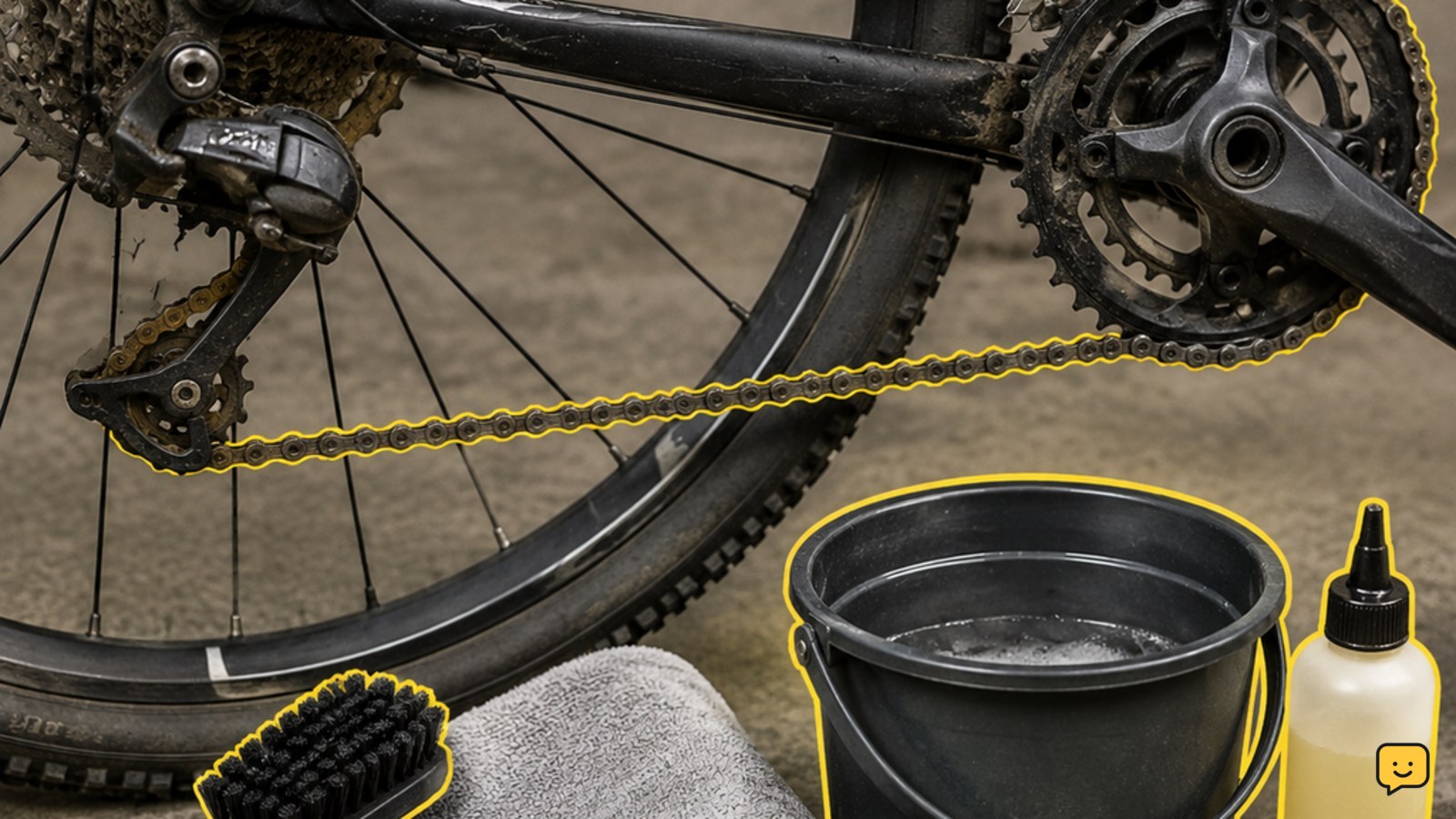
To clean a bike chain, shift onto an easy-to-reach gear, wipe off loose grime, scrub the links with a firm brush and bike-safe cleaner, then wipe and dry the chain completely. Apply lubricant to the chain links, rotate the cranks, and wipe away all excess. Stop if links remain stiff, damaged or heavily rusted.
For more help with this topic, use the Sports Recreation guides.
1. Position the bicycle and inspect the chain
Position the bicycle where you can turn the cranks backward and inspect the entire chain. Shift to a gear that leaves the chain easy to reach without forcing the pedals, then look for thick black buildup, gritty residue, orange rust, stiff links or damaged plates.
Rotate the cranks slowly backward and watch each link pass through the rear derailleur and around the chainrings. A chain that moves smoothly but looks dirty can usually be cleaned in place. A link that stays folded, catches or makes a sharp click needs attention before you continue.
Verification: You should be able to identify a complete loop of chain and reach both the outer plates and the gaps between links. If the chain is damaged or seized, stop rather than trying to scrub the fault away.
2. Remove loose grime with a dry rag
Remove loose dirt first by gripping the lower run of the chain with a dry rag and turning the cranks backward slowly. Keep your fingers on the rag, not near the chainrings, cassette or derailleur pulleys.
Repeat with a clean section of rag until the heavy surface film is gone. This first pass prevents loose grit from becoming a muddy paste when cleaner is added. Chainwheel Drive recommends a rag dampened with biodegradable solvent as a simple cleaning approach; a bicycle-specific degreaser is another suitable option.
Verification: The rag should stop picking up large clumps of oily dirt. If the chain still feels gritty when you rotate it, continue to brushing rather than applying lubricant over the residue.
3. Scrub between the links with cleaner
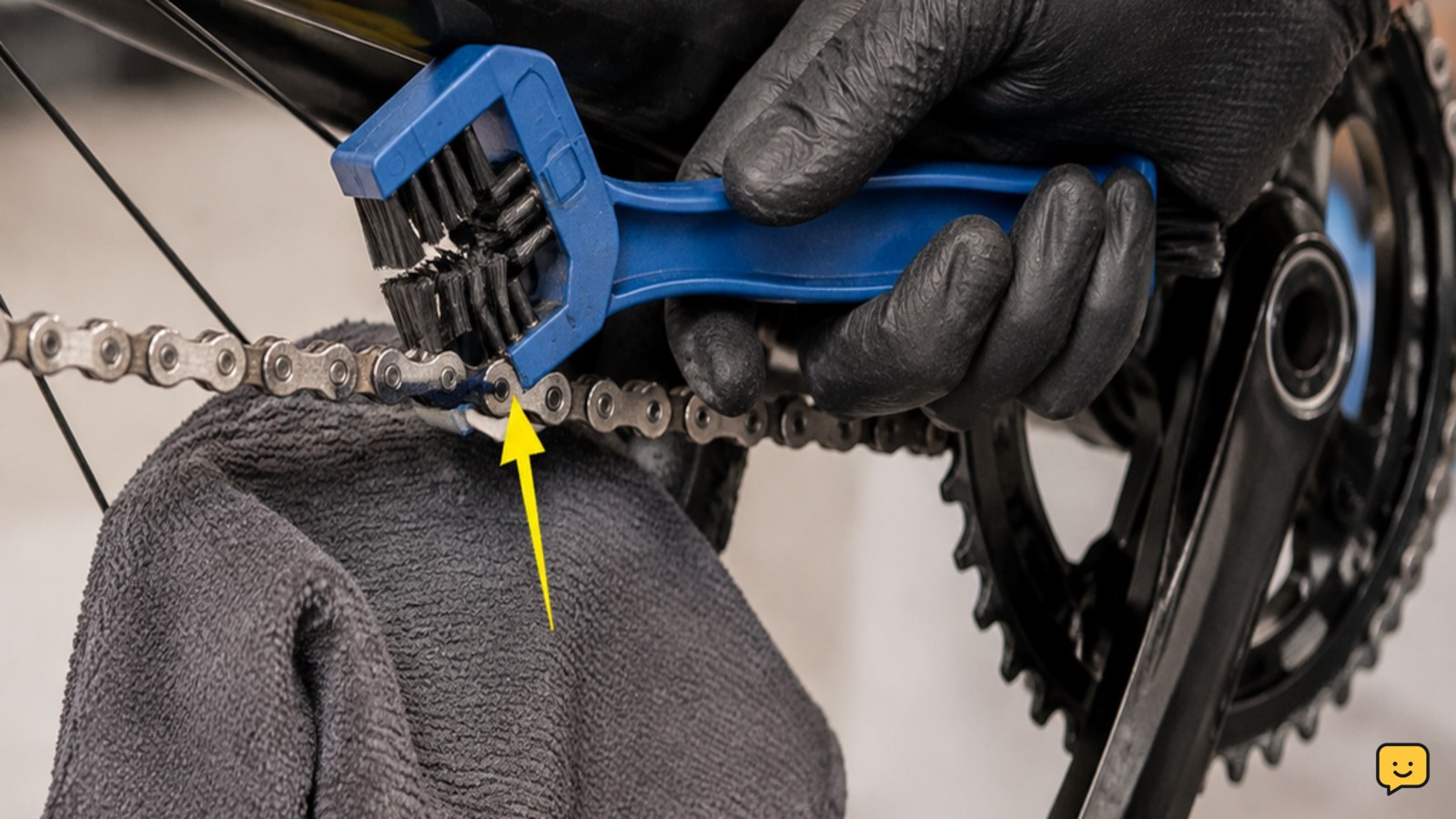
Apply a small amount of bicycle degreaser or mild detergent solution to a firm brush, then scrub the chain while turning the cranks backward. Work across the top, sides and underside of the chain so the brush reaches the rollers and the spaces between the plates.
REI recommends brushing the links with a firm brush, including an old toothbrush. For a less aggressive wash, Canyon advises using warm water with a cleaning agent such as liquid kitchen detergent, degreaser or bicycle cleaner. Use the product label if its dilution or rinsing instructions differ.
For heavy buildup, let the cleaner sit only for the period stated on its label, then brush again. Do not keep adding solvent indefinitely. Move to a fresh rag or rinse the brush when it becomes coated with black paste.
Verification: The chain should look metallic rather than covered in wet black sludge, and each link should articulate as it passes around the drivetrain. If dirt remains inside the rollers, repeat one cleaning pass. If a link remains stiff, stop and replace or service the chain.
4. Rinse carefully and dry the chain completely
Remove cleaner residue with a clean damp rag or a controlled rinse, then immediately wipe the chain dry. Turn the cranks backward while holding the chain in a dry cloth, using several passes until no visible water remains.
Do not leave the chain wet while you wait for it to air-dry. Moisture left in the links can dilute fresh lubricant and encourage corrosion. Also wipe nearby chainrings, cassette teeth and derailleur pulleys if they collected loosened grime, taking care not to spread oily residue onto braking surfaces.
Verification: The chain should feel dry to the touch, move freely and leave little or no black residue on a clean section of rag. If water or cleaner remains, keep wiping and allow additional drying time before lubrication.
5. Lubricate the links and remove excess oil
Apply one small drop of bicycle chain lubricant to each link as you rotate the cranks backward. Aim for the moving joints and rollers rather than flooding the outside plates. REI recommends relubricating the links periodically and wiping off excess lubricant.
After the lubricant has reached the full chain, rotate the cranks for several revolutions. Hold a clean rag around the lower chain run and turn the cranks again to remove oil from the outside surfaces. Excess lubricant attracts dirt and can quickly undo the cleaning work.
Verification: The chain should move quietly and smoothly, with a light lubricant film but no visible drips. Shift through the gears while the bicycle is stationary and supported. If shifting remains rough, the cassette, chainrings, derailleur or chain may need separate cleaning, adjustment or replacement.
What to do if the chain is still noisy or dirty
If the chain is still noisy after cleaning, first check whether it is actually dry or over-lubricated. Add no more lubricant until excess oil has been wiped away. A dry chain needs a small amount applied to the links; a wet, sticky chain needs another clean rag pass.
If the chain feels gritty, repeat the brush-and-cleaner stage once rather than using stronger chemicals or excessive force. Inspect the chain again for stiff links, rust pits or bent plates. Cleaning cannot correct worn or damaged parts.
If shifting problems continue even though the chain is clean, dry and lightly lubricated, stop riding hard and inspect the rest of the drivetrain. A bicycle shop can check chain wear, cassette and chainring condition, derailleur alignment and indexing.
Frequently asked questions
Can I clean a bike chain without removing it?
Yes. Most routine cleaning can be done with the chain installed: wipe it with a rag, scrub it with a brush and cleaner, dry it, then lubricate the links. Removing the chain is more useful for a deeply contaminated chain or a thorough drivetrain wash, but it is not required for regular maintenance.
Can I use dish soap to clean a bike chain?
Yes, mild dish detergent diluted in warm water can handle light grime, and Canyon lists liquid kitchen detergent among possible cleaning agents. Use a brush and rinse or wipe away the residue thoroughly. For thick, oily buildup, a bicycle-specific degreaser may work more effectively.
Should I lubricate a bike chain immediately after cleaning?
Yes, but only after the chain is fully dry. Apply lubricant to the links while turning the cranks, then wipe the outside of the chain thoroughly. If the chain is still wet, the lubricant may not coat the moving parts properly.
Why is my bike chain still rusty after cleaning?
Surface rust may remain after a normal cleaning, especially in the gaps around the links. If corrosion is deep, the plates are pitted or links remain stiff, cleaning is not enough and the chain should be assessed for replacement. Do not ride if corrosion affects smooth movement or chain strength.