A double boiler is a two-part cooking setup: a lower pot holds gently simmering water, while an upper bowl or pan holds the food. Steam from the water warms the upper vessel indirectly and more gently than direct burner heat. It is commonly used to melt chocolate or warm heat-sensitive mixtures without scorching them.
For more help with this topic, use the Cooking Basics guides.
What a double boiler does
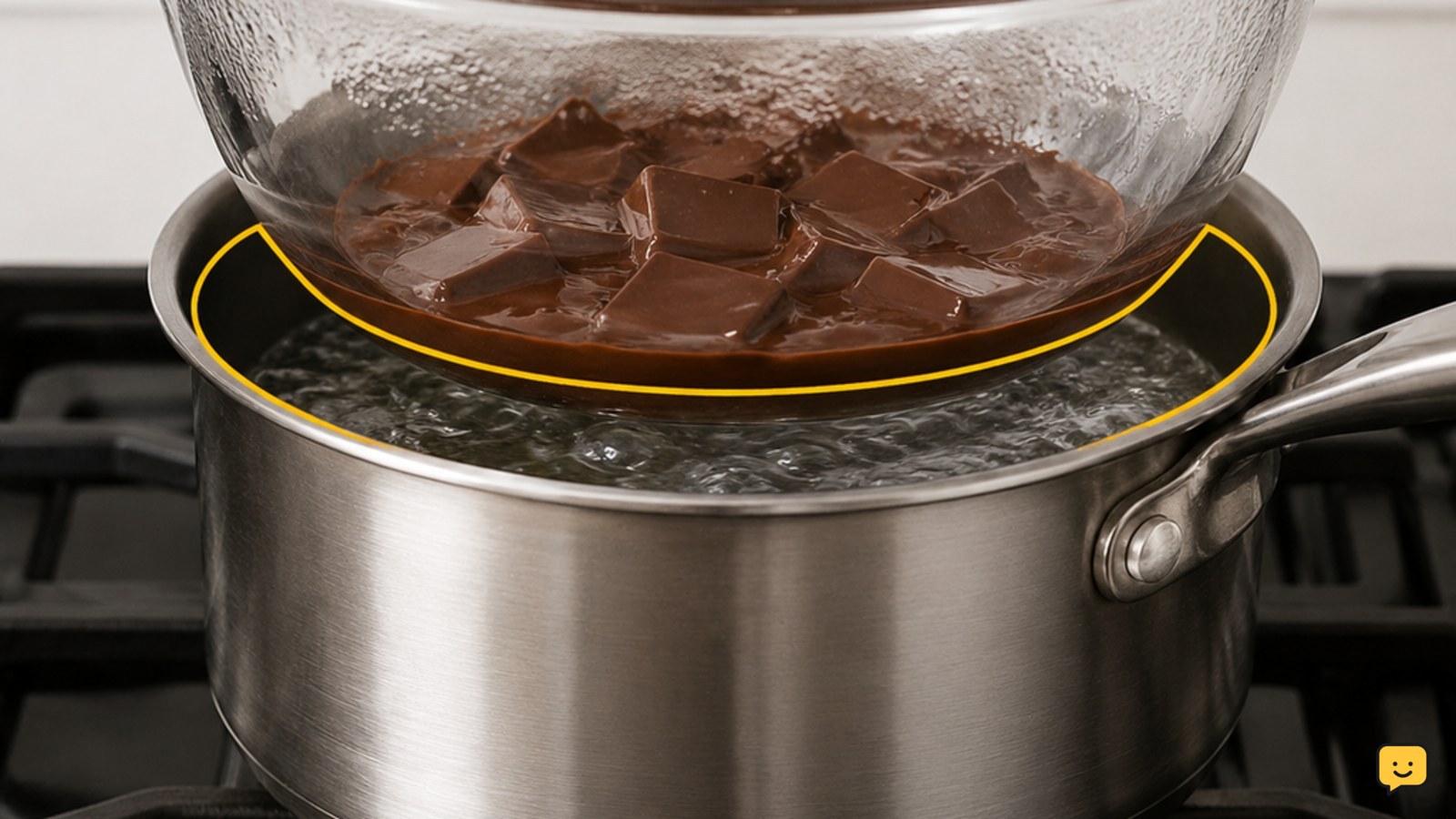
A double boiler separates the food from direct contact with the burner. The lower pot heats water, and the resulting steam warms the upper bowl or pan gradually. This gives you slower, more even heating than placing the food directly in a hot saucepan.
The name refers to the two cooking levels, not to two separate boiling temperatures. The water should usually stay at a gentle simmer rather than a hard boil. Bon Appétit’s documented pot-and-bowl method uses a bowl over simmering water, while Baking Bites specifies that the bowl should not touch the water.
Choose a double boiler or direct heat
A double boiler is the better choice when direct burner heat could scorch, split, or overheat a delicate ingredient. It is especially useful for melting chocolate slowly and for gently warming mixtures that need close temperature control.
Use a regular saucepan instead when the food needs strong browning, rapid boiling, or high heat. A double boiler is not a replacement for a frying pan, stockpot, or pressure cooker because the indirect heat is deliberately limited.
- Choose indirect heat: melting chocolate or keeping a delicate mixture warm.
- Choose direct heat: searing, sautéing, boiling pasta, or reducing a sauce quickly.
- Choose a purpose-built insert: when you use the method often and want a fitted, stable upper pan.
Make a double boiler with a pot and bowl
You can make a double boiler with one saucepan and one heat-safe bowl if the bowl rests securely above the water. The improvised arrangement follows the same structure as a commercial double boiler.
- Fill the lower pot with a shallow layer of water. Leave enough clearance for the water to remain below the bowl.
- Set the pot on the burner and bring the water to a gentle simmer.
- Place the heat-safe bowl over the pot. Its base should sit above the water, not in it.
- Add the ingredients to the upper bowl and stir as they warm.
- Adjust the burner so the water continues steaming gently without vigorous bubbling.
- Remove the upper bowl with oven mitts when the ingredients reach the desired texture or temperature.
The bowl should be stable but not sealed tightly onto the pot. Steam needs a controlled path to escape, and you need to be able to lift the bowl safely.
Verify the setup before adding food
A safe double boiler has three visible checkpoints: the bowl is stable, its bottom is above the water, and the water is simmering rather than violently boiling.
- Stability check: gently nudge the empty bowl. If it rocks or slides, choose a better-matched pot and bowl.
- Clearance check: lift the bowl and confirm that the water line remains below its base. Water should heat the bowl through steam, not direct contact.
- Heat check: look for small, steady bubbles. Reduce the burner if the pot rattles, splashes, or sends large bursts of steam around the bowl.
- Ingredient check: keep the upper bowl and utensils dry when melting chocolate. Water droplets can make melted chocolate seize or turn lumpy.
Success looks like a warm upper bowl, steady steam, and ingredients that soften gradually without sticking to a hot pan surface.
Use the setup for common cooking tasks
A double boiler works best for foods that benefit from gentle, continuous warming rather than direct high heat.
- Chocolate: chop it into similar-sized pieces, stir periodically, and remove the bowl when only a few small pieces remain; residual heat can finish the melting.
- Delicate sauces: stir continuously or frequently, following the recipe’s temperature and texture cues rather than increasing the heat to speed the process.
- Gentle warming: use the upper bowl to keep a mixture warm, but check it regularly because the water below continues transferring heat.
The exact cooking time depends on the quantity, bowl material, ingredient size, and simmer strength. A smooth, uniform texture is a more useful checkpoint than a fixed time.
Fix water contact, slow heating, or overheating
Most double-boiler problems come from an unstable fit, incorrect water level, or excessive heat. Match the visible symptom to the safest adjustment.
| What you see | Likely cause | What to do |
|---|---|---|
| Water touches the bowl | The lower pot is overfilled | Turn off the heat, let the setup settle, then remove water until the bowl clears the surface. |
| Ingredients warm very slowly | The water is barely warm or the pieces are large | Raise the burner slightly to a steady simmer and stir or break up the ingredients; do not switch immediately to a hard boil. |
| Steam escapes in strong bursts | The water is boiling too vigorously | Lower the burner. If splashing continues, turn off the heat and reposition the setup after it cools. |
| The bowl wobbles | The bowl and pot do not fit | Stop and replace one piece with a wider, more stable match. |
| Chocolate becomes thick or lumpy | Water entered the bowl or the chocolate overheated | Remove it from the heat. Do not keep heating a scorched mixture; start over if the texture or smell does not recover. |
Know when a double boiler will not work
A double boiler will not provide the intense, direct heat needed to brown ingredients or reduce a large volume of liquid quickly. It also cannot correct a recipe that requires a specific temperature, ratio, or stirring technique.
Use a microwave-safe bowl and short heating intervals as an alternative for small amounts of chocolate when the recipe allows it. Stir between intervals and stop before the mixture is fully melted. For frequent use, a fitted double-boiler insert offers more predictable stability than an improvised bowl, but the same water-clearance and simmer checks still apply.
Never move a hot bowl with bare hands, and never pour cold water into a hot pot to cool it rapidly. Turn off the burner, let the cookware become manageable, and then handle it with dry oven mitts.
Frequently asked questions
Does the bowl in a double boiler touch the water?
No. The upper bowl should sit above the water so steam, rather than direct water contact, transfers the heat. If the water reaches the bowl, remove some water after lowering or turning off the heat. This is particularly important for chocolate and other mixtures whose texture can change when water enters.
Can you use a glass bowl as a double boiler?
Yes, if the glass bowl is specifically heat-safe and rests securely over the pot. Do not use a thin, decorative, cracked, or unmarked glass bowl on the stovetop. Check that the bowl remains stable and does not touch the simmering water before adding ingredients.
Is a double boiler the same as a bain-marie?
They use related gentle-heating ideas, but the terms are not always used for the same arrangement. A double boiler normally places one vessel above simmering water. A bain-marie can also mean placing a dish in a larger pan of hot water, often in an oven. Follow the recipe’s specified setup.
Can you boil water in a double boiler?
The lower pot can simmer or boil water, but the upper vessel is not designed for rapid boiling. It receives indirect heat, so it is better suited to melting, warming, or gently cooking delicate foods. Use a direct saucepan when the upper mixture needs a fast, vigorous boil.