Choose a sleeping bag for the coldest conditions you realistically expect, not the average daytime temperature. Compare its temperature rating, insulation, shape, fit, packed size and weight, then consider your sleeping pad and clothing as part of the same sleep system. If the forecast or your experience is uncertain, choose more warmth and verify the manufacturer’s rating and fit before buying.
For more help with this topic, use the Camping Outdoors guides.
Choose the coldest night before comparing bags
A camping sleeping bag should be selected from the coldest overnight conditions you realistically expect. Start with the forecast for the campsite, then account for season, elevation, wind exposure and the quality of your shelter.
Use the bag’s stated temperature information as a comparison point, not a promise that every sleeper will feel equally warm. Feathered Friends recommends choosing a bag rated about 10°F, or roughly 5°C, below the coldest temperature you expect; it suggests a larger margin for people who regularly sleep cold.
For example, if the coldest expected night is 32°F (0°C), a bag rated around 20°F to 25°F (-7°C to -4°C) gives more practical margin than a bag rated exactly at 32°F. A warmer bag can be opened for ventilation, while a bag that is too cold is harder to correct safely.
Verify the choice: the rating should cover the coldest planned night, and you should be able to explain how your shelter, pad and clothing add protection.
Choose down or synthetic insulation for the weather
Sleeping bag insulation determines warmth, packed size, weight and how the bag behaves around moisture. REI’s sleeping-bag guidance identifies insulation type as a primary buying decision alongside temperature ratings and shape.
Choose down when low weight and compact packing matter most and you can keep the insulation protected from rain, condensation and wet clothing. Down bags are often attractive for backpacking because they compress efficiently, but damp insulation can lose useful loft.
Choose synthetic insulation when trips are exposed to moisture, condensation or repeated damp conditions, or when easier care matters more than the smallest packed size. Synthetic options can be a practical alternative for casual camping and humid environments.
Do not compare fill-power numbers alone. Compare the complete bag’s temperature rating, total weight, fill amount, shell fabric, packed dimensions and care instructions.
Failure path: if two bags have similar ratings but one is substantially lighter or smaller, check whether the listed ratings were measured using the same standard and whether the difference comes from less insulation, a narrower cut or a lighter shell.
Match the bag shape and fit to your sleeping position
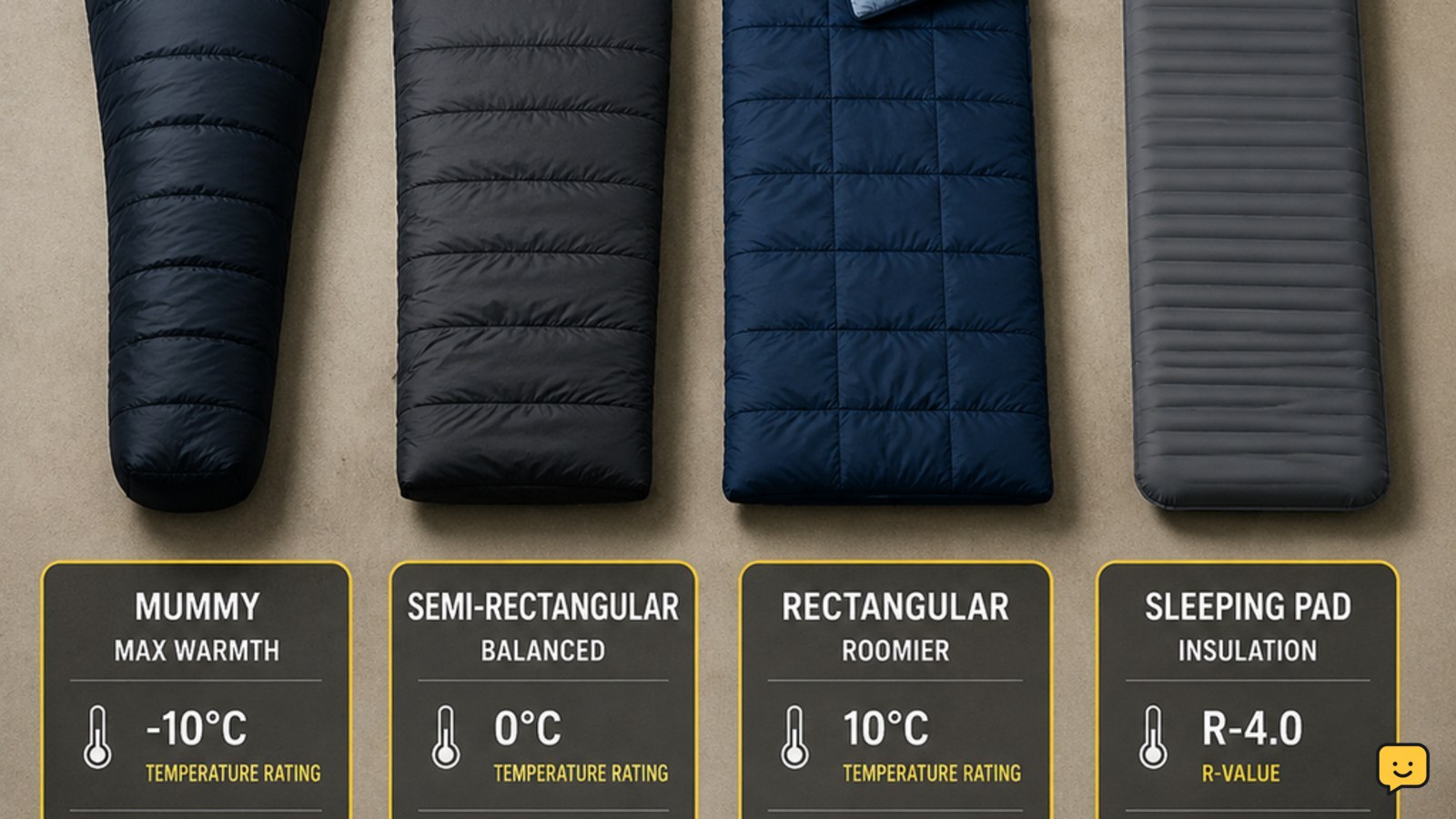
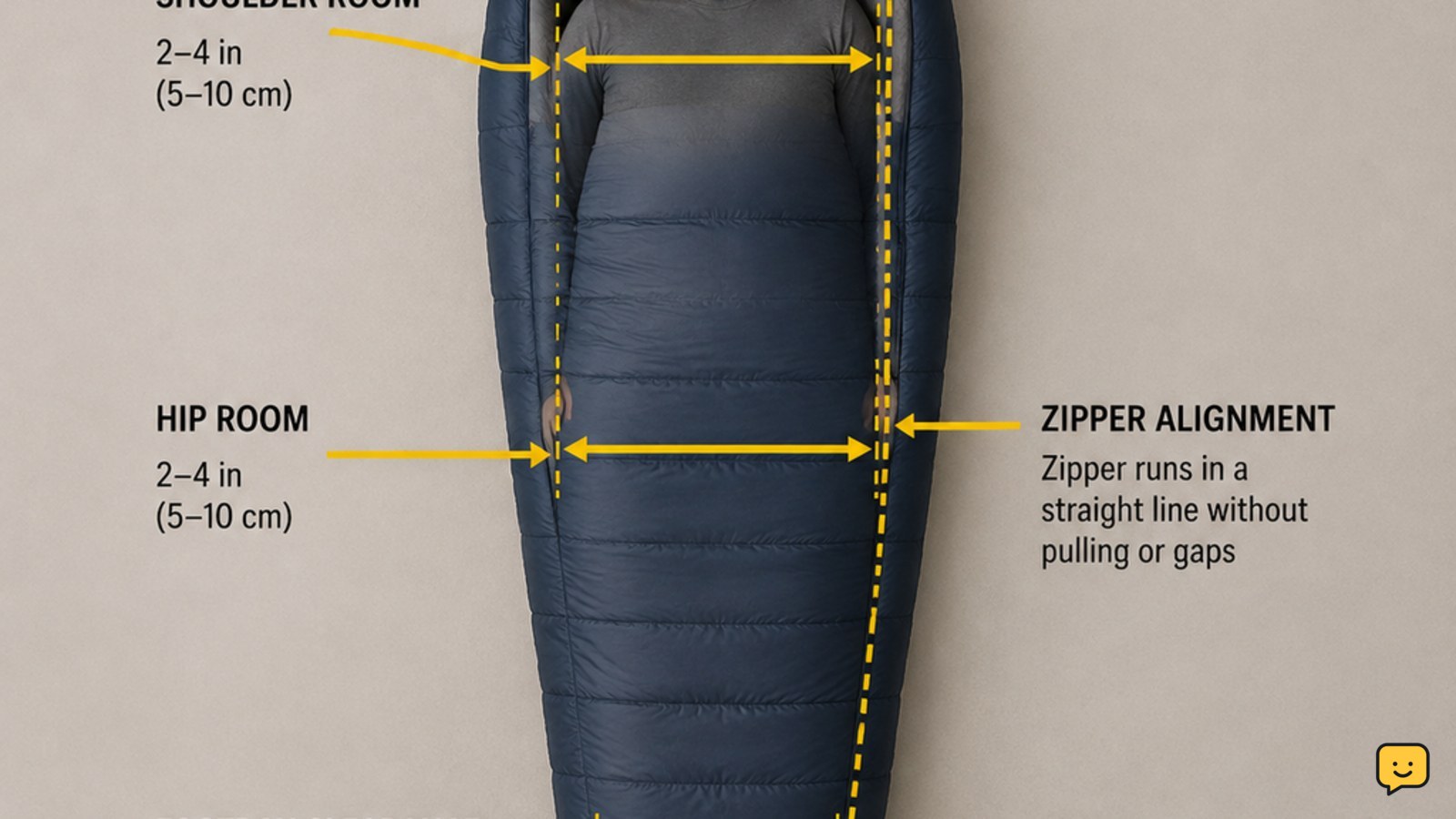
A sleeping bag must fit closely enough to retain heat but leave enough room to move, wear a base layer and avoid compressing the insulation. The main shapes are mummy, rectangular and semi-rectangular.
Mummy bags taper toward the feet and usually reduce unused air space, making them a strong choice when warmth and lower packed weight are priorities. Rectangular bags provide more room to turn and sit but generally use more material and pack larger. Semi-rectangular bags sit between those choices.
Check the manufacturer’s maximum user height, shoulder girth, hip girth and foot girth. Backpacking Light’s fit discussion also highlights measuring around the shoulders, hips and feet, including the space needed when wearing an insulated jacket in colder conditions.
Lie inside the bag before buying if possible. Zip it fully, pull the hood into position and bend your knees. You should be able to move without stretching the zipper or crushing the footbox, but there should not be a large empty chamber around your body.
Stop the purchase: reject a size that forces your shoulders or feet against the insulation, or that leaves so much unused space that warmth retention and comfort are likely to suffer.
Balance packed weight against comfort and durability
The right sleeping bag balances warmth, comfort, durability and packability for the actual trip rather than chasing the lowest listed weight. A car camper can reasonably choose more room and a larger packed size, while a backpacker usually gives more weight and volume priority.
Compare these specifications side by side: temperature rating, total weight, packed dimensions, shell material, zipper length, hood design and included storage or compression sacks. GearX’s selection guidance specifically frames weight, packability, warmth and comfort as competing considerations.
Do not store a down or synthetic bag compressed for long periods unless the manufacturer specifically permits it. Use the supplied storage method or a larger breathable storage sack when recommended by the maker, and dry the bag before storage.
Verification check: place the packed bag beside the rest of your gear. If it consumes space needed for food, water or essential safety equipment, choose a smaller model, a lighter insulation option or a less spacious shape only if the temperature and fit still pass.
For a broader load decision, use this guide to choose a backpack that fits before finalizing your sleeping system.
Your sleeping bag must fit inside your load plan, so use this guide to choose a backpack that fits before finalizing your kit.
Check the sleeping pad and clothing as one system
A sleeping bag cannot provide its intended warmth if the sleeping pad, shelter or clothing leaves you exposed to ground chill and drafts. Sea to Summit recommends considering the sleeping bag as part of a complete sleep system that can include a pad, liner, pillow and sleep clothing.
Match the bag to a sleeping pad with enough insulation for the same conditions. Check that the pad fits inside the bag if the design calls for it, or that the bag’s shape remains comfortable when used on top of the pad. A liner can alter comfort and cleanliness, but it should not be treated as a substitute for an inadequately rated bag.
Wear dry, non-cotton layers suited to the conditions, and keep water-resistant clothing outside the bag if it is wet. Avoid overdressing so tightly that the bag’s insulation is compressed.
Expected result: your pad, shelter and clothing should cover the same temperature range as the bag. If one component is clearly colder-rated or less protective, upgrade that weak point before relying on the system.
If your shelter has begun admitting rain, repair it before testing the bag outdoors; these steps explain how to waterproof a tent and check the result.
A wet shelter can overwhelm a well-rated bag, so learn how to waterproof a tent before camping in rain.
Verify the label, fit and condition before buying
Before buying a sleeping bag, verify the exact temperature information, size, insulation, packed measurements and care requirements on the manufacturer’s current product page or label.
- Confirm the rating covers the coldest expected night with a reasonable personal margin.
- Check that the listed size matches your height, shoulder, hip and foot measurements.
- Compare total weight and packed dimensions with your transport method.
- Inspect the zipper, hood adjustment, draft collar if fitted, stitching and shell for damage.
- Unpack the bag and allow it to loft according to the care instructions. Look for even insulation without obvious bare areas or persistent clumps.
- Test the zipper and lie in the bag with the hood adjusted. Confirm that the zipper closes smoothly and that you can change position without pulling the seams.
If the result is unclear: do not guess from a product name such as “winter” or “three-season.” Ask the manufacturer or retailer which rating standard applies, then compare like with like.
For remote trips, also prepare a shelter, navigation plan, water and communication method. A sleeping bag is comfort and insulation equipment, not a replacement for a rescue plan; review this wilderness safety guide to prepare for an unexpected night outside.
For remote routes, use this guide to prepare for an unexpected night outside if your planned trip changes unexpectedly.
Frequently asked questions
Should a sleeping bag be rated colder than the forecast?
Yes. Choose a rating below the coldest temperature you realistically expect, rather than matching the forecast exactly. A margin helps account for personal sleep differences, wind, elevation, dampness and imperfect shelter. Feathered Friends recommends about 10°F, or roughly 5°C, below the expected low and a larger margin for people who sleep cold.
Is down or synthetic insulation better for camping?
Neither is best for every trip. Down usually suits campers prioritizing low weight and compact packing who can protect the bag from moisture. Synthetic insulation is often the more forgiving choice for damp conditions, casual camping and easier ownership. Compare the complete bag’s rating, weight, packed size and care requirements instead of insulation type alone.
How should a sleeping bag fit?
A sleeping bag should leave enough room to move, wear a light insulating layer and avoid compressing the insulation, but it should not have large empty spaces around your body. Check the maker’s height, shoulder, hip and foot measurements, then lie inside with the zipper closed and hood adjusted before buying.
Does a sleeping pad affect sleeping bag warmth?
Yes. The pad is part of the sleep system because it separates you from cold ground and supports the bag’s rated use. Match the pad’s insulation to the same conditions as the bag. If the pad is poorly insulated, the bag may feel cold even when its temperature rating appears suitable.