Yes, plain sweet almonds are generally not toxic to dogs, but they are not a good routine treat. Whole almonds can be choking or blockage hazards and may cause stomach upset; fatty or seasoned products add risk. Do not offer bitter almonds, shells, or flavored almond foods. Call a veterinarian promptly after a large, uncertain, or symptomatic ingestion.
For more help with this topic, use the Everyday Pet Care guides.
Decide whether the almond was plain and sweet
Plain sweet almonds are generally not considered toxic to dogs, but that does not make them a suitable everyday treat. PetMD gives a conditional yes while warning about potential health problems, whereas the American Kennel Club recommends avoiding almonds because whole nuts can create safety and digestive concerns.
The key distinction is between the almond itself and the way it was served. A dog that picked up a small piece of a plain, shelled sweet almond is in a different situation from one that swallowed several whole nuts or ate a seasoned almond snack.
Remove the shell and skip unsafe products
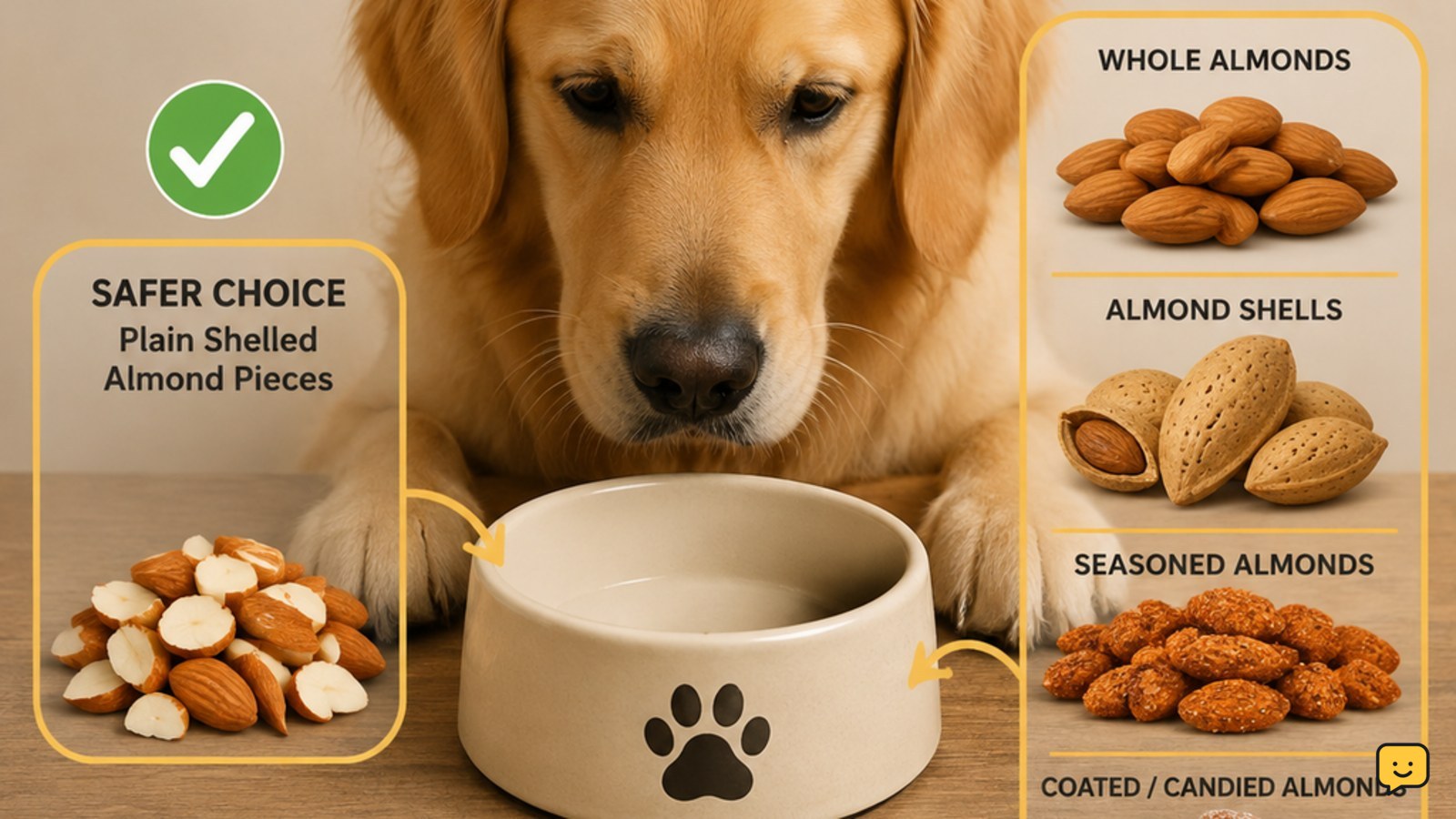
For the lowest-risk preparation, do not offer almonds at all; if a dog accidentally gets a small piece, it should be plain, sweet, shelled, and free of coatings or seasoning. Whole almonds are hard and rounded, so they can be difficult to chew and may become a choking or gastrointestinal obstruction concern.
Do not give almond shells or hull material. Also avoid bitter almonds and prepared foods such as salted or spiced almonds, chocolate-covered almonds, almond desserts, and products with unknown sweeteners or additives. Those ingredients can introduce risks beyond the almond, and a product label helps a veterinarian or animal poison service assess the exposure.
GSVS notes that almonds can be difficult for dogs to digest and may cause stomach upset. The safest preparation is therefore no routine almond treat; use a dog-appropriate treat instead of trying to make a whole nut safer by serving it intact.
Watch for choking or stomach warning signs
After almond ingestion, watch for signs that indicate immediate airway trouble or digestive distress. Choking signs include difficulty breathing, frantic pawing at the mouth, blue or pale gums, collapse, or inability to swallow normally. These require emergency veterinary care rather than home observation.
Less immediate warning signs can include vomiting, diarrhea, abdominal discomfort, unusual lethargy, loss of appetite, or repeated retching. GSVS specifically identifies choking as an emergency concern and describes stomach upset as a possible result of eating almonds.
Do not wait for symptoms if the nut was bitter, the quantity is uncertain, several whole almonds were eaten, or the dog swallowed an almond-containing product with other ingredients. A symptom-free period does not prove that an obstruction or ingredient exposure is impossible.
What to do after accidental ingestion
First, remove remaining almonds and keep the packaging. Record the type of almond product, approximate amount, time of ingestion, and your dog’s current symptoms. This information is more useful to a veterinarian than trying to estimate safety from the nut’s name alone.
Call your veterinarian for guidance when the amount was more than a small piece, the dog swallowed whole almonds, or the product was seasoned, coated, bitter, or unfamiliar. If your regular clinic is unavailable, contact an animal poison service or an emergency veterinary hospital.
While arranging advice, monitor breathing, gum color, swallowing, vomiting, energy level, appetite, and abdominal comfort. If any emergency sign appears, stop monitoring at home and leave for urgent veterinary care. Do not induce vomiting or administer medication unless a veterinary professional specifically directs you.
Choose a safer occasional treat
A dog does not need almonds for balanced nutrition, and plain dog treats are easier to portion and formulate for canine feeding. If you share human food, choose a plain option that your veterinarian has not restricted for your dog and introduce only a small taste rather than making nuts part of the routine.
For another plain-food comparison, see {link} for preparation guidance and warning signs for a different occasional dog treat.
Plain watermelon also requires specific preparation before serving: {link} explains why the seeds and rind should be removed.
For another plain-food comparison, see plain sweet potato preparation for preparation guidance and warning signs for a different occasional dog treat.
Frequently asked questions
Can dogs eat almond butter?
Only with caution, and it is usually better to avoid it. Check the full ingredient list and do not offer almond butter with chocolate, heavy salt, or unknown sweeteners or additives. If your dog ate a prepared spread and you cannot confirm the ingredients, contact a veterinarian or animal poison service.
What if my dog ate one almond?
One plain sweet almond is not usually a poisoning emergency, but monitor your dog because a whole nut can still be a choking or digestive concern. Seek prompt veterinary advice if the almond was bitter, coated, swallowed whole by a small dog, or followed by breathing trouble, repeated retching, vomiting, weakness, or abdominal discomfort.
Are almond shells safe for dogs?
No. Do not give dogs almond shells or hull material. Shells add a physical hazard and may be harder to chew or digest. If your dog swallowed shell pieces, several almonds, or an unknown amount, keep the packaging and call a veterinarian for case-specific guidance.
Can dogs eat flavored or salted almonds?
No, flavored and salted almonds are not appropriate dog treats. Seasonings, coatings, and other recipe ingredients can create risks that plain almond flesh does not. Check the label, save the package, and contact a veterinary professional if your dog ate more than a taste or the ingredients are uncertain.