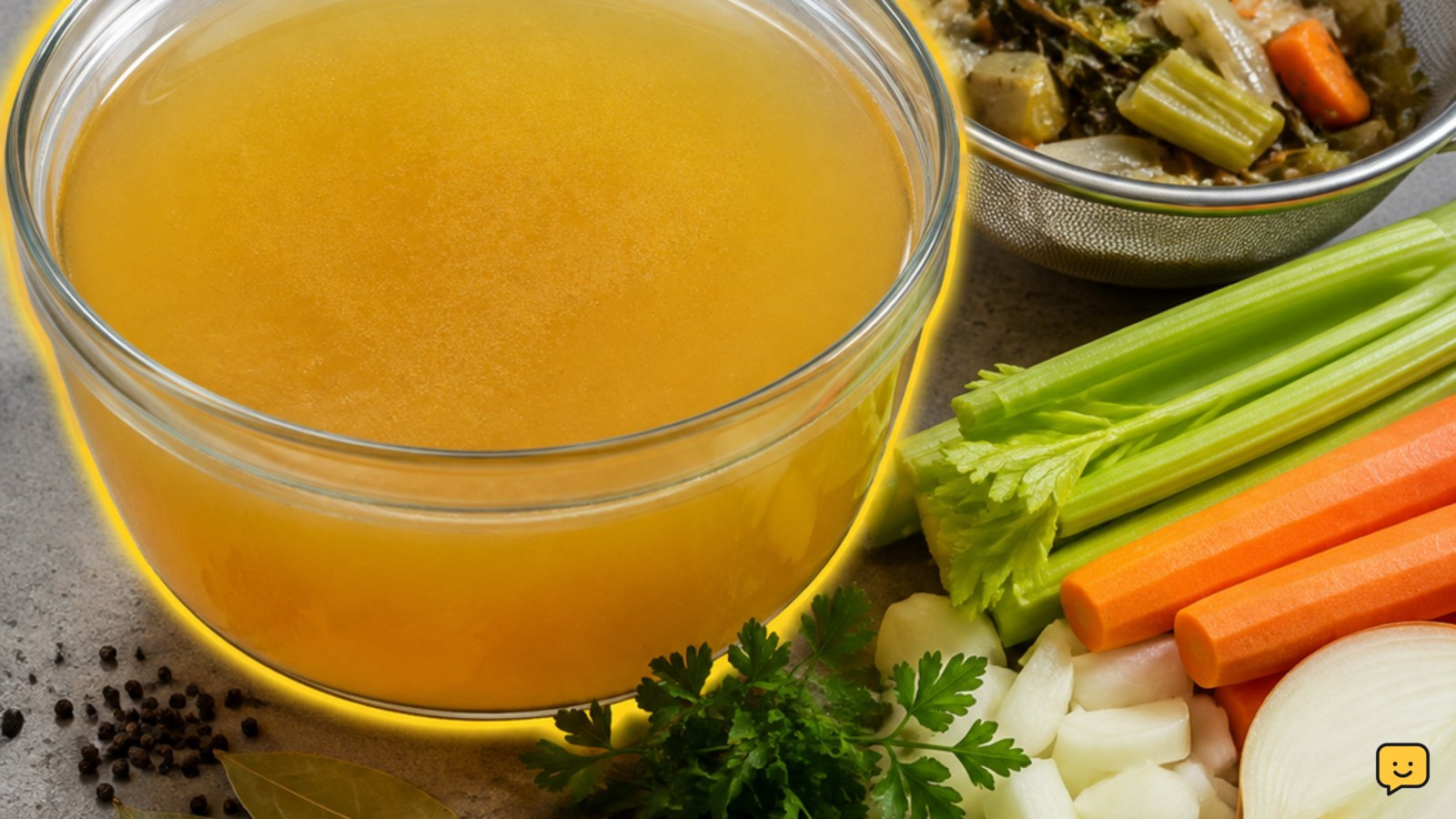
To make vegetable stock, combine chopped onion, carrot, celery, garlic, herbs, peppercorns, and 10–12 cups of water in a large pot. Bring it to a boil, reduce to a gentle simmer, and cook for about 1 hour. Strain when the liquid smells savory and tastes well rounded, then cool and store.
For more help with this topic, use the Cooking Basics guides.
Choose vegetables that give the stock a balanced base
Vegetable stock gets its main savory foundation from onion, carrot, and celery, with garlic and herbs adding aroma. For about 10–12 cups of water, use 1 large onion, 2 carrots, 2 celery stalks, 2–3 garlic cloves, 2 bay leaves, a few parsley or thyme sprigs, and ½ teaspoon of whole peppercorns.
Clean vegetable scraps can replace part of the fresh produce. Carrot ends, celery leaves, onion skins, mushroom stems, and herb stems are useful choices. Keep the pieces roughly bite-sized so they release flavor evenly. Salt lightly, or leave it out if you plan to reduce the stock or use it in a seasoned recipe.
Prepare the vegetables and fill the pot
Chop the vegetables into large pieces, then add them to a large stockpot with the garlic, herbs, peppercorns, and water. The ingredients should be covered, with enough room left in the pot for the liquid to simmer without spilling.
For a more delicate stock, add the water directly. For deeper flavor, sauté the onion, carrot, and celery in a little oil until the onion begins to soften before adding the water. This extra step is optional; the basic simmering method remains the most flexible way to use mixed scraps.
Simmer gently for about one hour
Bring the pot to a boil over high heat, then immediately reduce the heat to a gentle simmer. Cover the pot and cook for about 1 hour, as recommended in the vegetable-stock methods from The Kitchn and Love and Lemons.
Check the pot after 10 minutes. You should see occasional bubbles rather than constant, forceful boiling. A gentle simmer helps keep the liquid cleaner and prevents the vegetables from disintegrating too quickly. If the water level drops so much that the vegetables are exposed, add enough water to cover them again.
The stock is ready when the vegetables are soft, the liquid smells savory and herbal, and a spoonful has noticeable flavor without tasting watery. If it still tastes thin, simmer uncovered for another 10–20 minutes and check again.
Strain the stock and correct the flavor
Strain the hot stock through a fine-mesh strainer into a heatproof bowl or pot. Press the vegetables gently with the back of a ladle to recover liquid, but do not force a large amount of pulp through the strainer.
Taste the strained stock before adding more salt. If it tastes bland but aromatic, add a small pinch of salt. If it is too concentrated or salty, dilute it with water. If it tastes bitter, smoky, or strongly sulfurous, do not try to hide the flavor with more seasoning; use it only if the taste is acceptable, otherwise discard it.
Cool and store the finished stock safely
Transfer the strained stock to shallow heatproof containers so it cools more quickly, then refrigerate or freeze it promptly. Leave space at the top of a freezer container because liquid expands as it freezes. Label containers with the date and amount so you can measure stock easily for soups, sauces, grains, and braises.
For smaller portions, freeze the stock in measured cups or ice-cube trays, then transfer the frozen portions to a sealed freezer bag. Thaw refrigerated portions in the refrigerator or reheat them directly in a saucepan. If the stored stock smells sour, looks slimy, shows mold, or has unexpected bubbling, discard it rather than tasting it.
Fix weak, cloudy, or overly strong stock
Weak vegetable stock usually needs either more reduction or more seasoning, while cloudy stock is generally a visual issue rather than a safety problem. Use these checks before deciding what to do:
| Result | Likely cause | Safest next action |
|---|---|---|
| Watery flavor | Too much water or not enough vegetables | Simmer uncovered until the flavor becomes more concentrated, then taste again. |
| Flat flavor | Insufficient salt or mild vegetables | Add salt a little at a time; use mushrooms, garlic, or fresh herbs in the next batch. |
| Cloudy liquid | Hard boiling or vegetable pulp passing through | Strain again through a finer strainer. Do not boil aggressively to correct it. |
| Overly strong or salty | Too much reduction or seasoning | Dilute with water and retaste before using. |
Vegetable stock does not need to be perfectly clear to work well in cooking. Stop adjusting once it tastes pleasant on its own and suits the dish you plan to make.
Frequently asked questions
Can I make vegetable stock entirely from scraps?
Yes. Use clean, edible scraps such as carrot ends, celery leaves, onion skins, mushroom stems, and herb stems. Keep the mixture free of spoiled produce and heavily seasoned leftovers. If the scraps are mostly mild trimmings, add a fresh onion, carrot, or celery stalk for a fuller flavor.
Should I roast vegetables before making stock?
Roasting is optional. Sautéing or roasting the vegetables first can create a deeper, more browned flavor, while adding them raw produces a lighter stock with less preparation. Either method works; choose the raw-vegetable method when you want a neutral stock for a wide range of recipes.
Why does my vegetable stock taste bitter?
Bitterness can come from over-reduction, scorched vegetables, or scraps with a strong flavor. Dilute the stock first and taste it again. If the bitterness remains unpleasant, discard the batch rather than adding large amounts of salt or seasoning to cover it.
Can I make vegetable stock without celery?
Yes. Replace celery with extra carrot, onion, mushroom stems, leek, or parsley stems. The flavor will change, but the same water, simmering, straining, and cooling method still applies. Taste near the end and adjust the salt only after straining.