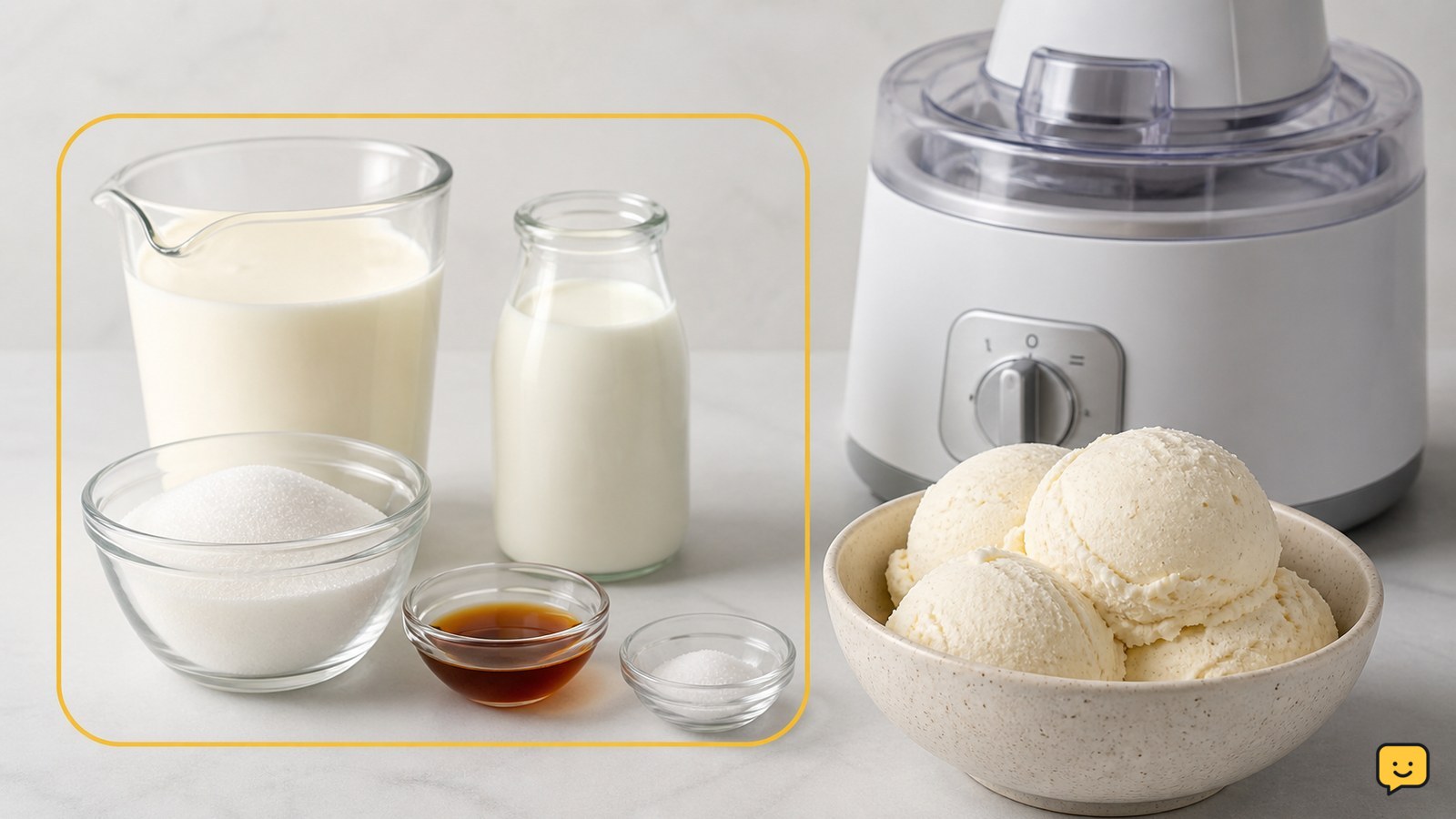
For about 1 quart of vanilla ice cream, whisk 1½ cups heavy cream, 1½ cups whole milk, ⅔ cup sugar, 2 teaspoons vanilla extract, and ⅛ teaspoon salt. Chill the mixture thoroughly, then churn it in a fully frozen or manufacturer-ready ice cream maker until thick and softly scoopable. Freeze it briefly for firmer scoops.
For more help with this topic, use the Cooking Basics guides.
Gather the five ingredients and prepare the machine
This ice cream maker recipe uses 1½ cups heavy cream, 1½ cups whole milk, ⅔ cup granulated sugar, 2 teaspoons vanilla extract, and ⅛ teaspoon fine salt for roughly 1 quart of ice cream. These proportions match the egg-free vanilla base documented by Love and Lemons.
- Set the cream, milk, sugar, vanilla, and salt beside a medium bowl.
- Follow the machine manual for bowl-freezing, assembly, and maximum fill level. Never fill past the stated line because the mixture expands as it churns.
- Place a clean lidded container in the freezer if you want firmer ice cream after churning.
Dissolve the sugar without heating the dairy
Whisking the milk, cream, sugar, vanilla, and salt until the sugar dissolves creates a smooth base without requiring a cooked custard. Combine all five ingredients in the bowl and whisk for about 1 to 2 minutes.
Check the base by rubbing a small drop between clean fingers: it should feel smooth rather than gritty. If sugar crystals remain, whisk longer. Do not start churning while the mixture is warm or visibly undissolved.
Chill the base before starting the ice cream maker
The ice cream base should be cold before it enters the machine, because a colder mixture freezes and thickens more efficiently. Cover the bowl and refrigerate it for at least 4 hours, or until thoroughly chilled.
For a quicker check, place the covered bowl over ice while stirring occasionally, but do not pour ice or meltwater into the dairy. If the base is still lukewarm, return it to the refrigerator. The base should smell clean, pour smoothly, and feel refrigerator-cold.
Churn until the mixture looks softly scoopable
Churning transforms the cold base into ice cream by freezing it while the dasher incorporates air. Assemble the machine, start the motor according to its instructions, and pour in the chilled base only after the dasher is moving if the manual specifies that order.
- Churn for the time recommended for your model. Many home machines finish in about 20 to 25 minutes, as reported by Lizzy Loves Food, but timing varies by machine, batch size, and mixture temperature.
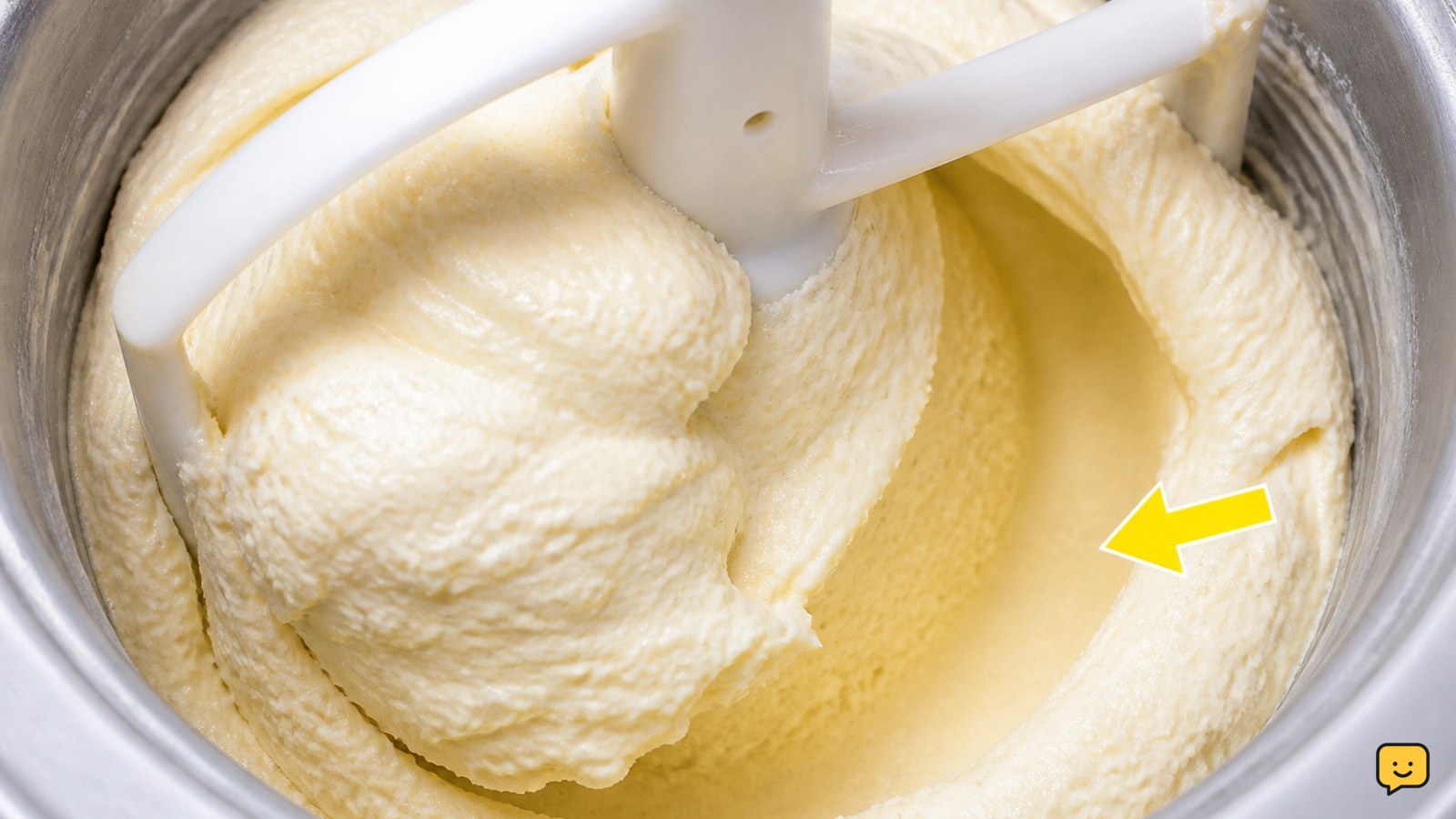
- Watch for a thick, smooth texture similar to soft serve. The dasher may begin to leave a visible track through the ice cream.
- Stop when the mixture is thick but still movable. Do not wait for it to become hard in the machine.
If the base remains thin after the normal cycle, stop and check whether the bowl was fully frozen, the base was cold enough, or the batch exceeded the machine’s capacity. Refreeze the bowl or chill the base before trying again; do not run a stalled motor.
Add mix-ins, firm the ice cream, and verify the result
Mix-ins are easiest to distribute when added during the final few minutes or folded in immediately after churning. Use up to about ½ cup of small chocolate chips, toasted chopped nuts, cookie pieces, or drained fruit for this batch.
Transfer the soft ice cream to the chilled container, smooth the surface, cover it, and freeze until firm enough for your preferred scoop. The finished ice cream should hold a mound on a spoon, contain no visible liquid pockets, and smell fresh. If it freezes very hard, let it stand briefly at room temperature before scooping rather than microwaving the entire container.
For storage, keep the ice cream covered and return it to the freezer promptly after serving. Use a clean, dry scoop each time and discard it if it develops an off odor, unusual discoloration, or signs of contamination.
Choose a flavor or dairy alternative without changing the method
Flavor changes work best when they preserve the base’s liquid balance. Replace the vanilla with 1 teaspoon almond extract, or add 2 tablespoons cocoa powder after whisking it with a little milk to prevent lumps.
- Chocolate: Add 2 tablespoons unsweetened cocoa powder and taste the chilled base before churning.
- Fruit: Fold in finely chopped, well-drained fruit near the end of churning so excess water does not make the ice cream icy.
- Dairy-free: Use a full-fat plant-based cream and milk intended for cooking or whipping, then expect a texture that may differ from the dairy version. Check the product label for sweeteners and adjust the added sugar cautiously.
Do not add large frozen pieces, hot sauce, or watery fruit purée directly to the machine. Chill additions first and keep pieces small enough for the dasher to move freely.
Frequently asked questions
Can you make ice cream in an ice cream maker without eggs?
Yes. This recipe is egg-free and uses cream, whole milk, sugar, vanilla, and salt. It does not require cooking or tempering, so chill the mixed base thoroughly before churning. The result is a lighter Philadelphia-style ice cream rather than a custard-style ice cream.
Why is my homemade ice cream not freezing in the machine?
The most common causes are a warm base, an incompletely frozen freezer bowl, an overfilled machine, or a room that is very warm. Chill the base fully, confirm the bowl is solidly frozen, and follow the manufacturer’s fill line. If the motor strains or stalls, stop the machine instead of forcing it.
When should you add chocolate chips or cookie pieces?
Add small, chilled mix-ins during the final few minutes of churning or fold them in immediately after removing the ice cream. Adding them too early can make pieces sink or interfere with the dasher. Drain wet ingredients well and avoid pieces large enough to jam the paddle.
How long should homemade ice cream chill before churning?
Chill the mixed base for at least 4 hours, or until it is thoroughly refrigerator-cold. A cold base gives the machine a better chance of producing a thick texture during its normal cycle. If the mixture still feels warm, keep chilling it rather than starting the machine.