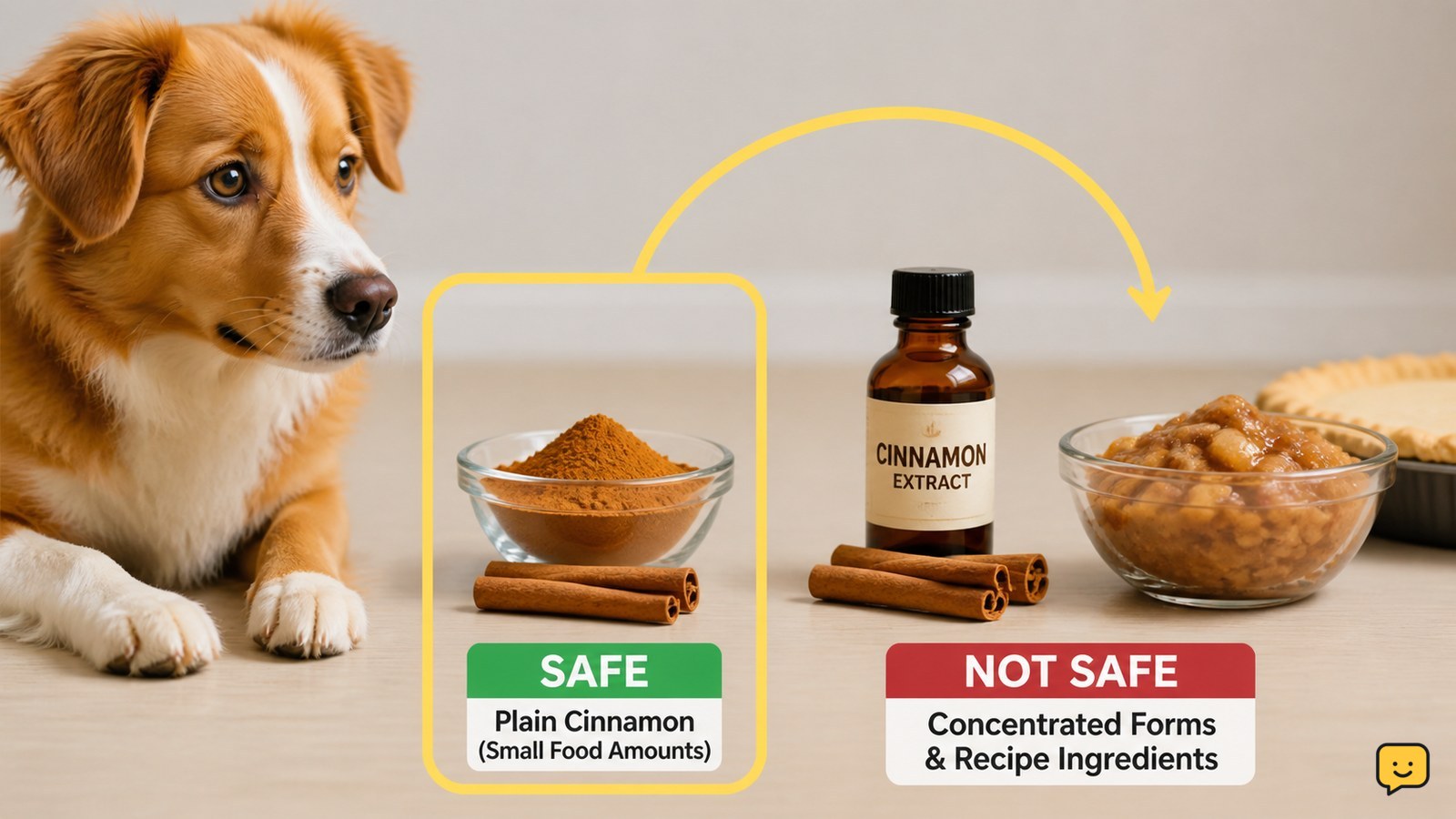
Yes, dogs can usually have a small amount of plain cinnamon, but it should be an occasional food ingredient rather than a supplement. Avoid cinnamon essential oil, large amounts of powder, cinnamon sticks and recipes containing ingredients such as xylitol, raisins or nutmeg. If your dog ate a large or unknown amount, contact a veterinarian or animal poison service promptly.
For more help with this topic, use the Everyday Pet Care guides.
Check whether the cinnamon was plain and lightly used
Plain cinnamon is generally acceptable for dogs in a small amount, while a large serving can irritate the mouth and digestive tract. Boulder Veterinary Hospital gives the same conditional answer: cinnamon is not usually a problem in small amounts, but it should not become a regular or concentrated addition to a dog’s food.
For a reasonable treat context, cinnamon should be a minor ingredient in a plain, dog-appropriate food rather than a spoonful offered by itself. There is no universally safe amount for every dog, so do not use a general internet quantity as an individualized dose. Dogs with an existing medical condition or a restricted diet should be cleared by their veterinarian before receiving new foods.
Verify the label: “cinnamon” should be the only relevant seasoning, with no xylitol, raisins, nutmeg or other ingredients that may create a separate hazard.
Choose powder in food instead of concentrated cinnamon products
Ground cinnamon mixed into a plain food is less concerning than a concentrated cinnamon product, but powder can still irritate the mouth, throat or stomach when a dog eats a lot at once. Keep the container closed and do not let a dog inhale or lick loose powder.
Do not offer cinnamon essential oil, cinnamon extract or other concentrated preparations. The supplied veterinary and pet-health sources support small amounts of ordinary cinnamon, not concentrated products; because their strength and ingredients vary, an accidental ingestion should be discussed with a veterinarian or animal poison service rather than managed from a standard serving suggestion.
If you use a commercial dog treat, read the full ingredient list. A treat labeled “cinnamon” may also contain sugar, high fat or other ingredients that are more relevant to the risk. Chewy specifically warns that cinnamon baked goods can include ingredients such as nutmeg or raisins, and Antelope Pets flags xylitol and nutmeg as ingredients to avoid.
Keep cinnamon sticks and decorative pieces away
Cinnamon sticks are not a suitable chew for dogs. A stick can irritate the mouth and digestive tract, and swallowing a hard piece creates a choking or foreign-body concern that plain ground cinnamon does not.
Cinnamon is tree bark, not a fruit with a pit or seed, so “pits and seeds” are not the main cinnamon concern. The practical check is the physical form: remove sticks, bark pieces and decorative cinnamon from food or displays before a dog can chew them. Also discard any whole-spice mixture if its other ingredients are unknown.
Stop and call: if your dog swallowed a stick, a large fragment or an unknown amount, do not wait for symptoms before contacting a veterinary professional.
Check the entire recipe before sharing a cinnamon food
A cinnamon-flavored recipe is not automatically safe for dogs because the recipe may contain a separate toxic or unsuitable ingredient. Check for xylitol, raisins, grapes, nutmeg, chocolate, macadamia nuts, alcohol and unusually rich or fatty ingredients before allowing a bite.
Plain cooked sweet potato can be a simpler treat base when it contains no seasoning or unsafe mix-ins; see this guide to safe forms of sweet potato for preparation and ingredient checks.
Do not assume that removing visible icing or topping makes a baked item safe. If the ingredient list is missing, keep the food away and treat an ingestion as an unknown-exposure question.
For an unseasoned treat base, compare these safe forms of sweet potato before preparing food: safe forms of sweet potato
Watch for irritation or digestive warning signs
After a small exposure to plain cinnamon, watch for observable changes such as coughing, gagging, mouth irritation, drooling, vomiting or diarrhea. Larger amounts may cause more pronounced irritation or digestive upset, and coughing after powder exposure may indicate that the material was inhaled rather than swallowed.
These signs do not identify the cause by themselves. Record when they began, what form of cinnamon was involved and whether the food contained other ingredients. If signs are severe, repeated or worsening, contact a veterinarian promptly rather than waiting for them to resolve.
Urgent checkpoint: trouble breathing, collapse, seizures or marked weakness requires immediate veterinary attention. Do not give food, oil, medication or another substance as a proposed antidote unless a professional tells you to do so.
Contact a veterinarian for a large or uncertain exposure
Call a veterinarian or an animal poison service when your dog ate a large amount, swallowed a cinnamon stick, consumed cinnamon oil or extract, or ate a recipe with unknown ingredients. Contact is also appropriate if the dog is very young, elderly, medically fragile or already showing symptoms.
Have the product name, ingredient list, estimated amount, your dog’s weight and the time of exposure ready. A professional can decide whether observation or an examination is appropriate. Do not wait for symptoms after a potentially hazardous recipe or concentrated-product exposure, and do not attempt to induce vomiting at home.
Frequently asked questions
Can dogs eat cinnamon powder?
Yes, a small amount of plain cinnamon powder in suitable food is generally not toxic to dogs. Large amounts can irritate the mouth and digestive tract, so do not offer powder by itself or let a dog inhale a pile of it. Call a veterinarian or animal poison service for a large or unknown exposure.
Can dogs have cinnamon sticks?
No, cinnamon sticks should not be given as dog chews. Their hard shape can cause choking or swallowing problems, and a swallowed stick or large fragment needs veterinary guidance. Remove decorative sticks from food and contact a veterinarian promptly if ingestion occurred.
Is cinnamon essential oil safe for dogs?
Cinnamon essential oil is not an appropriate treat or home remedy for dogs. Concentrated products differ from the small amount of ordinary ground cinnamon used in food. If a dog licked, swallowed or was exposed to cinnamon oil or extract, contact a veterinarian or animal poison service and keep the product label available.
What should I do if my dog ate cinnamon cake?
Check the recipe immediately for xylitol, raisins, grapes, nutmeg, chocolate, alcohol and other ingredients that may be unsafe. If the recipe is unknown, the amount was large or symptoms appear, contact a veterinarian or animal poison service promptly. Do not induce vomiting or give a home antidote.