To make Mexican-style chorizo, blend soaked dried chiles with vinegar, garlic, salt, cumin, oregano, and spices. Mix the cooled paste into 1 pound of cold ground pork, refrigerate it for at least 2 hours, then cook it loose in a skillet until browned and the center reaches 160°F (71°C).
For more help with this topic, use the Cooking Basics guides.
Gather and prepare the chorizo ingredients
Mexican-style chorizo is usually a strongly seasoned pork mixture that is cooked loose rather than formed into links; the supplied scratch-made pork chorizo references use this same general format.
- Remove the stems and most seeds from the guajillo and ancho chiles. Leave some seeds if you want more heat.
- Bring enough water to cover the chiles to a simmer, turn off the heat, and soak the chiles for 15 minutes.
- Keep the ground pork cold while the chiles soften. Cold meat is easier to mix without becoming pasty.
For a milder batch, use only guajillo and omit cayenne. For a hotter batch, add cayenne gradually; the chile variety can change the heat substantially.
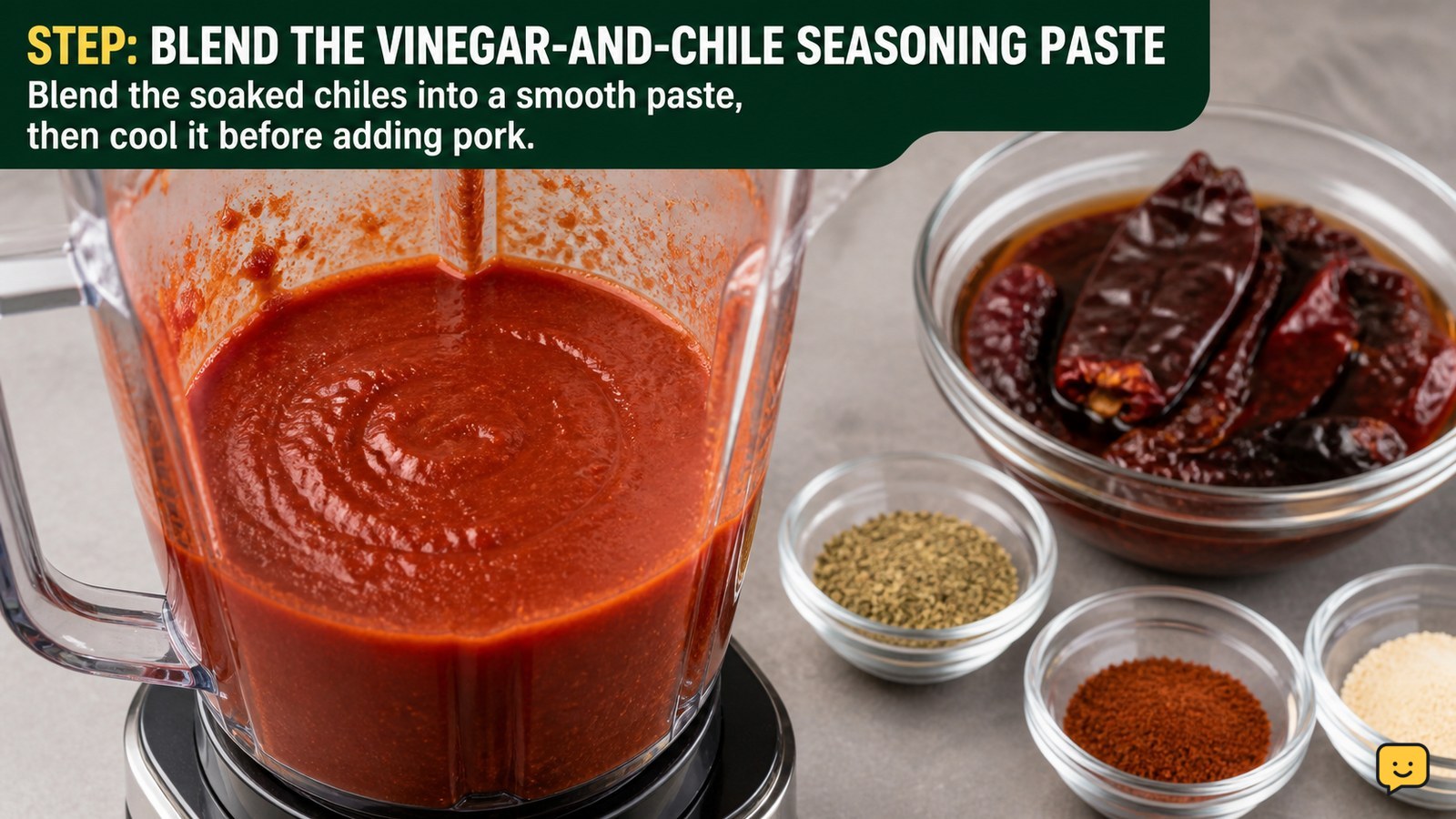
Blend the vinegar-and-chile seasoning paste
The seasoning paste should combine the chiles, vinegar, garlic, and dry spices into a smooth, spoonable mixture.
- Drain the softened chiles, reserving a few tablespoons of soaking water.
- Add the chiles, vinegar, garlic, salt, cumin, oregano, paprika, coriander, black pepper, and clove or cayenne to a blender.
- Blend until mostly smooth, adding reserved soaking water 1 tablespoon at a time only if the blades need help.
- Transfer the paste to a shallow bowl and let it cool to room temperature.
Check the paste before mixing: it should smell savory and chile-forward, not smell burnt, and should not be hot enough to warm the pork when combined. If it is too thick, loosen it with a small splash of vinegar or soaking water.
Mix the paste into the cold ground pork
Homemade chorizo is ready for resting when the chile paste is evenly distributed through the ground pork with no pale pockets.
- Put the cold pork in a large bowl and pour in the cooled paste.
- Mix with clean gloved hands or a sturdy spatula just until the color and texture are even. Do not knead it as firmly as bread dough.
- Cover the bowl or place the mixture in a sealed container. Refrigerate for at least 2 hours; overnight gives the spices more time to permeate the meat.
If the mixture seems wet, do not add flour or breadcrumbs. Cook a small portion after the resting period to check the seasoning, then adjust the remaining mixture with salt, vinegar, or cayenne only after the test portion is fully cooked.
Cook the chorizo and verify the center
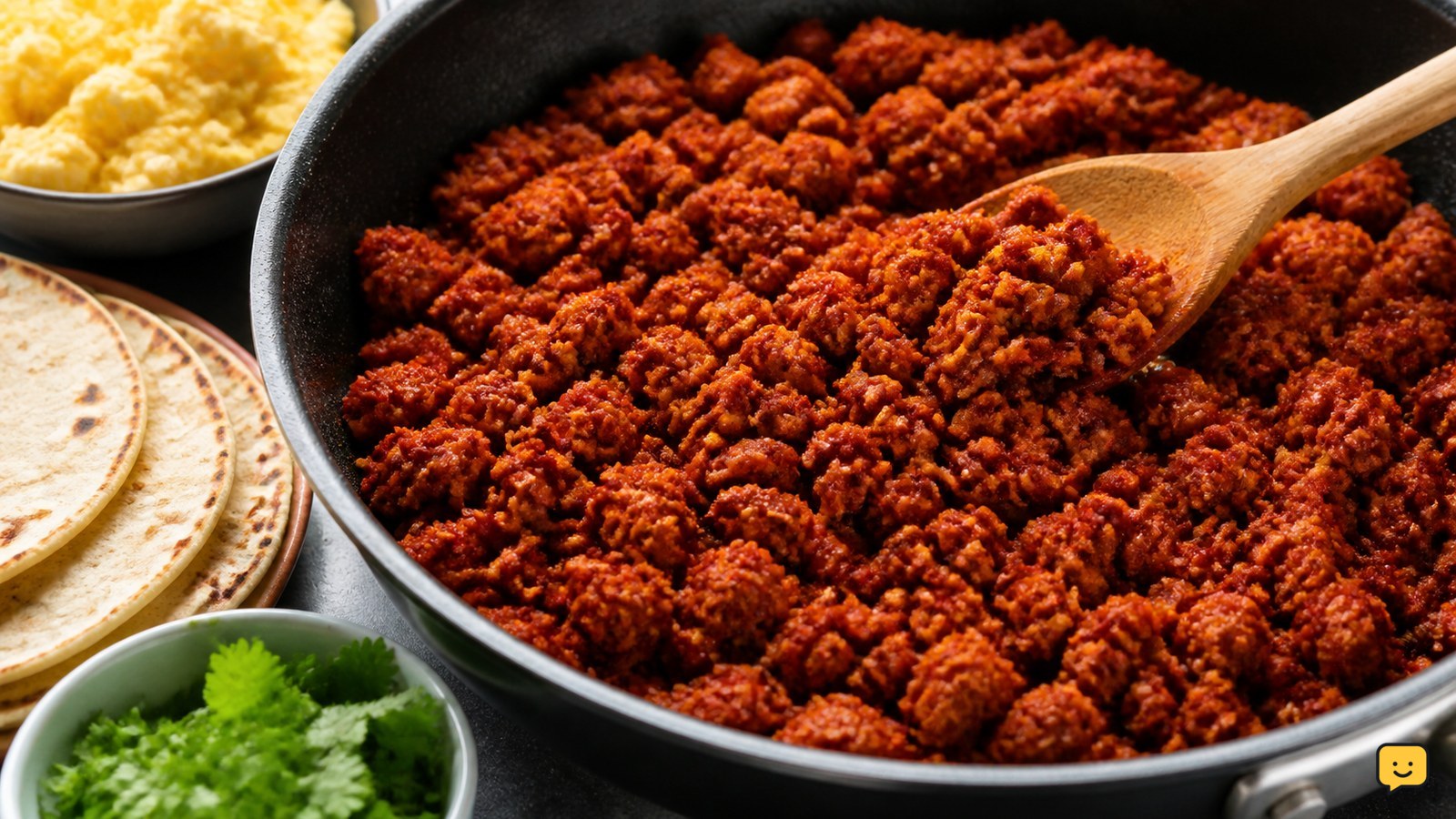
Cook the rested chorizo in a skillet over medium heat until the pork is fully browned and the thickest crumbles reach 160°F (71°C).
- Heat a large skillet over medium heat. Add the chorizo directly; extra oil is usually unnecessary because the pork releases fat.
- Break the meat into small crumbles with a spatula and stir every minute or so.
- Continue for about 8 to 12 minutes, depending on the size of the crumbles and the pan.
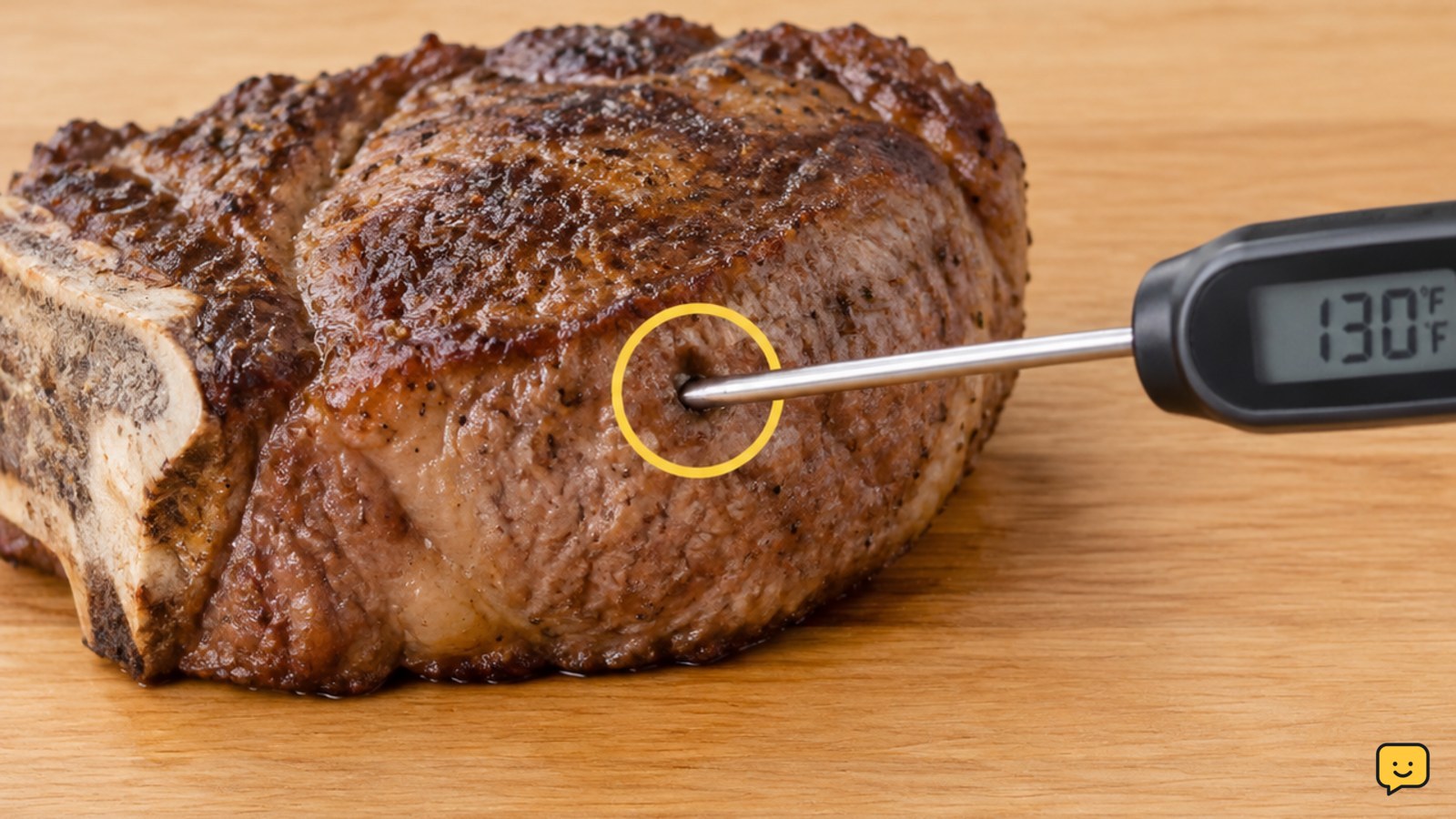
- Insert an instant-read thermometer into the largest crumble. The reading must reach 160°F (71°C), and the meat should no longer look raw in the center.
Brown color alone is not a reliable doneness check. If the surface is darkening before the center is ready, lower the heat and continue cooking. If the pan is crowded and the meat is steaming rather than browning, cook in two batches.
Choose serving swaps and store leftovers safely
Cooked chorizo works in tacos, scrambled eggs, rice, beans, quesadillas, and soups, but the best serving choice depends on how much fat and heat the batch has.
- Lean pork: Add a teaspoon of oil to the skillet if the meat sticks or seems dry.
- Ground turkey: Use it in place of pork, but expect a leaner result; add a little oil while cooking.
- No dried chiles: Use mild chili powder, then add cayenne only after a cooked taste test.
- Too fatty: Drain some fat after browning, but leave enough to coat the crumbles and carry the spices.
- Too sharp or acidic: Serve with eggs, beans, rice, or a creamy topping rather than adding more sugar to the raw mixture.
Refrigerate cooked chorizo in a shallow covered container within 2 hours. Cool it promptly, use it within 3 to 4 days, or freeze it in meal-sized portions. Reheat until steaming hot throughout, and do not partially cook raw chorizo for later finishing.
Frequently asked questions
Can I make chorizo without stuffing it into sausage casings?
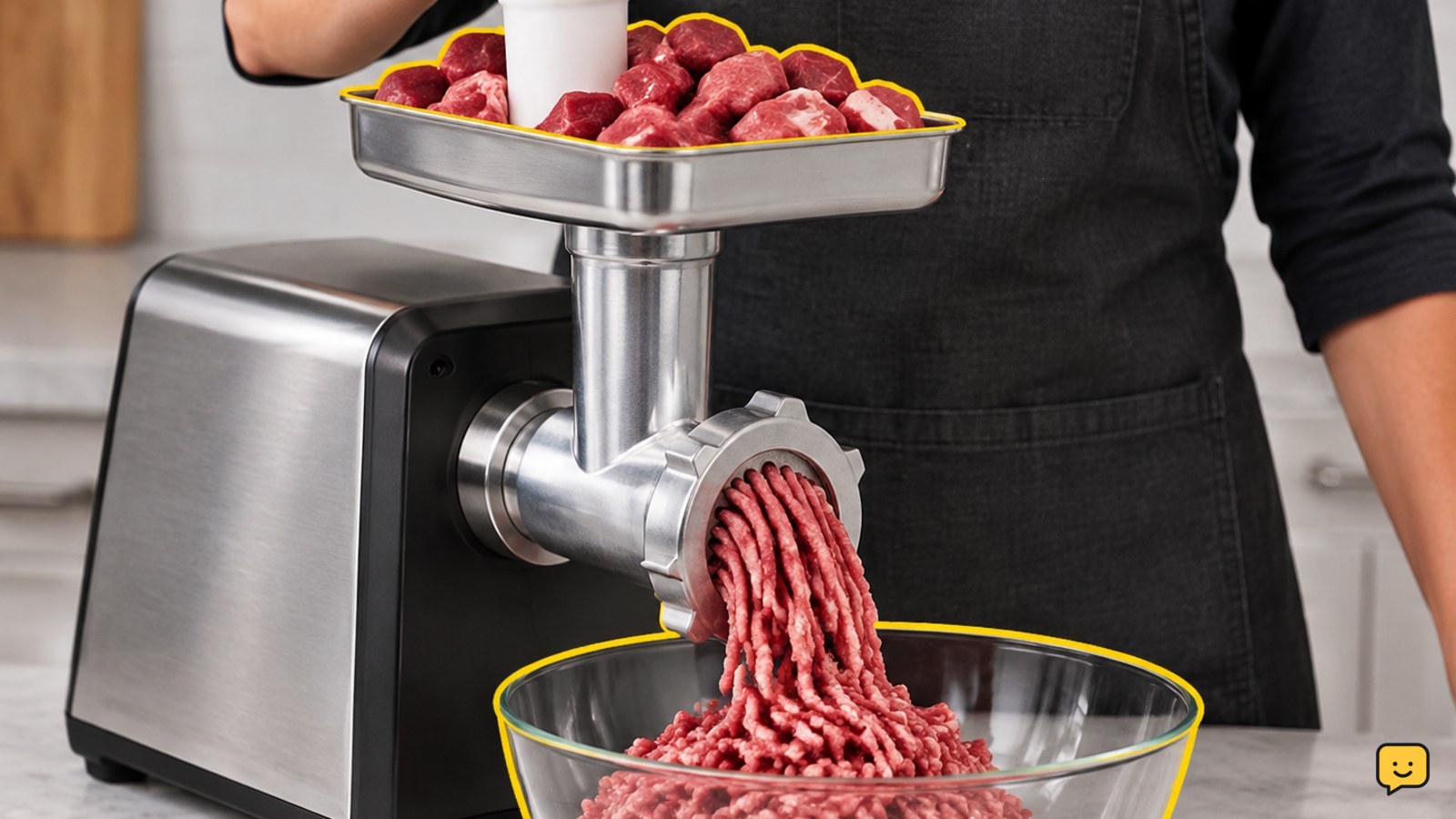
Yes. This recipe is designed as loose Mexican-style chorizo, so you mix the seasoned pork and cook it as crumbles in a skillet. Casings are unnecessary. If you want links, use a sausage-stuffing setup and follow the casing manufacturer’s preparation instructions, but the internal pork temperature still needs to reach 160°F (71°C).
How long should homemade chorizo rest before cooking?
Rest it for at least 2 hours in the refrigerator. An overnight rest gives the vinegar, chiles, garlic, and spices more time to flavor the pork. Do not rest the mixture at room temperature, and do not leave it uncovered where it can drip onto other foods.
Why is my homemade chorizo too dry?
The pork may be too lean, the pan may be too hot, or the crumbles may have been cooked too long. Use ground pork with some natural fat, cook over medium heat, and check temperature rather than relying only on time. For a lean batch, add a small amount of oil while it cooks.
Can I use fresh chili peppers instead of dried chiles?
Yes, but the flavor and moisture will change. Remove stems, blend the peppers with the vinegar and garlic, and use less added liquid at first. Cook a small test portion before adjusting the full batch, because fresh peppers vary in heat and can make the mixture softer.