Turn the thermostat down, let the heater cool, and switch off the circuit breaker before vacuuming. Remove only covers designed to come off, clean dust with a brush attachment, wipe surfaces with a barely damp cloth, and dry everything completely. Never spray liquid into the heater or bend its fins. This applies to electric and hot-water baseboard units.
For more help with this topic, use the Home Maintenance guides.
Check the heater type and isolate the heat
Baseboard heaters need to be cool and safely isolated before cleaning begins. Electric baseboard heaters are connected to household power, while hot-water units transfer heat through pipes and fins; the cleaning method is similar, but the safety check differs.
- Turn the thermostat to its lowest setting or switch the heating control off.
- For an electric heater, turn off the matching circuit breaker and keep it off during cleaning. If you cannot identify the breaker, stop rather than work inside the unit.
- For a hot-water heater, turn the thermostat down and wait until the cover, fins, and nearby pipe are cool. Do not adjust valves or bleed the system just to clean the exterior.
Test the heater cautiously by holding your hand near—not on—the accessible cover. If it still feels warm, wait longer and do not open or wipe it.
Vacuum dust from the cover, fins, and floor
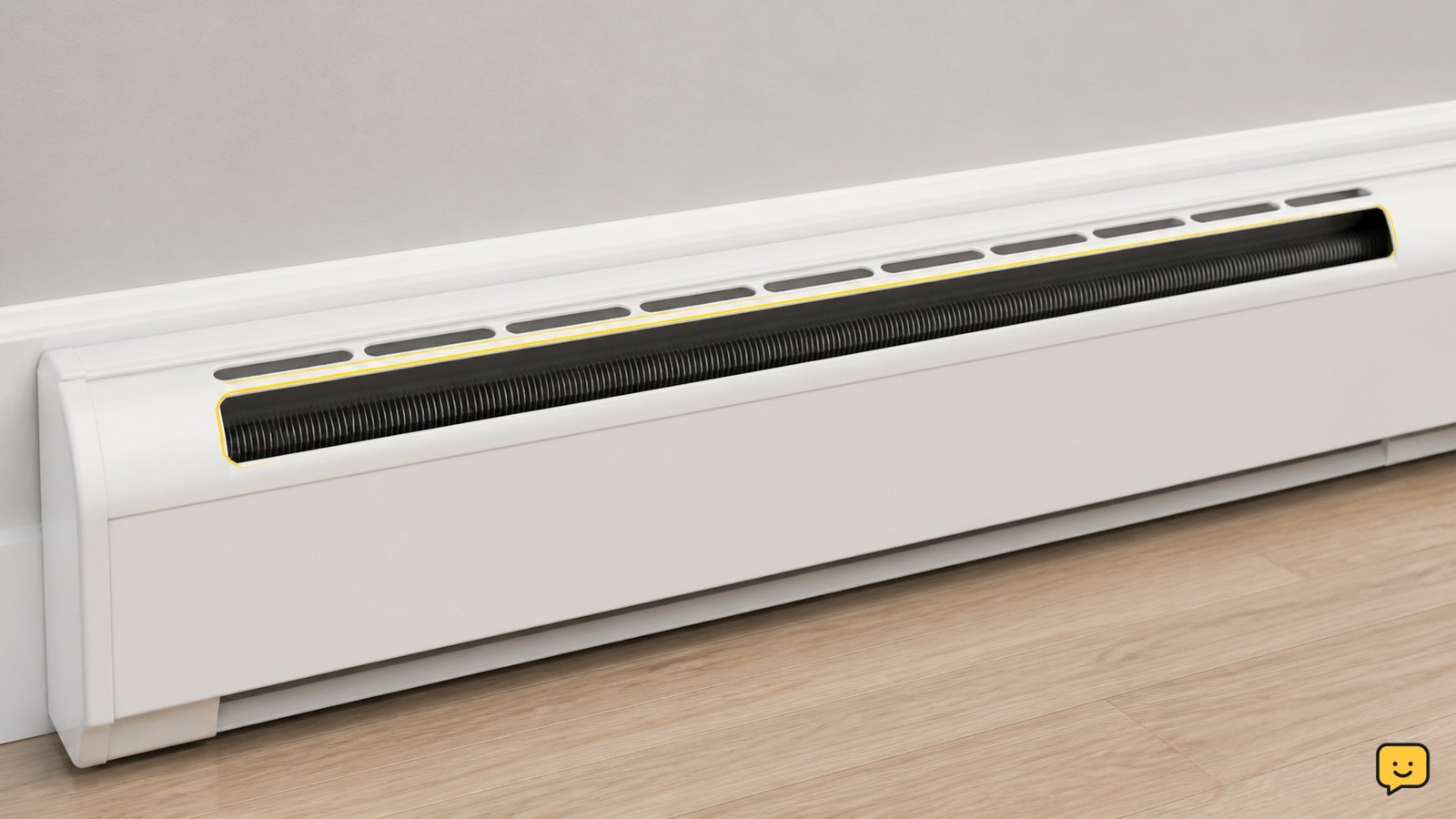
A vacuum with a soft brush attachment removes loose dust from a baseboard heater without pushing it deeper into the cabinet. Start at the top grille and work downward, keeping the nozzle from striking the metal fins.
- Vacuum the top, front, and bottom edges of the cover.
- Use the brush attachment to lift dust from between accessible fins and around the heater’s edges.
- Vacuum the floor and the gap immediately beneath the unit.
- Use a narrow attachment only where it fits without bending fins or contacting wiring.
Do not force the vacuum nozzle through a grille. Bent fins can restrict heat transfer, and contact with electrical parts can create a hazard. A soft, dry paintbrush can loosen dust that the vacuum cannot reach; hold the vacuum beside the brush to capture it.
Remove and wash only safe-to-handle covers
Baseboard heater covers can usually be wiped, and some removable covers can be washed separately, but the cover must come off without force. The supplied baseboard-cover cleaning guidance recommends warm water and mild detergent for remaining surfaces, followed by thorough drying.
- Check for visible clips or simple lift-out sections. Photograph the arrangement if several cover pieces overlap.
- Lift or release the cover according to its design. Do not pry against the wall or bend the metal.
- Wash a detached metal cover with warm water and a small amount of mild detergent, then rinse with a clean damp cloth.
- Dry the cover completely with a towel and leave it out until no moisture remains.
For a cover that does not detach easily, leave it in place. Wipe it with a barely damp microfiber cloth, keeping water away from openings, controls, wiring, fins, and pipes. Never spray cleaner directly onto the heater.
Clean the fins and accessible interior surfaces
The fins inside a baseboard heater should be dust-free but remain straight and dry. Use a soft brush or vacuum brush gently along the direction of the fins instead of scrubbing across them.
- Brush or vacuum loose dust from the upper and lower edges of the fin assembly.
- Remove remaining dust from the cabinet with a dry microfiber cloth.
- Wipe only hard, reachable surfaces with a barely damp cloth if necessary.
- Inspect for thick rust, oil, water marks, damaged insulation, or debris trapped near wiring.
Do not use water, degreaser, abrasive pads, or a steam cleaner inside the heater. If dust is compacted where you cannot reach it without disassembly, stop at the accessible cleaning point rather than removing electrical or plumbing components.
Reassemble the cover and verify safe operation
A cleaned baseboard heater is ready to use when its cover is secure, all surfaces are dry, and no debris blocks the openings. Refit each cover section without forcing clips or leaving sharp edges exposed.
- Confirm that the fins are not bent and that no cloth, brush bristle, or loose dust remains inside.
- Replace the cover and check that it sits evenly against its supports.
- For an electric heater, restore the breaker only after the unit is fully dry. For a hot-water heater, return the thermostat to its normal setting.
- After the heater runs, check for normal warmth and quiet operation.
Successful cleaning leaves less visible dust, clear openings, and no unusual smell, noise, smoke, leak, or breaker trip. Turn the system off and arrange service if any of those warning signs appears.
What to do if dust, odor, or poor heating remains
Persistent symptoms after cleaning usually point to a condition that cleaning cannot correct. Use the symptom to choose the safest next action.
- Dust returns quickly: Check nearby flooring, curtains, pet bedding, and air movement, then vacuum the surrounding floor more often. Keep furniture and fabric from covering the heater.
- Burning smell or smoke: Turn off the thermostat and, for an electric unit, switch off the breaker. Stop using the heater until an electrician or qualified technician inspects it.
- Water, rust, or staining: Turn down the heat and stop cleaning around the affected area. A hot-water system may need plumbing or heating service.
- Heater stays cold: Verify the thermostat setting and, for electric heat, whether the breaker has tripped. Do not remove wiring covers or attempt internal repairs as part of cleaning.
- New buzzing, crackling, or repeated breaker trips: Leave the power off and arrange professional inspection.
Frequently asked questions
How often should baseboard heaters be cleaned?
Clean baseboard heaters at least once each heating season and whenever visible dust collects on the grille or fins. Homes with pets, renovations, or frequent dust may need more frequent vacuuming. A light vacuum between deeper cleanings helps prevent buildup without requiring the cover to be removed.
Can you clean baseboard heaters without removing the cover?
Yes. Vacuum the grille, edges, and accessible fins with a soft brush attachment, then wipe the exterior with a barely damp cloth. This is the safer choice when the cover does not have an obvious release design. Never force the cover off or spray cleaner through its openings.
Can I use compressed air to clean a baseboard heater?
A vacuum is the better first choice because compressed air can scatter dust into the room or deeper into the heater. If dust is unreachable, clean only the accessible area and stop before removing electrical or plumbing parts. Persistent buildup is a reason to request professional cleaning or inspection.
Why does my baseboard heater smell after cleaning?
A brief dusty smell can occur when residual dust warms, but a burning electrical odor, smoke, sparking, or a smell that persists is not a normal cleaning result. Turn the heater off, disconnect electric power at the breaker, and have the unit inspected before using it again.