Yes—most dogs can eat a small amount of plain, fully cooked sweet potato as an occasional treat. Serve it cooled, soft, and free of butter, salt, sugar, spices, and recipe ingredients such as onion or garlic. Skip raw, hard pieces and unfamiliar preparations. Call a veterinarian or animal poison service after risky ingredients or concerning symptoms.
For more help with this topic, use the Everyday Pet Care guides.
Choose plain, fully cooked sweet potato
Dogs can generally eat plain, fully cooked sweet potato as an occasional treat. Purina identifies sweet potato as suitable for dogs when served in moderation, but it should not replace a complete, balanced diet.
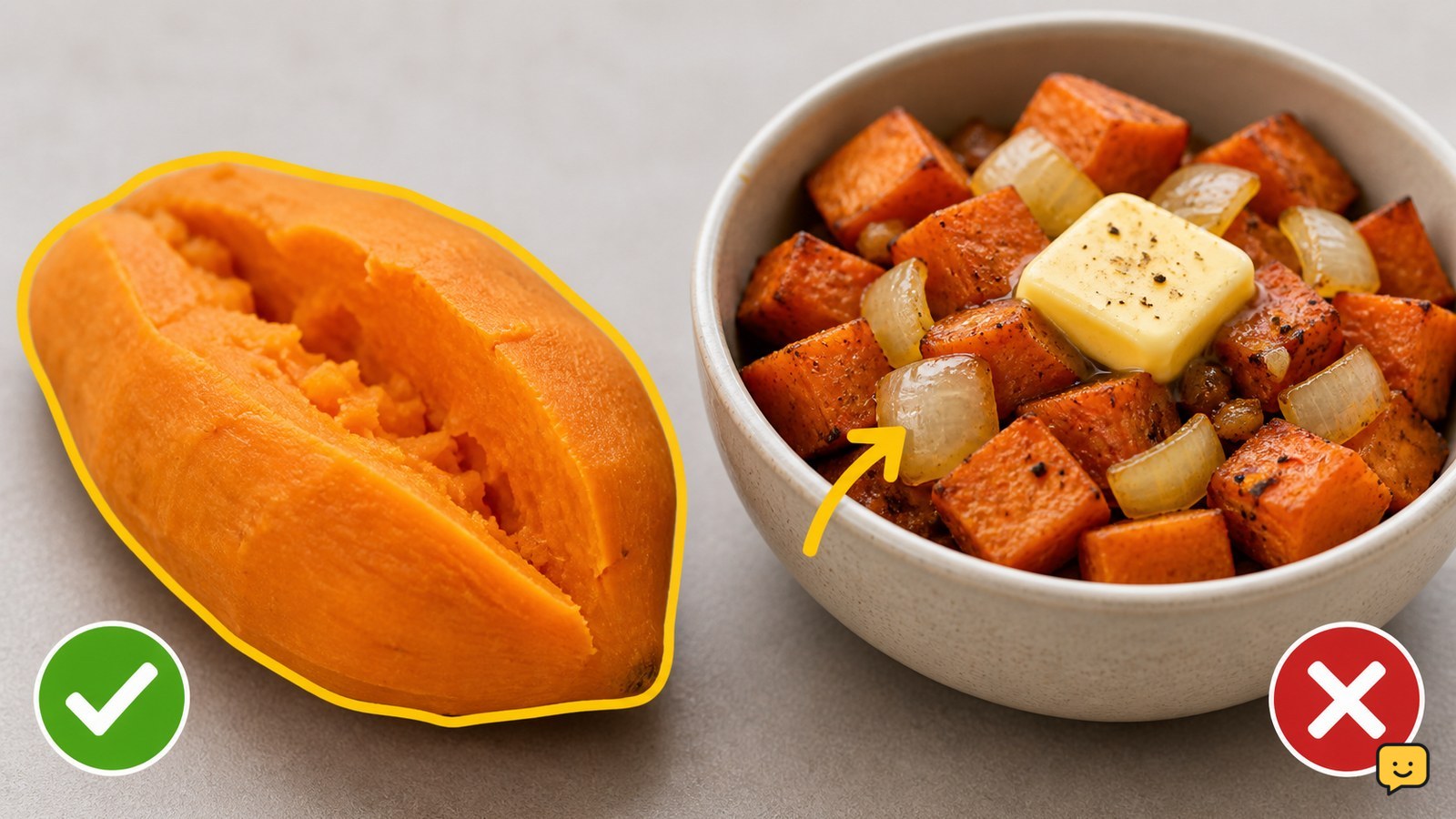
Cook the sweet potato until it is soft, let it cool, and offer it plain. Baking, steaming, or boiling can soften the flesh; remove hard pieces before serving. Keep the treat context reasonable rather than turning it into a daily staple, and ask your veterinarian before adding treats if your dog has a medical condition or a prescribed diet.
Stop if your dog develops digestive upset after eating it. A symptom that persists, becomes severe, or concerns you warrants veterinary advice rather than further experimentation.
Remove raw pieces, tough rind, and recipe add-ins
Raw or hard sweet potato is a poor choice because it is difficult to chew and digest and may present a choking or obstruction risk. Choose soft cooked flesh instead of raw chunks, dehydrated slabs, or large pieces.
The sweet potato itself has no pit or stone, and it is not a fruit with typical seeds. However, do not assume that seeds, pits, nuts, fruit pieces, or toppings in a prepared dish are safe for dogs. The peel or rind is not the safest presentation: it can be tough, dirty, or difficult to digest, so peeling the potato and removing fibrous pieces reduces avoidable risk. Do not offer leaves, vines, or other plant parts when their identity or safety is uncertain.
Plain is the key test for recipes. Avoid sweet potato mixed with butter, cream, gravy, salt, sugar, syrup, or heavily seasoned sauces. Onion, garlic, chives, and leeks are especially important ingredients to check because the ASPCA lists these allium foods among hazards for dogs. Desserts and sugar-free products may also contain ingredients that require urgent professional advice, including xylitol or chocolate.
Check the preparation before offering a treat
Before giving sweet potato to a dog, verify three conditions: it is fully cooked, it is soft enough to break apart easily, and the ingredient list contains only plain sweet potato or dog-safe food approved for your pet.
- Inspect the texture: discard raw, woody, burnt, or unusually hard pieces.
- Inspect the recipe: read the label or ask how the dish was made; do not rely on its color or smell.
- Inspect the serving: remove skins, sticks, wrappers, skewers, and other nonfood objects.
- Watch afterward: note vomiting, diarrhea, excessive drooling, unusual tiredness, weakness, tremors, or changes in breathing or behavior.
If the food passes those checks, a small plain portion can remain an occasional treat. The appropriate amount depends on the individual dog’s size, health, diet, and veterinary advice, so this guide does not prescribe a serving size.
Respond to accidental ingestion by risk, not guesswork
Accidental ingestion needs professional guidance when the sweet potato was raw and hard, the amount is unknown, the dog swallowed a large piece or nonfood object, or the dish contained potentially toxic ingredients.
First, remove access to the remaining food and save its packaging or recipe. Record what was eaten, approximately when it happened, your dog’s weight, and any symptoms. Call your veterinarian, an emergency veterinary clinic, or an animal poison service for case-specific instructions. The ASPCA Animal Poison Control Center and Pet Poison Helpline provide poison-related guidance; fees and availability can vary.
Do not wait for symptoms after known ingestion of a dish containing xylitol, chocolate, raisins, onion, garlic, chives, or leeks. Also seek prompt veterinary advice for repeated vomiting or diarrhea, weakness, severe lethargy, abdominal discomfort, trouble breathing, tremors, seizures, collapse, or any symptom that is rapidly worsening. A poison service or veterinarian can decide whether observation is appropriate; do not make that decision from the food name alone.
Confirm that plain sweet potato is the only exposure
Plain cooked sweet potato is usually the lowest-risk version, but a safe outcome depends on the whole preparation and the dog’s condition. If your dog remains comfortable and symptom-free after a small plain treat, do not add seasonings or increase the portion simply because it was tolerated once.
If symptoms appear, the food was part of a casserole, dessert, baby food, supplement, or restaurant dish, or you cannot confirm the ingredients, stop offering it and contact a veterinary professional. Bring the package or a photograph of the ingredient list. If your dog has a prescribed diet, recurring digestive problems, diabetes, or another health concern, obtain individualized feeding advice from its veterinarian before using sweet potato as a regular treat.
Frequently asked questions
Can dogs eat sweet potato skin?
Dogs may tolerate thoroughly cleaned, cooked skin, but peeling the sweet potato is the more cautious option because the skin can be tough and harder to digest. Never serve dirty, raw, burnt, or unusually thick pieces. Contact a veterinarian if your dog swallowed a large amount of skin or shows repeated vomiting, diarrhea, weakness, or discomfort.
Can dogs eat sweet potato fries?
Sweet potato fries are not a good routine dog treat. They commonly contain excess oil, salt, coatings, or seasonings, and some recipes include onion or garlic. If your dog ate fries, check the ingredients and contact a veterinarian or animal poison service promptly if the recipe contained a potentially toxic additive or the amount eaten is unknown.
What should I do if my dog ate sweet potato casserole?
Check the recipe immediately and keep the package or ingredient list. Casserole may contain butter, sugar, dairy, onion, garlic, raisins, chocolate, or sugar-free sweeteners. Call your veterinarian or an animal poison service for advice rather than waiting for symptoms, especially when the ingredients or quantity are unknown. Do not induce vomiting or give a home remedy.
Can dogs eat sweet potato every day?
Sweet potato is better treated as an occasional addition than as a daily staple. Frequent extras can unbalance the diet or aggravate digestive problems, and the right choice depends on the dog’s health and normal food. Ask your veterinarian before making it a regular treat, particularly if your dog follows a therapeutic or restricted diet.