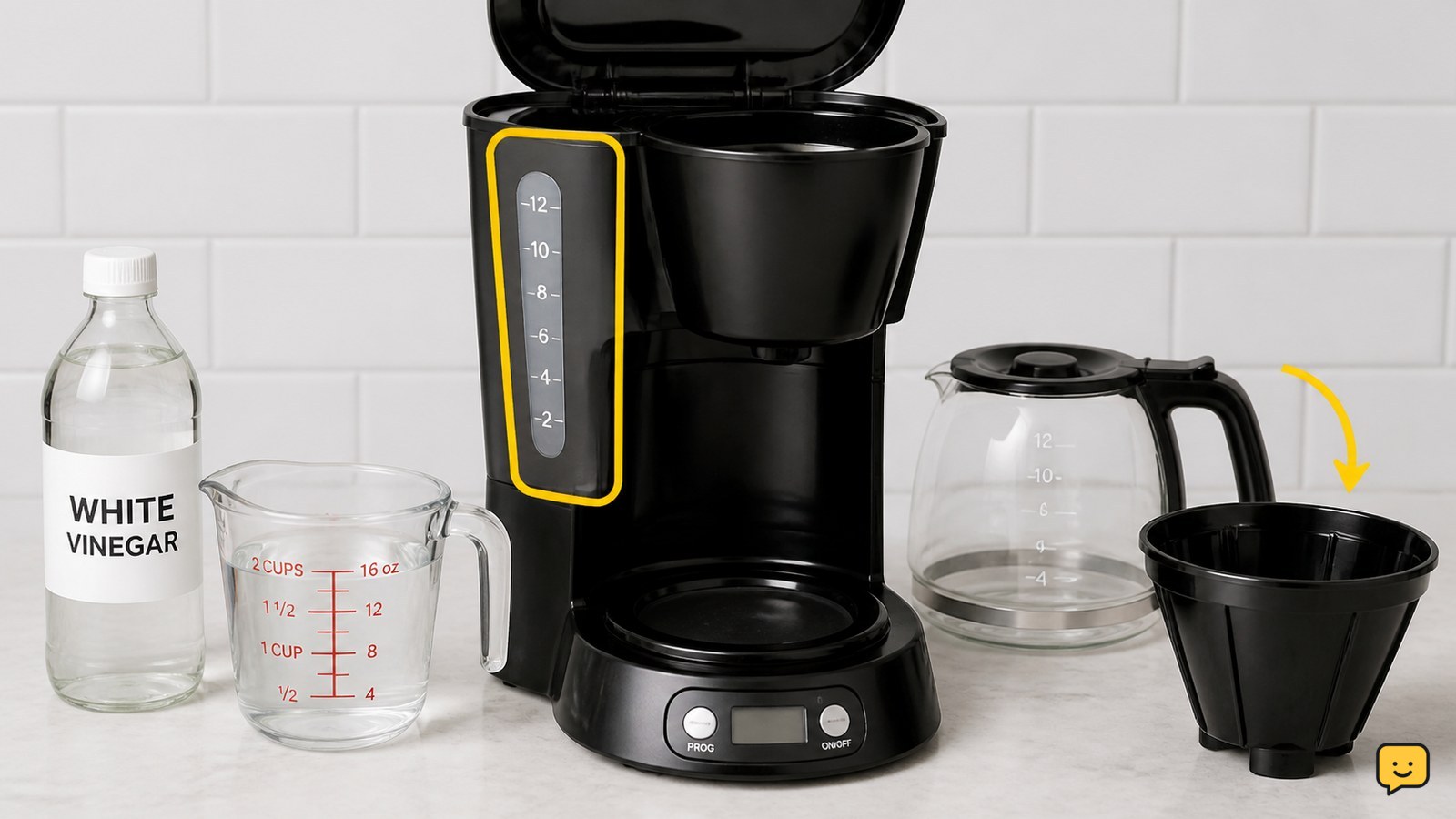
To clean a standard drip coffee maker with white vinegar, empty the grounds and carafe, wash removable parts, and fill the reservoir with equal parts white vinegar and water. Run a full brew cycle, discard the solution, then run fresh water through the machine until the vinegar smell and taste are gone.
For more help with this topic, use the Cooking Basics guides.
Check that white vinegar suits your coffee maker
A standard drip coffee maker is the best match for this vinegar method, while pod, espresso and specialty machines may require a manufacturer-approved descaler. Vinegar can help loosen mineral buildup and coffee residue, but the supplied evidence does not establish one formula for every model.
The Kitchn recommends a one-part-water to one-part-vinegar solution and a cleaning run. Mr. Coffee also describes adding white vinegar and water to the reservoir, with vinegar making up about half of the mixture. If your manual provides a different ratio or a dedicated clean cycle, follow that instruction instead.
- Remove any paper filter and used coffee grounds.
- Empty the carafe and check that the brew basket is clear.
- Wash the carafe, brew basket and reusable filter with warm water and dish soap.
Run the white vinegar cleaning cycle
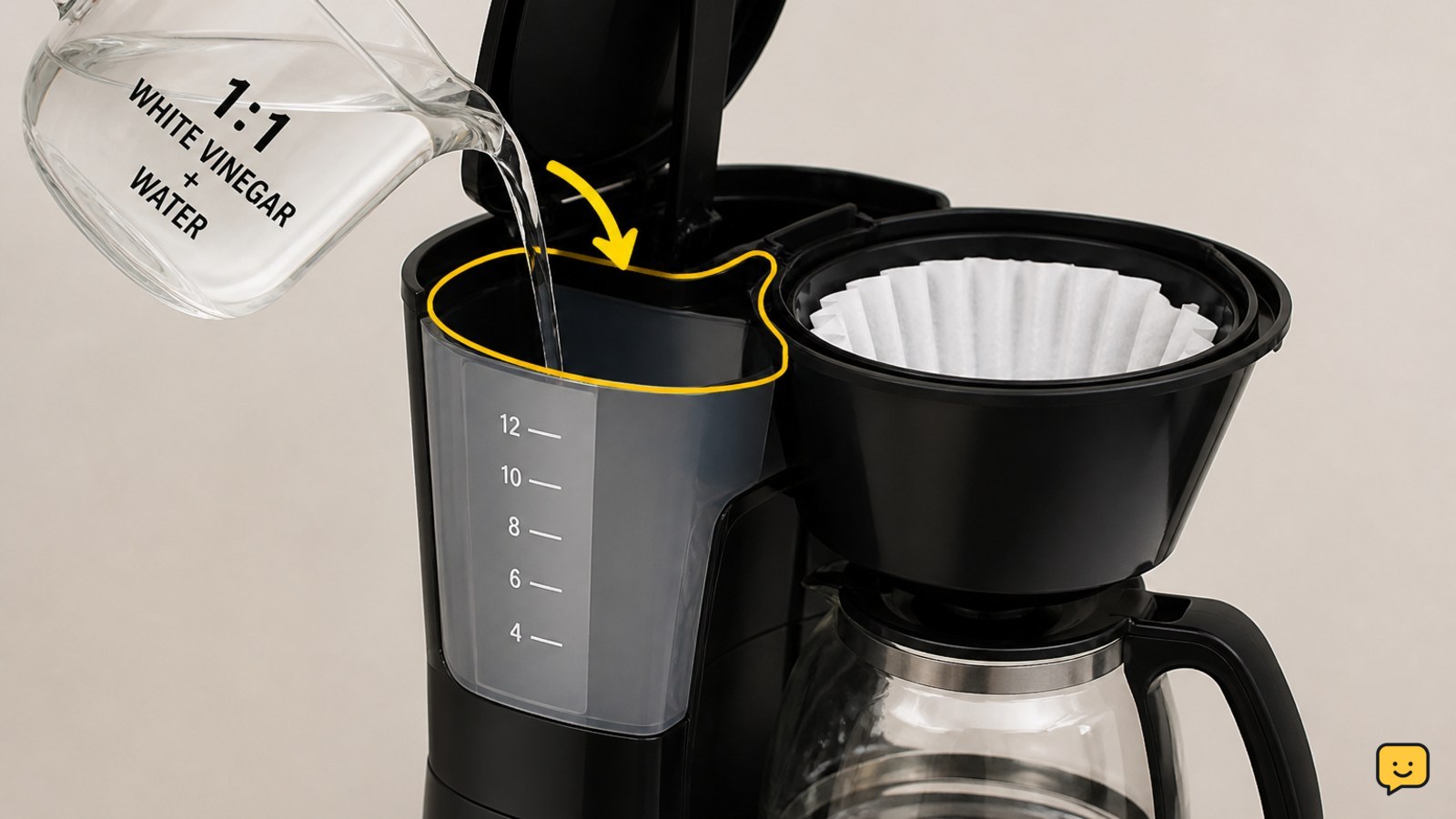
To clean a standard drip coffee maker, pour equal parts white vinegar and water into the reservoir without exceeding the maximum-fill line.
- Place the empty brew basket and carafe back in position.
- Insert a clean paper filter only if your machine needs one to catch loosened residue; otherwise leave the basket empty.
- Start a normal full brew cycle, or select the labeled clean/descale cycle if the manual directs you to use it.
- Let the liquid finish draining into the carafe, then discard it. Do not drink or reuse the cleaning solution.
A vinegar smell during this cycle is expected. Do not leave the machine unattended if it has previously overflowed, leaked or stopped partway through a brew.
Rinse until no vinegar smell or taste remains
Fresh water removes the remaining vinegar from the coffee maker and confirms whether the cleaning cycle is complete.
- Empty and rinse the carafe.
- Fill the reservoir to its normal maximum level with fresh water.
- Run a complete brew cycle and discard the water.
- Repeat with fresh water until the water in the carafe has no noticeable vinegar smell.
Two plain-water cycles may be enough for some machines, but smell and taste are the deciding checks. If vinegar odor remains after several rinses, stop brewing coffee, wash the removable parts again, and consult the manual rather than adding another chemical.
Clean the parts that vinegar does not reach
The reservoir, brew basket, carafe and lid need separate washing because the vinegar-water cycle does not scrub every exposed surface.
- Unplug the cooled coffee maker before wiping the warming plate and exterior with a damp cloth.
- Wash the brew basket, reusable filter, carafe and lid with warm soapy water.
- Wipe coffee splashes from the area beneath the brew basket.
- Rinse all washed parts thoroughly and leave them open to air-dry.
Keep the electrical base, cord connection and controls out of standing water. Do not immerse the coffee maker unless the manual specifically says that the part is washable.
Verify normal flow before brewing coffee
A successfully cleaned coffee maker should complete a water-only cycle without overflow, unusual leakage or a persistent vinegar odor.
Check the carafe for a normal amount of water and look for steady dripping from the brew basket. After the machine cools, inspect the counter and underside for moisture. If flow is still slow, scale may remain in an internal passage; one additional vinegar cycle may be reasonable only if the manual permits it.
Do not keep repeating vinegar cycles when the machine leaks, shuts off early, smells burnt or produces very little water. Unplug it and use the manufacturer’s service guidance instead.
Choose a different descaler when vinegar is unsuitable
A manufacturer-approved descaling product is the safer choice when the manual prohibits vinegar or the coffee maker has a specialized internal system.
Use the product’s stated dilution, cycle and rinse instructions rather than combining it with vinegar. For a machine with a clean light that stays on after descaling, repeat only the documented clean-cycle procedure; do not guess at button combinations or leave cleaning solution sitting in the reservoir.
Frequently asked questions
How often should you clean a coffee maker with white vinegar?
Clean it when mineral buildup, slower dripping or an altered coffee taste appears, and follow the frequency in your machine’s manual if one is provided. Wash the carafe and brew basket more regularly because those parts collect coffee oils even when the internal water path looks clear.
Can you use undiluted white vinegar in a coffee maker?
Use diluted white vinegar unless the manufacturer specifically instructs otherwise. A 1:1 mixture of white vinegar and water is the method supported by the supplied cleaning guidance. Undiluted vinegar is stronger than necessary for this general procedure and may leave a more persistent odor.
Why does my coffee maker still smell like vinegar after rinsing?
The smell usually means vinegar remains in the water path, carafe lid, brew basket or reservoir area. Wash the removable parts with dish soap, then run fresh water through the machine again. Stop if the odor persists after repeated rinsing and check the manual before using another cleaner.
Can vinegar fix a coffee maker that is leaking?
Vinegar may loosen scale that contributes to restricted flow, but it is not a general fix for leaks. If water escapes from the base, cord area or an unfamiliar seam, unplug the machine and stop using it. Check the carafe, brew basket and reservoir seating only after the appliance is cool and disconnected.