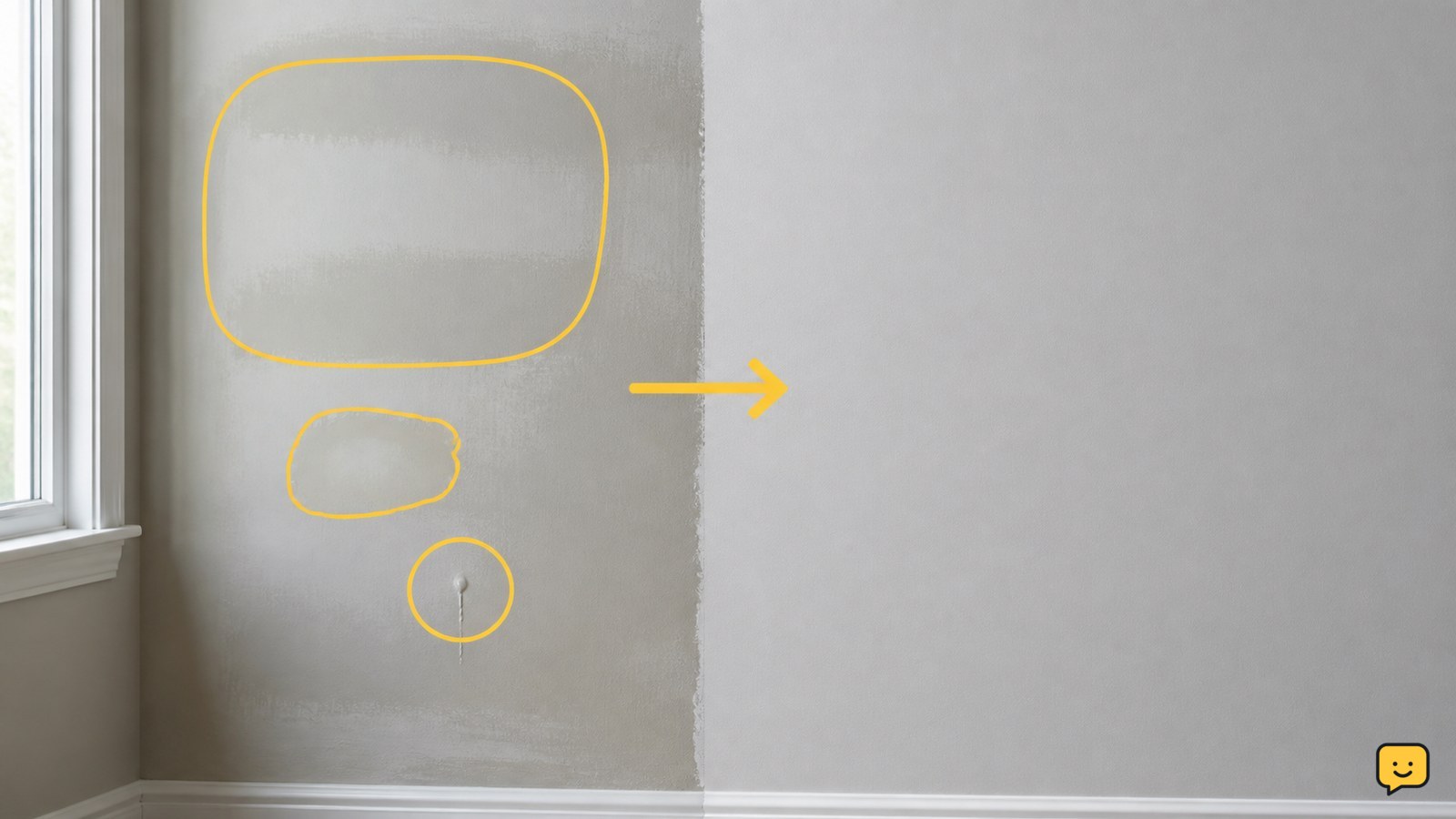
To fix uneven paint, let the surface dry completely, identify whether the problem is color, texture, or sheen, then sand raised areas and remove all dust. Prime stains, repairs, or bare patches before repainting the entire wall or defined section with a properly loaded roller. Stop if the wall is damp, peeling extensively, or the finish stays uneven after preparation.
For more help with this topic, use the Home Maintenance guides.
Check whether the paint or wall is uneven
A painted wall can look uneven because of patchy coverage, raised paint, roller texture, different sheen, or an underlying wall defect. Shine a bright light across the surface from the side and run your clean hand lightly over it. A visible ridge or rough feel needs sanding; a smooth surface with different color usually needs primer or another consistent coat.
| What you see | Likely cause | Best next action |
|---|---|---|
| Dark and light areas | Uneven coverage, porous repairs, or poor hiding | Prime affected areas and repaint the full wall or section |
| Lines or ridges | Heavy roller pressure, lap marks, drips, or paint buildup | Let the coat dry, then sand high areas smooth |
| Glossy and dull patches | Different sheen or spot touch-ups | Use the same paint and repaint from corner to corner |
| Bulges, bubbling, or peeling | Moisture, contamination, or poor adhesion | Stop and fix the underlying condition first |
Let the uneven coat dry before judging it
Uneven paint should be judged only after the coat has dried for the time stated on its label. Wet areas can reflect light differently and may appear streaked even when they level out. If the surface is still soft or tacky, wait longer instead of sanding it. If the color remains visibly patchy after drying, plan to correct the surface and repaint rather than adding small dabs.
Benjamin Moore’s guidance for blotchy or uneven paint is to start over with the preparation and coating process when the finish does not level out. That approach avoids trapping soft paint or creating a larger patch around a failed touch-up.
Sand ridges, drips, and roller marks
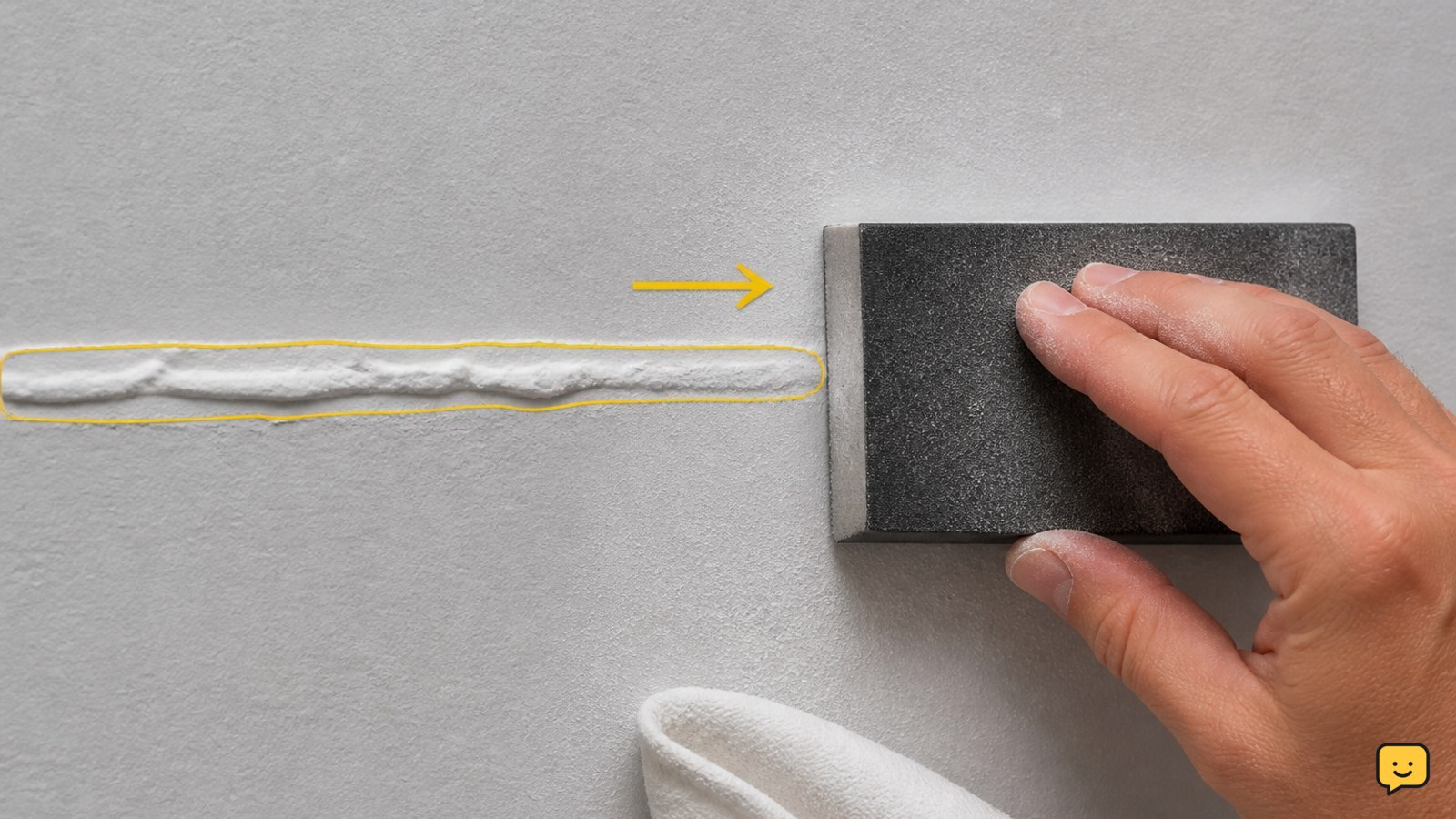
Dry raised paint must be leveled before another coat can produce a smooth finish. Use a sanding block with medium-grit paper on drips, ridges, and heavy roller texture, then switch to finer paper to soften the surrounding edge. Keep the sanding block flat and use light pressure; the goal is to remove high spots, not strip the entire wall.
- Scrape away any loose flakes with a clean putty knife.
- Sand the raised area until it feels flush when checked with your fingertips.
- Feather the edges several inches beyond the repair so the new coat does not create a visible step.
- Remove dust with a vacuum or clean, dry cloth. Do not paint over sanding residue.
Loconsolo’s repair guidance also recommends allowing the paint to dry fully, lightly sanding raised areas, removing dust, and applying a consistent coat. If sanding exposes drywall paper or creates a deep depression, stop sanding and use a suitable patching compound before priming.
Prime stains, repairs, and bare patches
Primer is needed when the wall has exposed substrate, porous filler, water staining, or a sharply different color. Without it, repaired areas can absorb paint at a different rate and remain visible as dull or dark patches. Brush or roll primer over the affected area and slightly beyond it, then let it dry according to the label.
For a major color change or difficult-to-cover color, use a primer suited to the surface and the stain. Community painting discussions commonly note that strong reds can need a gray-tinted primer and multiple finish coats, but treat that as a color-specific option rather than a universal rule. Match the new paint’s base and sheen to the existing finish, and mix the paint thoroughly before use.
Repaint the whole wall or a defined section
A smooth, uniform coat is the most reliable way to hide uneven color or sheen. For a wall that shows scattered patches, repaint from one corner to the other instead of making isolated spot repairs. Use a brush only for edges and a roller for the broad surface.
- Load the roller evenly and roll excess paint off on the tray ridges.
- Work in manageable sections, keeping a wet edge so adjacent sections blend before drying.
- Apply moderate pressure; pressing harder near the end of a pass can create thin bands.
- Finish each section with light, parallel strokes in the same direction.
- Keep the roller moving until the section is covered, but do not repeatedly roll paint that has begun to set.
- Allow the coat to dry fully before deciding whether another coat is required.
Use the paint label’s coverage and recoat guidance rather than assuming two coats will always be enough. Dark colors, porous repairs, and large color changes may need additional consistent coats.
Verify the finish and choose the next repair
The repair is successful when the wall looks uniform in normal room light, remains consistent under side lighting, and feels smooth without distinct ridges or gritty dust. Check the wall after the final coat has dried, viewing it from several angles rather than inspecting only the wet area.
If the color is even but the texture is not, sand only the high spots after drying and apply another light coat. If the texture is smooth but the sheen changes, repaint the complete wall or a natural break such as a corner. If stains bleed through, stop repeating finish coats and use a stain-blocking primer suited to the surface. If the entire wall continues to fail, the paint may be incompatible, contaminated, incorrectly mixed, or applied in unsuitable temperature or humidity; stop and ask a paint professional to identify the cause.
Frequently asked questions
Can I fix uneven paint with a small touch-up?
Sometimes, but only when the damaged area is small and you have the original paint in the same color and sheen. Feather the touch-up into the surrounding area with a nearly dry brush or small roller. If the patch remains visible after drying, repaint the entire wall or the section between natural breaks.
Why is my wall still patchy after two coats of paint?
The surface may be absorbing paint unevenly, the previous color may be difficult to cover, or repairs and stains may not have been primed. Check the dry wall under side lighting. If it is smooth but blotchy, prime the affected areas or use a suitable tinted primer, then apply another consistent coat.
Should I sand between coats of wall paint?
Sand between coats only when the dry surface has raised dust, nibs, ridges, or roller texture. Use fine-grit paper with light pressure, then remove every trace of dust before recoating. Do not sand a soft coat or use aggressive pressure that exposes drywall or removes sound paint.
How do I fix uneven paint sheen on a wall?
Repaint the whole wall with paint from the same product line, color, and sheen. Spot painting often leaves a visible halo because the new and old surfaces reflect light differently. If the sheen difference comes from contamination or poor adhesion, clean and prepare the surface before applying fresh paint.