Water succulents by soaking the potting mix until water runs from the drainage holes, then let the mix dry completely before watering again. Check the soil several inches down and lift the pot when possible. Water less often in cool, low-light conditions, and stop if the soil stays wet, the stem softens, or water collects around the roots.
Check whether the succulent is ready for water
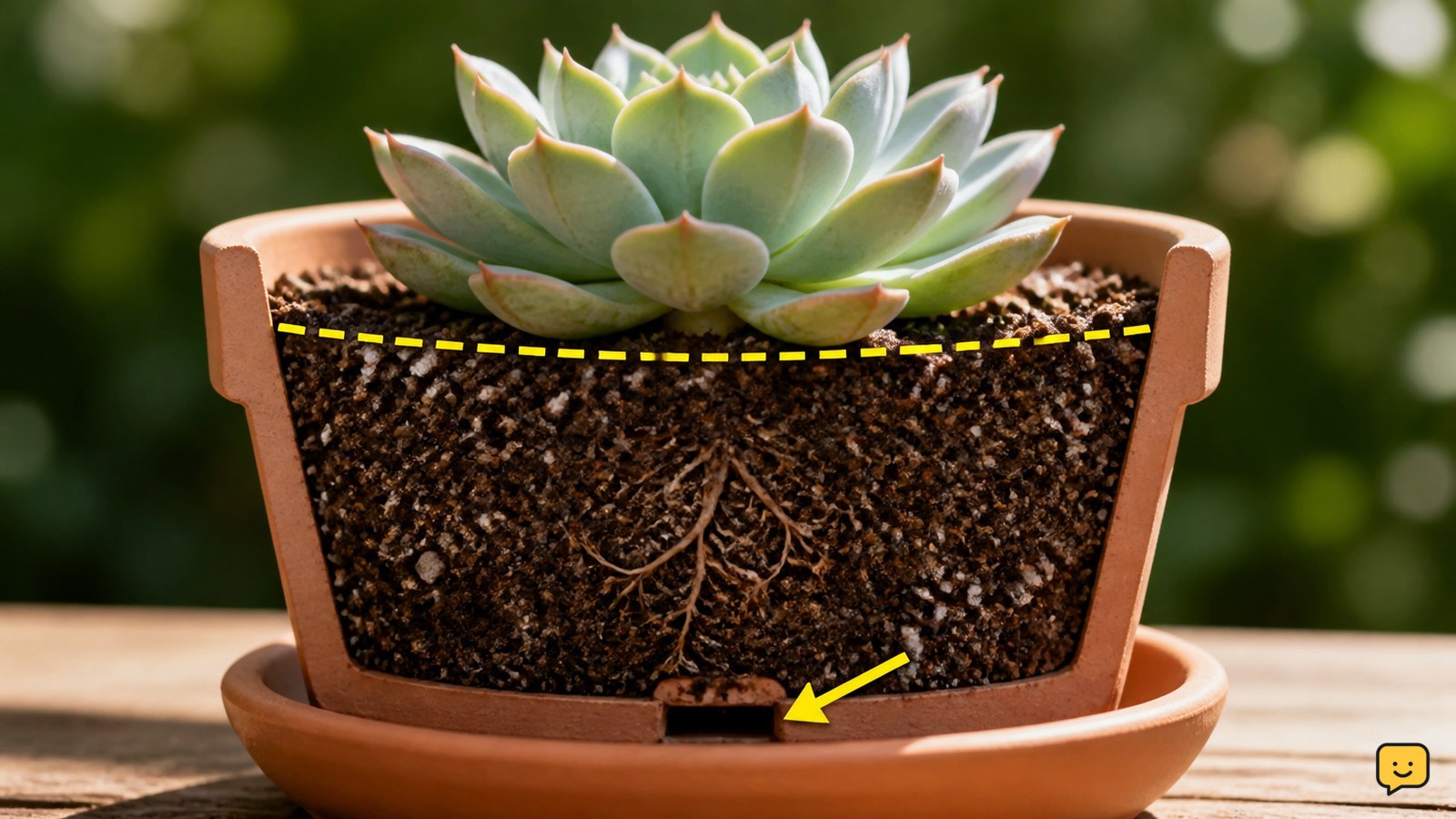
Succulents are ready for water when the potting mix has dried substantially or completely through the root zone, not simply when the surface looks dry. Push a finger or wooden stick several inches into the mix, then lift the pot if it is small enough to handle safely. A noticeably lighter pot plus dry mix is a stronger signal than a calendar reminder.
Do not water merely because the leaves look slightly soft. Heat, recent repotting, root damage, and normal growth can change leaf firmness. If the lower soil is damp, wait and check again later.
Water the pot until excess drains out
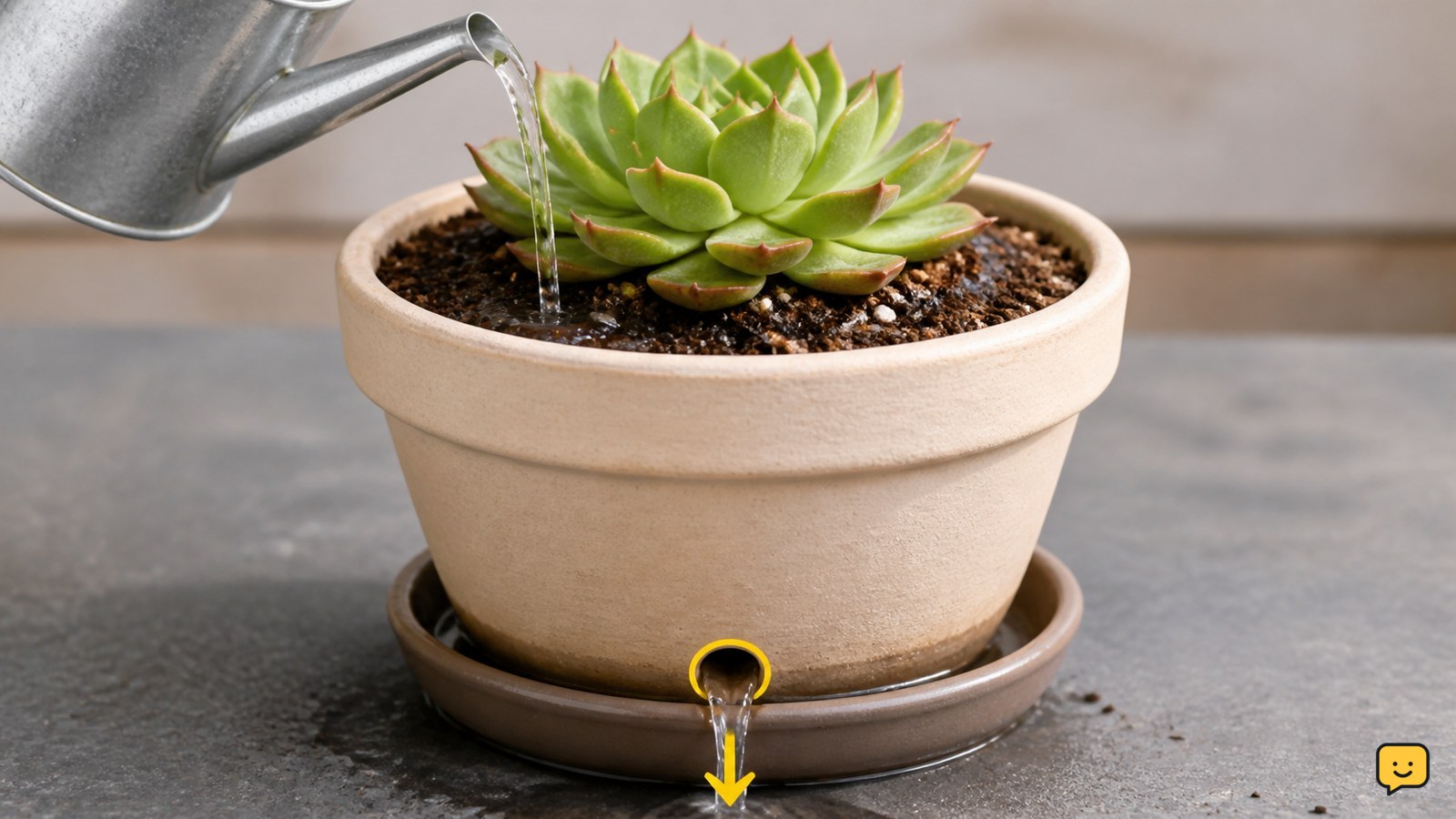
For a succulent in a draining container, pour water slowly over the soil surface until the mix is thoroughly wet and water begins to leave the drainage holes. This is the soak-and-dry method described by Planet Desert: saturate the soil, then allow it to dry before repeating the process.
Apply the water to the soil rather than repeatedly misting the leaves. Slow pouring helps dry pockets absorb water and makes it easier to see when the container is draining. After watering, wait until the flow slows, then empty any saucer or cachepot that is holding water.
Verification: The soil should be evenly wet rather than dry in the center and flooded at the edge. The pot should drain freely, and no standing water should remain around the roots.
Adjust the interval for season and growing conditions
There is no reliable universal schedule for succulents. A plant in bright light, warm weather, a small porous pot, or a fast-drying mix may need checking more often than one in cool shade, a large container, or low winter light.
As a starting comparison, Debra Lee Baldwin describes about weekly watering in summer and about monthly watering in winter, but those intervals still depend on the plant and its conditions. Use them only as a reason to check the soil, not as an automatic schedule.
In cool or low-light weather, wait longer between soakings because the mix may stay wet. In hot conditions, check sooner, but do not water again until the root-zone mix has dried. Record the date and how long the pot took to dry for the first few cycles; that creates a useful plant-specific interval.
Handle containers without drainage safely
A succulent in a container without a drainage hole cannot be watered with the usual “water until it runs out” check. Excess water has nowhere to go, so the safest long-term option is to move the plant into a draining container with an appropriate mix.
Until it can be repotted, water only a small, controlled amount after confirming that the mix is dry below the surface. Stop immediately if water pools or the lower mix remains wet. This is a cautious workaround, not an equivalent substitute for drainage; Baldwin’s guidance notes that succulents can sometimes grow without drainage, but moisture control becomes more demanding.
Do not assume a layer of stones at the bottom makes a sealed pot drain properly. It does not provide an outlet for excess water. Treat persistent wetness as a reason to repot rather than adding more water.
Verify healthy moisture levels and respond to failure signs
A correctly watered succulent has dampened soil immediately after watering, followed by a drying period. New growth should remain firm, and the plant should not sit in water. The mix should not stay continuously wet between checks.
If the leaves become thin or wrinkled while the soil is dry, water thoroughly once and monitor the plant rather than giving repeated small splashes. If leaves turn translucent, yellow, or soft while the soil remains wet, stop watering and inspect the drainage, mix, and roots. A soft stem or dark, spreading tissue is a stop condition: continuing to water can worsen the problem.
If water runs down the sides without wetting the center, pour more slowly and check the mix after several minutes. If the soil repels water repeatedly, the mix may be compacted or exhausted; repotting into fresh, fast-draining mix is safer than increasing the watering frequency.
Frequently asked questions
How often should succulents be watered?
Water when the potting mix has dried through the root zone, rather than on a fixed weekly schedule. Bright light, warmth, small pots, and porous soil usually shorten the drying interval; cool weather, shade, large containers, and winter dormancy lengthen it. Check the soil and pot weight each time.
Should you water succulents from the top or bottom?
Watering from the top is usually the simplest method: slowly soak the soil until water drains from the holes, then empty the saucer. Bottom watering can wet a dry root ball, but remove the pot once the mix is moist and do not leave it sitting in water.
Can succulents live in pots without drainage holes?
They can sometimes survive in sealed containers, but moisture is harder to control because excess water cannot escape. Use a draining pot when possible. If a sealed container stays wet or water pools, stop watering and repot rather than trying to correct the problem with a larger dose.
Why are my succulent leaves soft after watering?
Soft leaves after watering usually mean the plant is stressed or the soil is staying too wet, especially if the stem is also soft or dark. Stop watering, check below the surface, and inspect drainage. Do not keep adding water to firm the leaves when the mix is already damp.
For more help with this topic, use the Gardening guides.