Pat the New York strip dry, season it, and sear it in a very hot oven-safe skillet until browned on both sides. Move the skillet to a 350°F oven to finish cooking, then check the thickest part with a thermometer. Snake River Farms lists 120°F for medium-rare, followed by a short rest before slicing.
Choose and prepare the New York strip for even cooking
A New York strip cooks most evenly when its surface is dry and its thickness is reasonably consistent. Pat both sides dry with paper towels, then season generously with salt and pepper. Remove any loose surface moisture before the steak touches the pan; wet meat steams instead of browning.
Use an oven-safe skillet large enough to hold the steak without crowding. Heat the oven to 350°F while the skillet warms. The steak is ready for the pan when the seasoning is in place and the cooking oil is nearby, because the sear should begin as soon as the pan reaches high heat.
Sear the steak until both sides develop a brown crust
Searing a New York strip creates the browned exterior before the center finishes in the oven. Heat the skillet over high heat, add a thin film of oil, and place the dry steak in the pan away from you to reduce splatter.
Leave the steak undisturbed long enough for the first side to brown, then turn it with tongs and brown the second side. Avoid repeatedly flipping or pressing the meat; pressing forces juices onto the pan and makes the surface harder to brown. If the oil begins smoking heavily, reduce the heat rather than allowing the pan to scorch.
The sear is ready for the next stage when both broad sides are visibly browned. A pale gray surface means the pan was not hot enough or the steak was too wet, so keep cooking briefly rather than moving it to the oven immediately.
Finish the New York strip in a 350°F oven
Finishing the seared New York strip in a 350°F oven cooks the center more gently than continuing over high stovetop heat. Transfer the oven-safe skillet to the preheated oven and begin checking the steak before the estimated cooking window ends.
Snake River Farms’ New York strip method places the skillet in a 350°F oven for about 10 to 20 minutes and identifies 120°F as its medium-rare target. The exact time depends on the steak’s thickness, starting temperature, and pan, so use time only as a guide.
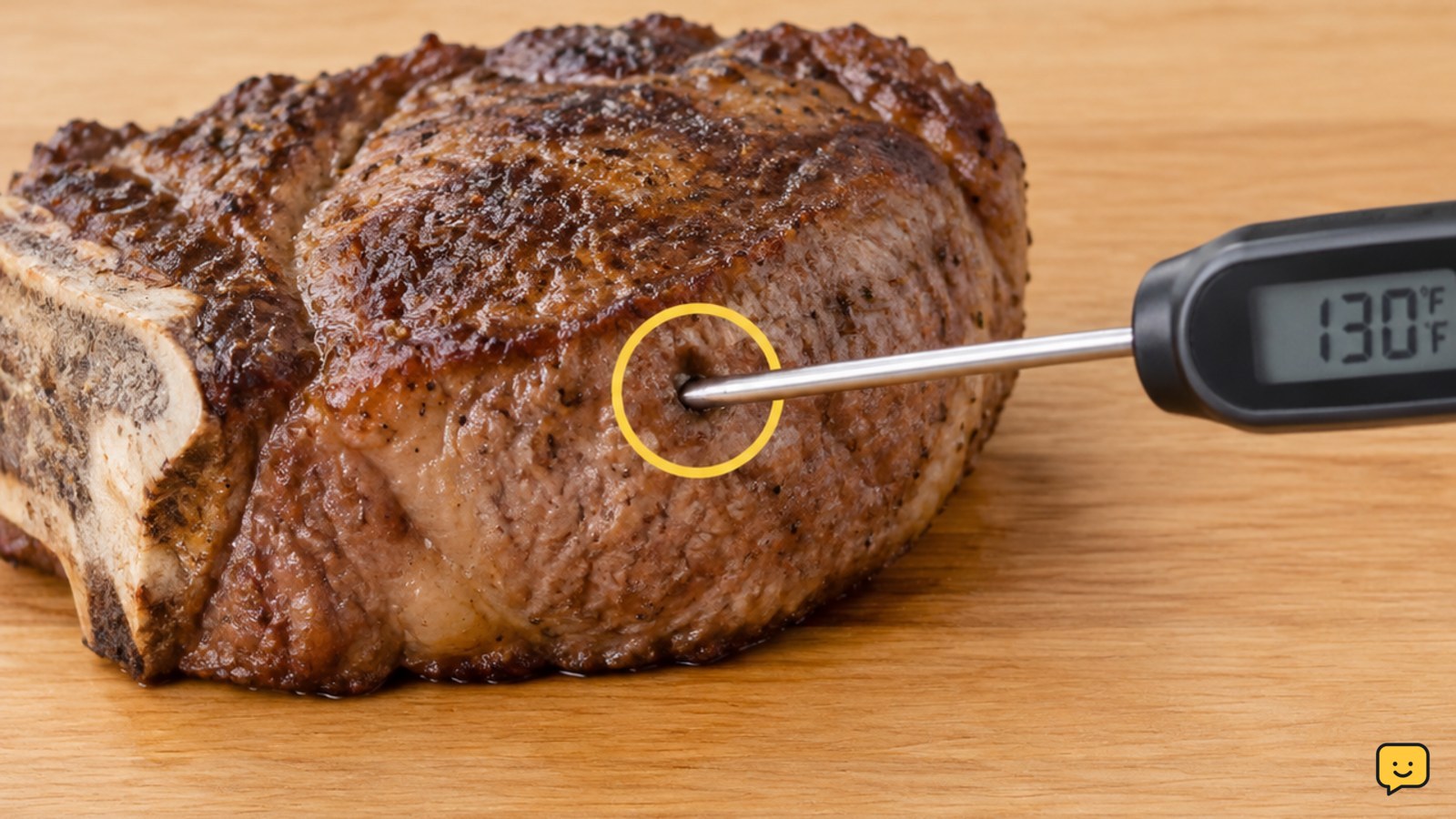
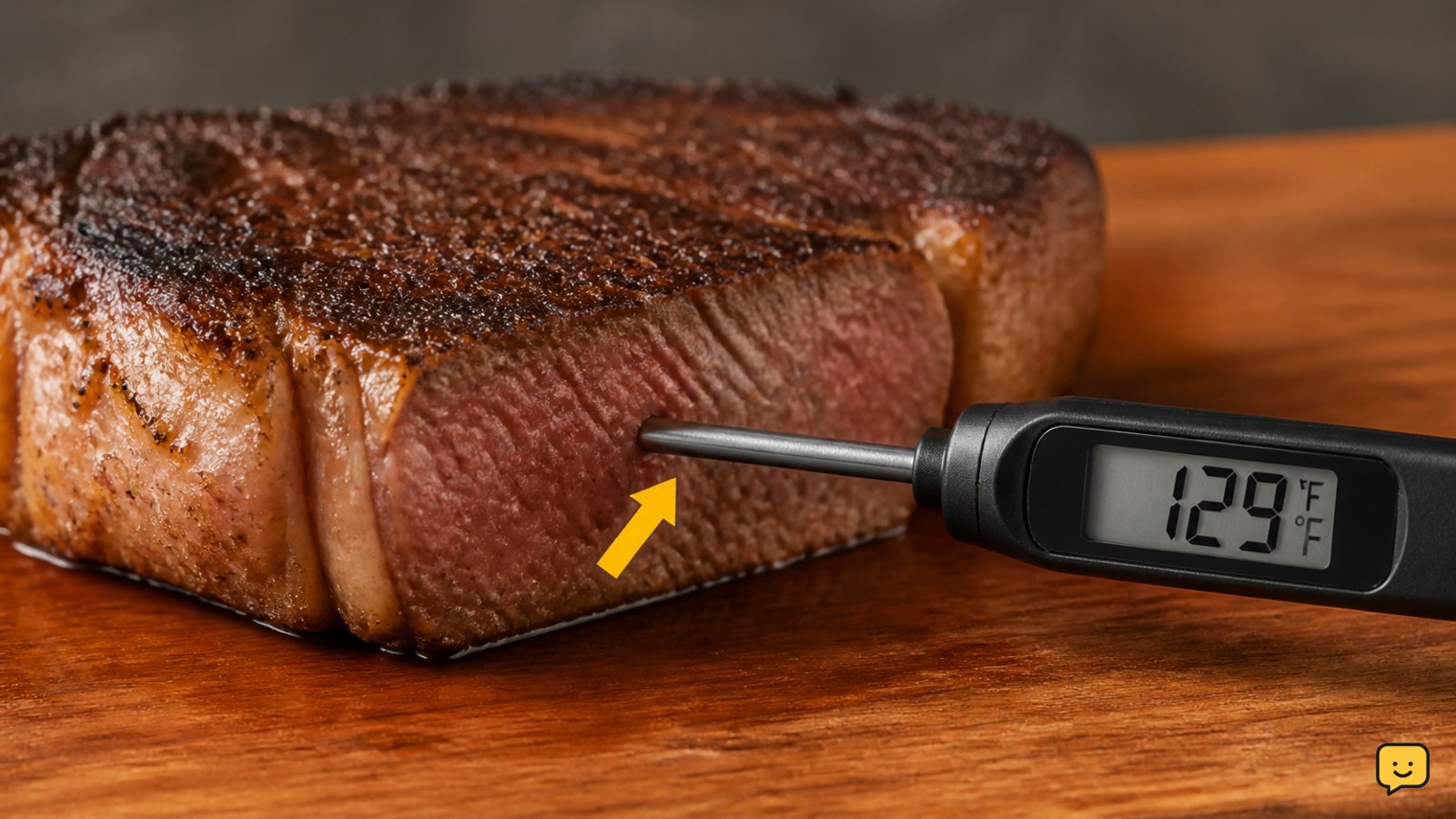
Insert an instant-read thermometer horizontally into the thickest part of the steak, avoiding the skillet and any large fat seam. Remove the steak when it reaches your intended target according to your preferred doneness and applicable food-safety guidance. If the center is below target, return the skillet to the oven and check again after a short interval.
Rest and verify the steak before slicing
Resting the New York strip gives its internal heat and juices time to settle after cooking. Transfer it to a clean plate or board and leave it undisturbed for several minutes before slicing.
Verify the result by checking the thickest center with the thermometer and by looking for a browned crust with a center that matches your chosen doneness. If the steak is less done than you want, return it to the warm skillet or oven briefly; if it is already overdone, slice it thinly across the grain and serve it with its accumulated juices.
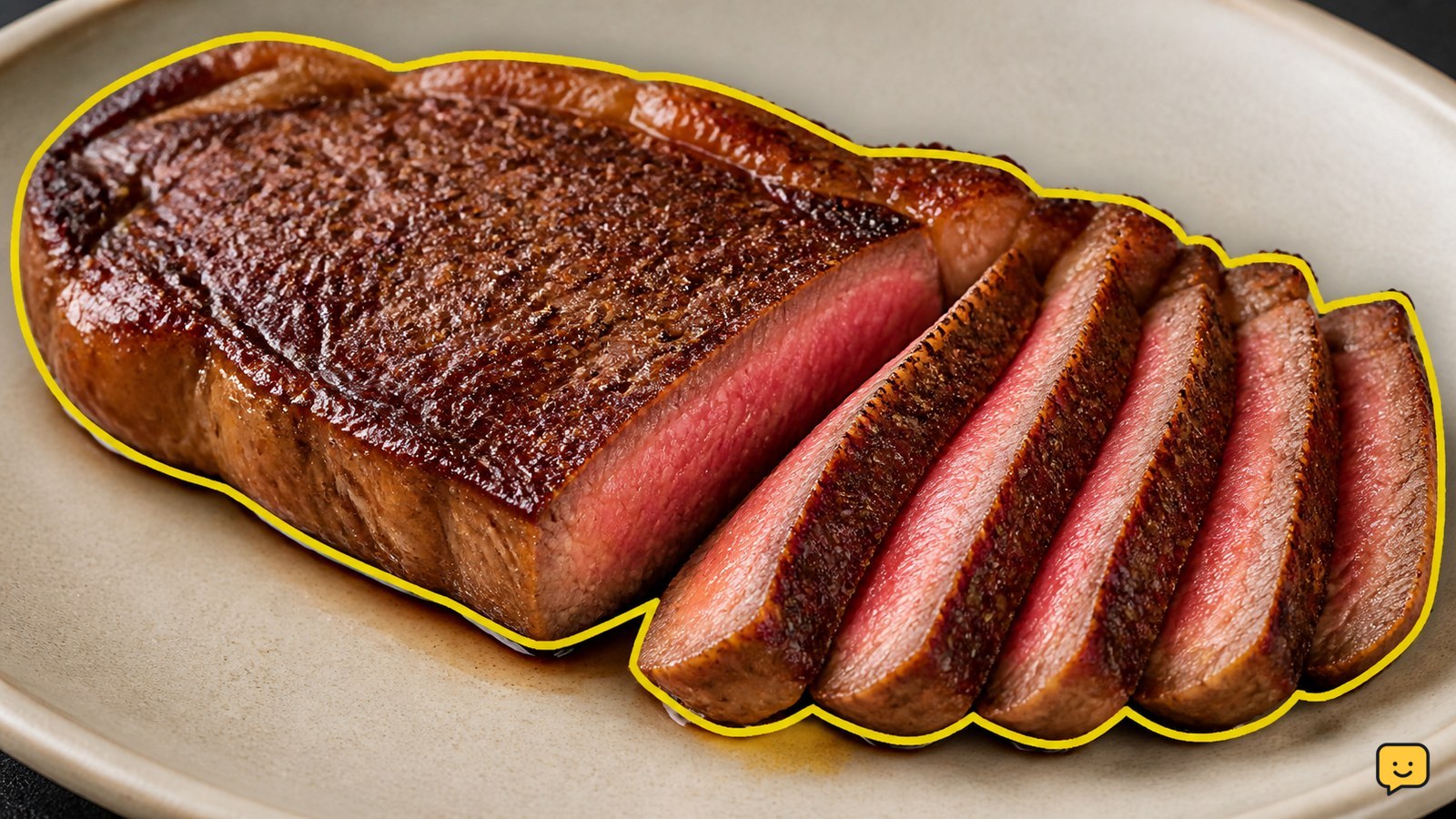
Slice across the muscle fibers rather than parallel to them. Shorter slices are easier to chew and make a firm, well-seared steak feel more tender.
Fix common problems or choose another cooking route
Most New York strip problems come from moisture, uneven heat, or judging doneness by time alone. Use the symptom as the decision point:
- Pale crust: the surface may have been wet or the pan too cool. Pat the next steak drier and preheat the skillet longer.
- Burned outside, cool center: the pan heat was too aggressive for the steak’s thickness. Sear until browned, then finish at 350°F instead of staying on high heat.
- Center is too raw: return the steak to the oven and check the thickest part again with the thermometer.
- Center is too firm or dry: shorten the next oven interval and start checking earlier; do not rely on the same timing for a different thickness.
For a steak that is too thin for a useful oven finish, cook it entirely in the hot skillet and turn it as needed until the center reaches your target. For a very thick steak, use the skillet-to-350°F-oven method and check temperature rather than adding a fixed amount of time.
Frequently asked questions
What temperature should a New York strip be for medium-rare?
For the method cited by Snake River Farms, 120°F is the medium-rare target before resting. Measure the thickest part horizontally with an instant-read thermometer, avoiding the pan. Because steak thickness and carryover cooking vary, use the thermometer as the main check rather than relying on a fixed cooking time.
Can I cook a New York strip without an oven-safe skillet?
Yes. Sear the steak in a skillet, then transfer it to a preheated oven-safe pan or baking sheet to finish. Do not place a skillet in the oven unless its body and handle are rated for oven use. A thin steak can also finish entirely on the stovetop while you monitor its center temperature.
Why is my New York strip tough after cooking?
A New York strip is often tough when it is overcooked, sliced with the grain, or cut from a less tender section. Check the center temperature earlier on the next attempt, rest the steak briefly, and slice across the grain. A thick steak benefits from a hot sear followed by gentler oven finishing.
For more help with this topic, use the Cooking Basics guides.