To make a sourdough starter, mix 50 grams of flour with 50 grams of water in a clean jar. Keep it loosely covered at room temperature, then discard part and feed it with equal weights of flour and water each day. It is ready when bubbly, pleasantly sour, and reliably doubles after feeding.
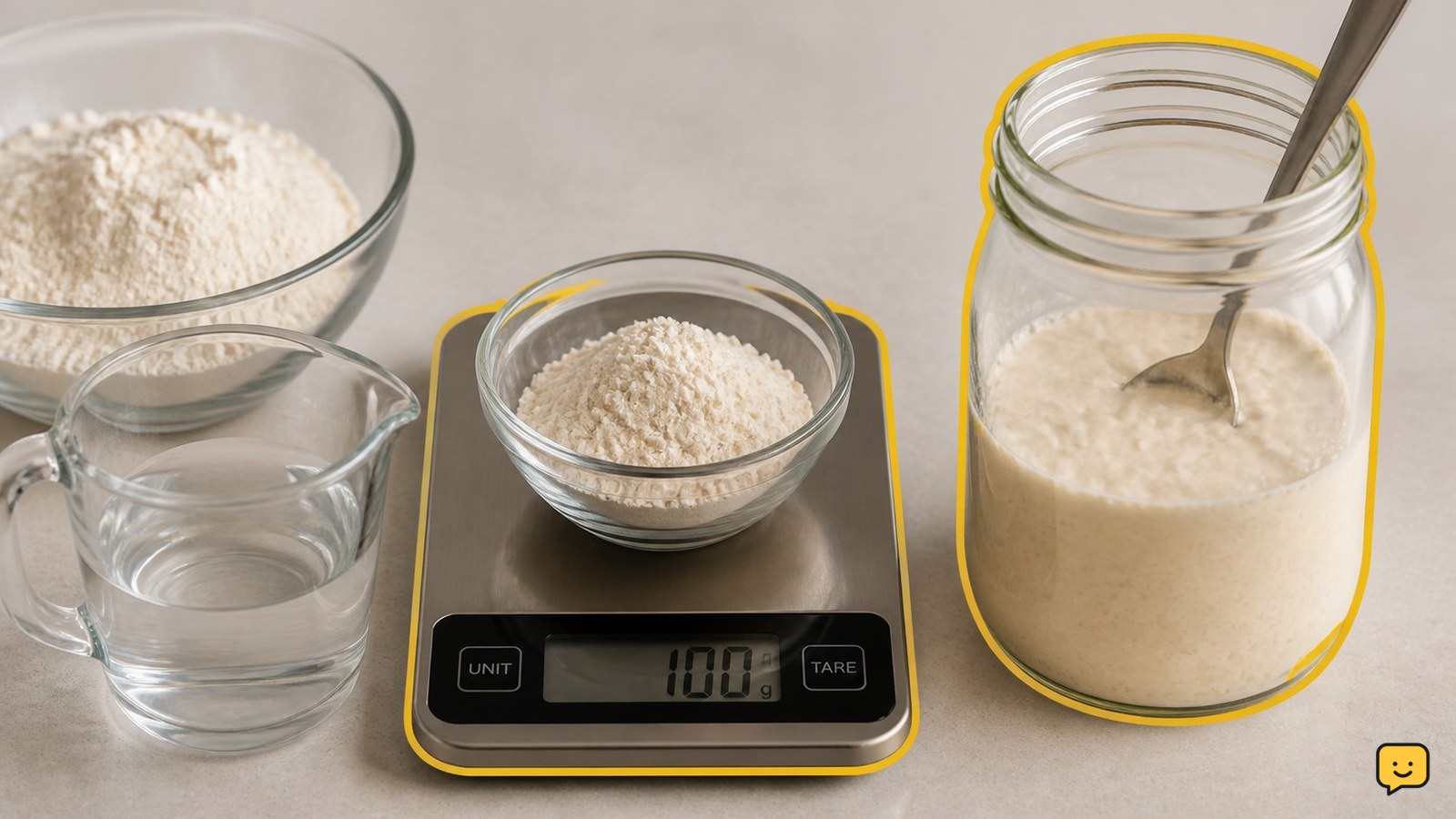
Gather flour, water, jar, and scale
A sourdough starter needs only flour, water, a clean jar, and a scale. Use all-purpose or bread flour and room-temperature water; Hauste’s sourdough guide specifies water around 75°F (24°C) and describes the target texture as thick pancake batter.
Place the empty jar on the scale and record or tare its weight. This makes later feeding more repeatable. Leave several inches of headspace because an active starter can expand above its starting level.
Mix the first starter
The first starter is made by combining 50 grams of flour with 50 grams of water. Stir both ingredients in the jar until no dry flour remains and the mixture looks smooth and thick.
- Add 50 grams of flour to the jar.
- Add 50 grams of water.
- Stir thoroughly, scraping dry flour from the sides and bottom.
- Level the surface and mark the starting height with a rubber band or removable marker.
- Cover loosely and leave at room temperature.
After mixing, the starter may look quiet. That is normal. The useful checkpoint is whether bubbles and expansion appear during the next feeding cycle, not whether it rises immediately.
Feed the starter on a repeatable schedule
Feed the starter once each day by removing part of it, then adding equal weights of flour and water. Keeping a smaller amount prevents the jar from filling too quickly and keeps the flour-to-water balance consistent.
- Stir the starter, then discard roughly half.
- Add 50 grams of flour and 50 grams of water.
- Stir until evenly combined and return the cover loosely.
- Mark the new level and note the time.
Repeat this daily while the starter develops. A rise followed by a fall shows that fermentation occurred; a quiet surface after feeding means it may need more time, a warmer stable location, or another feeding cycle. Keep the texture close to thick batter rather than changing the water amount by guesswork.
Verify the starter is ready to bake
A starter is ready for baking when it becomes visibly bubbly, smells pleasantly tangy or yeasty, and rises predictably after feeding. Hauste’s guide also emphasizes feeding and observing the starter before deciding it is ready to bake.
Use the marked jar to check the rise. The strongest practical signal is repeatability: after feeding, the starter should expand substantially and then show signs of settling. If it rises only once and then stays flat, continue the daily feeding routine rather than using the first burst as proof of maturity.
Do not rely on a water-float test as the only decision. A rise mark, bubbles throughout the mixture, and a clean fermented smell provide more useful information about whether the starter is active.
Fix slow, watery, or inactive starter
A slow starter usually needs a stable environment and more observation, while a watery or separated starter needs more thorough mixing and accurate measurements.
- No bubbles: Confirm the jar is not cold, the flour is fresh, and the feeding amounts are measured by weight. Continue daily feedings before changing the recipe.
- Liquid on top: Stir it back in, then feed using equal weights. If separation keeps returning quickly, check that the scale is working and that the flour was fully incorporated.
- Very thick mixture: Recheck the water measurement and stir until no dry pockets remain.
- Fast rise followed by collapse: The starter is fermenting but may be exhausting its available food before the next feeding. Mark the rise and shorten the interval only after you can observe the pattern clearly.
- Unusual color or smell: Do not taste it. Follow the discard stop condition and restart with a clean jar.
Refrigerate and refresh an established starter
Once the starter rises reliably and you are not baking every day, refrigerate it in a clean jar with room for expansion and a loose cover. Cold storage slows activity, so the starter will not follow the same daily pattern as one kept on the counter.
Before baking, bring out the amount you need, feed it with equal weights of flour and water, and wait for visible bubbles and a reliable rise. If it remains flat after one refresh, give it another feeding cycle rather than baking with an inactive culture.
Keep the jar clean around the rim. If mold, pink or orange discoloration, or a putrid odor appears at any point, discard the contents and clean the container before starting again.
Frequently asked questions
Can I make sourdough starter without a kitchen scale?
Yes, but a scale is the most reliable option because equal weights of flour and water are easier to repeat than volume measurements. If you use cups and spoons, expect more variation in thickness and adjust only when the mixture is clearly dry or separated. Marking the jar and watching its rise still matters more than an exact calendar schedule.
How long does a homemade sourdough starter take to become active?
A homemade starter commonly takes several days to become dependable, but room temperature and flour can change the pace. Use observable checks instead of a fixed deadline: look for bubbles throughout, a pleasantly tangy smell, and a repeatable rise after feeding. If it stays completely inactive, check warmth, measurements, and flour freshness before restarting.
What flour is best for a first sourdough starter?
All-purpose flour or bread flour works for a first starter. The supplied Hauste recipe uses either option with equal weights of water. Choose one flour consistently while the starter develops so changes in texture and rise are easier to interpret.
Should sourdough starter be covered airtight?
No. Cover the jar loosely rather than sealing it airtight. A loose cover helps keep the mixture protected while avoiding pressure buildup as fermentation produces gas. Leave headspace in the jar so an active starter can rise without reaching the cover.
Can I bake with sourdough starter that smells bad?
Do not bake with a starter that smells rotten or putrid. A clean sour, tangy, or yeasty smell is a better sign of normal fermentation. Discard the starter if it also has fuzzy mold or pink, orange, or other unusual discoloration, then clean the jar before restarting.
For more help with this topic, use the Cooking Basics guides.