Yes, you can boil frozen chicken safely if it cooks all the way through. Place individual frozen pieces in a pot, cover them with water, bring the water to a boil, then reduce to a steady simmer. Separate pieces as they loosen and do not serve until the thickest part reaches 165°F (74°C).
Check the frozen chicken pieces before boiling
Frozen chicken is suitable for this method when the pieces are individual raw cuts that can sit in a pot with water circulating around them. Breasts, thighs, drumsticks, and tenderloins can be cooked from frozen, although thicker or bone-in pieces will take longer than thin boneless pieces.
Remove the chicken from its tray, bag, or wrap before it touches the water. If several pieces are frozen into one dense mass, do not force them apart with a knife. Put them in the pot only if they can separate safely as they heat; otherwise, thaw them in the refrigerator first.
Cover the chicken with water in a deep pot
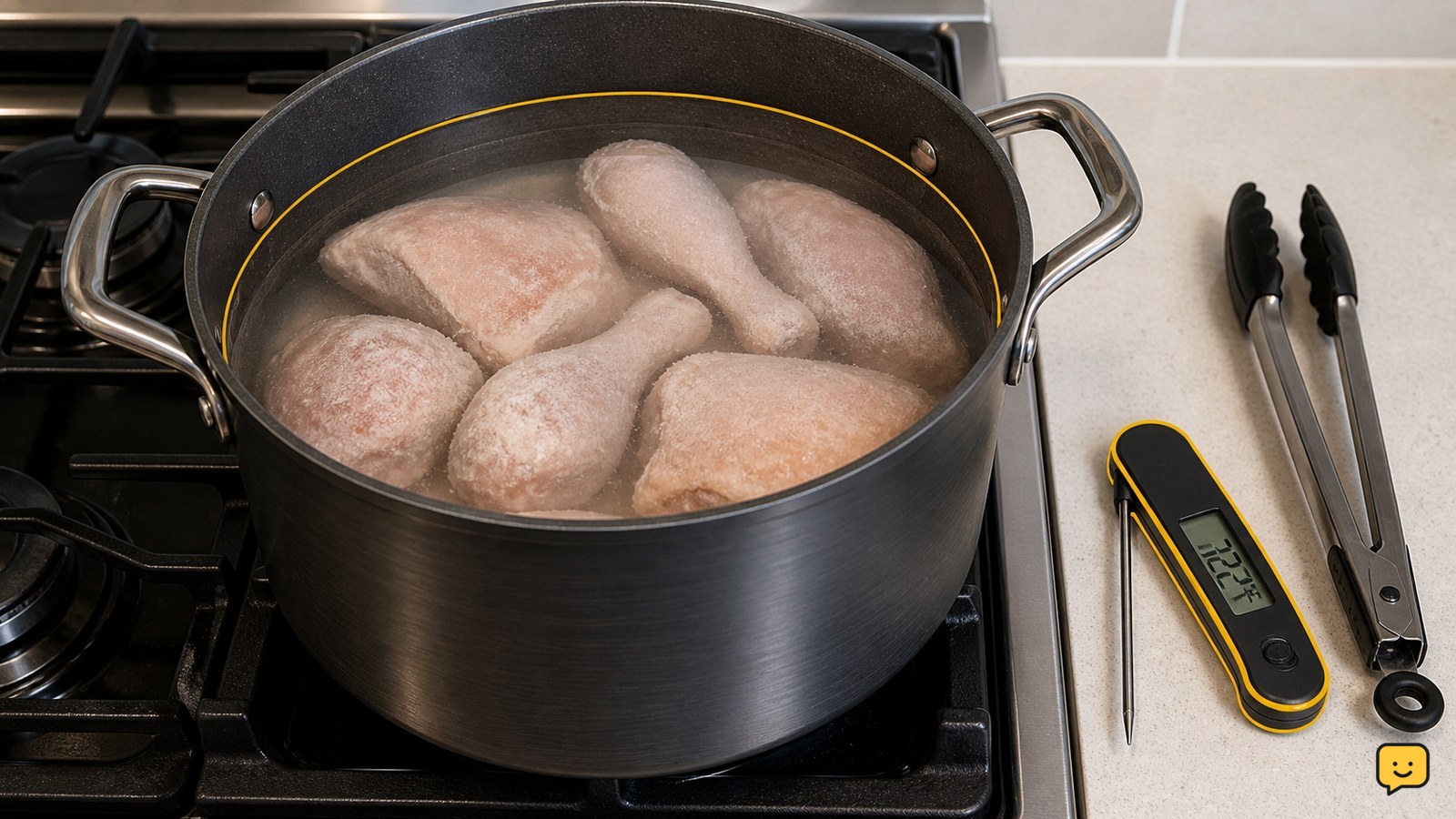
Place the frozen chicken in a single layer when possible and add enough cold water to cover every piece by about 1 inch. Leave space at the top of the pot so boiling water does not spill over.
You can add salt, peppercorns, onion, garlic, herbs, or broth for flavor, but keep the liquid free of raw-chicken splashes. Wash hands and utensils that touch the uncooked meat before handling anything ready to eat.
Set the pot over medium-high heat and bring the water to a full boil. Starting with cold water helps the pieces heat gradually while the liquid comes up to temperature.
Reduce to a steady simmer and separate the pieces
Once the water boils, reduce the heat to maintain a steady simmer rather than a violent boil. A simmer has small, regular bubbles and keeps the chicken moving gently without breaking it apart.
After several minutes, use clean tongs to separate pieces that have loosened. Turn thick pieces if part of the meat is above the water. Keep the pot partially covered to reduce heat loss, but check it occasionally so the liquid remains deep enough to cover the chicken.
Cooking time depends on the cut, thickness, bone, starting temperature, and number of pieces. A clock is only a guide; the safe endpoint is the internal temperature. The supplied Longbourn Farm guidance likewise identifies 165°F (74°C) as the safety check for frozen chicken.
Verify the thickest part reaches 165°F
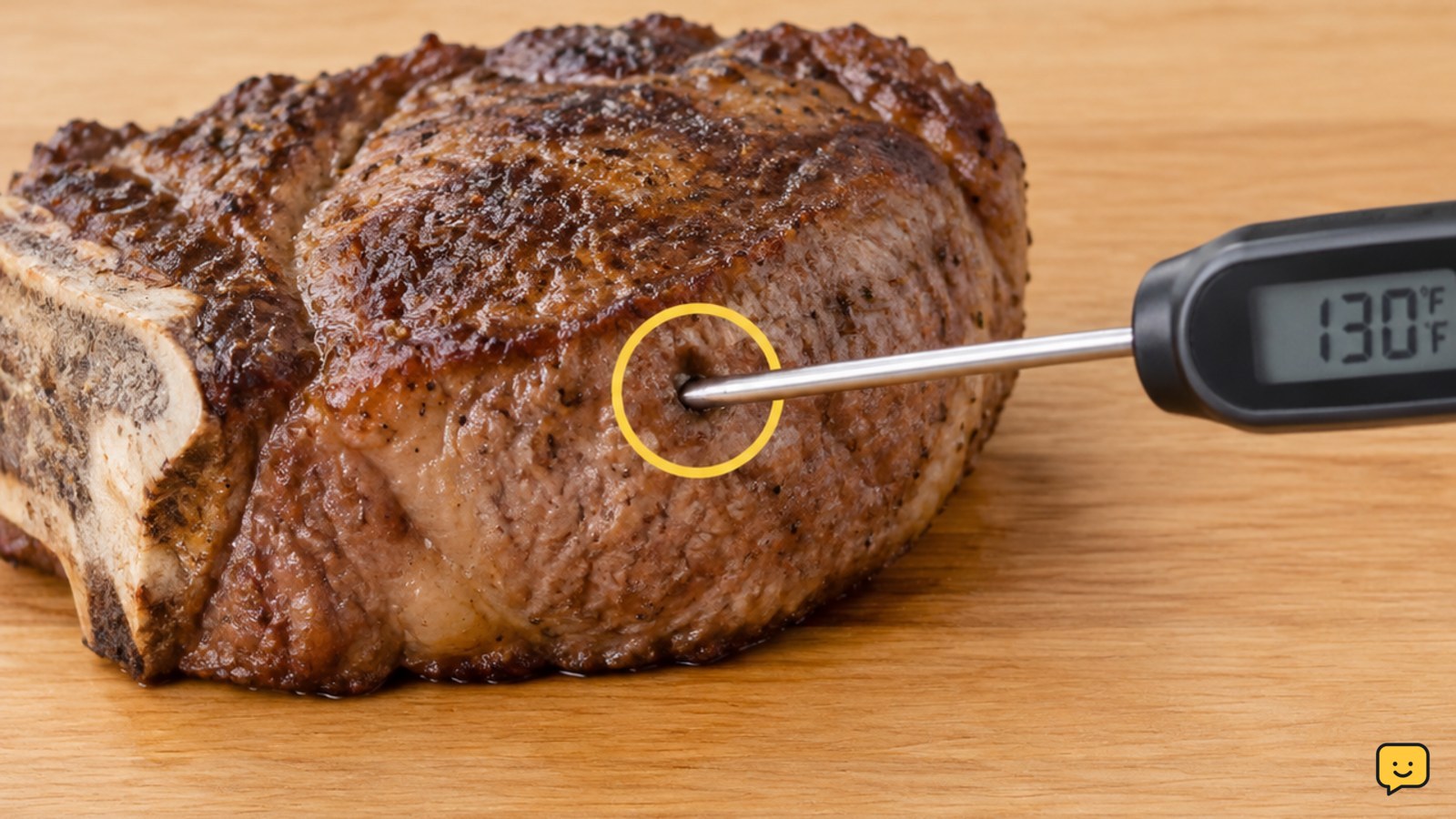
Boiled frozen chicken is ready only when the thickest part reaches 165°F (74°C), the minimum temperature identified by the USDA for safely cooked poultry. Insert the thermometer into the center of the thickest piece, avoiding the bone because it can give a misleading reading.
Check more than one piece when sizes differ. The chicken should be opaque throughout, but appearance alone is not a reliable safety test. If the thermometer reads below 165°F, return the chicken to the simmer and check again after a few minutes.
When the temperature is reached, remove the chicken with clean tongs. Serve it immediately, shred it for soup or salad, or cool leftovers promptly in shallow containers and refrigerate them.
Fix uneven cooking, clumping, or a low temperature
If the chicken remains frozen together, lower the heat and wait until the outer pieces soften enough to separate with tongs. Do not pry the block apart forcefully. If the pieces still cannot separate or the water cannot circulate, stop and thaw the chicken in the refrigerator before cooking.
If the outside is cooked but the center remains below 165°F, keep the water at a steady simmer and turn the pieces so heat reaches all sides. For very thick or bone-in cuts, use a larger pot and more water rather than increasing the heat sharply.
If the pot begins to boil dry, turn off the heat. Do not add water and assume the chicken is finished; check the thickest part with a thermometer. Continue only if the chicken has been kept hot and the pot and meat remain in good condition. Discard it if it has sat lukewarm for an uncertain period.
Frequently asked questions
Can you boil frozen chicken breasts?
Yes, frozen chicken breasts can be boiled, but thick breasts cook less evenly than thin pieces. Keep them covered with water, maintain a steady simmer, and check the center of the thickest breast with a thermometer. Continue cooking until it reaches 165°F (74°C).
Can you boil frozen chicken in broth instead of water?
Yes, broth can replace water and adds flavor. Use enough broth to cover the chicken and watch the salt level, especially if the broth is concentrated. The chicken still needs to reach 165°F (74°C) in its thickest part before serving.
How long does it take to boil frozen chicken?
There is no single safe time because thickness, bone, quantity, and pot size change the result. Individual boneless pieces generally cook faster than bone-in pieces. Start checking with a thermometer as the chicken firms up, and cook until the center reaches 165°F (74°C).
Can you boil frozen chicken that is stuck together?
You can begin heating a clump only if the pieces will separate as they soften. Use tongs, not a knife, to separate them. If they remain tightly frozen together or the water cannot circulate around them, stop and thaw the chicken in the refrigerator first.
What if you do not have a food thermometer?
Continue cooking until the thickest piece is opaque all the way through and no cold or translucent center remains, but this is less reliable than measuring temperature. A thermometer is the safest way to verify poultry is ready, especially for thick or bone-in cuts.
For more help with this topic, use the Cooking Basics guides.