To check automatic transmission fluid, park on level ground, set the parking brake, and follow the owner’s manual for engine temperature and gear position. With the engine running when specified, find the transmission dipstick, remove and wipe it, reinsert it fully, then remove it again and read the correct marks. Do not add fluid unless the level is low and the manual confirms the fluid type.
Confirm your vehicle has a serviceable transmission dipstick
Your vehicle can be checked at home only if its transmission has an accessible dipstick and the owner’s manual provides a dipstick procedure. Many newer automatic and continuously variable transmissions are sealed or use a level plug instead, so do not remove an unknown plug or add fluid through an unmarked opening. Check the manual first for the transmission type, fluid specification, and required temperature.
Manual transmissions generally do not use an under-hood dipstick. Their fluid level is commonly checked at a case fill plug, which usually requires raising the vehicle safely and keeping it level. That is a different procedure; stop here unless your manual specifically describes a safe home check.
Prepare the car on level ground and reach the specified condition
Transmission fluid must be checked with the vehicle level and under the condition specified by its manufacturer. Park on a flat surface, apply the parking brake, and place the selector in the position listed in the manual. Quaker State’s general procedure calls for a level surface, parking brake, and running engine, while Car and Driver describes checking a warmed automatic transmission while idling in Park; your vehicle’s instructions take priority.
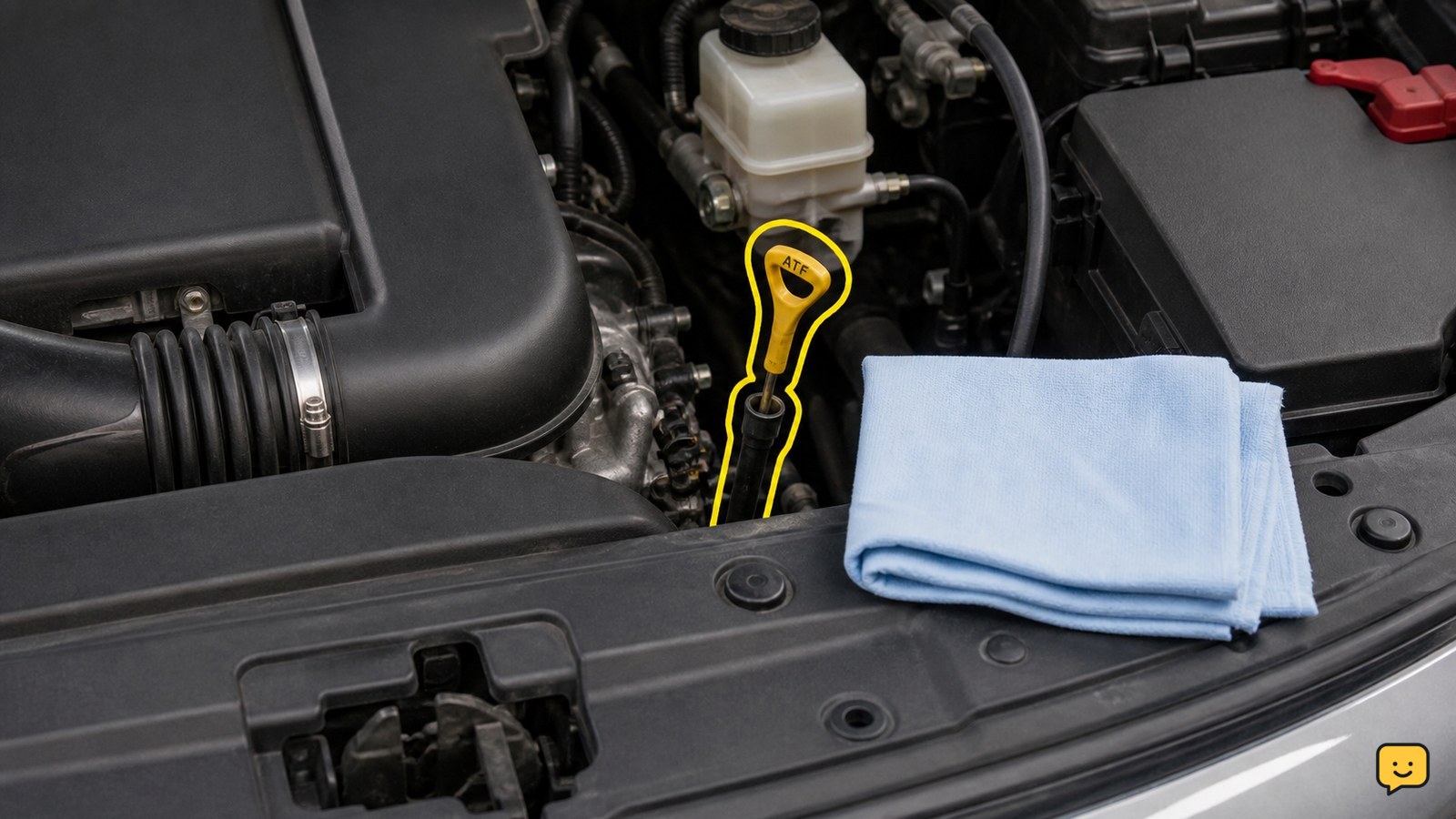
Open the hood and identify the transmission dipstick by its label or manual diagram. Do not confuse it with the engine-oil dipstick. If the engine must run, keep the car secured and avoid the radiator fan, drive belts, pulleys, and hot components.
Read the transmission fluid level twice
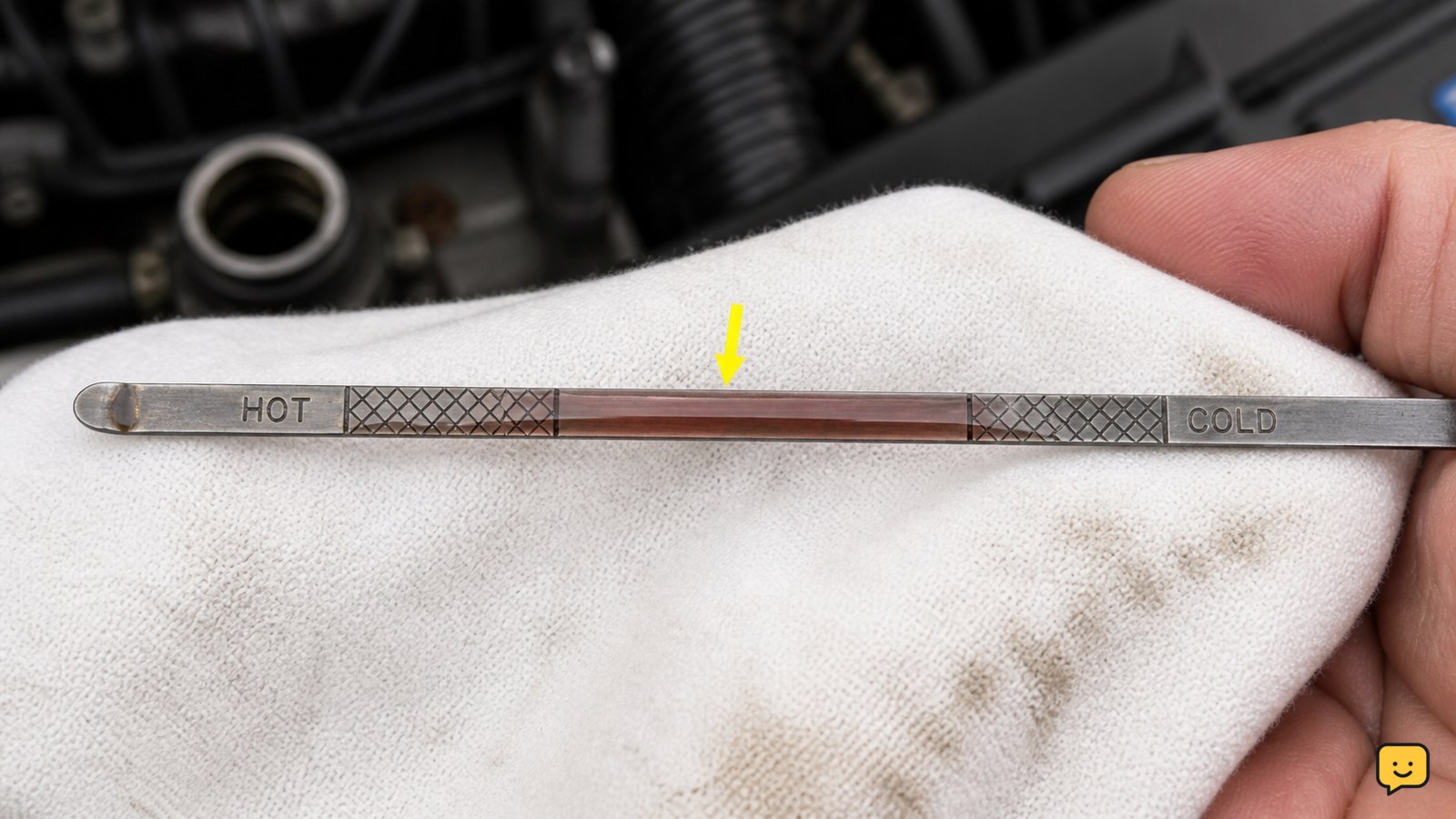
The transmission fluid level is accurate when a clean dipstick is wiped, fully reinserted, and read again on a level vehicle. Remove the dipstick and note its orientation, then wipe the end completely clean. Reinsert it slowly until it is fully seated, remove it again, and hold it horizontally over a rag so the fluid does not run along the stick.
- Find the marking that matches the vehicle’s condition, such as HOT, COLD, or a temperature range.
- Confirm the fluid film reaches the correct zone rather than judging by a single splash or smear.
- Repeat the wipe, insertion, and removal once if the reading is unclear.
Jiffy Lube and Quaker State both describe wiping and checking the dipstick, and Jiffy Lube notes that the fluid should reach the specified FULL indicator. A reading below the applicable range means the level needs attention; a reading above it also requires correction rather than more fluid.
Check the fluid’s appearance and nearby leaks
Transmission fluid should look clean and consistent for the fluid used in that vehicle, without obvious grit, coolant-like contamination, or a burned appearance. A North Bay GMC service explanation describes healthy fluid as nearly clear with a pink hue, but color varies by formulation, age, and transmission type, so the owner’s manual and service information matter more than a universal color rule.
Look around the dipstick tube, transmission case, cooler lines, and the ground beneath the vehicle for fresh fluid. A low reading together with wetness usually indicates a leak rather than normal consumption. Do not treat a dark or contaminated sample, repeated low level, or unexplained odor as a reason to keep topping up; arrange an inspection.
Add only the specified fluid and verify the final reading
Correcting a low level requires the exact transmission fluid specification listed for the vehicle, not a generic substitute. Add a small amount through the dipstick tube only when the manual allows that method. Use a clean funnel, add gradually, and pause between additions so you do not overfill the transmission.
After adding fluid, repeat the manufacturer’s checking condition and read the dipstick again. Success means the film sits within the correct marked range, the dipstick is fully seated, and no fluid has spilled onto hot components. If the level remains low, drops again, or rises above the mark, stop adding fluid and have the system checked. Overfilling can also cause operating problems.
Frequently asked questions
Can you check transmission fluid when the engine is cold?
Sometimes, but only if the owner’s manual provides a COLD range or cold-check procedure. Many automatic transmissions require a warmed fluid reading because temperature changes the fluid level. If the dipstick has only HOT marks, do not use a cold reading to decide how much to add.
What does low transmission fluid usually mean?
Low transmission fluid usually means there may be a leak, an incorrect previous fill, or a measurement taken under the wrong conditions. Transmission fluid is not normally consumed like fuel. Recheck the level correctly, inspect for wet spots, and stop driving if the car slips, delays engagement, or makes unusual noises.
What if my car has no transmission dipstick?
Do not improvise by opening a plug or pouring fluid into an unknown tube. A dipstick-less transmission may require a specific fluid temperature, a level plug, special equipment, or a scan tool. Use the owner’s manual or a qualified repair shop for the check and fill procedure.
Can you tell transmission fluid condition by its color?
Color provides only a rough clue because fluid formulations differ. Clean fluid may be red, pink, amber, or another manufacturer-specified shade. A sample that looks contaminated, contains particles, or accompanies slipping, leaks, or delayed engagement should be assessed professionally rather than judged by color alone.
For more help with this topic, use the Maintenance Repair guides.