To check engine oil, park on level ground, switch off the engine, and follow your owner’s manual for the correct hot-or-cold procedure. Find the dipstick, pull it out, wipe it clean, reinsert it fully, then remove it again and read the oil between the low and full marks. Add only the specified oil if the level is low.
Confirm the car is safe and the method applies
Checking engine oil starts with a stable vehicle and the correct temperature procedure for that specific car. Put the transmission in Park or in gear with the parking brake applied, then switch off the engine. The owner’s manual takes priority because some instructions call for a cold engine while others specify normal operating temperature followed by a wait.
Open the hood and identify the oil filler cap and dipstick. If you cannot find a dipstick, do not guess from another vehicle’s layout; check the manual for the approved oil-level procedure. Some vehicles require a dashboard reading or a particular start-and-stop sequence.
Clean the dipstick before taking a reading
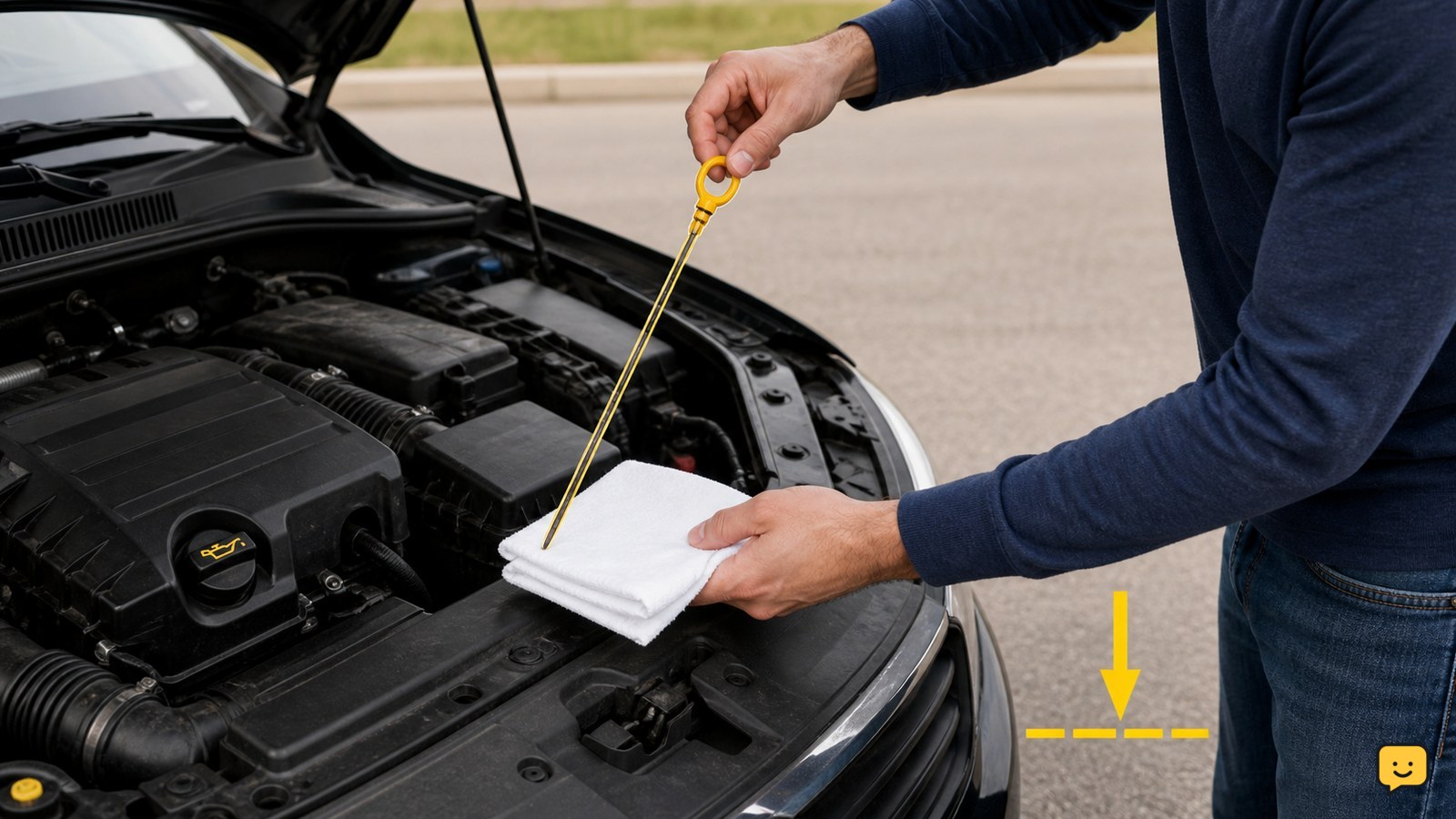
A clean dipstick reading shows the actual oil level rather than oil left on the tube. Pull the dipstick straight out and wipe the entire marked end with a clean, lint-free cloth or paper towel.
- Push the dipstick fully back into its tube.
- Pull it out again without brushing the marked end against surrounding parts.
- Hold it horizontally and look at both sides of the tip.
Car and Driver describes this clean, reinsert, and recheck sequence as the basic way to avoid a false reading. If the oil is smeared up the sides, wipe it and repeat the reading until the level is clear.
Read the low and full marks correctly
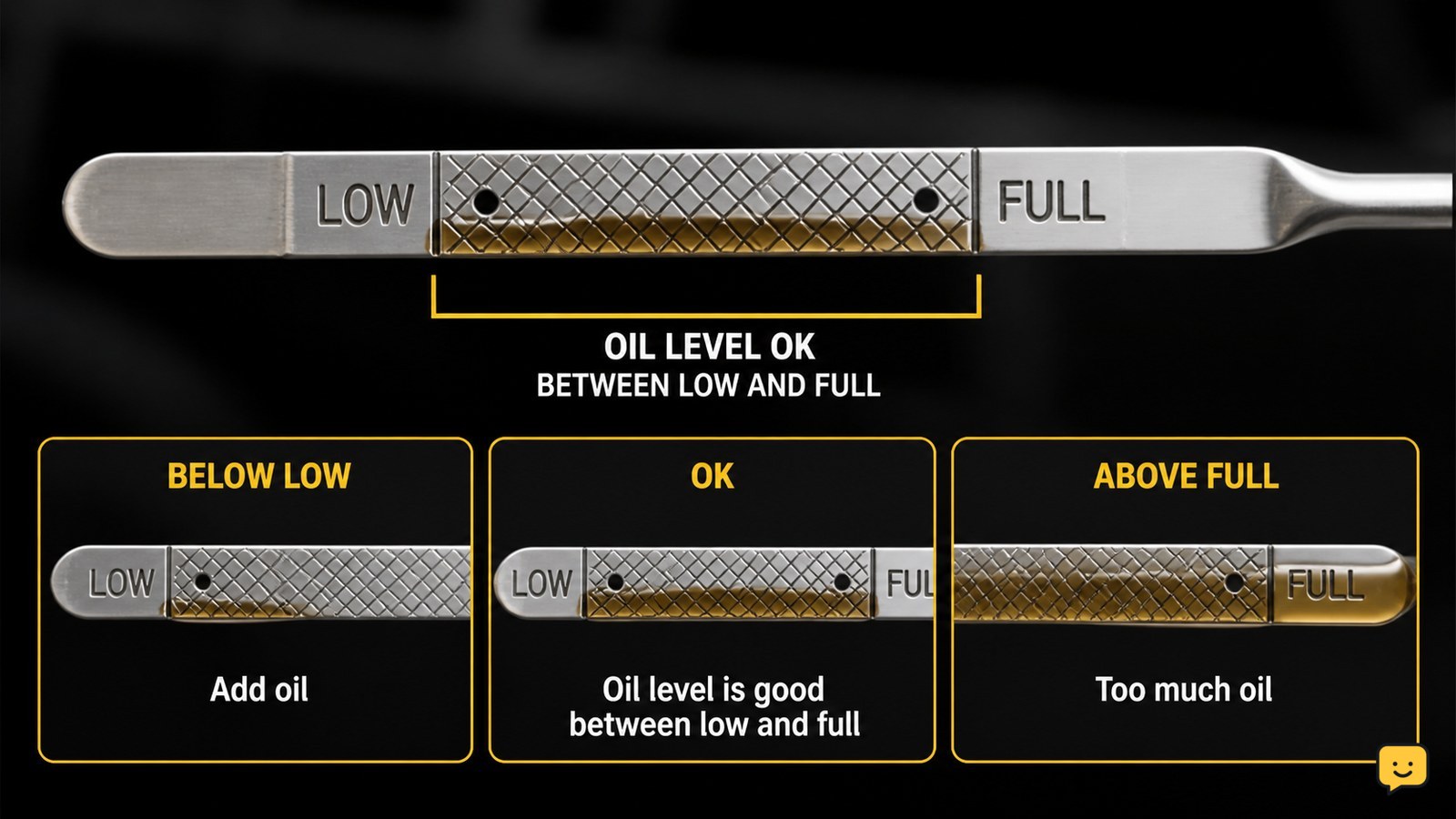
The oil should form a visible band between the dipstick’s low and full marks, holes, or crosshatched area. A level near the low mark means the engine may need oil; a level at or just below full is normally the target shown by the dipstick.
Check both sides because oil can cling unevenly to the metal. If the readings disagree, wipe and repeat the process on level ground. Do not treat the dipstick’s entire length as the measuring area: only the marked section indicates the intended operating range.
Oil color alone does not determine whether it needs changing. Use the vehicle’s maintenance schedule, oil-life monitor, or manual for service intervals rather than changing oil solely because it looks darker.
Add the specified oil in small amounts
If the level is below the low mark, add only the oil grade and specification listed for the vehicle. Remove the oil filler cap, place a funnel in the opening if available, and add a small amount at a time. The dipstick marks show level, not necessarily the exact amount required.
Wait for the added oil to drain into the engine, then repeat the clean-and-reinsert reading. This prevents adding too much based on oil that has not yet reached the sump. Keep the bottle upright and wipe spills from the engine and surrounding components.
Do not mix in a guessed grade, use another fluid, or continue pouring once the level reaches the full mark. If the level was extremely low, the engine uses oil repeatedly, or you see fresh oil underneath the car, arrange an inspection instead of relying on repeated top-ups.
Verify the final level and check for warning signs
A successful oil check ends with a stable reading between the marked low and full range, a securely seated dipstick, and a tightened oil filler cap. Close the hood, start the engine only after all tools and cloths are clear, and confirm that the oil-pressure warning light goes out as expected after startup.
If the warning light stays on, stop the engine and do not continue driving. If the dipstick remains dry after a correct reading, oil is leaking rapidly, the oil looks milky or contaminated, or the level rises unexpectedly, stop and have the vehicle checked. These findings cannot be safely resolved by adding more oil.
Frequently asked questions
Should I check engine oil when the engine is hot or cold?
Follow the owner’s manual because the correct procedure varies by vehicle. One manufacturer guide recommends checking with the engine cold, while other instructions may require normal operating temperature and a waiting period. If the manual is unavailable, do not assume a universal rule; obtain the vehicle-specific procedure before relying on the reading.
What should I do if the dipstick shows no oil?
Do not start or drive the vehicle until you have checked for an obvious leak and confirmed the correct oil type. Add the specified oil cautiously only if the manual allows it, then recheck the level. If the dipstick remains dry, oil is leaking, or the oil-pressure warning light is on, stop and arrange professional assistance.
Can dark engine oil still be safe to use?
Yes, dark color by itself does not prove that oil needs changing. Engine oil can darken during normal use. Check the service interval, oil-life monitor, oil level, and any signs of contamination instead. Milky oil, metal particles, a fuel smell, or a sudden level change should be assessed by a qualified technician.
What happens if I overfill the engine oil?
Too much oil can cause engine problems, so do not drive normally if the level is clearly above the full mark. Do not try to correct it by guessing how much to drain. Keep the engine off and have the excess removed using the vehicle manufacturer’s procedure or by a qualified service professional.
For more help with this topic, use the Maintenance Repair guides.