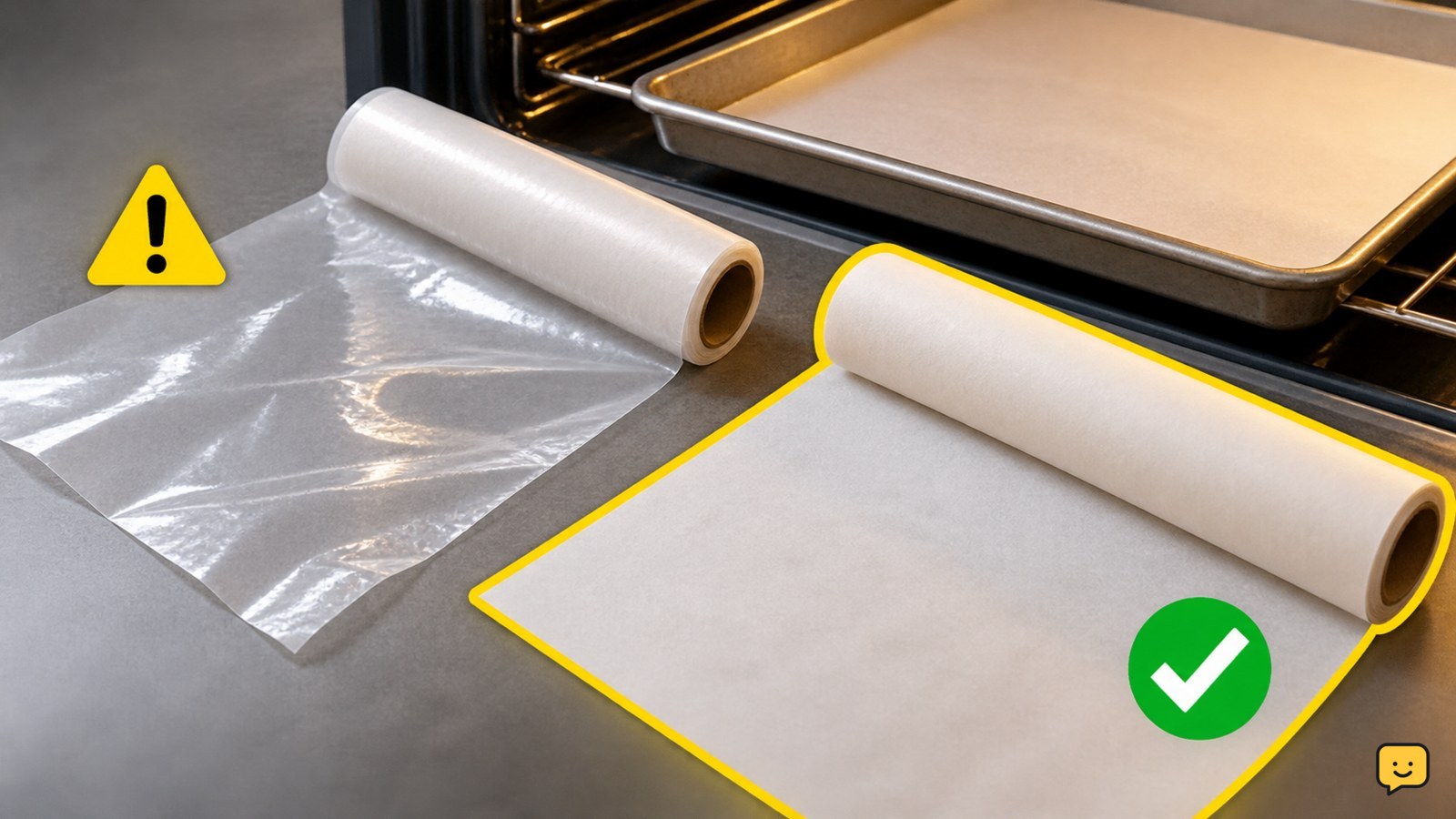
No—wax paper should not be exposed directly to oven heat. Its wax coating can soften, smoke, transfer to food, or potentially ignite if it touches a hot oven surface or heating element. Some manufacturers allow wax paper as a fully covered pan liner for certain baked goods, but parchment paper, a greased pan, or a silicone mat is the safer general choice.
Check whether the sheet is wax paper or parchment
Wax paper has a moisture-resistant wax coating, while parchment paper is treated to resist sticking and withstand baking heat. Wax paper usually feels smoother and may look slightly glossy on both sides; parchment is commonly labeled “parchment” or “baking paper” on the package.
Do not rely on color alone. If the package does not clearly identify the product or give an oven temperature limit, treat it as unsuitable for exposed oven use.
Use parchment paper for exposed oven surfaces
Parchment paper is the practical replacement when you need a nonstick liner on a baking sheet, cake pan, or roasting pan. Cut it to fit the base, keep it inside the pan’s edges, and prevent loose corners from reaching an oven wall or heating element.
Reynolds Brands distinguishes the two papers by warning against direct oven exposure for wax paper while describing parchment as the appropriate choice for baking. Follow the temperature limit printed on your parchment package, because product limits can differ.
Use a greased pan or silicone mat when parchment is unavailable
A lightly greased metal or glass pan works for many cakes, brownies, breads, and roasted foods when parchment is not available. Apply a thin, even layer of butter, oil, or shortening, then add flour when the recipe calls for extra release.
A silicone baking mat is another option for flat baking sheets. Confirm that the mat is labeled for oven use and keep it away from direct flame, broiler elements, and temperatures above its stated limit.
Know the limited covered-liner exception
Some wax paper instructions allow the paper to line a pan when it is completely covered by batter or dough. Reynolds Brands says wax paper may be used as a pan liner for certain cakes, breads, or brownies when it is not directly exposed to oven heat.
This exception does not make wax paper a general baking liner. The food must cover the paper completely, no edge should remain exposed, and the package must allow that use. If batter shifts, the paper extends beyond the food, or the recipe needs broiling or high surface heat, stop and switch to parchment or a greased pan.
What to do if wax paper is already in the oven
If the oven is still heating and the wax paper is intact, turn the oven off, open the door carefully, and let the pan cool enough to handle safely before replacing the paper. Do not pull smoking paper toward your face or reach near a heating element.
If you see smoke, flames, rapid darkening, or a burning smell, turn off the oven and keep the door closed to limit oxygen. If the fire does not go out promptly, leave the area and contact emergency services. Do not pour water into a hot oven or use the oven again until it has been checked and cleaned according to the appliance instructions.
Verify the substitute before baking
The setup is ready when the liner is labeled for oven use, fits inside the pan, lies flat under the food, and has no loose edge near a heating element. During baking, the paper should remain flat and free of smoke, flames, or strong odors.
If food sticks despite using parchment, let it cool briefly before lifting it, or use a greased pan next time. If the paper curls or browns at the edges, remove the exposed excess and use a smaller sheet for the next batch.
Frequently asked questions
Can wax paper go in the oven at a low temperature?
Usually no. Low heat does not guarantee that exposed wax paper is safe, especially if the sheet can touch a hot pan edge, oven wall, or heating element. Use parchment paper or grease the pan unless the product package specifically permits the intended use.
Can wax paper be used under cookie dough?
Not as an exposed cookie-sheet liner. Cookie dough usually leaves much of the sheet visible, so the wax coating can be heated directly. Use parchment paper, a silicone baking mat labeled for oven use, or a lightly greased baking sheet instead.
What happens if wax paper melts onto food?
Discard food that has wax visibly melted onto it or that has been exposed to smoke from burning paper. Do not assume that removing a small visible spot makes the rest safe, because the coating may have spread or transferred unevenly.
Is wax paper safe in the microwave?
Wax paper may be suitable for some microwave uses, but check the package first and keep it away from exposed heating elements or browning functions. Microwave-safe labeling does not mean the paper is safe for conventional oven baking.
For more help with this topic, use the Cooking Basics guides.