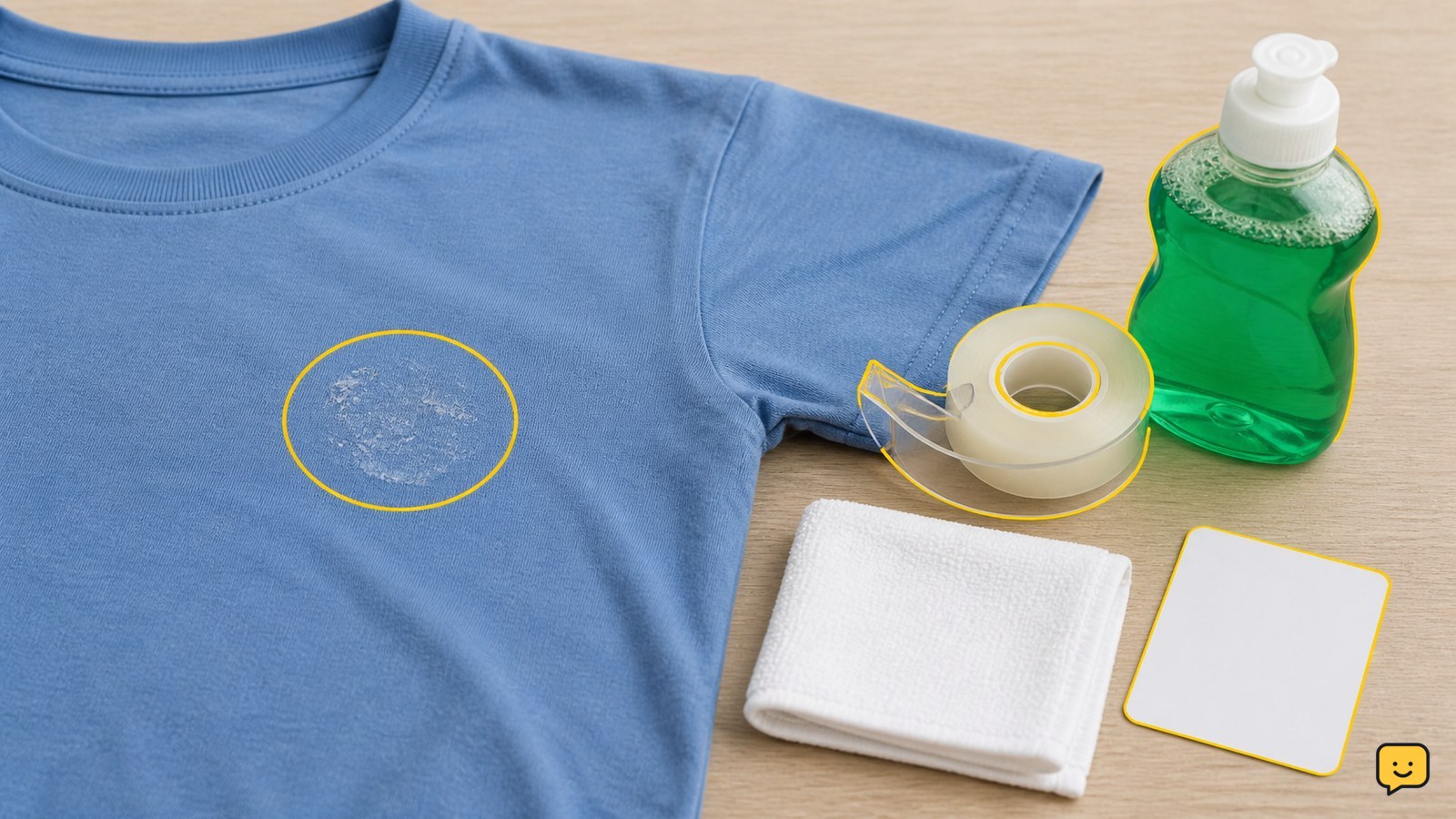
Start with the garment dry. Press fresh tape over the residue and lift repeatedly, then work a small amount of dish soap or liquid laundry detergent into the remaining film. For washable, colorfast fabric, rubbing alcohol can help with stubborn glue after a hidden-spot test. Rinse, wash as directed, and air-dry until you confirm the residue and stain are gone.
Check the care label before treating the residue
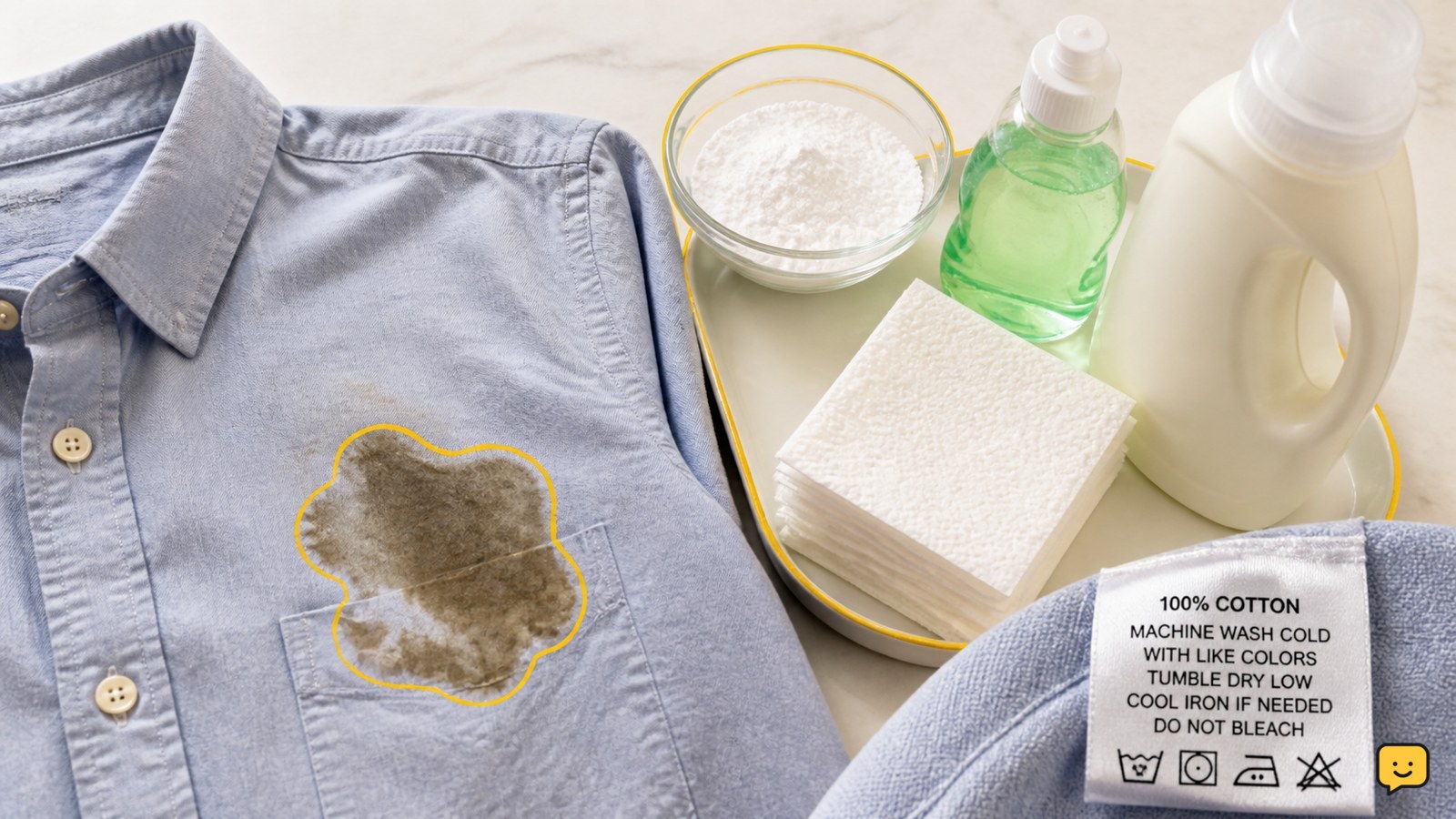
The care label determines whether you can safely use water and household cleaners on the garment. If it says dry clean only, set the item aside and tell the cleaner that sticker adhesive is present. For washable clothes, check whether the fabric is delicate, dark, brightly dyed, or finished with a print before choosing a treatment.
Turn the garment inside out or find an inconspicuous seam. Test a drop of dish soap solution first, and test rubbing alcohol separately if you plan to use it. Wait a few minutes, blot with a white cloth, and compare the spot with the surrounding fabric. Continue only if there is no color transfer, fading, ring, or texture change.
Lift loose glue from the dry fabric
Dry fabric makes the first removal step easier because tape can grip the adhesive instead of spreading it with water. If a raised patch remains, gently lift its edge with a plastic card or the back of a spoon. Keep the edge shallow and stop if threads begin to catch.
- Press a piece of fresh tape firmly over the residue.
- Pull the tape straight up rather than dragging it across the fabric.
- Repeat with clean sections of tape until little or no glue transfers.
This approach is especially useful for fresh, rubbery residue. A practical clothing-removal guide also recommends working on completely dry fabric so the tape adheres to the glue rather than slipping over damp fibers.
Choose tape, soap, or alcohol for the remaining film
Dish soap or liquid laundry detergent is the safest next choice for most washable garments because it can loosen the oily film without requiring a strong solvent. Apply a small amount to the residue, gently work it in with your fingertips or a soft cloth, and leave it for several minutes. Do not flood the fabric.
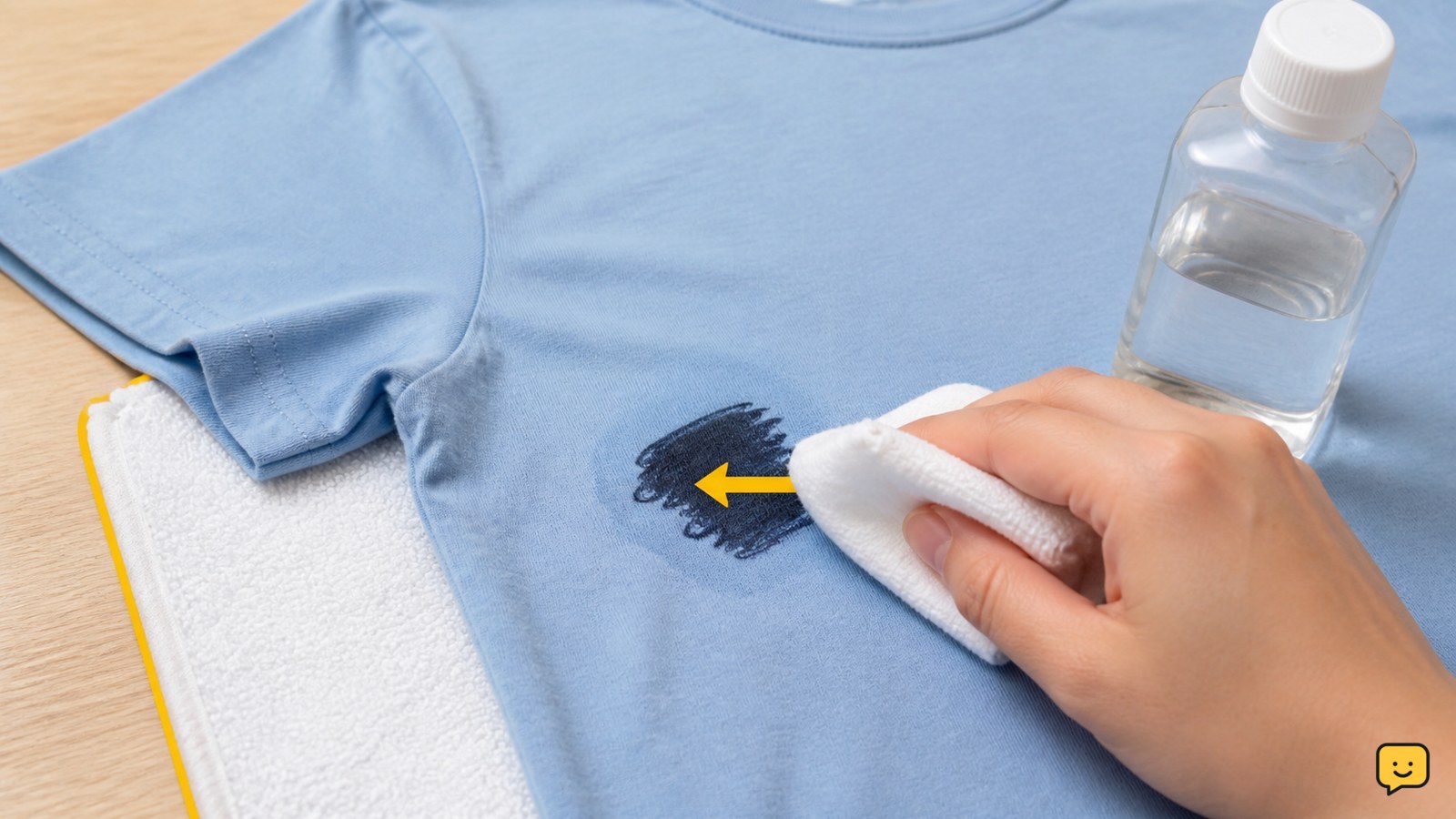
Blot or lift the softened adhesive from the outside toward the center. Rinse the area with cool or lukewarm water and check whether the sticky feel has disappeared. If residue remains, repeat once rather than scrubbing aggressively.
For stubborn adhesive on washable, colorfast fabric, apply a small amount of rubbing alcohol to a white cloth—not directly to a large area—and dab the residue. CRC Industries recommends rubbing alcohol followed by wiping with a clean, damp cloth for sticker residue on clothing and other surfaces. Rinse the treated area afterward and stop if dye transfers or the fabric changes.
Rinse, wash, and verify the fabric is clean
After the adhesive loosens, rinse until the fabric no longer feels slippery from soap or alcohol. Wash the garment according to its care label, using the warmest permitted setting rather than increasing heat beyond the label instructions.
Before drying, inspect the original spot under good light. Run a fingertip across it: successful removal feels like the surrounding fabric, with no tackiness, stiff patch, dark outline, or cleaner ring. If the mark is still visible or sticky, repeat the suitable treatment while the garment is air-dryable. Heat from a dryer can make remaining adhesive harder to manage, so do not tumble-dry yet.
What to do if the residue remains or the fabric changes
If tape removes only the surface, return to a small amount of dish soap or liquid detergent and blot after a short dwell time. If the glue was washed and dried onto the shirt, expect to repeat the treatment; do not compensate by scraping harder or using more solvent.
If the fabric has faded, developed a ring, or feels rough, stop applying products. Rinse the area if the cleaner is still present, let the garment air-dry, and take it to a professional cleaner with the product details. If the adhesive covers a printed design, embroidery, elastic, or coated finish, keep treatment on the residue only and avoid saturating the decoration.
Frequently asked questions
Can I remove sticker residue from clothes after washing and drying?
Yes, but dried adhesive may need more than one gentle treatment. Let the garment cool and dry completely, lift what you can with tape, then use dish soap or liquid detergent. Test rubbing alcohol only on washable, colorfast fabric. Keep the item out of the dryer until the surface feels normal and no outline remains.
Will rubbing alcohol bleach a shirt?
Rubbing alcohol can affect some dyes, finishes, prints, and synthetic fibers, so test it on a hidden seam first. Blot with a white cloth and check for dye transfer or fading. If the test spot changes, do not use alcohol; choose mild detergent or take the garment to a professional cleaner.
Is acetone safe for removing sticker glue from fabric?
Acetone is not a safe default for clothing. It can damage dyes, synthetic fibers, finishes, and printed areas, and the care label may prohibit solvent treatment. Use tape and mild detergent first. If the residue remains on a valuable or delicate garment, stop experimenting and consult a professional cleaner.
How do I remove sticker residue without leaving an oil stain?
Use the smallest amount of product needed and work from the outside toward the center. Dish soap or liquid laundry detergent is preferable to an oily household remedy. Rinse thoroughly, wash according to the care label, and inspect the garment before drying so any remaining ring can be treated safely.
For more help with this topic, use the Clothing Care guides.