Yes—many cheeses can be frozen, especially firm blocks, slices, and shredded cheese. Wrap or seal them tightly while they are still fresh, then thaw them in the refrigerator. Freezing can make cheese crumbly or change its texture, so frozen cheese is usually best for cooking, melting, casseroles, sauces, or grating rather than serving as-is.
Check the cheese before freezing
Firm blocks, slices, and shredded cheese are the most practical candidates for freezing because they can be portioned and later used in recipes. Soft or fresh cheeses may suffer a more noticeable texture change, so freezing is less suitable when you want a smooth, fresh serving texture.
Inspect the cheese first. It should still look and smell fresh, with no leaking package or other sign of spoilage. Running to the Kitchen gives the same basic decision rule: freeze cheese only while it is fresh, and wrap it tightly before freezing.
- Identify how you will use the cheese after thawing.
- Choose freezing for cheese intended for melting, cooking, shredding, or grating.
- Keep fresh cheese refrigerated instead if its original texture matters most.
Wrap cheese tightly to limit drying
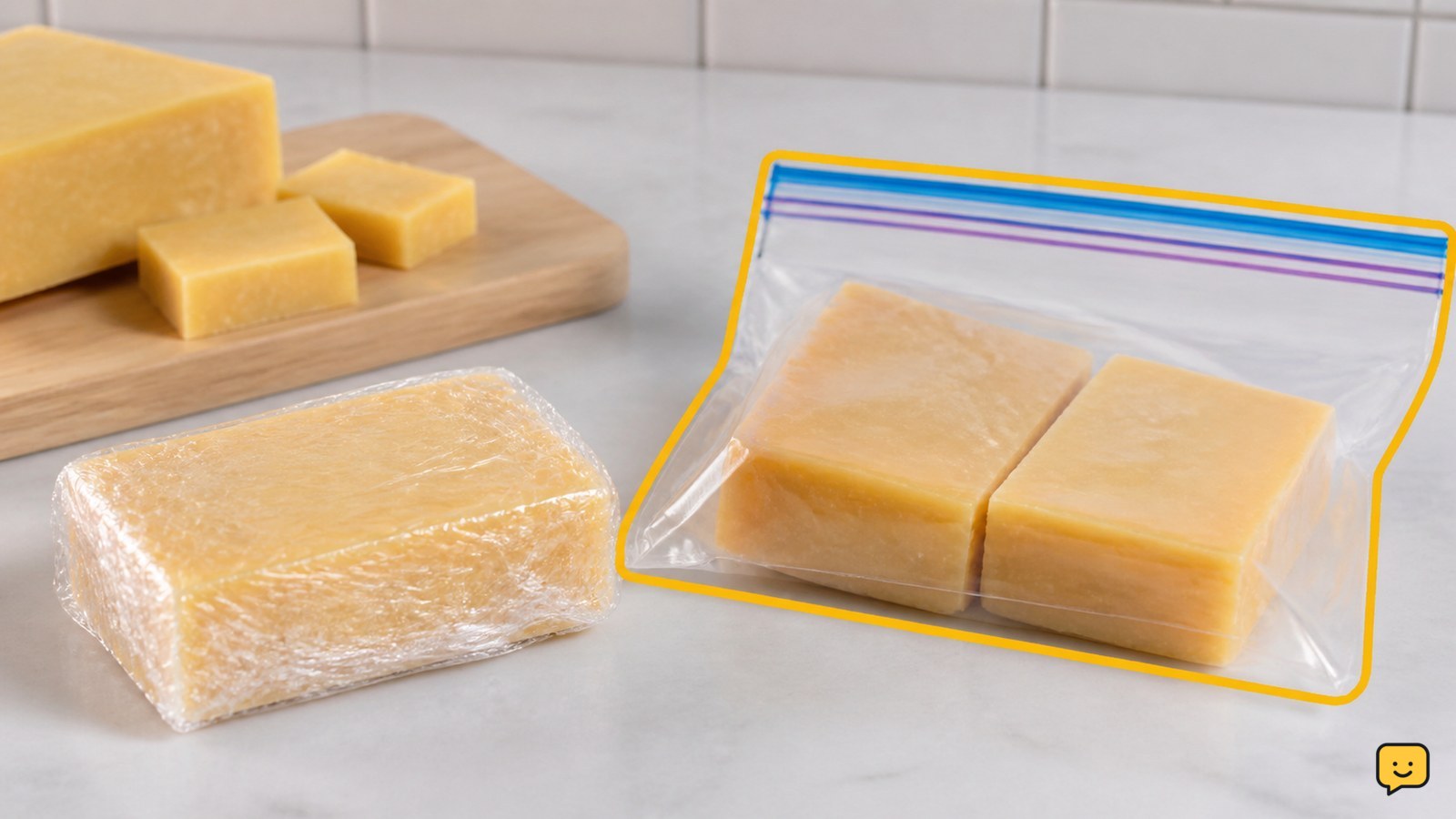
Tightly wrapped cheese is better protected from air, moisture loss, and freezer odors. Keep the original package if it is intact, then add a freezer-safe outer bag or container when possible.
- Cut a block into recipe-size portions, or leave slices and shredded cheese in smaller packs.
- Wrap each portion snugly in freezer-safe plastic wrap, foil, or another suitable freezer covering.
- Place the wrapped portions in a freezer bag or airtight container.
- Press out as much excess air as practical before sealing.
- Label the package with the cheese type and date.
If the package has already been opened, freezing the remaining fresh cheese can be more useful than leaving it unused in the refrigerator, according to Running to the Kitchen. The package should still be tightly sealed before it goes into the freezer.
Freeze portions that match your recipes
Portioning cheese before freezing makes the later step simpler and avoids repeatedly warming the whole package. A portion for one sauce, casserole, pizza, sandwich filling, or batch of grated cheese is easier to thaw and use.
For shredded cheese, spread it into a relatively flat freezer bag rather than creating one thick, hard-to-separate mass. For slices, place them in small stacks with protective wrapping between portions if they are likely to stick together. For a block, divide it before freezing if you rarely use the entire piece at once.
Check the seal before storage. The package should lie flat or sit securely without exposed cheese. If air remains trapped or the wrapping has gaps, rewrap it before freezing.
Thaw frozen cheese in the refrigerator
Thaw cheese in the refrigerator while it remains sealed. This limits condensation on the cheese and gives the package a controlled temperature change.
- Move the sealed portion from the freezer to the refrigerator.
- Leave it sealed until it has thawed enough to handle.
- Open the package and check the surface, smell, and texture.
- Pat away excess moisture only if needed for the recipe.
Do not judge the cheese only by its appearance immediately after opening. Frozen cheese can become crumbly, dry, or less smooth even when it remains suitable for cooking. If it has an off smell or looks spoiled, do not try to save it by cooking.
Use thawed cheese where texture matters less
Thawed cheese is usually most successful in cooked applications where melting or blending matters more than a perfectly smooth original texture. Use it for casseroles, pizza, pasta, sauces, soups, baked dishes, or grated toppings.
If the cheese separates, crumbles, or slices poorly after thawing, change the use rather than forcing it into a cold serving. Grating it over a hot dish or stirring it into a sauce can make the texture change less noticeable.
For a cheese board, cold sandwich, or other preparation where the original texture is central, use fresh refrigerated cheese instead. Freezing is a storage option, not a way to preserve every cheese exactly as it was.
Frequently asked questions
Can you freeze shredded cheese?
Yes, shredded cheese can be frozen in small, tightly sealed portions. Remove as much air as possible from the freezer bag, then thaw it in the refrigerator. Because the texture may become drier or more crumbly, thawed shredded cheese is usually most useful on pizza, in casseroles, sauces, or other cooked dishes.
Can you freeze cheese slices?
Yes, cheese slices can be frozen when they are fresh and well wrapped. Separate portions if you want to prevent the entire stack from sticking together. After refrigerator thawing, use the slices in melts, grilled sandwiches, burgers, casseroles, or other cooked foods if the texture is no longer suitable for serving cold.
Does freezing cheese ruin it?
Freezing does not necessarily ruin cheese, but it can change the texture. Cheese may become crumbly, dry, or less smooth after thawing. Firm cheese generally remains more useful for cooking, melting, shredding, or grating than for serving exactly as it was before freezing.
How should you thaw frozen cheese?
Thaw frozen cheese in its sealed package in the refrigerator. After thawing, check its smell, appearance, and texture before using it. Do not freeze cheese that was already spoiled, and do not use thawed cheese with an off smell or other clear sign that it is no longer safe.
For more help with this topic, use the Food Storage guides.