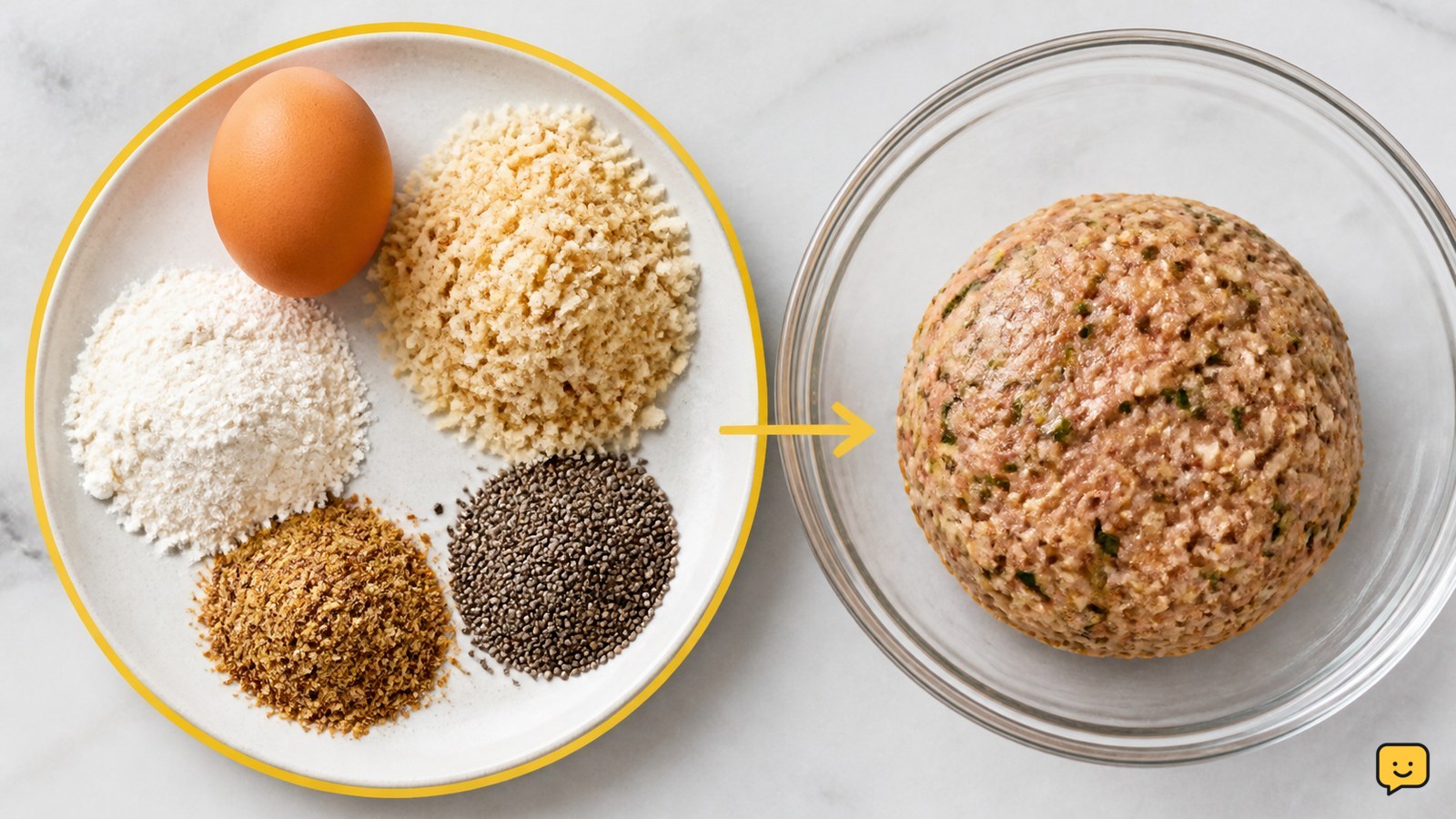
A binder in cooking is an ingredient that helps separate ingredients stick together, hold their shape, retain moisture, or develop a stable texture. Common binders include eggs, flour, breadcrumbs, starches, and gel-forming plant ingredients such as ground flax, chia, or psyllium. The best choice depends on whether you are binding meat, baking, or making a vegan mixture.
Identify what the binder must do
A binder in cooking is chosen according to the job it needs to perform: holding loose ingredients together, helping a mixture keep its shape, absorbing excess moisture, or creating a cohesive texture. Food Fire + Knives and Viva Chefs both describe binders as ingredients that support structure, moisture, and texture rather than as a single specific food.
Some binders overlap with thickeners, but they are not identical. A binder mainly helps ingredients stay together; a thickener mainly increases the viscosity of a liquid. Eggs, starches, and flour can sometimes do both.
Choose a binder by recipe type
The best binder in cooking depends on the ingredients and the result you want.
| Recipe or mixture | Common binder choices | What to check |
|---|---|---|
| Meatballs, meatloaf, or patties | Eggs, breadcrumbs, flour, or starch | The mixture should hold its shape without feeling wet or pasty. |
| Baking | Eggs, flour, starch, ground flax, chia, or psyllium | The replacement must suit the recipe’s moisture and structure. |
| Vegan mixtures | Ground flax, chia, psyllium, starch, mashed potato, or another recipe-specified plant ingredient | Allow gel-forming ingredients time to hydrate when the recipe calls for it. |
| BBQ rubs or coatings | A thin wet ingredient or a recipe-specified binder | Use only enough to help the coating adhere without making the surface soggy. |
DDR BBQ Supply lists familiar options such as eggs and flour, along with vegan and gluten-free alternatives. TurmericMeCrazy also identifies psyllium, chia, and flax as useful plant-based binding agents, especially in gluten-free cooking.
Add and mix the binder without overworking
To use a binder in cooking, add the amount specified by the recipe, distribute it evenly, and mix only until the ingredients become cohesive.
- Measure the binder accurately instead of adding a large amount at once.
- Combine it with the mixture so no dry pockets or clumps remain.
- Pause briefly if the binder needs to absorb liquid or form a gel.
- Shape a small portion or press the mixture in your hand to assess its cohesion.
- Cook a test piece when the recipe allows, then adjust the remaining mixture.
Overmixing can make some mixtures dense or tough, while too little mixing leaves weak spots. A binder should support the existing ingredients, not overwhelm their flavor or texture.
Verify the mixture before cooking
A properly bound mixture in cooking should stay together when gently pressed or shaped, while still looking and feeling like the food it is meant to become.
- Meat mixture: A small portion should form a patty or ball without cracking apart.
- Baking mixture: The dough or batter should match the recipe’s expected consistency rather than becoming unusually stiff.
- Plant-based mixture: A gel binder should be evenly distributed, with no dry seeds or powdery pockets.
- Coating: The coating should cling in a thin, even layer instead of sliding off or forming wet patches.
If the test portion breaks apart, add only the next small amount recommended by the recipe or a compatible absorbent such as breadcrumbs, flour, or starch. If it feels sticky and heavy, stop adding binder and reassess the liquid balance.
Fix crumbly, wet, or gummy results
A binder problem is usually visible before cooking: a crumbly mixture lacks cohesion, a wet mixture has too much free liquid, and a gummy mixture contains too much binder or has been mixed too aggressively.
| Observed result | Likely cause | Safest next action |
|---|---|---|
| Falls apart while shaping | Not enough binder, or the binder has not hydrated | Rest briefly if appropriate, then add a small measured amount of a compatible binder. |
| Feels loose or watery | Excess liquid or ingredients releasing moisture | Add a suitable dry absorbent gradually and retest the shape. |
| Feels sticky, dense, or gummy | Too much binder or overmixing | Stop adding binder; fold in compatible ingredients only if the recipe permits. |
| Cracks after cooking | The mixture was too dry or lacked enough structure | Review the liquid-to-binder balance before making another batch. |
Do not assume one binder can replace another in equal amounts. Eggs contribute liquid and set when heated, breadcrumbs absorb moisture, and flax, chia, or psyllium form gels. Those differences can change the finished result.
Frequently asked questions
Is flour a binder in cooking?
Yes. Flour can act as a binder by helping ingredients adhere and by absorbing moisture. It is common in patties, coatings, doughs, and batters. Flour also contributes starch and, when wheat flour is mixed with liquid and worked, gluten structure. Use a different option when the recipe must be gluten-free or when a lighter texture is needed.
What can replace eggs as a binder?
Ground flax, chia, psyllium, starch, mashed potato, and breadcrumbs can replace eggs in some recipes. The right substitute depends on whether the egg provides binding, moisture, richness, or lift. Plant-based gel binders are more suitable for some patties and baked goods than others, so follow the replacement guidance for the specific recipe.
Is a binder the same as a thickener?
No. A binder mainly holds ingredients together, while a thickener increases the body or viscosity of a liquid. Some ingredients perform both roles: starch can thicken a sauce and help a patty hold together, while eggs can bind a mixture and set into a firm structure when heated.
What happens if you use too much binder?
Too much binder can make food dense, tough, dry, sticky, or gummy. It can also hide the flavor of the main ingredients. Add binders gradually when a recipe allows adjustment, and stop once a test portion holds together without feeling paste-like.
For more help with this topic, use the Cooking Basics guides.