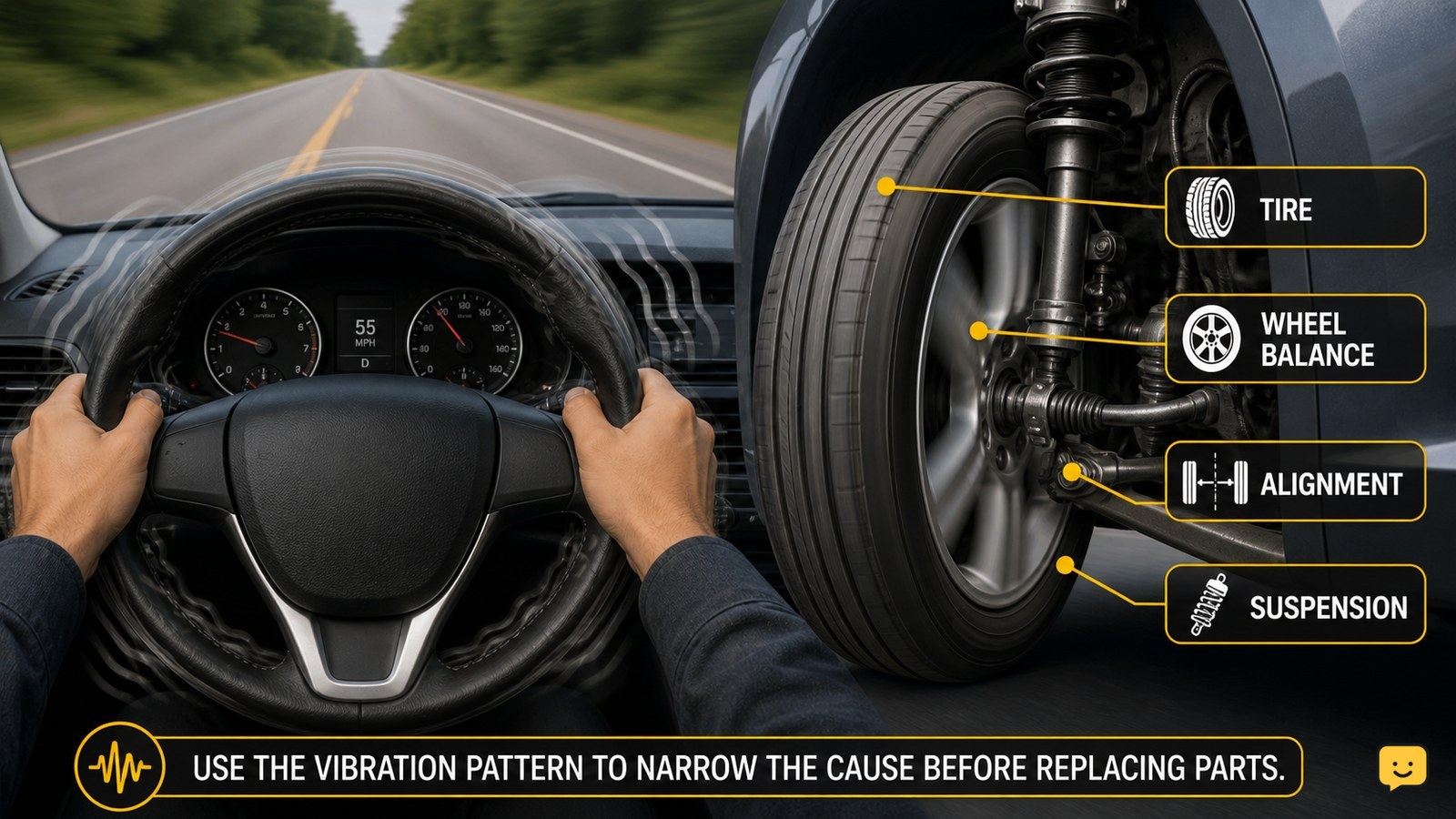
To find why your steering wheel shakes while driving, note when it happens: at a certain speed usually points to a tire or wheel-balance problem, while pulling or uneven tread suggests alignment. Vibration over bumps points more toward suspension. If the shake is sudden, severe, worsening, or paired with a loose wheel, damaged tire, noise, or warning light, stop driving and arrange a professional inspection.
Match the vibration pattern to the likely cause
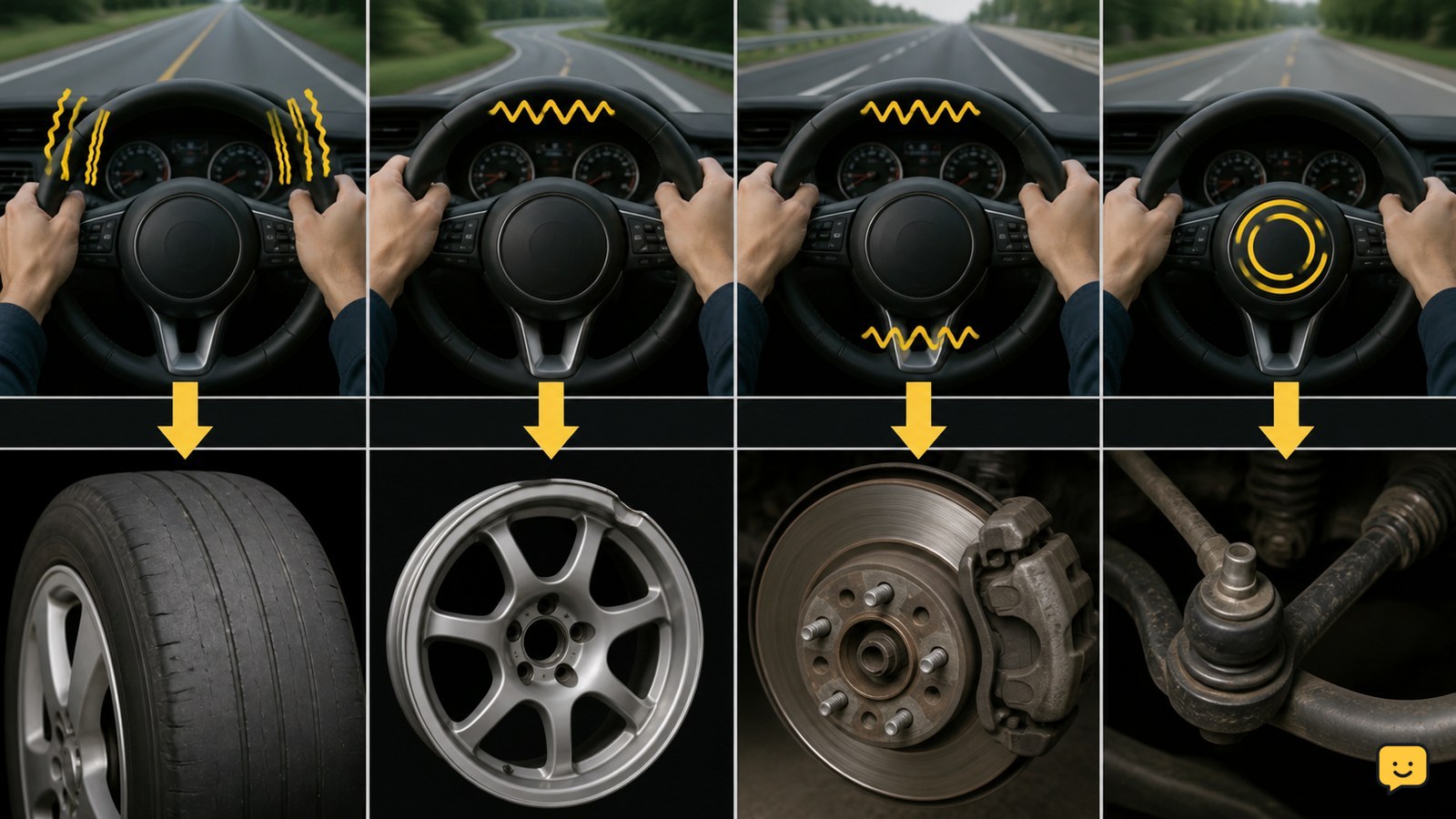
The vibration pattern is the fastest way to separate tire, wheel-balance, alignment, and suspension causes.
| What you notice | More likely cause | First action |
|---|---|---|
| Shake begins at a repeatable road speed and changes little when braking | Wheel imbalance, bent wheel, tire damage, or uneven tire wear | Inspect the tire and wheel, then request a balance check |
| Vehicle pulls, the steering wheel sits off-center, or tread wears on one edge | Alignment problem, sometimes with worn steering or suspension parts | Check tire condition and arrange an alignment inspection |
| Vibration appears mainly over bumps, rough roads, or during steering input | Suspension or steering wear, such as a damaged joint or bushing | Stop if there is looseness, clunking, or poor control; otherwise book an inspection |
| Shake happens mainly when the brake pedal is applied | Brake-related vibration, although tire, wheel, or suspension faults can also contribute | Use the separate braking diagnosis rather than treating it as a speed-related wheel-balance issue |
AAA lists tire, alignment, brake-rotor, and suspension faults among possible causes of steering-wheel shaking. These patterns narrow the search but do not confirm a failed part without inspection.
Check tire pressure, tread, and visible damage
Low pressure, uneven tread, or a damaged tire can make the steering wheel shake and can create an unsafe loss of control.
- Check all tires when cold and compare each reading with the vehicle handbook or the pressure label on the driver-door area. Do not use the maximum pressure molded into the tire sidewall as the vehicle setting.
- Look across the tread and sidewalls for a bulge, cut, exposed cord, separated tread, embedded object, or a section that looks lower than the rest.
- Run a hand lightly across the tread only when the tire is safely accessible and free from exposed damage. A sawtooth or cupped surface can indicate uneven wear or a suspension problem.
- Check whether the shake started after a pothole, curb strike, tire replacement, or long period of storage. That timing raises suspicion of a bent wheel, tire damage, or a lost balance weight.
If pressure is low, inflate only to the specified cold pressure and recheck after the tire cools. If it falls again, do not continue driving; have the leak found and repaired. A pressure correction will not fix a bulge, separated tread, or bent wheel.
Separate wheel balance from alignment trouble
Wheel-balance problems usually follow a repeatable speed range, while alignment trouble changes how the vehicle tracks and wears its tires.
- On a safe, straight road, note the approximate speed at which the shake starts, becomes strongest, and fades. Do not exceed the speed limit or continue if the vibration is severe.
- Notice whether the steering wheel is centered while the vehicle travels straight. An off-center wheel, a tendency to drift, or pulling after a road impact supports an alignment or steering-geometry concern.
- Inspect the front-tire tread for one-sided wear, feathering, or a pronounced difference between the inner and outer edges. These are useful clues, not a substitute for alignment measurements.
- Ask a tire shop to inspect the wheel for bends, confirm the tire is seated correctly, and check balance on the affected wheel. Request a road-force or equivalent diagnostic check if a normal balance does not remove the vibration.
Alignment will not correct a damaged tire or a bent wheel. Likewise, balancing will not correct a vehicle that pulls because its alignment or suspension geometry is wrong. If a fresh balance does not change the symptom, return for a wheel-and-tire runout check and suspension inspection.
Inspect for loose or worn suspension parts
Suspension or steering wear is more likely when the steering wheel shakes over bumps, the vehicle wanders, or you hear clunks while turning or braking.
- With the vehicle parked, look for a visibly damaged shock or strut, broken spring, leaking fluid, or a wheel that sits at an unusual angle.
- Check for new clunking, knocking, or clicking sounds when moving slowly over a bump or turning the wheel. Do not deliberately drive over rough surfaces to reproduce a serious symptom.
- After a recent impact, assume that hidden steering, suspension, tire, or wheel damage is possible even if the vehicle still moves normally.
- Have a qualified technician inspect ball joints, tie-rod ends, control-arm bushings, wheel bearings, and related mounting points. These parts can require lifting equipment and hands-on checks that are not safe to perform with a roadside jack.
A suspension repair may need an alignment afterward. If the steering feels loose, the car wanders, or the vibration is accompanied by a clunk, do not treat it as a simple tire-balance issue.
Verify the repair with a controlled recheck
The repair is verified only when the original vibration pattern is gone and the vehicle tracks normally on a safe road.
- Confirm the tire pressures are correct and that wheel fasteners were tightened to the vehicle maker’s specification.
- Repeat a short drive at the same legal speed and road conditions that first revealed the shake. Keep both hands available for steering and stop if the symptom worsens.
- Check whether the steering wheel is centered, the vehicle stays on course, and the tread or wheel shows no new problem.
- If the shake remains, tell the shop exactly when it occurs, whether it changes during braking, and whether it follows bumps or steering input. Request a complete tire, wheel, alignment, steering, and suspension diagnosis rather than replacing parts at random.
Stop the diagnosis when the vibration is severe, changes suddenly, or comes with a safety symptom. A smooth short test drive does not prove that a visibly damaged tire, loose wheel, or worn steering component is safe.
Frequently asked questions
Can low tire pressure make the steering wheel shake?
Yes. Low or uneven tire pressure can change how the tire flexes and may cause vibration or pulling. Check pressures when the tires are cold and use the vehicle’s specified setting. If one tire is losing air, has a bulge, or looks damaged, do not keep driving after inflating it; arrange a tire inspection.
How can I tell if the shaking is from wheel balance?
A wheel-balance issue often produces a repeatable shake at a particular road-speed range, with less connection to braking or bumps. The pattern is only a clue. A tire shop must inspect the tire and wheel, check for a bent rim or missing balance weight, and confirm the balance on the affected assembly.
Will an alignment fix a shaking steering wheel?
Alignment can help when the vehicle pulls, the steering wheel is off-center, or the tires wear unevenly. It will not repair a damaged tire, bent wheel, or worn suspension part. Those problems must be corrected first or diagnosed alongside the alignment check.
Is it safe to drive when the steering wheel vibrates?
It may be safe only for a short, careful trip when the vibration is mild, stable, and no tire, wheel, steering, suspension, brake, or warning-light problem is present. Stop driving for severe or worsening shaking, a loose wheel, tire damage, clunking, pulling, burning odor, or reduced steering control.
Browse more Maintenance & Repair guides for help with this topic.