To fix streaky windshield wipers, park safely, lift each arm, and clean the rubber edge and windshield with a lint-free cloth and automotive glass cleaner. Recheck the blade for cracks, splits, warping, or embedded grit, and make sure the washer reservoir has suitable fluid. Replace a damaged or still-streaky blade after cleaning; do not rely on it in poor visibility.
Check whether the glass or blade is causing the streaks
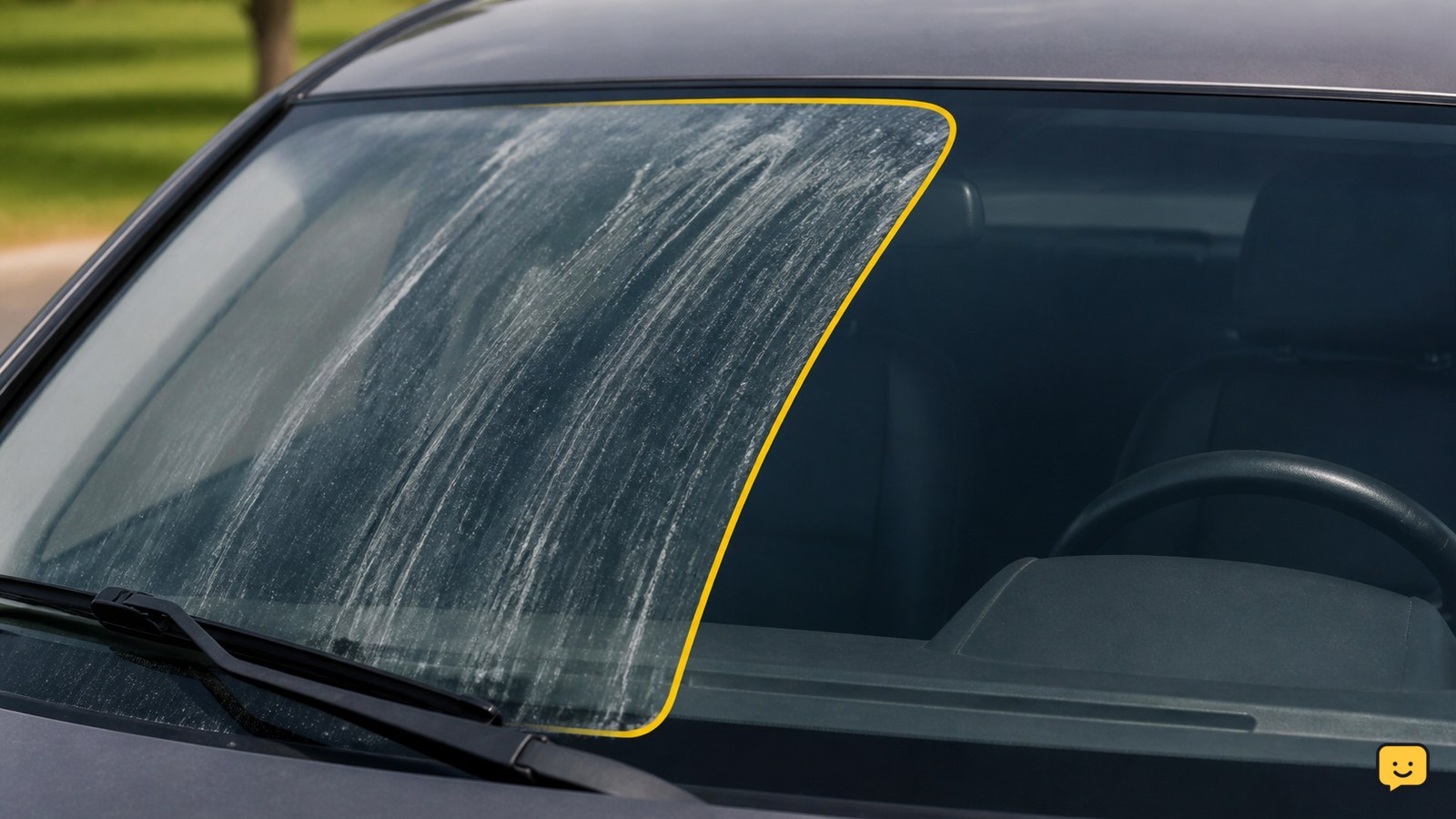
Streaky windshield wipers are usually caused by residue on the glass, contamination on the rubber edge, or a blade that has deteriorated. Run a clean fingertip or cloth across the windshield when it is dry. A greasy film, rough patches, tree sap, road grime, or fine grit points to glass contamination. Inspect the blade edge for dirt, cracks, splits, curling, or a section that no longer sits flat.
The pattern helps narrow the cause. A broad cloudy film across the swept area suggests dirty glass or contaminated rubber. A narrow untreated strip, repeated arc, skipping movement, or chatter suggests poor blade contact, damaged rubber, or a wiper arm problem. If only one side streaks, compare that blade with the other before replacing both.
Clean the windshield before testing the wipers
Cleaning the windshield removes the film that can make even a usable blade smear. Raise the wiper arms carefully if the vehicle allows it, then wash the exterior glass with automotive glass cleaner and a clean lint-free cloth. Work across the full swept area, including the lower section where road dirt collects. Wipe again with a dry part of the cloth until the surface looks clear rather than hazy.
For stubborn residue, the Jiffy Lube Blauvelt guidance identifies a vinegar-and-water solution as an option for breaking down residue. Use it cautiously on exterior glass, keep it away from painted surfaces and rubber trim, and wipe the area clean afterward. Do not use an abrasive pad or scrape aggressively, because a damaged windshield can create glare and poor visibility.
Verify: Shine a light across the dry glass from an angle. Continue cleaning if you see an even film, oily patches, or distinct spots. Stop this procedure if the cloth catches on a chip, crack, or deep scratch.
Clean the rubber blade edge without damaging it
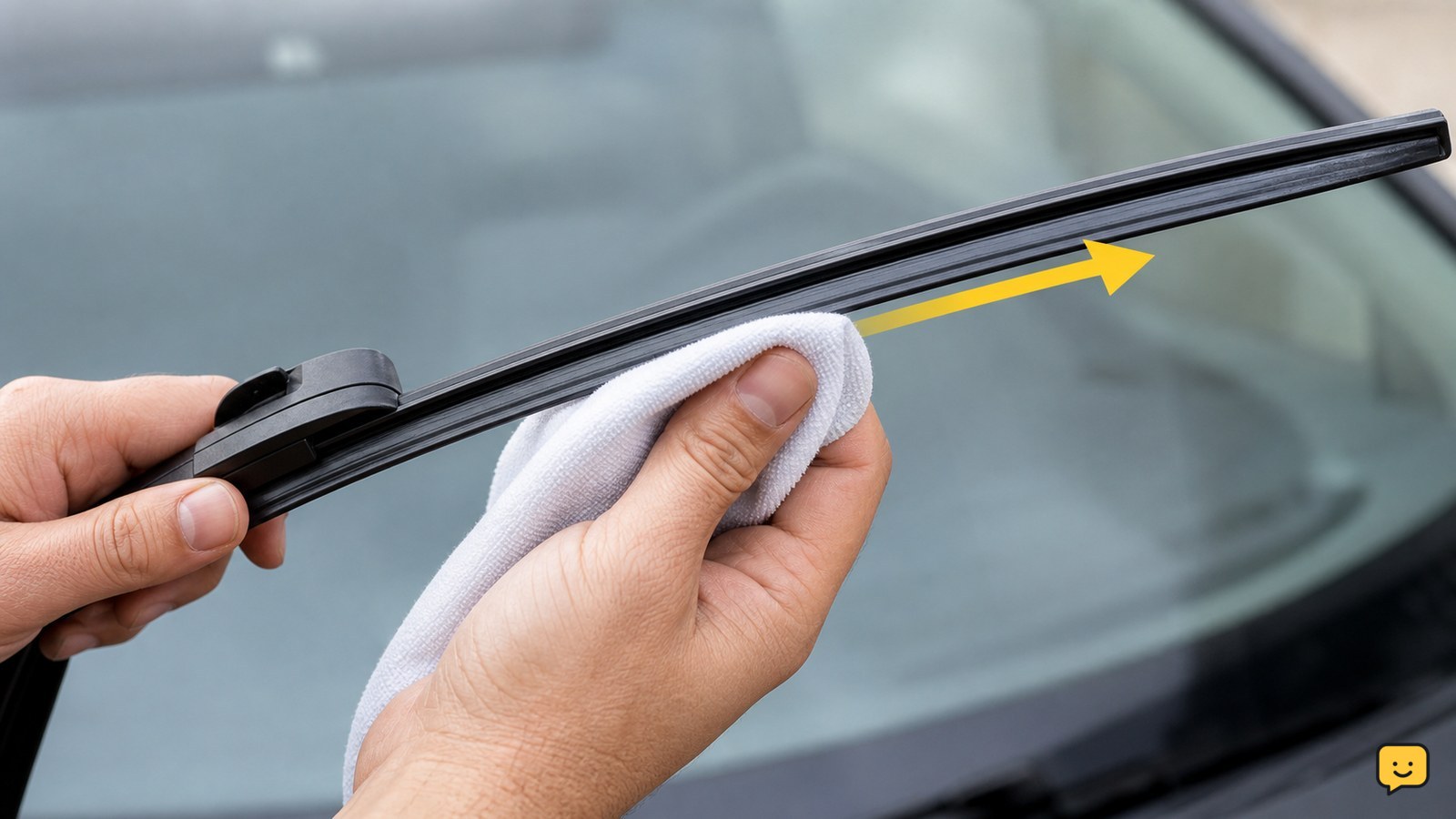
Cleaning the rubber edge removes grit and residue that the windshield wash cannot reach. Dampen a clean cloth with water or glass cleaner, pinch it gently around the rubber wiping edge, and draw the cloth from one end of the blade to the other. Repeat with a clean section until the cloth no longer picks up dark grime.
Do not bend, twist, or scrape the rubber. The supplied evidence includes blade-cleaning demonstrations, but cleaning only restores a blade when the rubber still has a continuous, flexible edge. If the cloth reveals a tear, split, hardened section, curled lip, or missing piece, cleaning is not a repair.
Lower the arm carefully against the glass, wet the windshield with washer fluid, and run the wipers briefly. A clean blade should move across a wet surface without leaving the same opaque bands. If the result improves but streaks return immediately, the blade may be worn or the glass may still have bonded contamination.
Check washer fluid and spray coverage
Suitable washer fluid helps carry dirt away while the blades sweep. Check the washer reservoir and refill it with fluid intended for vehicle windshields, following the product label and the vehicle manual. Do not test dry blades on a dry windshield; add washer fluid first.
Activate the washers while parked and observe the spray pattern. Fluid should reach the area swept by the blades. If the reservoir is full but little or no fluid sprays, check for an empty-looking stream, blocked nozzle, disconnected hose, or a leak. Clean only an accessible nozzle gently; do not force a hard object into it. A washer problem can leave fresh grime on the glass even after the blades have been cleaned.
Failure path: If the spray is weak or absent, fix the washer-fluid delivery problem before judging the wipers. If the glass becomes wet but the same streaks remain, continue to blade inspection or replacement.
Replace a blade that still streaks or skips
Replace the affected wiper blade when cleaning does not remove the streaks or when the rubber is visibly damaged. Use the vehicle manual, the blade packaging, or a fitment guide to confirm the length and connector type. Some vehicles use different lengths on the driver and passenger sides, so do not assume the two front blades match.
Lift the arm, release the old blade using its connector, and install the new blade until the retaining clip locks. Keep the arm supported throughout the change and lower it gently. Remove any protective sleeve from the new rubber before testing. If the rear wiper is the problem, confirm that the rear blade uses the correct vehicle-specific fitting.
Wet the glass with washer fluid and test the new blade at low speed. The expected result is a clear swept path without repeated bands, skipping, or chatter. If a new blade leaves a fixed untouched strip, the arm may not press evenly against the glass. If the arm is bent or loose, stop and arrange service rather than forcing it into position.
Verify clear visibility before returning to the road
Clear windshield wipers should leave a transparent swept area when the glass is wet, with no persistent haze, skipped section, or heavy chatter. Test both front blades and the rear blade if fitted, using washer fluid rather than a dry windshield.
View the glass from the driver’s seated position and from outside at an angle. Headlights or streetlights can expose a film that is difficult to see in daylight. If visibility remains impaired after clean glass, clean rubber, adequate fluid, and a correctly fitted blade, do not keep experimenting while driving. The remaining cause may be windshield damage, incorrect arm pressure, a bent arm, or another wiper-system fault.
Frequently asked questions
Can cleaning restore old windshield wiper blades?
Sometimes. Cleaning can remove grime from a blade whose rubber is still smooth, flexible, and unbroken. It will not reliably restore rubber that is split, hardened, curled, warped, or missing pieces. If streaks return after one careful cleaning and a wet test, replacement is the safer choice.
Why do my wipers streak in one direction?
One-direction streaking can come from uneven blade contact, contaminated rubber, or a wiper arm that is not applying pressure evenly. Clean the glass and blade first, then test with washer fluid. If the same band remains or the arm looks bent or loose, stop using it in poor weather and arrange an inspection.
Should I replace both front wiper blades?
Replace both when they are similarly aged, both leave streaks, or you cannot identify which blade is failing. If only one blade is damaged and the other produces a clear sweep, replacing the affected blade may be enough. Confirm each side’s required length and connector before buying.
Why are my new wipers still leaving streaks?
New blades can still streak if the windshield has an oily film, the protective covering remains on the rubber, the washer fluid is not reaching the sweep area, or the wiper arm has poor contact. Clean the glass, confirm the blade is installed and uncovered, and check spray coverage. Persistent fixed bands require inspection.
Browse more Maintenance & Repair guides for help with this topic.