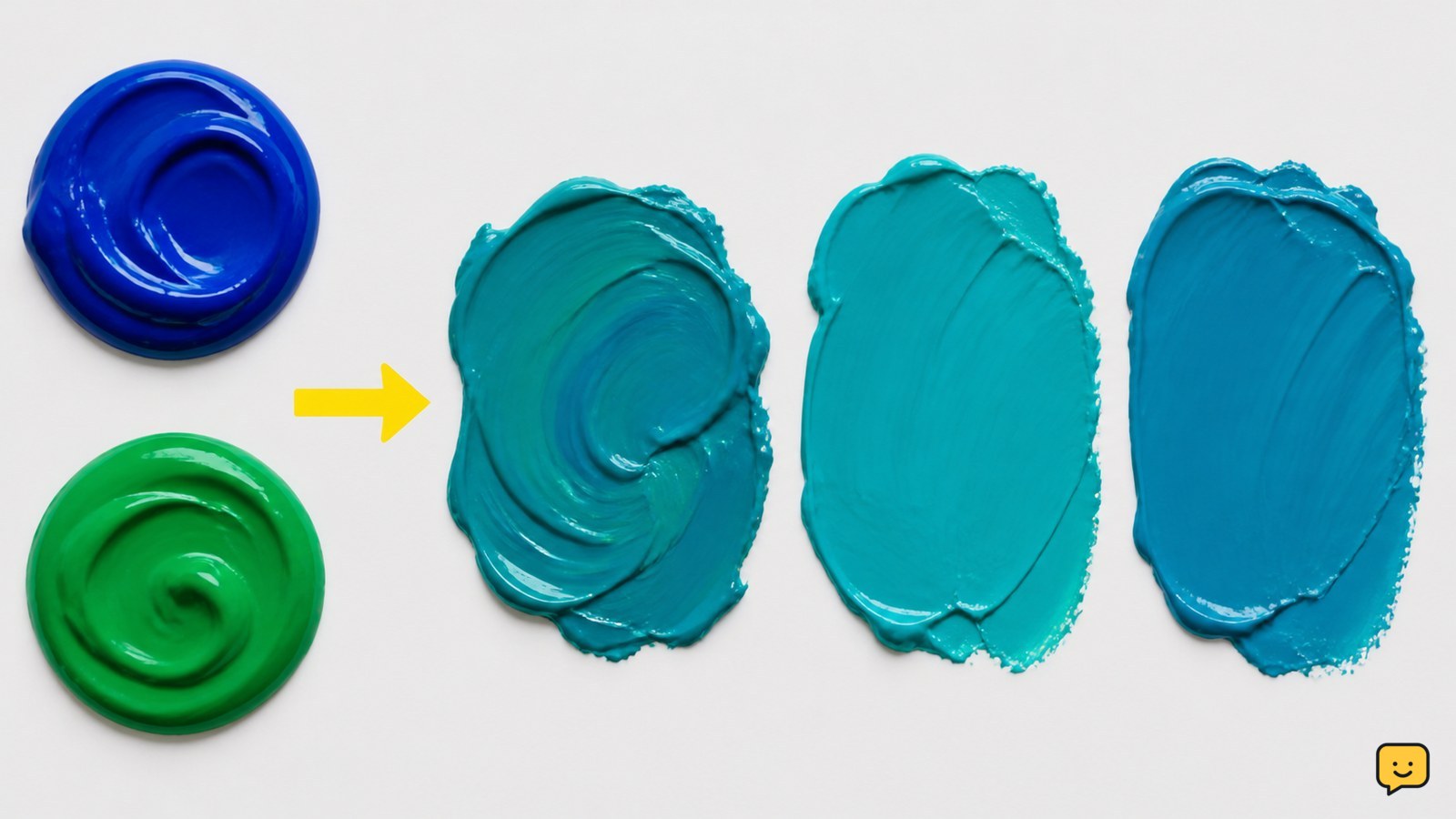
When you mix blue and green paint, you usually get teal, turquoise, or another blue-green shade. More blue creates a cooler, darker result; more green makes it warmer and brighter. With colored light, blue and green combine to make cyan. The exact appearance depends on the pigments, brightness, and mixing ratio.
Identify the result: blue and green usually make teal
Blue and green paint usually make a teal, turquoise, or blue-green color. The result is not one fixed shade because different paints contain different pigments. A blue-heavy mixture looks cooler and deeper, while a green-heavy mixture looks brighter and more yellow-green.
The supplied paint-mixing references show blue-green combinations as a range of related shades rather than one universal formula. Treat the first mixture as a test, not a final color match.
Check the medium before mixing the colors
Paint, light, and digital color do not combine in the same way. For paint, physically combine small amounts of blue and green pigment. For colored light, blue and green combine additively and appear cyan when their intensities are balanced.
If you are working in a drawing or presentation app, the displayed result can also depend on the color model and screen settings. Use the paint instructions only for physical pigments, not for a light-based screen effect.
Mix blue and green paint in a controlled ratio
To mix blue and green paint, begin with a blue-led test because green can overpower a small amount of blue quickly.
- Place about two parts blue and one part green on a palette or mixing surface.
- Blend the colors fully with a clean brush or palette knife.
- Spread a small sample on white paper or the intended surface.
- Wait until the sample looks evenly blended before deciding whether to adjust it.
A balanced starting point often produces a medium teal. The ratio is a practical starting method rather than a guaranteed formula because pigment strength varies between brands and color names.
Adjust the shade without losing the blue-green balance
Add blue to make the mixture cooler, darker, and more ocean-like. Add it in small increments, mix completely, and check another sample. This is useful when the first result looks too lime, yellow, or bright.
Add green to make the mixture warmer, lighter, and more vivid. Use very small additions when the green is strong. If the result becomes too green, correct it with a little blue instead of adding white immediately.
Add white only after the hue is correct if you need a tint. White lightens the color but can make a vivid teal look softer or less saturated. Add black sparingly, if at all, because it can make the mixture look dull or muddy.
Verify the color before using the full mixture
Verify a blue-green mixture by checking the sample in the same lighting and on the same surface where it will be used. A successful result should look consistently teal or blue-green, with no visible streaks of unmixed blue or green.
- If it looks too blue, add a tiny amount of green.
- If it looks too green, add a tiny amount of blue.
- If it looks gray or muddy, clean the tool and make a fresh small test with uncontaminated colors.
- If it looks right when wet but changes after drying, let a sample dry before mixing a larger amount.
Once the dried sample matches your goal, record the approximate ratio and repeat the same order of additions for the remaining mixture.
Choose alternatives when you need a specific blue-green
Use a ready-made teal, turquoise, or blue-green color when you need a consistent result across several pieces or cannot test the pigments first. A premixed color can be easier to reproduce than combining two paints with unknown pigment strength.
For a muted blue-green, test a small amount of a neutral or complementary tint rather than darkening the entire batch at once. Stop if the color loses its blue-green identity; a new test is safer than trying to rescue a large mixture.
Frequently asked questions
Does blue and green make turquoise?
Yes. Blue and green can make turquoise when the mixture is relatively bright and balanced, often with enough green to shift blue toward a lighter, warmer blue-green. A darker or more blue-heavy mixture may look teal instead. The exact result depends on the pigments and their proportions.
What does dark blue and green make?
Dark blue and green usually make a deep teal, blue-green, or subdued turquoise. Because dark pigments can dominate quickly, add the second color in small amounts and test the mixture before applying it to the final surface.
What does blue and green make with paint?
Blue and green paint generally make a blue-green color such as teal or turquoise. Start with more blue than green, mix thoroughly, and adjust with tiny additions until the sample reaches the desired temperature and brightness.
What does blue and green make with light?
Blue and green light combine to make cyan when their brightness levels are balanced. This differs from paint mixing because light combines additively, while paint relies on pigments absorbing and reflecting parts of the visible spectrum.
How do you make blue-green lighter without changing the hue too much?
Make blue-green lighter by adding a small amount of white after the hue is correct. Mix thoroughly and test a sample because white can reduce saturation. For screen colors, increase brightness or adjust the color value instead of adding physical white.
For more help with this topic, use the Learning Study guides.