To drive a manual car, press the clutch fully, select first gear, then slowly release the clutch while gently pressing the accelerator. Once moving, release the clutch completely and shift up as engine speed and road speed increase. Press the clutch before each gear change, use neutral during longer stops, and practice first in a legal, quiet area with an experienced driver or instructor.
Browse more Features & Controls guides
Learn the pedals and gear pattern before moving
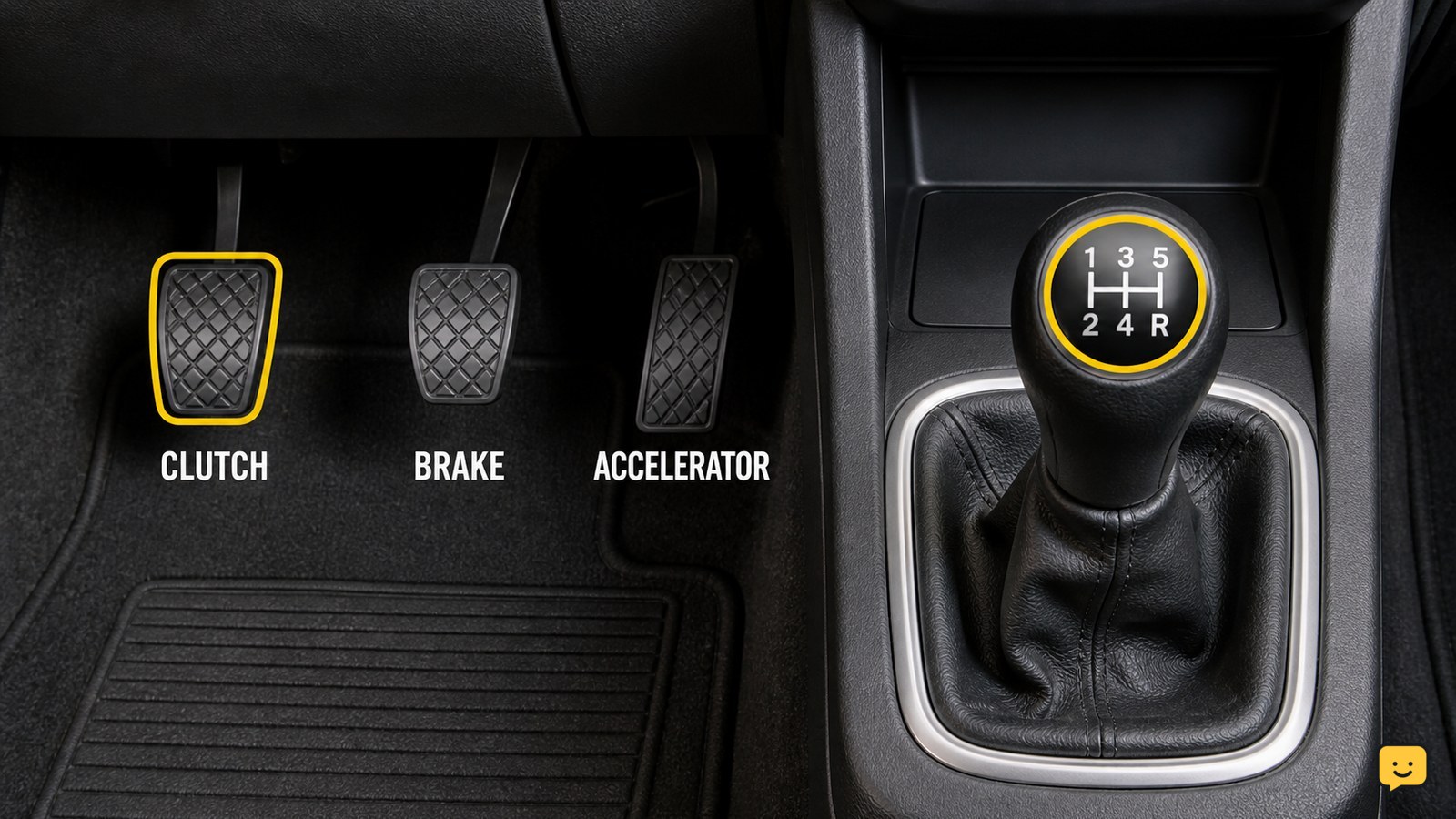
A manual car uses three foot pedals: clutch on the left, brake in the middle and accelerator on the right. The clutch temporarily disconnects the engine from the transmission so you can select a gear. The gear lever usually shows an H-pattern, but the layout varies by vehicle.
With the engine off, press the clutch fully and move the lever through the pattern without forcing it. Find neutral by moving the lever side to side; it should move freely between the gear positions. Confirm reverse only from the owner’s manual because some cars require a collar lift or extra push.
Verify: You should be able to identify first gear, neutral, reverse and the parking brake without looking away from the road for more than a moment.
Start the car in neutral with the clutch pressed
To start a manual car, select neutral, press the clutch pedal fully and keep the brake applied. Turn the ignition or press the start control according to the vehicle instructions. Many cars use a clutch-start safety switch, so the engine may not crank unless the pedal is fully down; South Bend Clutch gives the same neutral-and-clutch procedure for starting a manual vehicle.
Once the engine starts, keep the clutch pressed and check that the area ahead is clear. If the car does not start, confirm neutral, press the clutch to the floor and check for an immobilizer or battery symptom rather than repeatedly cycling the starter.
Move away smoothly by finding the clutch bite point
To move a manual car from a stop, press the clutch fully, select first gear, release the parking brake when safe, and slowly lift the clutch until you feel the engine load change or the front of the car begin to settle slightly. This is the bite point, also called the engagement point.
- Keep your right foot on the brake while you find the bite point on level ground.
- Move your right foot to the accelerator and add a small, steady amount of throttle.
- Continue releasing the clutch smoothly as the car begins to roll.
- Take your left foot completely off the clutch once it is fully engaged.
The car should move forward without a sharp jump, loud engine flare or repeated shudder. If the engine stalls, press the clutch and brake, select neutral, apply the parking brake and restart. If the engine revs rise but the car barely moves, lift the clutch more gradually and avoid holding it halfway for longer than necessary.
Shift up when the engine and road speed require it
To shift up in a manual car, ease off the accelerator, press the clutch fully, move the lever to the next higher gear, then release the clutch smoothly while returning to gentle throttle. RAC’s learner guidance treats gear selection as dependent on the car’s speed and conditions rather than one fixed engine-speed figure, so use the owner’s manual and the engine’s sound as your guide.
- Accelerate in first gear until the engine sounds busy or the car is ready for more speed.
- Lift off the accelerator and press the clutch completely.
- Select second gear with a light, direct movement.
- Release the clutch progressively and apply throttle again.
Repeat the same sequence for higher gears. A smooth change has no loud engine flare, harsh jolt or prolonged clutch slip. If the car lurches, slow the clutch release and coordinate the throttle more gently. Never force the lever; return to neutral and try again if a gear does not engage.
Slow down and downshift without forcing the car
To slow a manual car, release the accelerator and use the brake. Press the clutch before the engine reaches a very low speed or begins to shudder, especially when preparing to stop. Select a lower gear only when it matches the car’s current speed; do not use a low gear to replace normal braking.
For a routine stop, brake progressively, press the clutch fully as the car slows, select neutral when stopped and release the clutch. South Bend Clutch recommends neutral for longer stops so you do not hold the clutch pedal down unnecessarily.
For a downshift while still moving, brake first, press the clutch, select the lower gear and release the clutch smoothly. A small throttle blip can help match engine speed, but beginners can leave this technique until basic clutch control is consistent. If the car jerks sharply, the selected gear may be too low or the clutch was released too quickly.
Control hill starts with the parking brake
To start on a hill, use the parking brake to prevent the manual car from rolling backward while you find the bite point. Press the clutch, select first gear, add gentle throttle, and slowly release the clutch until the car begins to pull against the brake. Release the parking brake smoothly, then continue releasing the clutch.
Practice this only after you can move away reliably on level ground. If the car rolls backward, press the clutch and brake fully, apply the parking brake and reset. Do not hold the car on a hill with clutch slip or accelerator alone; that creates unnecessary heat and wear.
Avoid clutch wear and confirm each drive is controlled
Good manual-car technique keeps the clutch fully released whenever you are not changing gear or moving away. Do not rest your foot on the clutch pedal, hold the car stationary with the clutch at its bite point, or rev the engine heavily before releasing it.
Before entering traffic, verify that you can repeatedly start in first gear, shift into second without a jolt, stop without stalling and select neutral when stationary. The RAC’s beginner procedure also emphasizes setting the seat, belt and controls before driving.
If the car repeatedly stalls after slow, controlled practice, ask an instructor to observe your feet and confirm the clutch’s engagement point. If the pedal or transmission behaves abnormally, stop practicing and arrange a mechanical inspection.
Frequently asked questions
Which gear should I use when starting a manual car?
Start in first gear on level ground or a normal uphill slope. Use reverse only to move backward, and select neutral when stopped for a longer period. The correct gear depends on the vehicle, road speed and incline, so do not select first gear at high speed.
Why does a manual car stall when I release the clutch?
A manual car usually stalls because the clutch is released too quickly, the engine has too little throttle, or the selected gear is too high for the car’s speed. Press the clutch and brake, select neutral, restart, and practice finding the bite point more slowly.
Can I keep the clutch pressed at a red light?
You can, but selecting neutral and releasing the clutch during a longer stop reduces the time the release mechanism is loaded. Keep the brake applied and select first gear again only when you are ready to move.
How do I know when to change gear in a manual car?
Change gear when the engine sounds strained or busy in the current gear, or when the car feels ready for a higher ratio. Use the owner’s manual for model-specific guidance. Avoid relying on one universal RPM number because engines, gearing, speed and road conditions differ.
Is it difficult to learn how to drive a manual car?
The first challenge is coordinating clutch release with gentle acceleration. Most beginners improve by practicing starts and stops on flat, open ground before adding gear changes, hills or traffic. A qualified instructor can correct pedal timing before poor habits cause clutch wear.