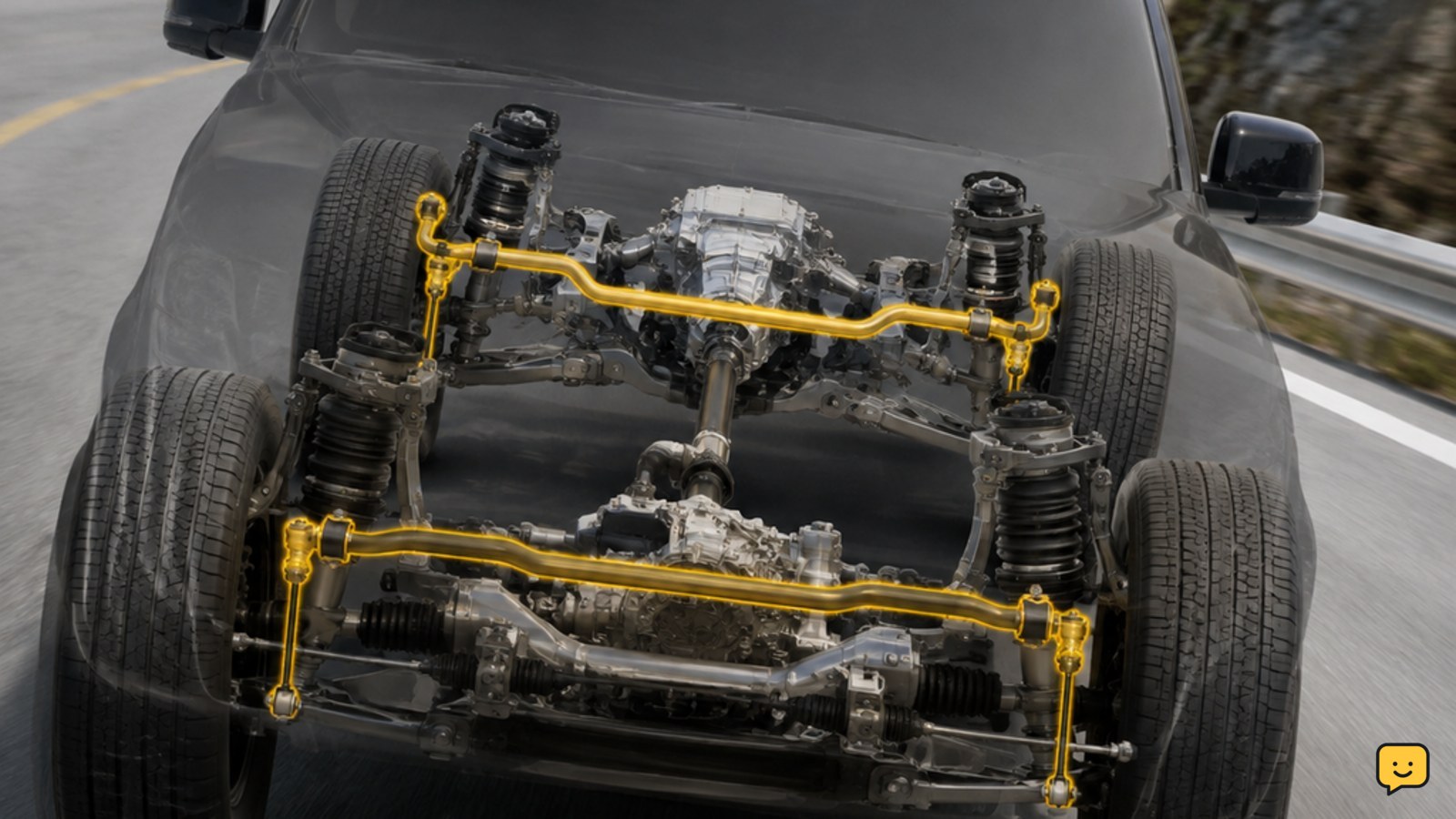
Active Cornering Enhancement, usually abbreviated ACE, is a model-dependent chassis system associated mainly with Land Rover vehicles. It reduces body roll in corners by actively controlling the anti-roll bars, rather than relying only on passive springs and bars. Confirm fitment in the owner’s manual or vehicle specification before checking the system; do not open hydraulic lines or drive if the vehicle leans, leaks fluid, or displays an ACE warning.
For more help with this topic, use the Features Controls guides.
Check whether your vehicle has Active Cornering Enhancement
Active Cornering Enhancement is not a universal feature and should be confirmed by model and year before any diagnosis. Search the owner’s manual, vehicle specification sheet, or factory equipment list for “Active Cornering Enhancement,” “ACE,” or a related dynamic suspension description.
The term is most closely associated with certain Land Rover and Range Rover applications. CarParts.com describes ACE as a system intended to assist cornering and improve handling, while owner discussions distinguish earlier ACE systems from later Dynamic Response systems. Treat those names as model-dependent rather than interchangeable.
- Record the exact model, model year, engine, and market specification.
- Check the manual’s suspension, chassis, warning-light, and technical-data sections.
- Look for a dedicated ACE or suspension warning symbol when switching the ignition on. A normal bulb check is not proof that the system is fitted; use the vehicle documentation as the primary confirmation.
Verification: You have identified the feature only when the manual or vehicle-specific equipment information names ACE or clearly identifies the applicable active anti-roll system.
Understand what ACE changes during cornering
Active Cornering Enhancement is designed to reduce body roll by changing the resistance of the anti-roll bars as the vehicle corners. A technical description cited by Land Rover owner communities characterizes earlier ACE as a high-pressure system that stiffens the anti-roll bars to limit roll. The exact hydraulic, electronic, and control arrangement depends on the vehicle.
ACE does not increase tire grip, shorten braking distance, or make an unsafe corner safe. Tires, road surface, speed, suspension condition, alignment, and driver inputs still determine how much control the vehicle has. A vehicle may feel flatter in a bend while still exceeding the available grip.
Observable result: On a properly functioning system, the vehicle should remain composed during ordinary, legal-speed cornering without a new warning message, fluid leak, unusual hydraulic noise, or sudden change in body movement. Do not use aggressive steering or speed to test this result.
Inspect for the warning signs of an ACE problem
An ACE fault is more likely when a warning message or lamp appears together with changed body roll, uneven ride height, fluid loss, or unusual suspension noise. One symptom alone cannot identify the failed component because similar behavior can come from tires, springs, dampers, anti-roll-bar parts, steering, or wheel-alignment problems.
| Observable symptom | Possible direction | Safest next action |
|---|---|---|
| ACE or suspension warning remains on | Stored fault, low system pressure, sensor issue, electrical fault, or hydraulic problem | Do not clear the warning; have the vehicle scanned and inspected. |
| Vehicle leans or rolls more than usual | Loss of active control, damaged anti-roll components, spring or damper fault, or another suspension issue | Avoid cornering tests and arrange professional inspection. |
| Fluid is visible under the vehicle | Possible hydraulic leak | Do not touch pressurized fittings or drive until the leak is assessed. |
| Noise occurs without a warning | Possible mechanical, hydraulic, tire, or suspension issue | Compare the noise at low speed only if handling remains normal; stop if control changes. |
Check the ground beneath the vehicle and visible suspension areas with the engine off. Do not wipe unknown fluid with bare hands, and do not assume a small wet patch is harmless. If you cannot identify the fluid or its source, stop the inspection and seek a qualified technician.
Verify the system without opening hydraulic components
You can verify basic operating conditions without dismantling ACE. Start with a level-ground visual check, then use the vehicle’s normal ignition self-test and diagnostic process.
- With the vehicle parked level, compare the left and right ride height at the front and rear. A small visual difference may come from the ground or load, but a clear lean needs inspection.
- Turn the ignition on without starting the engine and observe the normal warning-lamp check. Note whether an ACE, suspension, stability, or general chassis warning remains after the engine starts.
- Inspect only visible pipes, reservoir areas, and suspension components for fresh fluid, damaged lines, loose-looking brackets, or impact damage. Do not tighten or disconnect anything.
- If the manual provides a vehicle-specific diagnostic procedure, follow that procedure. Otherwise, use a workshop with a scan tool that can communicate with the vehicle’s suspension and chassis modules.
- Record the exact warning text, when it appears, recent suspension work, fluid work, impacts, and any change in handling. This information helps separate an ACE fault from a tire or conventional suspension problem.
Expected result: The vehicle sits evenly, no relevant warning remains after the self-test, no fresh leak is visible, and ordinary low-speed maneuvering feels normal. These checks do not prove full ACE performance or hydraulic pressure; only model-specific testing can do that.
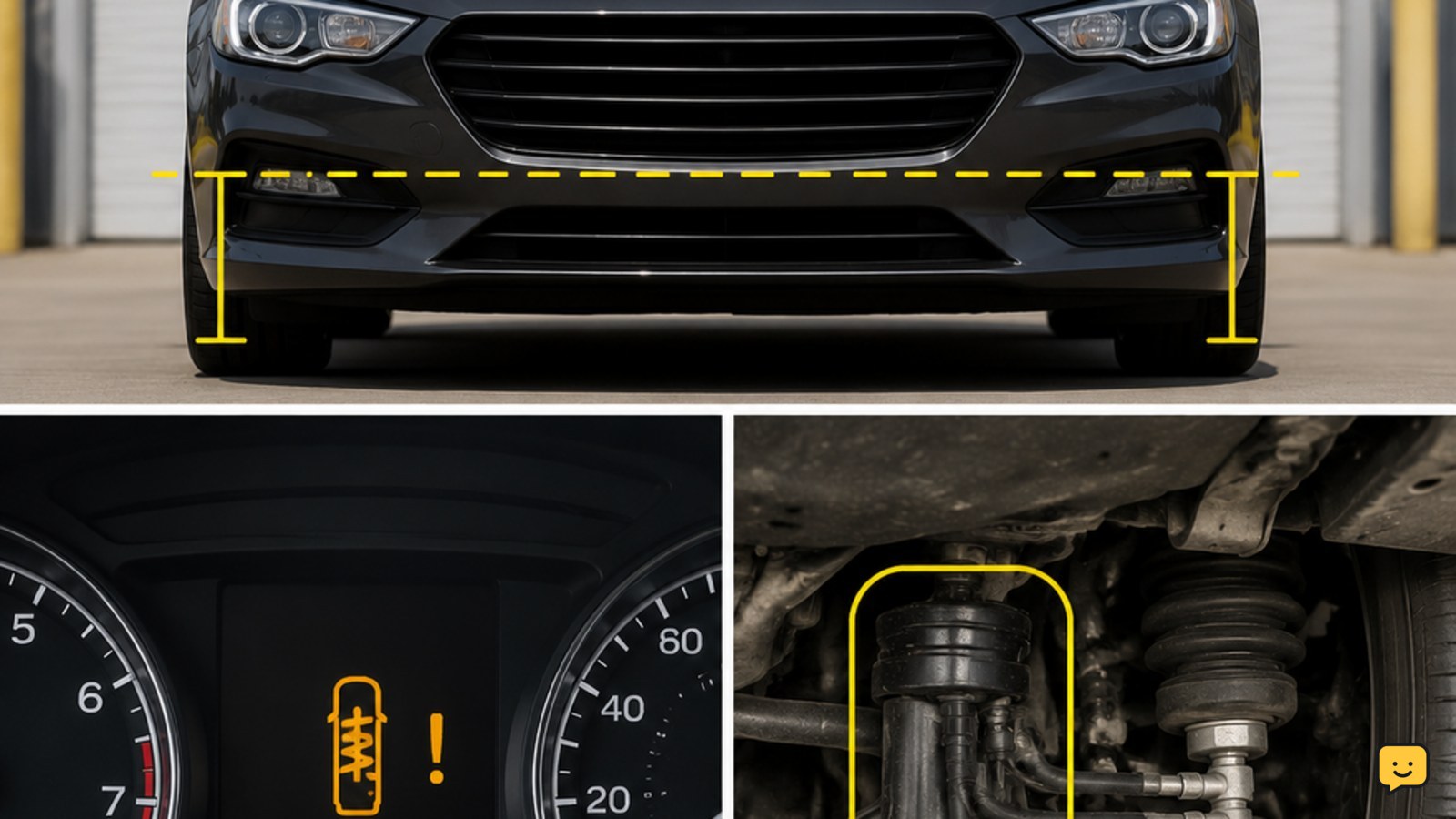
Choose the correct next step when a check fails
If identification fails, do not buy ACE fluid, parts, or a replacement anti-roll component based only on the acronym. Confirm the vehicle specification first because later systems may use different names or designs.
If a warning appears but the vehicle remains level and handles normally, avoid clearing the code and book a diagnostic inspection promptly. Keep driving limited to the safest necessary trip only when the owner’s manual permits it and no stop condition is present.
If the warning is accompanied by a lean, leak, harsh suspension movement, steering change, or unusual braking behavior, do not drive it to the workshop. Arrange recovery and tell the technician that the vehicle may have an active suspension or anti-roll-bar fault.
If the scan identifies a fault, have the technician confirm the code with physical inspection before replacing parts. A warning can result from a sensor, wiring, pressure, valve, control, or mechanical issue, and replacing a component without confirming the cause may leave the handling problem unresolved.
Frequently asked questions
Is Active Cornering Enhancement the same as air suspension?
No. ACE is an active anti-roll or chassis-control system intended to manage body roll in corners. Air suspension changes ride height and spring support. A vehicle can have one system, both systems, or neither, so confirm the equipment from the model-specific manual.
Can I drive with an ACE warning light on?
Only the vehicle’s manual and the symptoms can determine whether a limited drive is acceptable. If the vehicle leans, handles differently, leaks fluid, or shows a serious chassis warning, do not drive it. Arrange inspection or recovery instead of testing the system at speed.
Does ACE improve tire grip?
No. ACE can reduce body roll, but it cannot create additional traction. Worn or incorrectly inflated tires, standing water, ice, excessive speed, poor alignment, or damaged suspension parts can still cause loss of control.
Can I repair an ACE hydraulic leak at home?
Do not open or loosen ACE hydraulic components as a home repair unless you have the model-specific equipment, procedures, and training. Pressurized fluid can cause injury, and an incorrect repair can affect suspension control. Have a qualified technician locate, depressurize, repair, and test the system.