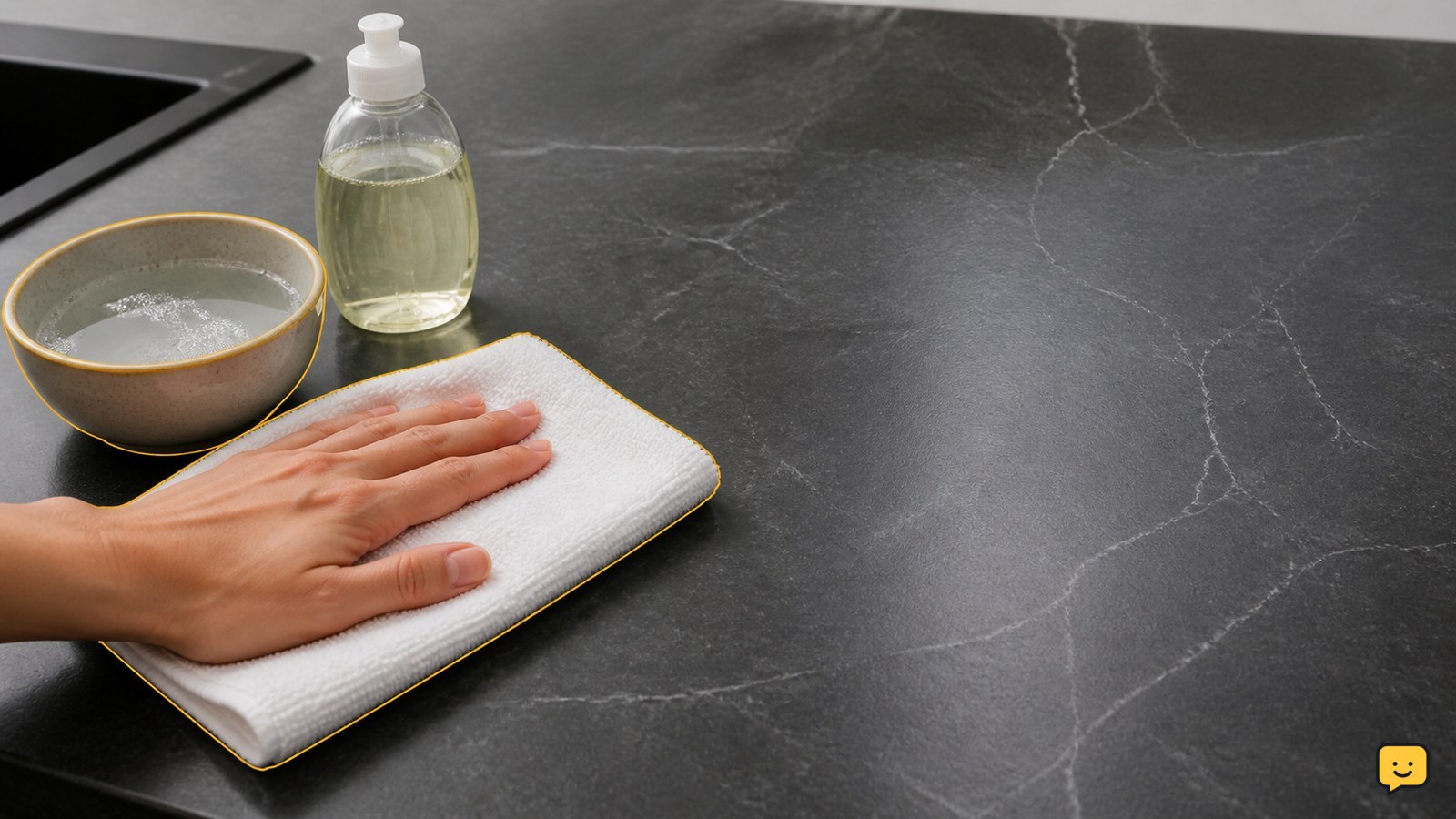
Wipe soapstone countertops with warm water and a soft cloth after removing crumbs and loose grit. For daily soil, add a small amount of mild dish soap, then wipe again with clean water and dry the surface. Soapstone is durable, but test any stronger cleaner on a hidden area and stop if a mark appears etched, cracked or unusually deep.
Gather soft, soapstone-safe cleaning supplies
Soapstone countertops need only a few gentle supplies for routine cleaning: warm water, mild dish soap, a soft cloth or nonabrasive sponge and a dry towel.
Remove crumbs and loose grit before wet cleaning so they do not drag across the surface. A small amount of dish soap is enough; excess soap creates a film that can make the countertop look cloudy or feel tacky.
M Teixeira Soapstone says common household cleaners can be used on soapstone and that chemicals and acids do not harm the stone. For regular care, however, the simpler water-and-mild-soap method is easier to control and leaves less residue. Surface Care Pros likewise recommends warm water with a drop or two of dish soap or a mild pH-neutral cleaner.
Wipe the countertop with warm water and mild soap
To clean a soapstone countertop, first wipe the surface with a damp soft cloth to remove loose dust and crumbs.
- Mix warm water with a small amount of mild dish soap.
- Wipe in overlapping passes, paying extra attention to the area around the sink, faucet and food-preparation zones.
- Use a second cloth dampened with clean water to remove soap residue.
- Dry the countertop with a clean towel.
The surface is clean when no visible food film remains and the dried stone does not feel slippery or sticky. If a cloudy patch remains, rinse and dry that area again instead of adding more cleaner.
Lift dried spills without aggressive scrubbing
Dried food and drink residue on soapstone should be softened before wiping rather than scraped forcefully.
- Place a warm, damp cloth over the residue for several minutes.
- Wipe gently with the cloth or a nonabrasive sponge.
- Repeat the warm-water treatment if the spill is still attached.
- Rinse the area with clean water and dry it completely.
Use a plastic scraper only for a small, softened deposit and keep it nearly flat against the surface. Do not continue if the scraper catches, the edge chips or the mark appears to be part of the stone rather than residue. At that point, contact the fabricator for a material-specific repair recommendation.
Treat scuffs, rings and dark marks separately
Soapstone scuffs and rings are often surface marks, so first clean the area and inspect it only after the countertop has dried.
For a light mark, repeat the mild-soap cleaning once and dry the surface. Surface Care Pros identifies light sanding and periodic oiling as possible ways to even out the appearance of marks, but sanding is a repair step rather than daily cleaning. Use it only when the fabricator approves the method and abrasive grade for your slab.
A dark ring that fades after cleaning is likely residue or moisture at the surface. A mark that remains unchanged, feels indented or follows a crack should not be treated as a cleaning problem. Stop rather than enlarging the damaged area with repeated rubbing.
Choose whether the countertop needs oiling
Oiling is optional appearance maintenance, not a requirement for removing everyday dirt from soapstone.
M Teixeira Soapstone explains that oiling can darken the stone and help create a more uniform color and sheen. If you want the natural, lighter appearance, skip oiling. If you want a darker or more even look, use only the product and schedule recommended for your specific countertop.
- Clean and dry the stone first.
- Test the oil on a hidden section and wait long enough to judge the color change.
- Apply a thin, even coat if the test result is acceptable.
- Wipe away excess product so the surface does not remain greasy.
Verify success when the finish looks even and does not transfer an oily film to a dry cloth. If the color is too dark or uneven, stop applying product and ask the fabricator how to correct it.
Verify a clean, dry surface before using the counter
A properly cleaned soapstone countertop should be free of visible residue, feel smooth rather than sticky and dry without a cleaner film.
Check the surface under normal room light from several angles. If you see streaks, use a clean damp cloth followed by a dry towel. If the same mark remains after gentle cleaning and rinsing, classify it before trying anything stronger: residue can be cleaned again, while a scratch, dent, crack or persistent discoloration needs a repair decision.
For ongoing care, wipe spills when convenient and use the mild-soap routine whenever the surface has visible soil. Avoid turning a routine cleaning job into sanding or refinishing unless the countertop maker confirms that the step is suitable.
Frequently asked questions
Can you use dish soap to clean soapstone countertops?
Yes. Use warm water with a small amount of mild dish soap, then wipe again with clean water and dry the surface. Too much soap can leave a cloudy or sticky film, so use only enough to loosen everyday grease and food residue.
Do soapstone countertops need to be sealed?
Routine cleaning does not require sealing. Soapstone care guidance focuses on wiping the surface and treating oiling as an optional way to darken or even out the appearance. Check with the fabricator before applying any sealer, oil or wax.
How do you remove a ring or scuff from soapstone?
Clean the area gently, rinse it and inspect it after drying. Light marks may improve with repeated mild cleaning. If the mark remains, feels indented or looks like a scratch, do not keep scrubbing; ask the fabricator whether light sanding or another repair is appropriate.
Can household cleaner be used on soapstone?
M Teixeira Soapstone says common household cleaners can be used and that chemicals and acids do not harm soapstone. For everyday cleaning, warm water and mild dish soap are the most controlled choice. Follow the fabricator’s instructions and test an unfamiliar product in a hidden spot first.
For more help with this topic, use the Cleaning Stain Removal guides.