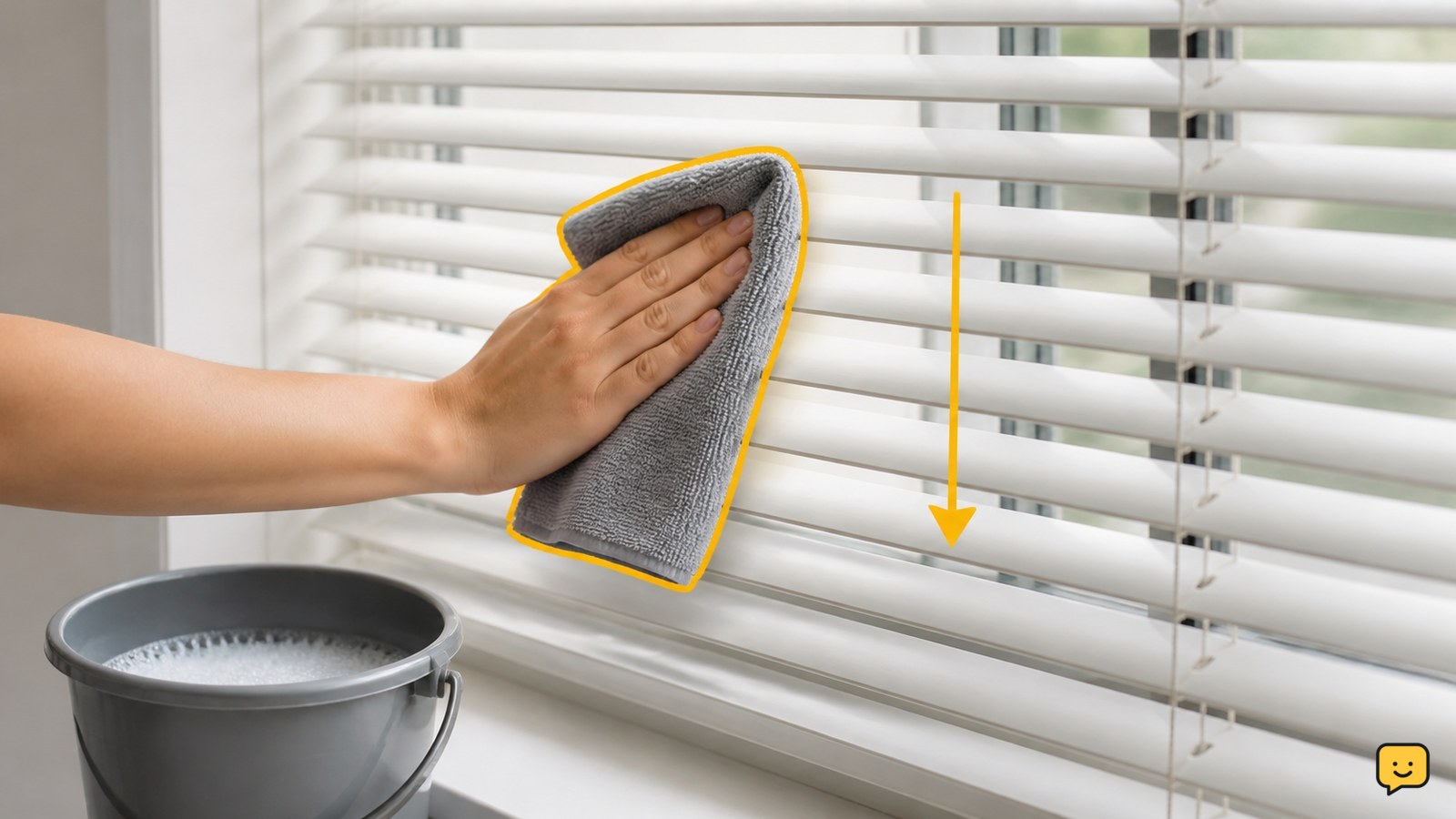
Start by identifying the blind material, then lower and close the slats. Remove loose dust with a dry microfiber cloth or vacuum brush, working from top to bottom. For washable vinyl, aluminum, plastic, or faux wood, wipe with a thoroughly wrung-out cloth and a few drops of mild dish soap. Use minimal moisture on wood, bamboo, fabric, and cellular blinds, and dry every surface fully.
For more help with this topic, use the Cleaning Stain Removal guides.
Choose the safest cleaning method for the material
The safest way to clean blinds depends on the material and finish: use dry dusting for all blinds, a lightly damp cloth for washable non-porous slats, and minimal moisture for wood, bamboo, fabric, and cellular styles.
Aluminum, plastic, vinyl, and faux-wood blinds generally tolerate a damp microfiber cloth. Natural wood and bamboo can swell, warp, discolor, or lose their finish when exposed to too much water, so use only a product permitted by the care instructions. Fabric and cellular blinds should usually be vacuumed or spot-treated rather than saturated.
If you cannot identify the material or find its care instructions, use a dry microfiber cloth or brush attachment only until the manufacturer confirms a wet-cleaning method.
Remove loose dust before adding moisture
Dry dusting removes loose particles before they turn into wet grit that can streak or scratch the finish.
- Lower horizontal blinds fully and close the slats at a slight angle.
- Starting at the top, wipe each slat with a dry microfiber cloth or use a vacuum brush attachment on low suction.
- Work across each slat and continue downward so dust falls onto areas not yet cleaned.
- Tilt the slats in the opposite direction and repeat for the reverse side.
- For vertical blinds, clean each vane from top to bottom so it is less likely to come unhooked.
Replace or shake out the cloth when it becomes visibly dusty. A clean surface should look free of loose particles before you move to damp cleaning.
Wipe washable slats with mild soap
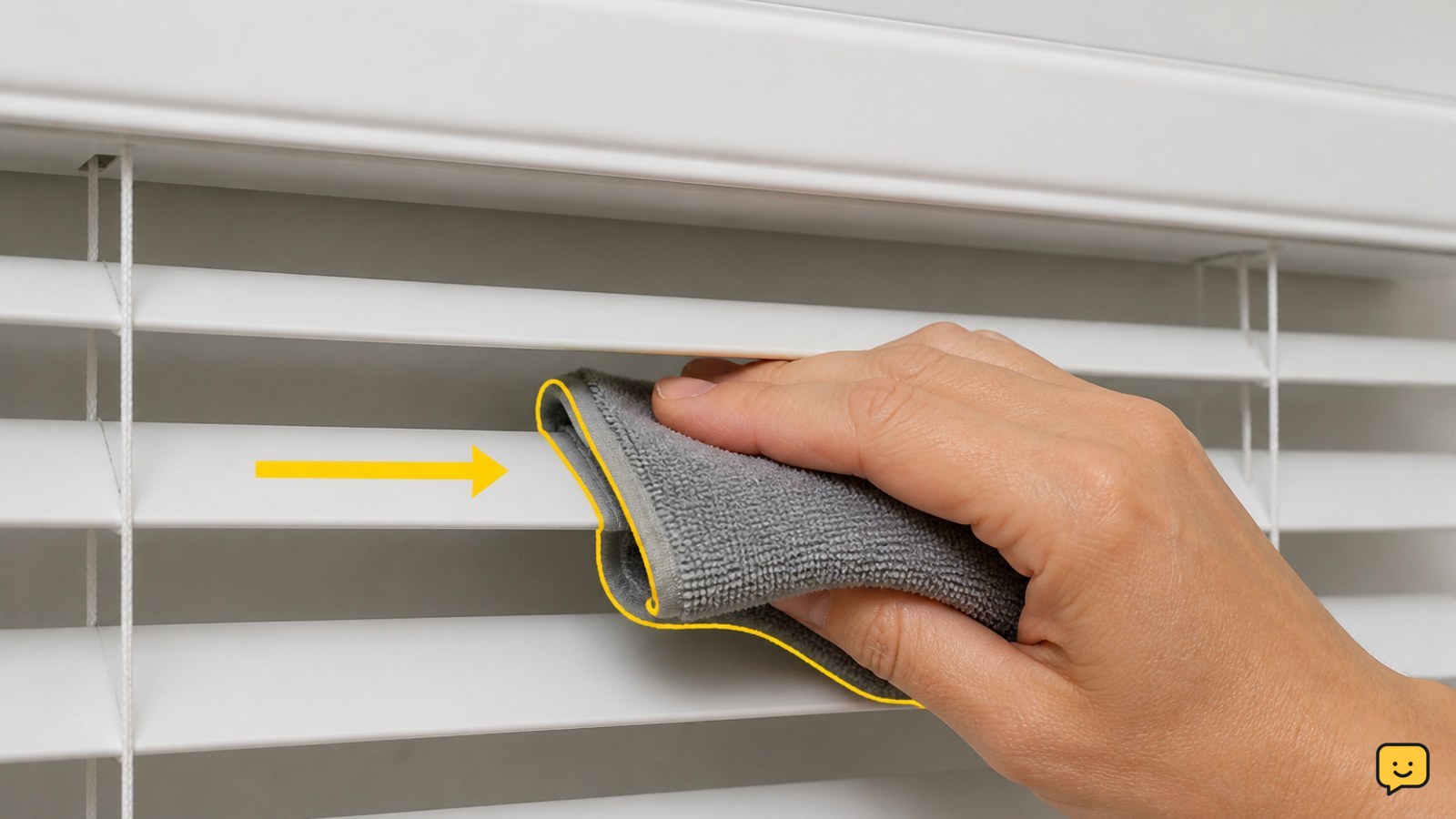
Washable aluminum, vinyl, plastic, and faux-wood slats can be cleaned with a barely damp microfiber cloth and a few drops of mild liquid dish soap.
- Mix warm water with a few drops of mild dish soap in a small bucket.
- Dip the cloth into the solution and wring it out thoroughly; it should feel damp, not dripping.
- Support thin or flexible slats with your free hand and wipe one slat at a time.
- For greasy buildup, hold the damp cloth against the spot for several seconds, then wipe gently instead of scrubbing.
- Use a clean, damp cloth sparingly if soap residue remains, then immediately follow with a dry microfiber cloth.
Consumer Reports recommends diluted dish soap for non-porous blind surfaces and stresses drying them well. Success looks like clean slats without streaks, pooled water, or a sticky soap film.
Protect wood, bamboo, fabric, and cellular blinds
Wood and bamboo blinds need the least moisture, while fabric and cellular blinds are better suited to vacuuming and careful spot treatment.
- For wood or bamboo, dust both sides with a dry cloth or brush attachment.
- If the care instructions permit a cleaner, apply the manufacturer-approved wood-safe product to the cloth, never directly to the slats.
- Wipe one slat lightly and dry it immediately with a second cloth.
- For fabric or cellular blinds, use a vacuum brush attachment with gentle suction and avoid crushing folds or cells.
- For a small fabric mark, test the approved spot-cleaning method in an inconspicuous area before treating the visible surface.
Do not soak, steam, bleach, or aggressively scrub these materials unless their care instructions specifically allow it. Stop at the first sign of swelling, color transfer, puckering, or finish damage.
For another nearby window-care task, use this guide to clean window screens safely after the blinds are finished.
For another nearby window-care task, use this guide to clean window screens safely after the blinds are finished.
Dry the blinds and verify the result
Complete drying protects the finish and reveals whether residue or streaks remain.
- Run a clean, dry microfiber cloth over every damp slat or treated area.
- Leave blinds fully extended and open enough for air to circulate.
- Do not raise, fold, or tightly close wood, fabric, cellular, or damp washable blinds.
- Inspect from the side and in daylight for streaks, missed dust, sticky residue, bent slats, or damp edges.
- If a washable slat still feels sticky, wipe it once with a barely damp clean cloth and dry it immediately. Do not escalate to a harsh cleaner.
The job is complete when the slats or vanes look evenly clean, feel dry, operate normally, and leave no residue on a clean fingertip or cloth.
What to do when grime or stains remain
Persistent grime after gentle cleaning usually needs a material-specific solution rather than more pressure.
For washable non-porous slats, repeat the mild soap treatment once with a fresh cloth. If the mark does not improve, stop before the finish becomes dull or scratched. Avoid abrasive pads, powders, solvents, strong degreasers, and direct spraying because the evidence supports mild soap and controlled moisture, not aggressive chemical treatment.
For wood, bamboo, fabric, or cellular blinds, stop after the approved dry or spot-cleaning method fails. Photograph the mark, note the blind material and finish, and ask the manufacturer or a professional cleaner for the correct treatment. Do not immerse an entire blind or shade unless its care guide explicitly says that method is permitted; Hunter Douglas, for example, gives immersion instructions for eligible shade assemblies but first directs owners to check its care guide for excluded fabrics.
Frequently asked questions
Can you clean blinds without taking them down?
Yes, most routine dusting and damp wiping can be done while blinds remain installed. Lower horizontal blinds fully, clean from top to bottom, and use a stable step stool rather than leaning. Remove a blind or shade only when its care instructions require it for deep cleaning or when installed hardware prevents safe access.
How often should blinds be cleaned?
Dust blinds every one to two weeks when they collect visible dust, pet hair, or allergens. A deeper clean is commonly useful every three to six months, with more frequent attention in kitchens, bathrooms, or homes with pets. Use appearance and surface feel as the check: clean sooner when dust becomes visible or residue feels sticky.
Can I wash blinds in a bathtub?
Only if the manufacturer’s care instructions explicitly permit immersion for that exact blind or shade. Remove or protect components as directed, use lukewarm water and mild detergent only when specified, and dry the assembly completely. Do not put natural wood, bamboo, fabric, cellular, or an unidentified blind in a bathtub.
What is the safest way to clean fabric blinds?
Start with a vacuum brush attachment using gentle suction, then follow the care instructions for any spot treatment. Test the method in a hidden area first. Avoid soaking, steam, bleach, and vigorous rubbing unless the manufacturer specifically approves them, because moisture and friction can distort fabric or leave marks.