Clean window screens by removing them when the manufacturer allows, brushing or vacuuming away loose dust, then washing the mesh and frame with mild dish soap and water. Rinse gently, let each screen dry completely, inspect for bent frames or torn mesh, and reinstall it in the same position. If removal is unsafe or impossible, clean in place without forcing the frame.
For more help with this topic, use the Cleaning Stain Removal guides.
Check the screen type and choose a safe work area
A residential insect window screen should be cleaned according to its construction and the window manufacturer’s instructions. Removable aluminum or fiberglass screens can usually be washed on a flat surface, while fixed, retractable or specialty screens may need in-place cleaning.
Close or secure the window before working. Do not remove a screen from an upper floor, climb onto a sill, or reach outside the opening. If the screen cannot be handled from a stable position, clean only the accessible side or stop and arrange safer access.
Remove and label each removable screen
Remove a window screen only when its latches, tabs or springs can be operated from inside or from a stable floor-level position. Follow the screen’s normal release direction; never bend the frame to create clearance.
- Open the window as directed by the manufacturer.
- Release the screen tabs, pins or latches.
- Hold the frame with both hands and move it through the opening without twisting.
- Place it mesh-side up on a clean, flat surface and label its window position.
The screen is ready for cleaning when it lies flat without rocking. If it flexes sharply, catches in the frame or requires force, reinstall it and use the in-place method instead.
Remove loose dust before adding water
Loose dust and cobwebs should be removed from the window screen before washing so they do not turn into muddy residue. Use a vacuum with a soft brush attachment on low suction, or sweep both sides gently with a soft-bristled brush.
Start at the frame and work across the mesh with light strokes. Support the screen from underneath rather than pressing hard on the fabric. The dry-cleaning stage is complete when visible cobwebs, heavy dust and loose insects are gone; a light gray film can remain for the wash stage.
Wash the mesh and frame with mild soap
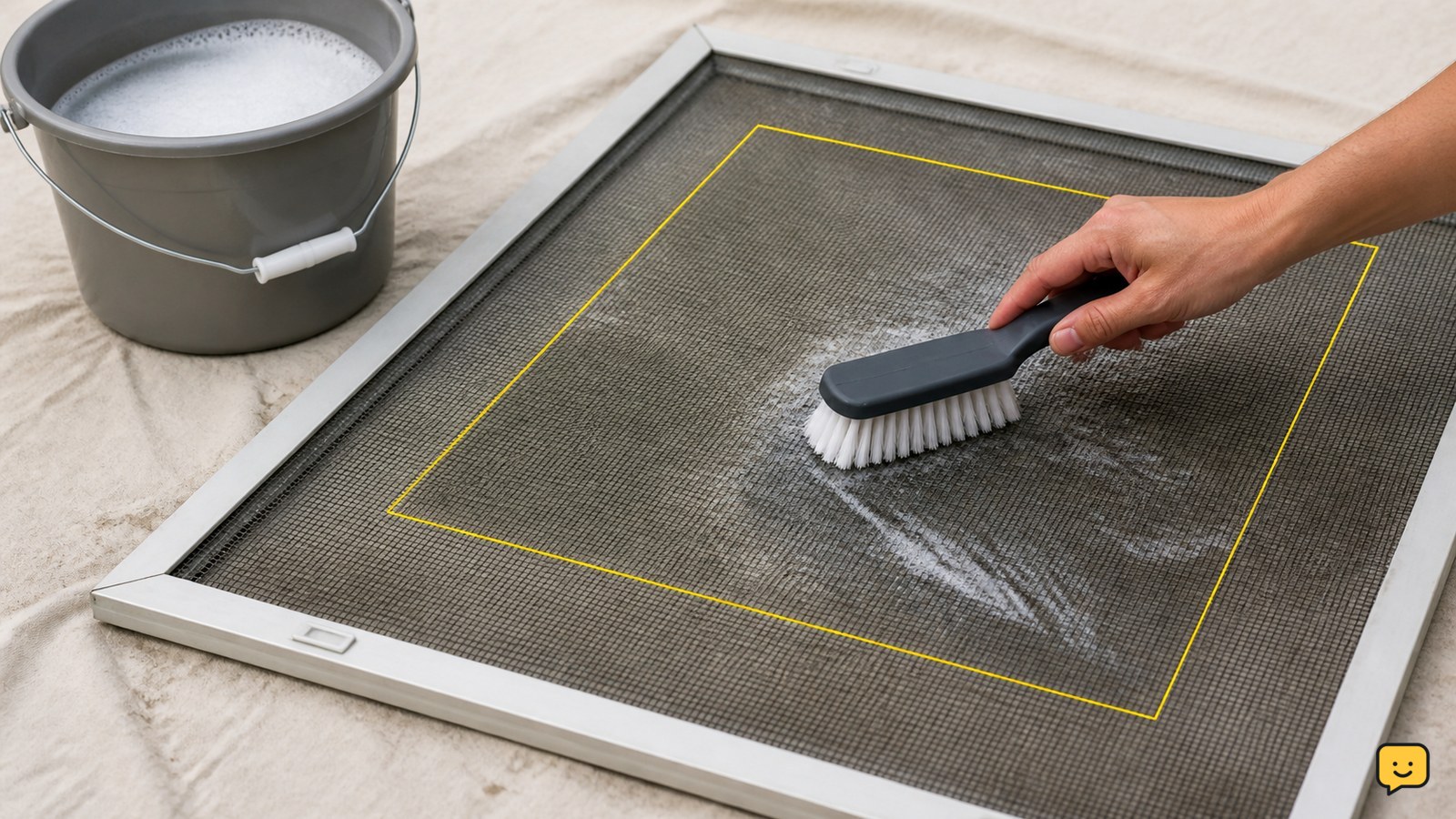
Wash the window screen with lukewarm water and a small amount of mild dish soap. Andersen Windows lists removing the insect screen and cleaning it as the basic sequence, while the Heller’s Hardware guidance specifies a soft-bristled brush and dish soap for dirty removable screens.
- Mix a small amount of mild dish soap into a bucket of lukewarm water.
- Wet the screen gently with a soft spray or a damp cloth. Avoid a forceful jet.
- Clean the frame first, then wipe or brush the mesh with light, even strokes on both sides.
- Rinse the cloth or brush often so loosened grit does not spread across the mesh.
Use a soft cloth or sponge for delicate mesh. Do not use a stiff scrubber, abrasive powder or concentrated solvent unless the manufacturer specifically approves it. Test any unfamiliar cleaner on a small hidden section first.
Rinse, dry and inspect for damage
Rinse the screen gently until no soap bubbles or slippery residue remain. Hold the screen so water can drain through the mesh, then stand it on its edge or lay it flat on clean towels in a shaded, ventilated area.
Let the frame and mesh dry completely before reinstalling. A clean screen should look evenly open across the mesh, feel free of soap when touched with a clean damp cloth, and leave no cloudy film when viewed against daylight.
Inspect the edges, corners, spline and mesh. Stop rather than patching during this cleaning if the mesh is torn, the spline has lifted, the frame is bent or a corner is loose. Those conditions can let insects through or prevent the screen from seating correctly.
Reinstall the screen and verify its fit
Reinstall the dry window screen in the same orientation and position from which it was removed. Guide the frame into its track or opening, engage the latches or springs, and confirm that every edge is seated.
Check the result from inside and outside where safely visible. The frame should sit evenly without gaps, the mesh should remain taut, and the screen should not rattle or shift when the window is moved normally. If a latch will not engage or one corner bows outward, remove the screen and check for trapped debris or incorrect orientation. Do not force it; a bent frame or damaged hardware needs repair or replacement.
Choose an in-place method when removal is unsafe
A fixed or inaccessible window screen can be cleaned in place with a vacuum brush followed by a lightly damp soft cloth. Protect the sill and nearby wall from drips, clean only the reachable surface, and use minimal water around the window frame.
For heavy grime that cannot be removed safely in place, stop before spraying harder or reaching farther. The safer option is manufacturer-approved removal by a qualified window professional or replacement of a damaged screen. Cleaning does not correct torn mesh, failed spline or a frame that no longer fits.
Frequently asked questions
Can I clean window screens without removing them?
Yes. Vacuum the accessible mesh with a soft brush, then wipe it with a lightly damp cloth and mild soapy water. Protect the sill from drips and avoid pushing against the screen. Use this method when removal would require an unsafe reach or when the screen is fixed. Stop if dirt remains in inaccessible areas rather than forcing the frame or spraying with high pressure.
What is the safest brush for a window screen?
Use a soft-bristled brush or a vacuum brush attachment. The tool should lift dust without catching the mesh or pressing it out of shape. For delicate screens, use a damp soft cloth instead of brushing. A stiff brush, abrasive pad or forceful scrubbing can stretch or tear the mesh.
How do I clean a window screen with stubborn grime?
Start with mild dish soap and lukewarm water after removing loose dust. Let the soapy water loosen the film briefly, then wipe gently and rinse well. Do not escalate to abrasive cleaners or strong solvents without checking the manufacturer’s instructions. If the film remains, the mesh or frame may need professional cleaning or replacement.
What should I do if a window screen is torn or bent?
Do not force a torn or bent screen back into its track. A small mesh tear may be repairable with a compatible patch, while lifted spline, loose corners or a distorted frame may require rescreening or replacement. Keep the opening closed or use another insect barrier until the screen is secure and sits evenly.