To clean a washing machine, empty it, wipe the drum opening, door gasket or lid, detergent dispenser and exterior, then run the manufacturer-approved tub-clean or hottest empty cycle with one approved cleaner. Rinse removable parts, clean the drain filter if your model has one, and leave the door or lid open until completely dry. Never mix bleach, vinegar or other cleaners.
Check the washer type and approved cleaning cycle
A washing machine should be cleaned according to its model instructions because cycle names, cleaner amounts and filter access vary. Front-load and top-load machines both need surface cleaning, but a front-loader also needs attention around the rubber door gasket.
- Look for a Tub Clean, Clean Washer or Drum Clean cycle in the manual or control panel.
- If there is no dedicated cycle, use the hottest, longest empty cycle that the manufacturer permits.
- Choose one approved option: a washer-cleaning product, liquid bleach or vinegar only when the manual allows it. GE Appliances lists these as possible basket-cleaning options, but the model instructions take priority.
Do not put clothes, detergent or fabric softener in the cleaning cycle. Never combine cleaning products.
Wipe the gasket, lid and detergent dispenser
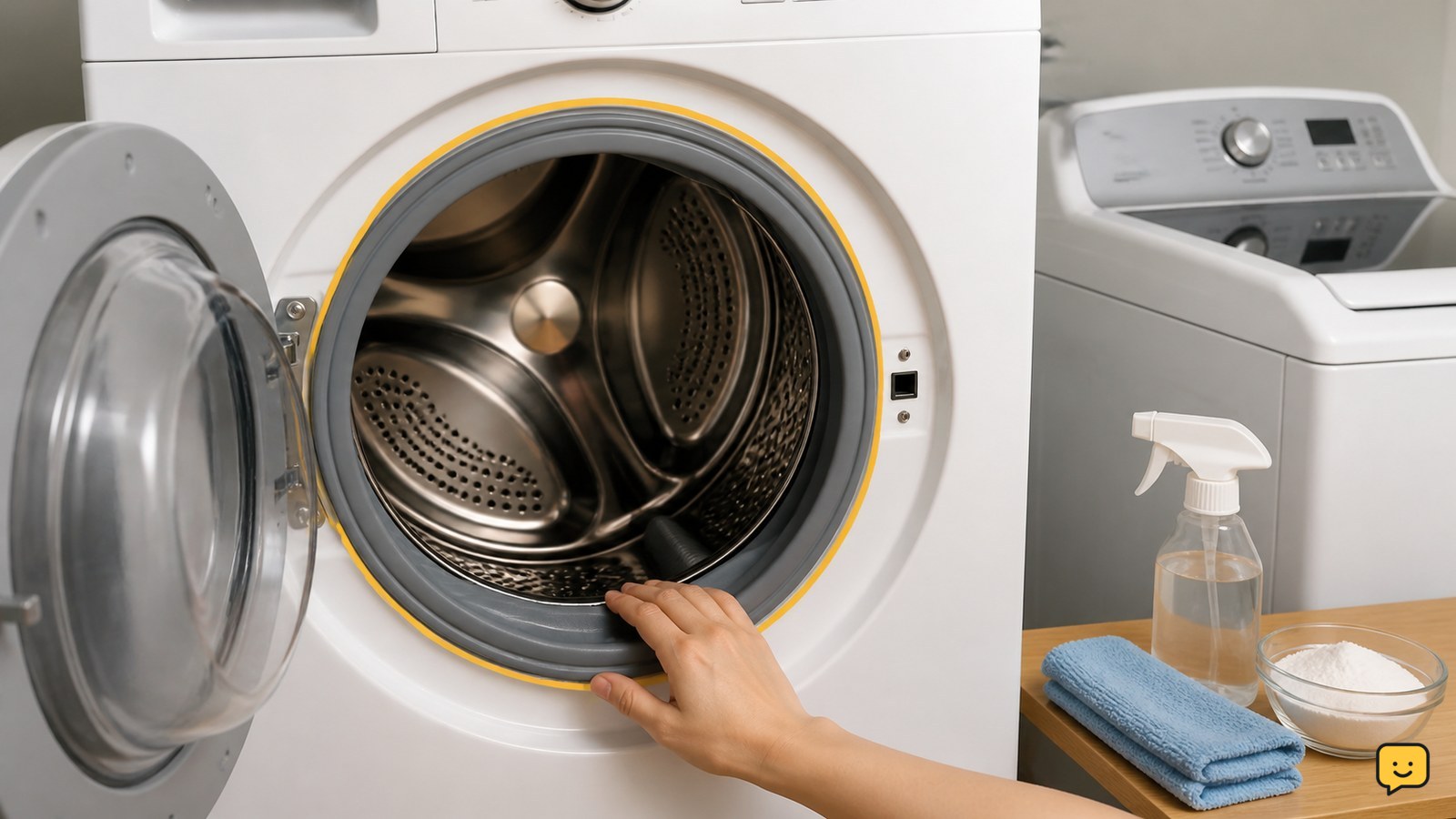
Visible residue is removed by hand before the empty cleaning cycle, especially around the front-loader’s door gasket and the detergent drawer.
- Front-load washer: Pull back each fold of the rubber gasket and remove hair, lint, coins and damp residue. Wipe with warm water and mild dish soap, then dry thoroughly.
- Top-load washer: Wipe beneath the lid, around the rim, agitator or impeller, and any fabric-softener cup. Use an old toothbrush for narrow seams.
- Remove the detergent dispenser if the manual permits it. Rinse away softened detergent and fabric softener, brush the channels, and dry the parts before replacing them.
- Wipe the control area and exterior with a lightly damp cloth. Do not spray liquid directly into buttons, displays or openings.
Check: No visible slime, lint or pooled water should remain in the gasket folds, dispenser channels or lid rim before you start the empty cycle.
Run one approved empty cleaning cycle
The washer’s empty cleaning cycle loosens residue inside the basket and other water-contact areas that a cloth cannot reach.
- Add only the approved cleaner and amount specified for your model. If using a commercial washer cleaner, follow its label rather than adding another product.
- Start the Tub Clean, Clean Washer or Drum Clean cycle. If your machine has none, select the permitted hot empty cycle.
- Let the cycle finish fully, including draining and spinning. Do not interrupt it to add a second cleaner.
- Run an extra rinse only if the manual or cleaner label calls for it, or if visible suds or cleaner residue remains.
American Home Shield describes a hot, long empty cycle as a general cleaning approach, while GE Appliances gives model-dependent cleaner choices. That difference is why the owner’s manual is the final authority.
Clean the drain filter only when the model allows it
A user-accessible drain pump filter can hold lint, coins and other debris, but its position and draining procedure differ by washer.
- Unplug the washer and place towels and a shallow container below the filter access point.
- Open the filter only as described in the manual. Drain trapped water slowly; it may be dirty or hot.
- Remove debris, rinse the filter with water, check that the seal is intact, and reinstall it firmly.
- Run a short rinse or drain test and inspect the access area for leaks.
Skip this section if your manual does not identify a user-serviceable filter. Do not remove hoses, panels or pump parts to reach hidden buildup.
Dry the washer and verify the result
A clean washer should finish with no visible residue, no pooled water in the gasket or dispenser, and a noticeably fresher interior after it has dried.
- Wipe the drum opening, gasket, lid rim and dispenser area with a dry towel.
- Leave a front-loader door ajar or a top-loader lid open until the interior is dry. Keep the opening secured if children or pets can reach it.
- Check the floor, filter access and hose connections for leaks during or after the test cycle.
- Wash a small load of ordinary laundry only after the drum is clear of cleaner residue and the odor has improved.
If odor or residue remains, repeat only the manufacturer-approved cleaning cycle after checking the manual. Persistent sewage odor, standing water or repeated error codes points to a drain, hose, seal or pump problem rather than routine surface dirt.
Prevent new washer odor and buildup
Routine drying and residue control reduce the conditions that make a washing machine smell.
- Remove finished laundry promptly instead of leaving wet items in the drum.
- Leave the door or lid open between loads when safe to do so.
- Wipe the gasket and dispenser area whenever you see moisture, lint or detergent buildup.
- Use the detergent type and quantity listed for the washer; excess product can leave residue.
- Run the maker’s recommended cleaning cycle at the interval stated in the manual.
If the washer repeatedly develops a musty smell despite being dried and cleaned correctly, stop adding stronger chemicals. Have the drain path, door seal, pump and internal hosework inspected.
Frequently asked questions
Can I clean a washing machine with vinegar?
Yes, but only if your washer manual permits vinegar. Use it alone and follow the stated amount; never combine vinegar with bleach, commercial cleaner or another chemical. Some manufacturers prefer a dedicated washer cleaner or liquid bleach for particular models.
How do I clean a front-load washing machine gasket?
Pull back each fold of the rubber door gasket, remove lint and trapped objects, then wipe the area with warm water and mild dish soap. Dry every fold with a towel and leave the door ajar. Stop if the seal is cracked, loose or leaking.
How often should I clean my washing machine?
Use the cleaning interval in your owner’s manual. Clean sooner when you notice musty odor, visible slime, detergent buildup or standing water. Wiping wet areas after use and leaving the door or lid open can reduce recurring residue.
Why does my washing machine still smell after cleaning?
A remaining smell can indicate trapped water, a blocked drain filter, a dirty hose, a damaged door gasket or a drain connection problem. Check only user-serviceable areas listed in the manual. Stop and arrange service if odor persists with standing water, leaks or error codes.
For more help with this topic, use the Cleaning Stain Removal guides.