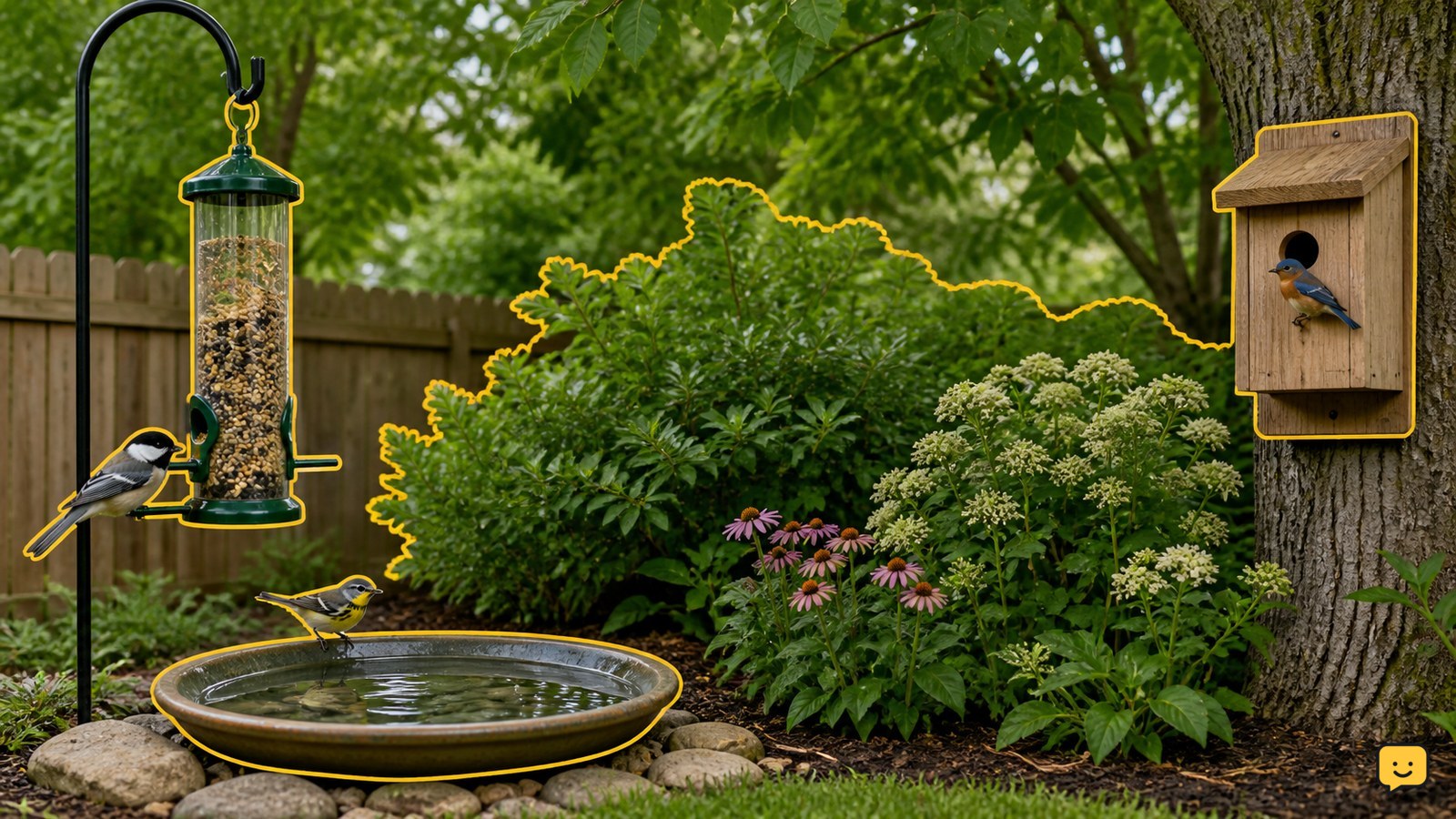
To attract birds, provide four basics: suitable food, clean water, shelter, and nesting cover. Start with a feeder filled with an appropriate seed mix, add a shallow water source, and plant or preserve dense native cover. Keep each feature clean and safe from cats and other predators, then adjust the setup according to the birds that actually visit.
Provide the food your local birds can use
Bird feeders attract the most visitors when the food matches the birds in your area and remains fresh. Begin with a small amount of black-oil sunflower seed or another locally suitable seed, then observe which birds feed before buying several specialized foods.
- Fill a clean feeder with fresh seed and place it where you can inspect it easily.
- Add a second food only when you know what you want to attract. Perky-Pet lists sunflower, Nyjer or thistle, peanuts, fruit, jelly, suet, and mealworms as options that can bring different bird species.
- Use a nectar feeder only when it suits birds found in your region, and follow local guidance for preparation and cleaning.
- Keep the quantity modest at first. Increase it only when birds are visiting regularly and the food is being eaten before it spoils.
Verify success: fresh food disappears gradually, birds return to the feeder, and you can identify at least one regular visitor. If seed remains untouched, replace the mix rather than continually adding more; the food may not suit the local birds, or the feeder may be too exposed.
Add clean water for drinking and bathing
A dependable water source can make a yard more useful to birds, particularly when natural water is scarce. Rocky’s identifies food, water, and shelter as the core features of a bird-friendly backyard.
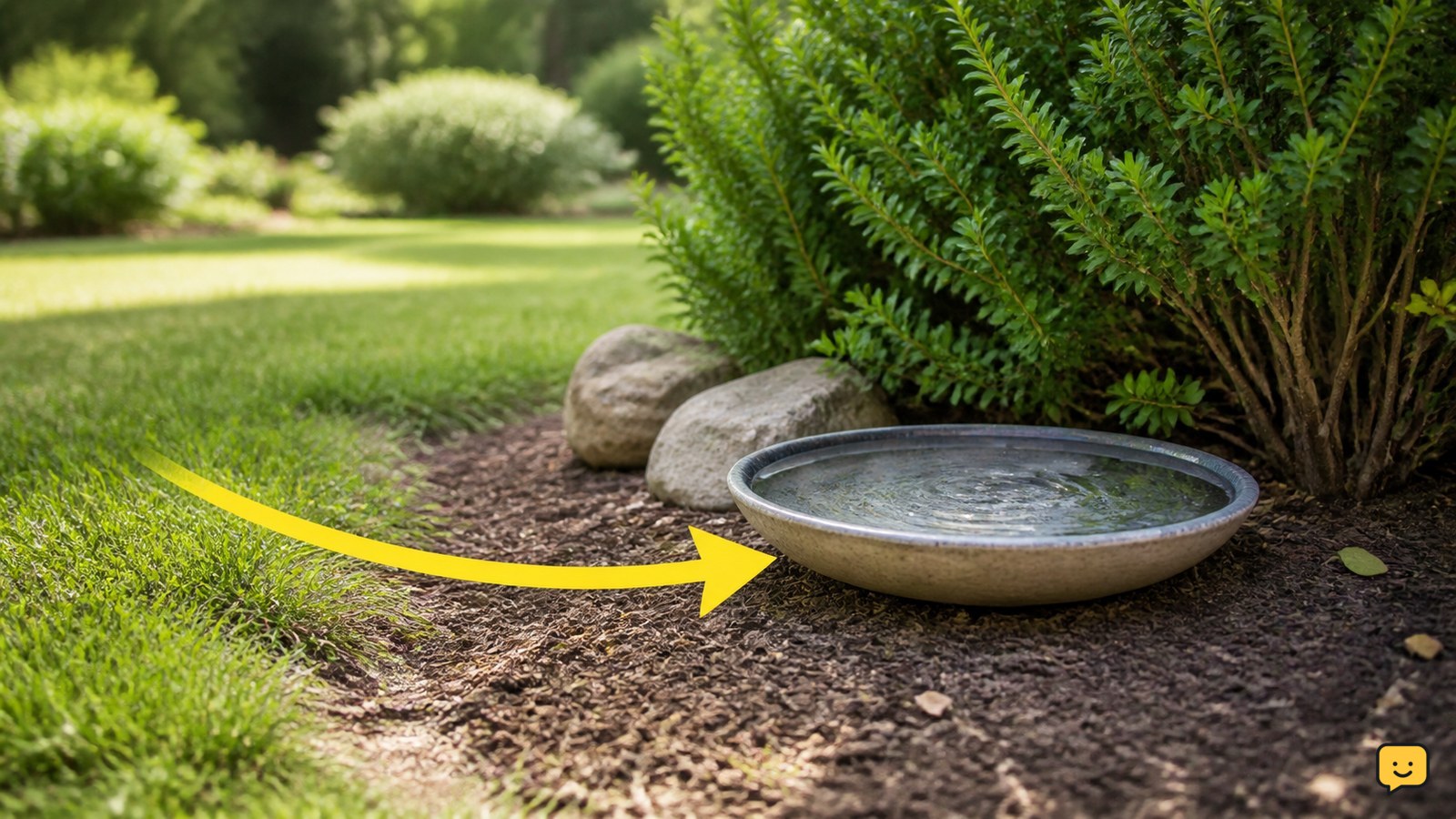
- Set out a shallow, stable dish that birds can enter and leave easily.
- Place it where birds have visibility around the container, while nearby shrubs or branches provide a quick escape route.
- Replace the water whenever it becomes dirty, and scrub away residue before refilling.
- Watch the container during hot or freezing weather so it does not remain empty or become unusable.
Verify success: birds approach the water, drink, or bathe, and the surface stays clear between cleanings. If no birds use it, move the dish to a quieter location or closer to natural cover. If the water repeatedly becomes fouled, stop using that location until you can maintain it safely.
Create shelter with plants and natural cover
Shelter gives birds places to rest, hide, and search for natural food. Bird Collective recommends meeting birds’ needs with food, water, shelter, and nesting sites, with native plants providing especially useful habitat.
- Preserve existing shrubs, hedges, mature trees, leaf litter, and low branches where they do not create a safety problem.
- Choose native plants suited to your soil, light, and climate. Favor a mix of heights so birds can use ground, shrub, and tree-level cover.
- Include plants that produce seeds, berries, or flowers when those food sources suit local species.
- Keep the approach to feeders and water visible enough for birds to detect danger. Dense cover should offer refuge, not an unseen launch point for pets or predators.
Verify success: birds pause in shrubs, move between cover and feeding areas, or forage among plants. If the yard has food but little cover, expect fewer cautious species. Add habitat gradually rather than clearing established vegetation to make room for decorative features.
Offer safe nesting places without disturbing birds
Birds need protected nesting sites as well as feeding stations. Southern Living’s guidance includes shelter and safe nesting sites, while Bird Collective describes nesting habitat as one of the basic needs a bird-friendly space should provide.
- Leave suitable trees, shrubs, and dense vegetation in place when possible.
- Choose a nest box only after checking which cavity-nesting birds occur locally and what entrance size and placement they require.
- Install any box where it can be inspected without repeatedly approaching an active nest.
- Keep pruning, hedge removal, and major garden work away from active nests. If a nest is occupied, leave it undisturbed and seek local wildlife guidance before moving anything.
Verify success: birds carry nesting material, enter a box, or repeatedly visit a sheltered area. Do not open, move, or clean an occupied nest box. If birds ignore a box, leave it in place through the season or relocate it only when it is clearly unused and local guidance permits.
Keep feeders hygienic and adjust the setup
Attracting birds is an ongoing maintenance task, not a one-time purchase. Inspect food, water, plants, and access points regularly so the yard remains useful rather than becoming a source of spoilage or avoidable danger.
- Check the feeder and ground below it for wet food, mold, buildup, or excessive waste.
- Clean the feeder and water container whenever they are visibly dirty, then refill them with fresh supplies.
- Watch from a distance at different times of day to learn which birds visit and whether one species is monopolizing the food.
- Change one feature at a time, such as the food type, feeder position, or nearby cover, so you can see what improves the result.
If birds do not appear: first check that food is fresh, water is clean, and the area is quiet and predator-safe. Then try a different locally suitable food or add native shelter. There is no fixed arrival schedule; weather, migration, nearby habitat, and natural food supplies can all affect visits. If maintenance cannot be kept consistent, remove the food and water until the setup can be managed safely.
Frequently asked questions
What is the fastest way to attract birds to a yard?
The simplest starting point is a clean feeder with fresh, locally suitable seed placed near safe cover, plus a shallow container of clean water. Begin with one setup so you can identify visiting birds and spot problems quickly. Add fruit, suet, Nyjer, mealworms, or nectar only when those foods fit the birds and conditions in your area.
Why are birds not coming to my feeder?
Birds may be avoiding the feeder because the food is stale, the location is exposed, predators are nearby, or natural food is plentiful elsewhere. Check those conditions first. Keep the feeder clean, improve nearby shelter, and try a suitable food variety one at a time. Give birds time to discover a new feeding location.
Should I use a birdhouse to attract birds?
A birdhouse can help only when it matches cavity-nesting birds found in your area. The entrance size, box design, placement, and surrounding habitat all matter. Do not install a box simply as decoration or disturb an occupied nest. Native trees, shrubs, and dense vegetation may provide more useful shelter for species that do not use boxes.
Is it safe to feed birds all year?
Year-round feeding can be appropriate in some yards, but it requires consistent cleaning and observation. Remove spoiled food, keep water fresh, and stop temporarily if birds appear sick, predators use the station, or local authorities issue a feeding advisory. Natural habitat remains important because feeders should supplement, not replace, shelter and wild food sources.
For more help with this topic, use the Gardening guides.