To plant a succulent, choose a pot with a drainage hole, use fast-draining cactus or succulent soil, and remove the plant without damaging its roots. Set the root ball at its previous depth, keep leaves and the crown above the soil, fill around it without compacting hard, and place it in bright light while it settles. Water only after the soil is dry.
For more help with this topic, use the Gardening guides.
Choose a container and planting site
Succulents need a container or planting site that lets excess water leave quickly, because standing moisture can damage roots.
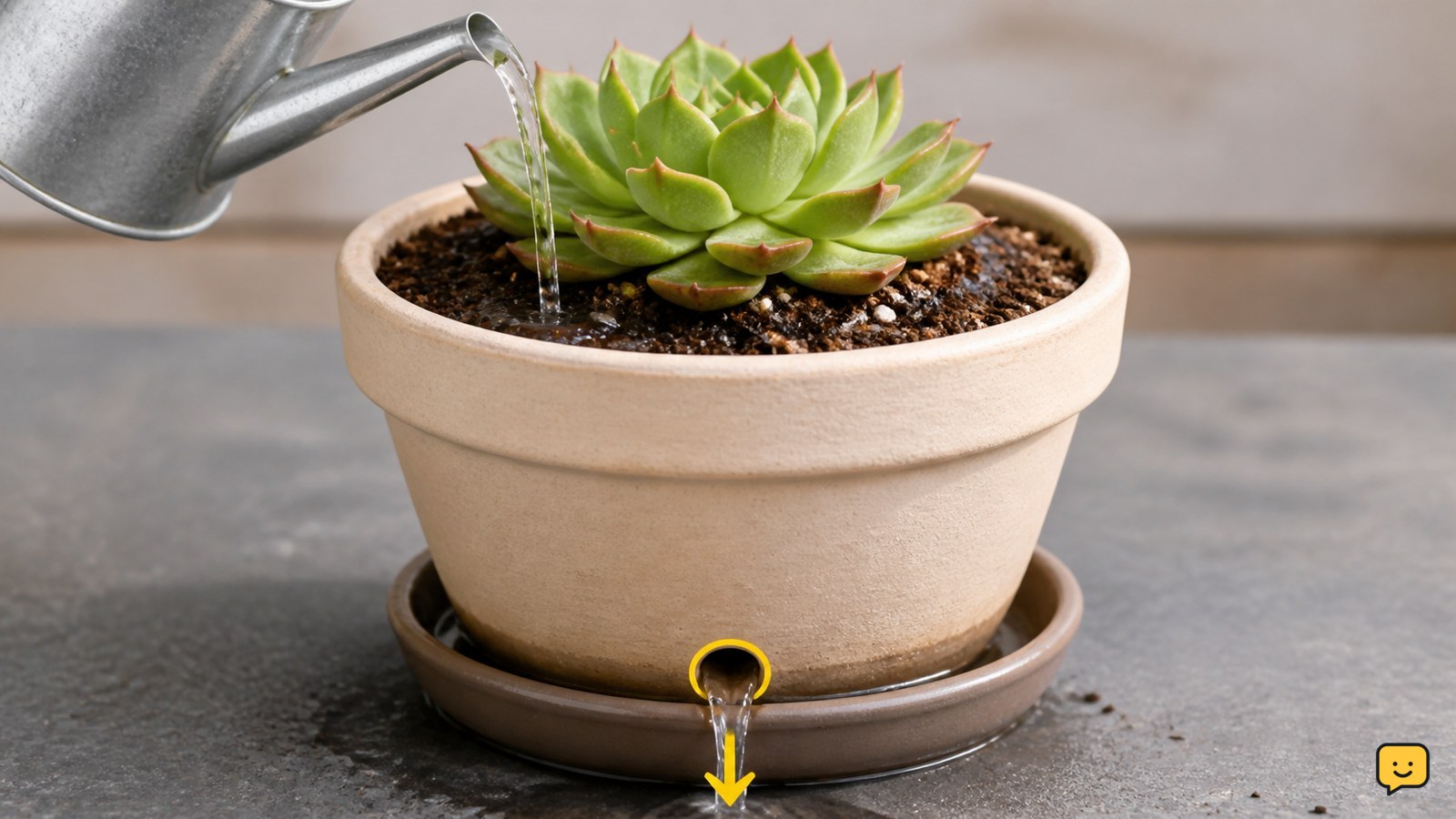
For a potted plant, choose a container only slightly wider than the root ball and make sure its drainage hole is open. A large empty pot holds more wet soil around a small root system and can take longer to dry. Set the pot on a tray that can be emptied after watering.
For an outdoor bed, select a sunny or bright site where water does not collect after rain. A raised bed or a gently sloped area is preferable to a low pocket in heavy soil. Do not plant directly into a location that stays wet.
Needles + Leaves identifies fast-draining soil and a container drainage hole as basic requirements for avoiding water sitting around succulent roots. Before continuing, pour a small amount of water through the empty pot; it should exit freely from the hole.
For a broader drainage project, see how to make a raised garden bed. {link} explains how to prepare a level, well-draining planting area.
For a broader drainage project, see how to make a raised garden bed; it explains how to prepare a level, well-draining planting area.
Prepare fast-draining soil
Use a commercial cactus or succulent mix, or improve ordinary potting soil with a mineral material intended to increase drainage, such as perlite, pumice, or coarse grit.
Do not fill the base of the pot with a separate layer of gravel as a substitute for a drainage hole. The planting mix itself should drain throughout the root zone. Break up compressed mix before use and remove large sticks or clumps.
- Moisten the mix only enough to reduce dust if needed; it should not be wet or muddy.
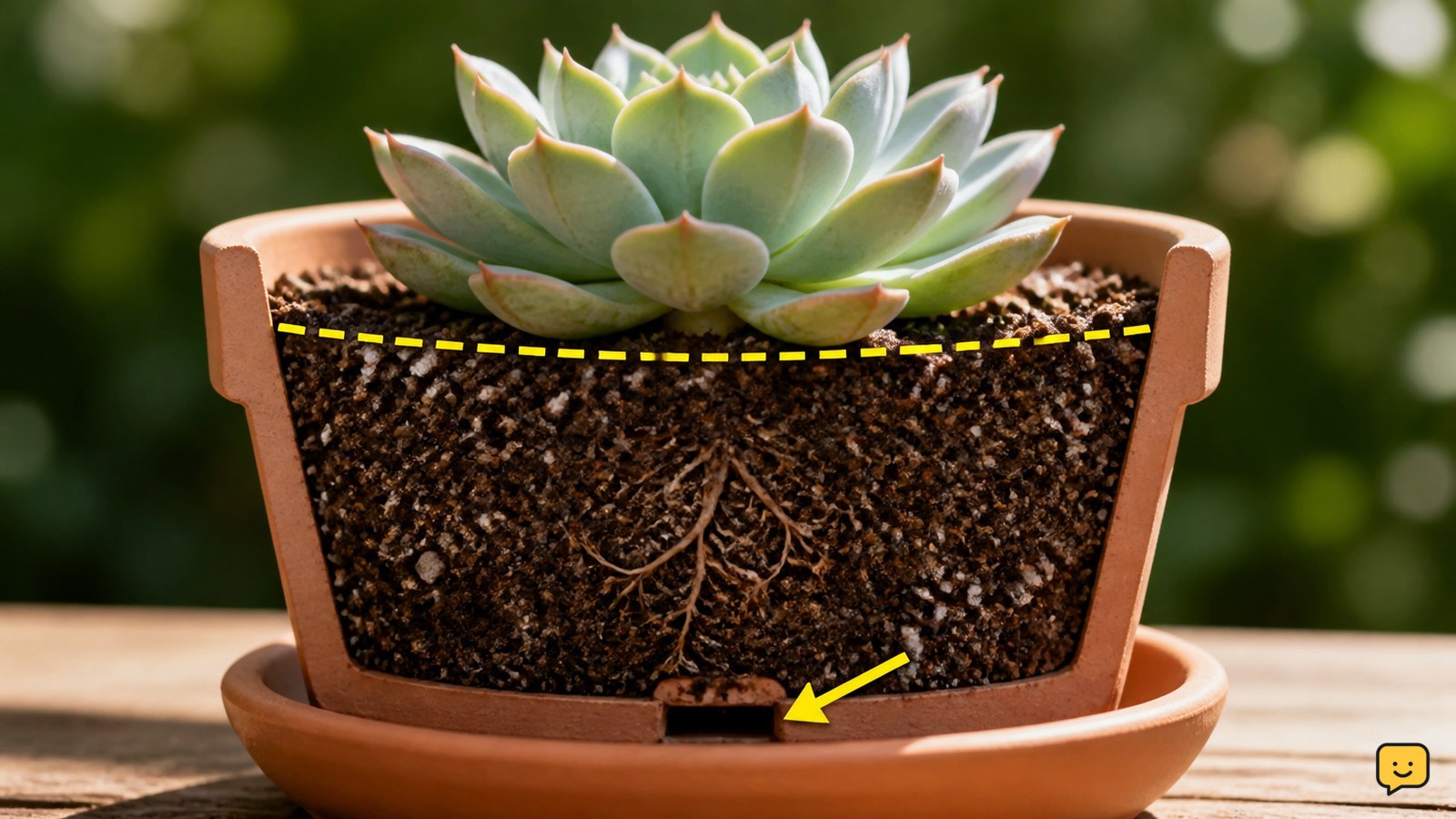
- Place enough soil in the container so the plant’s crown will sit at the same depth as before.
- Leave a small gap below the rim so water can be applied without immediately running over the sides.
Verification check: squeeze a handful of the mix. It should fall apart when released rather than remain as a heavy, waterlogged lump. If it stays wet, add more suitable mineral material or use a commercial mix instead.
Remove the succulent without crushing roots
Remove the succulent by supporting the root ball and lower stem rather than pulling on leaves, offsets, or the top growth.
- Tip the nursery pot sideways while holding the plant near its base with gloved fingers.
- Tap or squeeze the sides of a flexible pot until the root ball slides out. For a rigid pot, loosen the edge with a clean trowel.
- Inspect the roots. Healthy roots are generally firm and light-colored, while soft, dark, or foul-smelling areas indicate a problem.
- Gently loosen only the outermost circling roots. Do not shake all soil from the root ball or break healthy roots unnecessarily.
If the plant will not release, do not yank it. Cut away a disposable nursery pot or ask a nursery for help with a valuable or fragile specimen. Stop planting if the stem tears, the root ball falls apart, or rot extends into the crown.
Set the root ball at the correct depth
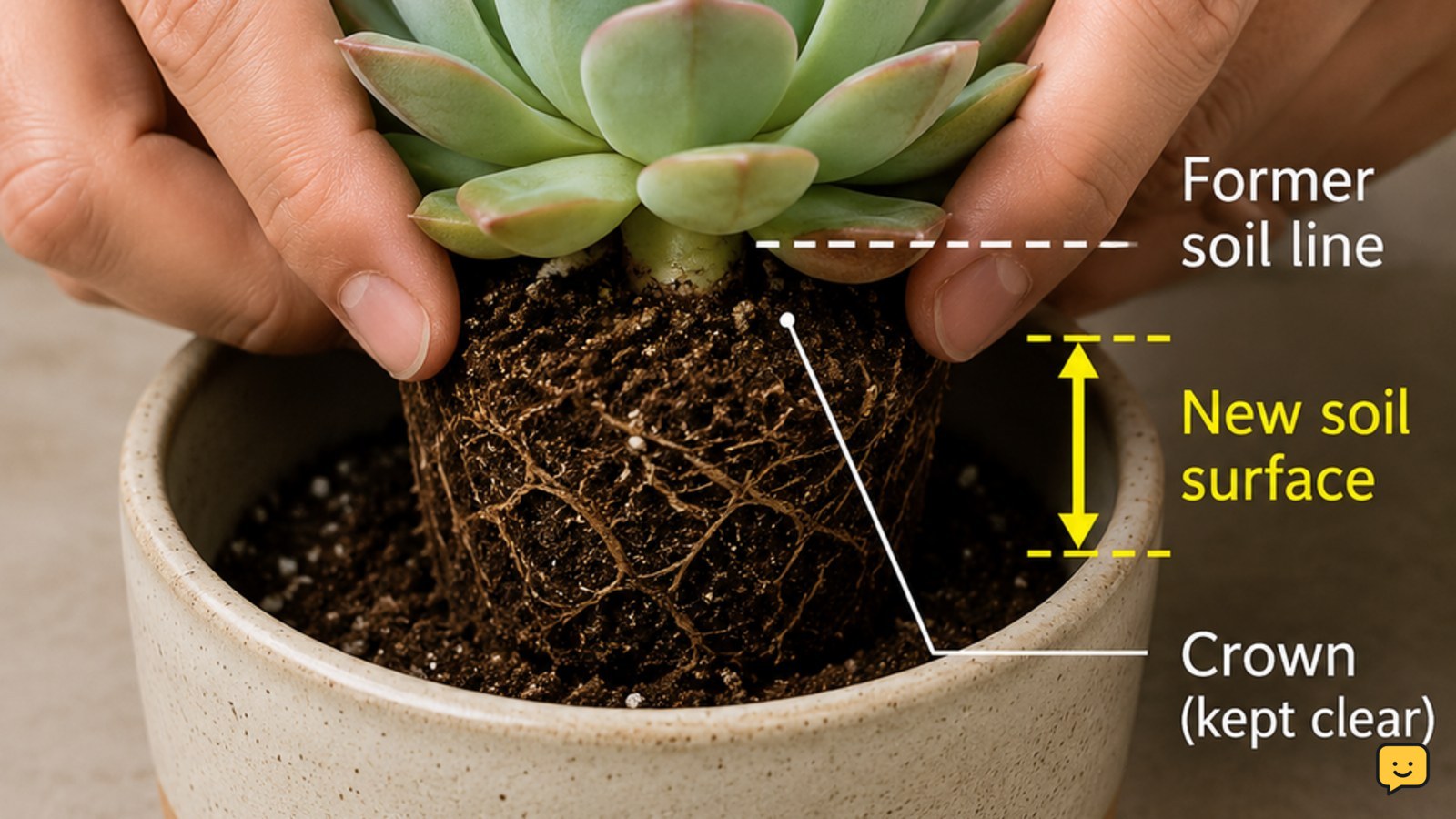
Set the succulent at its former soil level, keeping the crown and lowest leaves above the mix so they do not stay buried and damp.
- Place the root ball in the center of the prepared container or planting hole.
- Check the depth from several sides. The soil line should match the previous line on the stem or root ball.
- Add mix around the roots in small amounts, guiding it into gaps without pressing it into a hard layer.
- Leave foliage resting above the soil. Remove only leaves that are already detached or clearly damaged; do not bury healthy leaves to stabilize the plant.
- Use a thin layer of clean mineral top dressing only if it does not cover the crown or block water from reaching the soil.
Verification check: the plant should stand upright with the crown dry and the pot stable when lightly nudged. If it leans, add support temporarily or adjust the root ball rather than burying the stem deeper.
Acclimate light and verify the first watering
After planting, place the succulent in bright light while protecting it from abrupt exposure to intense midday sun.
A plant moved from a shaded store or indoor window can scorch when transferred directly into strong outdoor light. Increase exposure gradually over several days, watching for bleached or crispy patches. Keep outdoor plants protected from frost and prolonged wet weather until you know the species and its climate tolerance.
Do not water on a fixed schedule immediately after planting. Check the soil several inches down with a clean finger or wooden stick. If it feels damp or the stick comes out with wet soil attached, wait. When the mix is dry, water thoroughly until some water exits the drainage hole, then empty the saucer.
Our guide to watering succulents with a soak-and-dry routine {link} covers dry-soil checks, drainage, and signs that mean you should stop watering.
Success looks like firm foliage, a stable plant, free drainage, and soil that dries between waterings. If water runs down the sides without wetting the root ball, the mix may be badly compacted or the root ball may be hydrophobic; stop, inspect the soil, and repot into fresh mix if water continues to bypass the roots.
Our guide to watering succulents with a soak-and-dry routine covers dry-soil checks, drainage, and signs that mean you should stop watering.
Frequently asked questions
Should I water a succulent immediately after planting?
Not always. Check the soil first, especially if the plant came from a wet nursery pot. Wait until the mix is dry, then water thoroughly so excess leaves the drainage hole. Empty the saucer afterward. Delay watering and inspect the roots if the soil remains wet, smells bad, or the plant shows soft tissue.
Can I plant a succulent in a pot without a drainage hole?
A pot without a drainage hole is a poor choice for most succulents because excess water has nowhere to go. Use a container with an open hole and a saucer instead. If the decorative pot has no hole, keep the succulent in a properly draining nursery pot placed inside it, and remove that inner pot before watering.
How deep should succulents be planted?
Plant the succulent at the same depth it occupied before repotting. Cover the roots and keep the crown and lowest healthy leaves above the soil. Planting the stem or foliage too deeply keeps damp mix against tissue that can rot. A stable plant should not require deep burial to remain upright.
Why is my newly planted succulent leaning?
A leaning succulent may have a loose root ball, uneven soil, or a damaged root system. Lift it gently, check that the root ball is centered, and add fresh mix around the roots without compacting it hard. Do not bury the stem deeper to force stability. Stop if the stem is soft or discolored.