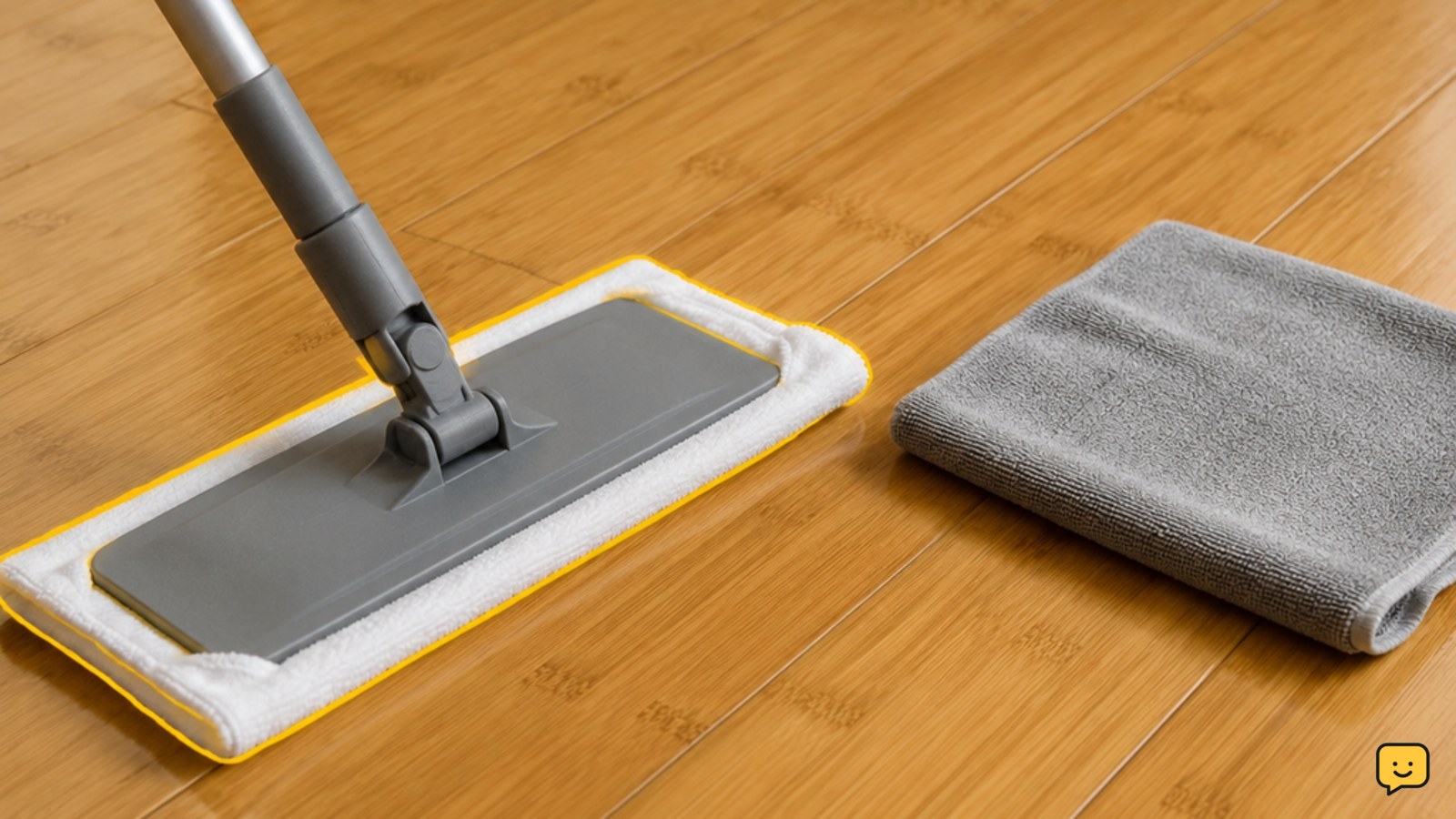
To clean bamboo flooring, remove loose grit with a soft broom, microfiber dust mop or suitable vacuum, then mop with a barely damp microfiber pad and a pH-neutral cleaner approved for bamboo or finished wood. Wipe spills immediately, use minimal water, and dry the floor when finished. Stop if planks swell, the finish turns cloudy or moisture enters joints.
For more help with this topic, use the Cleaning Stain Removal guides.
Check the finish before using moisture
Finished bamboo flooring can usually be cleaned with limited moisture, but the finish and installation determine what products are suitable. Check the care instructions first, especially if the floor is new, unfinished, waxed or already showing gaps, swelling or peeling.
Use a dry method only when the manufacturer does not approve wet cleaning. Never apply a cleaner broadly before testing it in a concealed spot. After the test area dries, check for cloudiness, color change, tackiness or a dull patch. If any appears, stop and use the manufacturer’s approved method.
Remove grit before it scratches the finish
Remove loose dirt from bamboo flooring with a soft-bristled broom, microfiber dust mop or vacuum configured for hard floors. Grit left under a mop or dragged by footwear can scratch the protective finish.
Work from the far side of the room toward the exit. Use the vacuum’s hard-floor setting or a soft attachment, and do not use a rotating brush that can mark the surface. The floor is ready for damp cleaning when no visible grit remains, particularly along edges and under furniture.
Choose a pH-neutral cleaner and barely damp mop
Use a pH-neutral cleaner labeled for bamboo or finished hardwood flooring, following the product’s dilution and application instructions. Bona recommends suitable floor-cleaning products for bamboo floors, while Simple Green advises clearing dust first and dampening a microfiber mop with clean water.
Apply the solution to the microfiber pad or use the smallest amount allowed by the product directions. The pad should be damp, not dripping. Mop in small sections with the grain or plank direction where practical, rinsing or changing the pad when it becomes dirty. Do not pour cleaner directly onto the floor or flood the surface.
For a comparable barely damp method on sealed wood, see {link} before selecting a cleaner.
For a comparable barely damp method on sealed wood, see safe hardwood floor cleaning before selecting a cleaner.
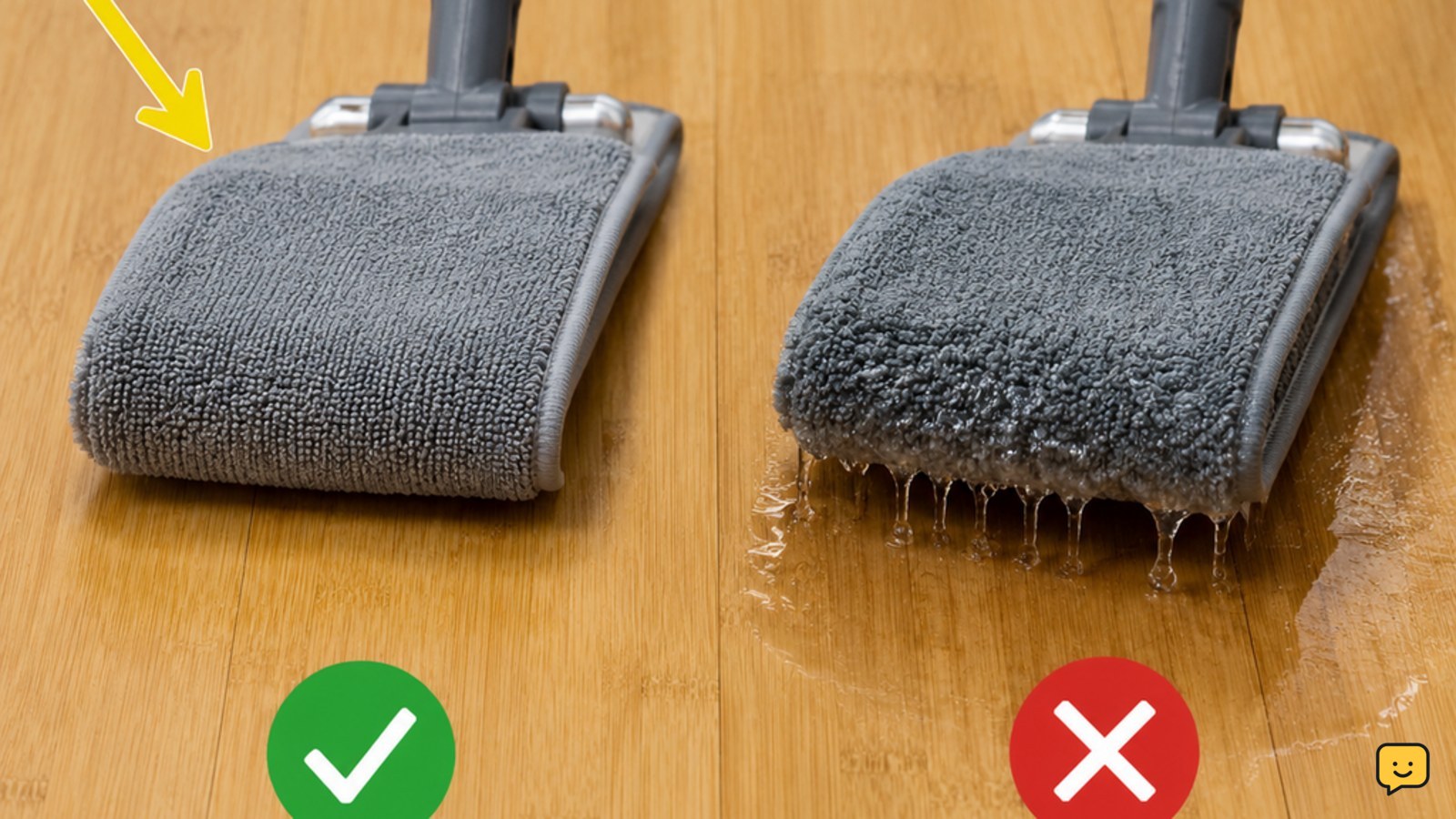
Dry the floor and verify the finish
Dry spills immediately with an absorbent microfiber cloth, then inspect the cleaned area after routine mopping. A successful result is a floor free of visible grit, sticky residue, standing water and streaks, with the original finish still even and clear.
If the surface looks streaky, the pad may be dirty or the cleaner may be over-concentrated. Wipe the area with a clean, barely damp pad only if the flooring instructions allow it, then dry with a clean microfiber cloth. If a cloudy film remains after drying, stop adding product and consult the cleaner or flooring manufacturer.
Treat sticky spots without abrasive scrubbing
For a small sticky spot on finished bamboo flooring, use a slightly damp microfiber cloth and the approved pH-neutral cleaner. Hold the cloth on the residue briefly to soften it, then wipe gently and dry the area.
Do not use steel wool, scouring powder, abrasive pads, strong solvents or a scraper that can cut through the finish. Avoid vinegar, ammonia-based cleaners, wax treatments and oil soaps because the supplied floor-care sources warn that they may damage the finish or leave a film. If the mark does not lift with gentle cleaning, stop rather than increasing pressure or chemical strength.
Avoid methods that add damaging heat or water
Do not use a steam mop on bamboo flooring unless the flooring manufacturer specifically approves that exact product and finish. Excess heat and moisture can damage the finish or contribute to swelling and warping. Eufy also advises avoiding overly wet mops, standing water, wax, ammonia and abrasive cleaners.
Do not leave wet mats, damp cloths or spilled liquids on the floor. Improve prevention with entry mats that do not trap moisture, felt pads under furniture and prompt cleanup around sinks, pet bowls and plant containers. If planks begin to cup, swell or separate, stop wet cleaning and arrange an inspection.
The same limited-moisture principle applies to care for moisture-sensitive flooring, where drying and product testing also matter.
Use a deep cleaner only when the finish allows it
Heavy dirt buildup may require a floor deep cleaner, but this is a product-specific step rather than a universal bamboo-floor treatment. Bona describes a hydrogen-peroxide-powered deep cleaner for heavy buildup; use it only when the product label and flooring manufacturer permit it.
Test the product first, follow its label exactly and keep contact time and moisture controlled. Do not improvise a stronger mixture or combine cleaners. If the finish changes, the buildup remains, or moisture reaches damaged seams, stop and ask the flooring manufacturer or a professional cleaner about refinishing or plank replacement.
Frequently asked questions
Can you mop bamboo floors with water?
Yes, if the flooring is finished and its care instructions allow it. Use a microfiber mop that is barely damp, never wet or dripping, and remove standing moisture immediately. Do not pour water onto the floor or allow it to collect in plank joints. If the floor is unfinished, damaged or the manufacturer prohibits wet cleaning, use only the approved dry method.
What cleaner is safe for bamboo flooring?
Use a pH-neutral cleaner specifically labeled for bamboo or finished hardwood flooring, following its dilution instructions. Test it in a hidden area first and check the dried spot for cloudiness, tackiness, discoloration or dullness. Avoid products containing abrasive ingredients, strong acids, ammonia, wax or oil-soap residue unless the flooring manufacturer explicitly approves them.
Can I use vinegar or a steam mop on bamboo floors?
Avoid vinegar and steam mops unless the flooring manufacturer specifically approves them for your exact finish. Vinegar can affect some finishes, while steam adds heat and moisture that may damage the surface or contribute to swelling. Choose a barely damp microfiber method instead, and stop if the finish changes or moisture remains on the floor.
How do I remove a sticky residue from bamboo flooring?
Use a slightly damp microfiber cloth with an approved pH-neutral floor cleaner, soften the spot briefly and wipe gently. Dry the area afterward. Do not use abrasive pads, steel wool, strong solvents or a sharp scraper. If the residue remains after one gentle attempt, stop and ask the flooring or cleaner manufacturer for a compatible treatment.