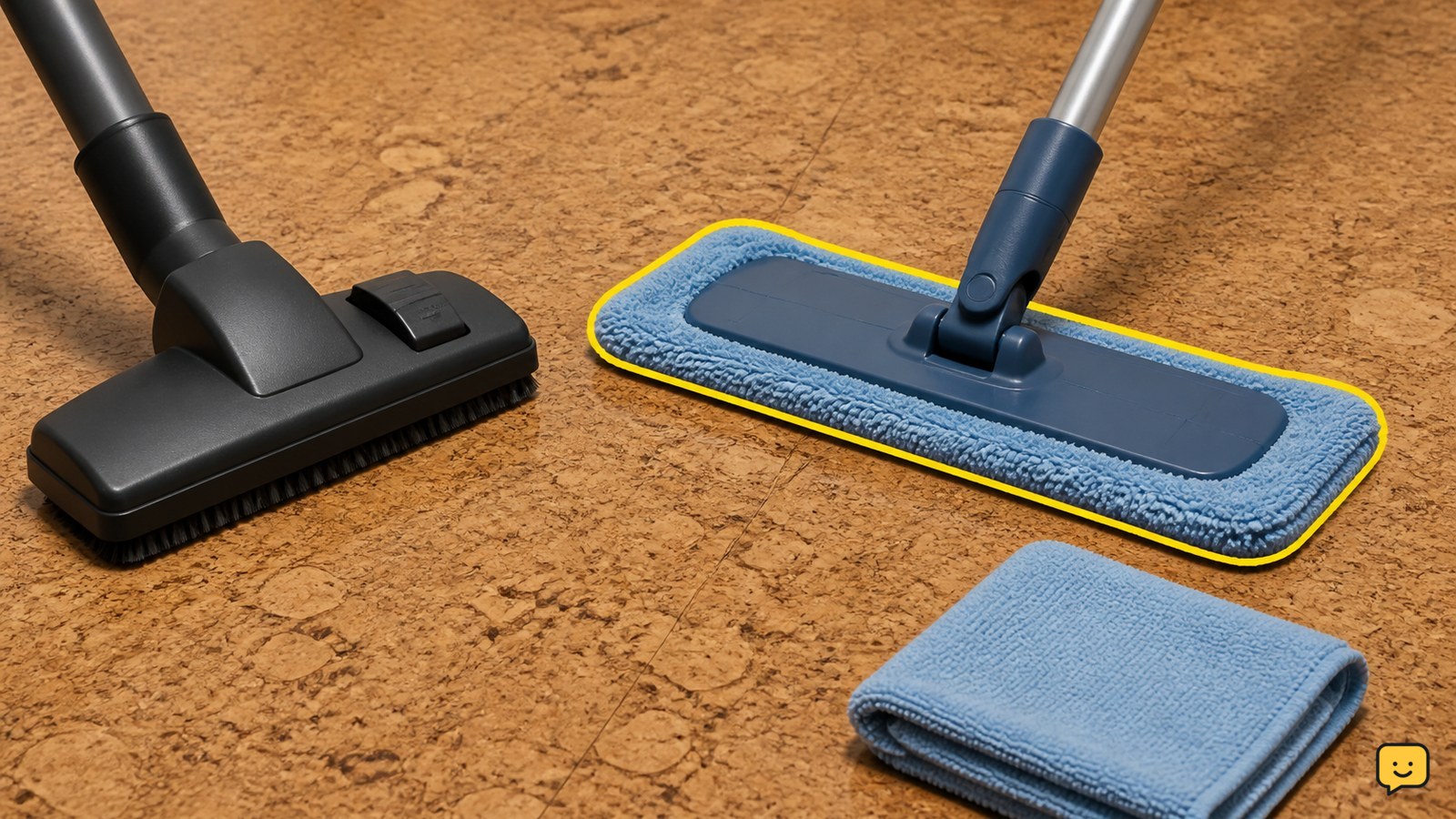
To clean cork flooring, first remove loose dirt with a soft-brush vacuum attachment or broom. Then mop with a well-wrung, barely damp mop and a cork-safe cleaner approved by the flooring manufacturer. Work in small sections, wipe up standing moisture immediately and let the floor dry fully. Stop if the finish lifts, the cork swells or stains remain after gentle cleaning.
Check the cork finish and choose safe tools
Cork flooring should be cleaned according to its finish and the flooring maker’s instructions, because sealed, waxed and older unsealed floors may not tolerate the same products. Wicanders recommends removing loose dirt first and using a mop without excess water; iCork likewise advises soft attachments, a wrung-out mop and cork-safe products.
- Look for care instructions from the flooring manufacturer, installer or product packaging.
- Choose a soft broom or vacuum attachment. Do not use a rotating brush or hard floor tool that can scratch the finish.
- Select a cleaner specifically labeled for cork or one explicitly approved in the floor’s care instructions.
- Test the diluted cleaner, if dilution is required, in a concealed corner. The dry test area should have the same color, sheen and feel as the surrounding floor.
If you cannot identify the finish, use only dry soil removal until the manufacturer confirms a suitable wet-cleaning method. This is especially important for vintage flooring or cork with visible wear.
Remove grit before adding moisture
Loose grit is the first thing to remove from cork flooring because sand and tracked-in dirt can act like abrasives under feet, furniture or a mop. Vacuum slowly with a soft attachment or sweep with a soft broom, paying attention to room edges and joints.
- Start at the farthest corner and work toward the exit.
- Use overlapping passes rather than pressing the tool into the floor.
- Lift dirt from edges with the vacuum’s soft nozzle or a soft hand brush instead of scraping.
Run a clean, dry hand or microfiber cloth over a small area. If it picks up visible grit, repeat the dry cleaning before mopping. Removing the grit first reduces the chance of turning loose particles into scratches or muddy residue.
Damp-mop cork flooring with minimal water
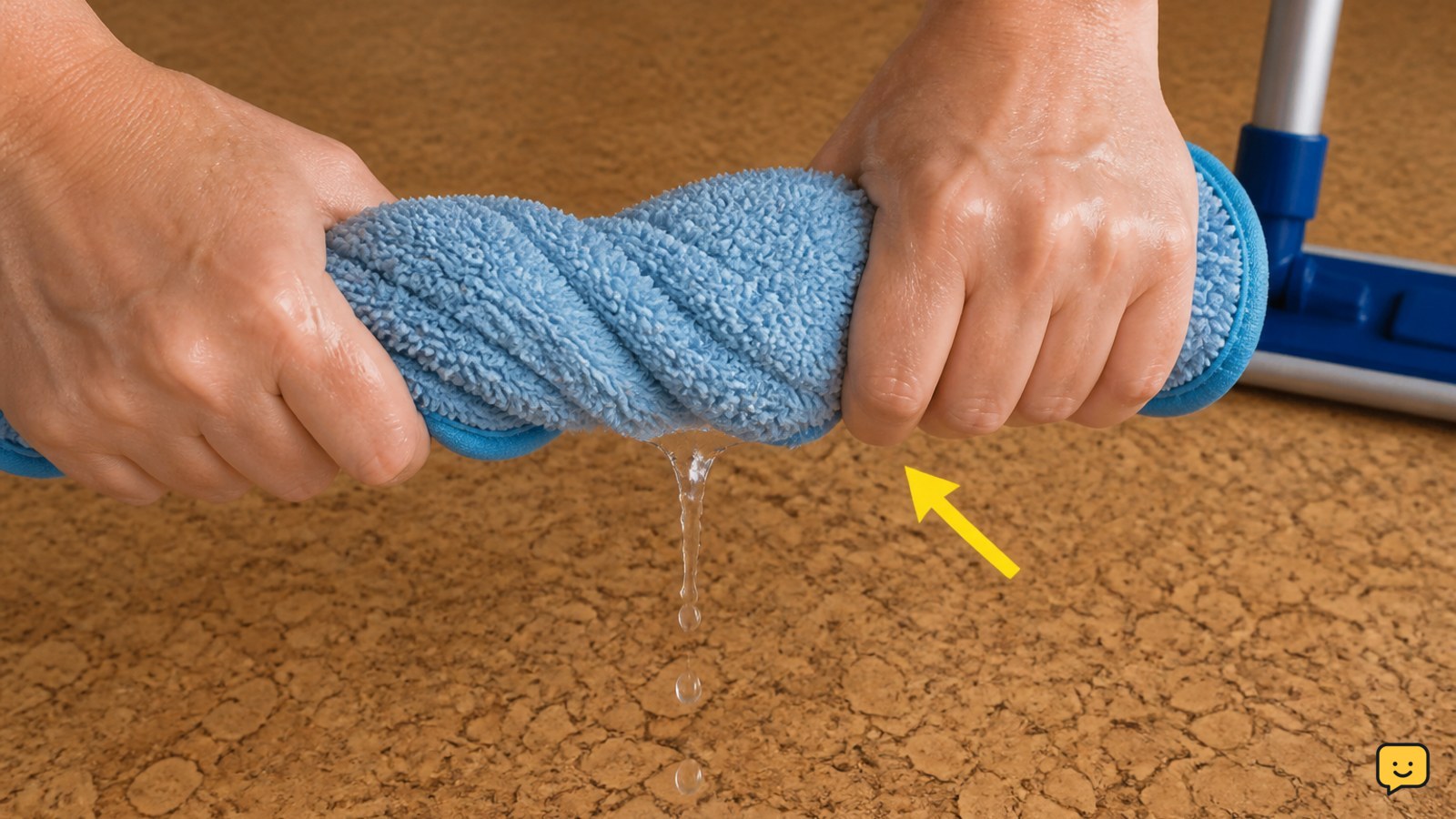
Cork flooring should be damp-mopped with a well-wrung mop, not saturated with water. Prepare the manufacturer-approved cleaner exactly as its label or floor-care instructions specify, then wring the mop until it is damp rather than dripping.
- Clean a small section at a time, using light pressure.
- Rinse or replace the mop when it becomes dirty so soil is not spread back over the floor.
- Keep the mop moving and do not leave wet strips or puddles behind.
- Wipe any standing moisture immediately with a clean, dry microfiber cloth.
The expected result is a floor with no visible film, pooled water or muddy streaks. If residue remains, use less cleaner on the next pass and follow with a separate pass using a clean, barely damp mop if the care instructions allow it. Do not compensate for a stubborn mark by soaking or scrubbing the cork.
Treat spills and marks without damaging the finish
Fresh spills on cork flooring are safest to handle promptly with a blotting and wiping approach rather than aggressive stain removal. Absorb the spill with a soft cloth, then use the approved cleaner on the cloth or mop as directed by the flooring maker.
- Blot liquid instead of pushing it across a wider area.
- Wipe the remaining residue with a clean, barely damp microfiber cloth.
- Dry the spot fully and inspect it under normal light.
For a light scuff, try a clean, dry microfiber cloth first. If the mark remains, stop before using solvents, abrasive powders, melamine sponges or strong household chemicals unless the flooring manufacturer specifically approves them. A mark that remains after gentle cleaning may be in the finish or cork itself, not surface dirt.
Verify the floor is dry and prevent repeat buildup
Clean cork flooring is ready for normal use when it feels dry, looks free of streaks and has no tacky or cloudy areas. Walk across the cleaned section only after it is dry, and check edges and joints for trapped moisture.
To reduce future cleaning:
- Place walk-off mats at entrances, while avoiding mats with backing that can trap moisture or discolor the finish unless approved.
- Remove tracked grit regularly with a soft broom or vacuum attachment.
- Use felt pads under furniture and lift furniture rather than dragging it.
- Wipe spills as soon as they occur.
If the floor stays dull, sticky or discolored after the cleaner has dried, do not apply polish or another coating over it. Stop, identify the existing finish and ask the manufacturer or a flooring professional for the compatible restoration method.
Frequently asked questions
Can you use a steam mop on cork flooring?
Do not use a steam mop unless the flooring manufacturer specifically approves it for your exact product and finish. Cork flooring should generally be cleaned with controlled moisture, and excess heat or water can create a risk of finish damage, swelling or moisture trapped in joints.
What is the best cleaner for cork flooring?
The safest choice is a cleaner labeled for cork flooring or one listed in the floor manufacturer’s care instructions. Test it in a hidden area first. Avoid choosing a product simply because it is marketed for hardwood, tile or laminate; compatibility depends on the cork floor’s finish.
How often should cork flooring be cleaned?
Remove loose grit as needed, especially in entryways and busy rooms, and damp-mop only when the floor has visible soil or residue. Frequent dry cleaning helps limit scratches while reducing the amount of moisture introduced to the cork.
How do you remove a stubborn stain from cork flooring?
Blot fresh residue, then try the approved cork cleaner with a soft microfiber cloth after testing it in a hidden spot. If the stain remains, do not escalate to abrasive scrubbing, solvent or bleach without manufacturer approval. A persistent mark may require finish repair rather than more cleaning.
For more help with this topic, use the Cleaning Stain Removal guides.