Blot the wine immediately with a clean cloth, then flush the stain from the back with cold water. For washable, colorfast fabric, apply a small amount of clear dish soap mixed with hydrogen peroxide, leave it for at least 30 minutes, rinse, and wash according to the care label. Check the stain before drying; heat can set it.
For more help with this topic, use the Cleaning Stain Removal guides.
Blot the wine before it spreads
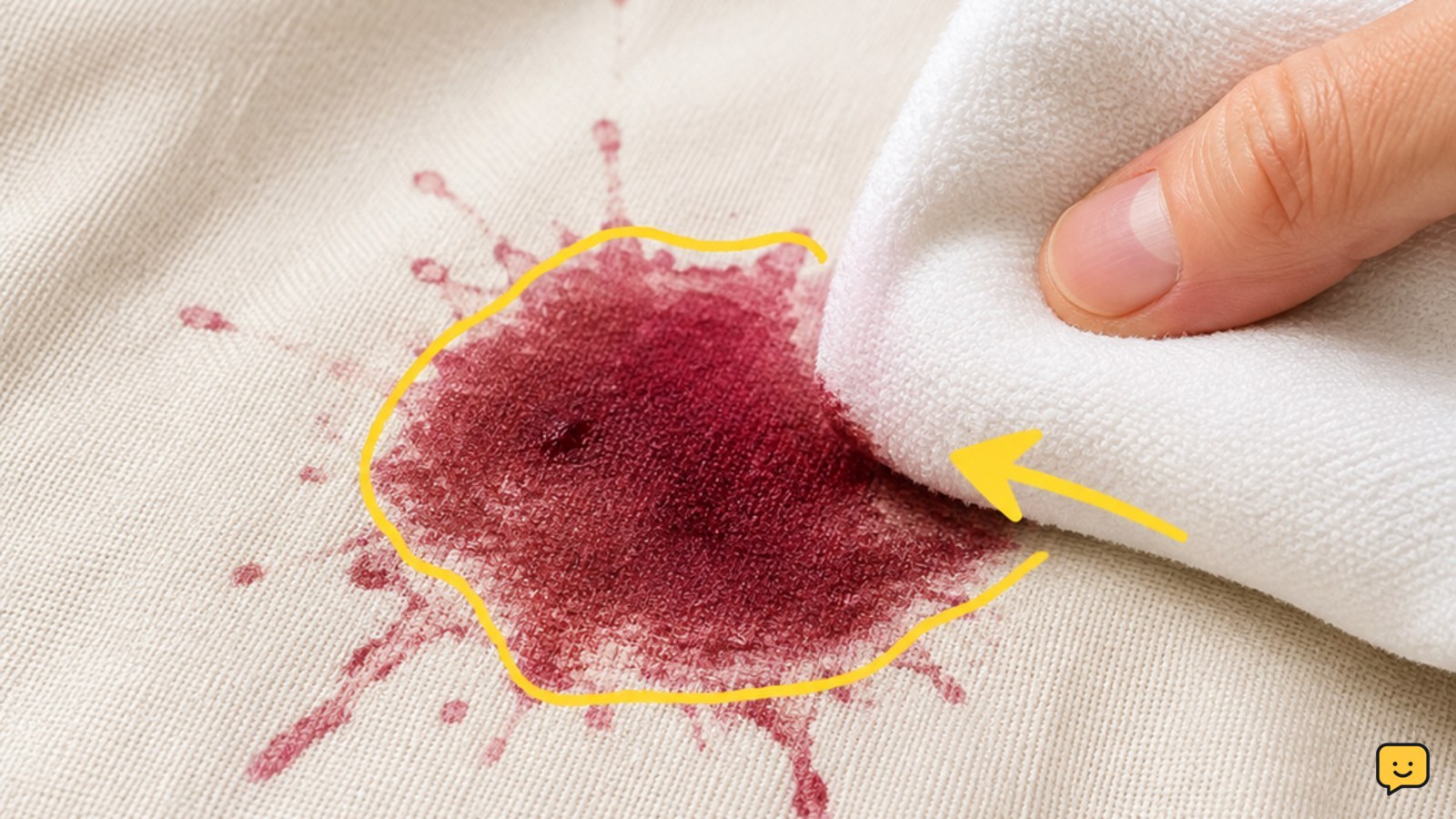
Fresh wine stains are easiest to manage before the liquid dries, so remove excess wine without rubbing it into the fabric.
- Place a clean white cloth or several paper towels under the stained area.
- Press another clean cloth onto the top of the stain.
- Lift and repeat with a dry section of cloth until no more liquid transfers.
Work from the outside edge toward the center to limit spreading. Replace saturated towels rather than pressing the wine back into the material.
Rinse the stain with cold water
Cold water helps dilute remaining wine before a detergent treatment is applied. Hold washable fabric with the stained side facing downward and rinse from the back with cold running water.
Continue until the water passing through the fabric is mostly clear. Do not use hot water, an iron or a dryer at this stage. If the stain has already dried, soak the fabric in cold water first and gently loosen the surface residue with your fingers.
Treat washable colorfast fabric safely
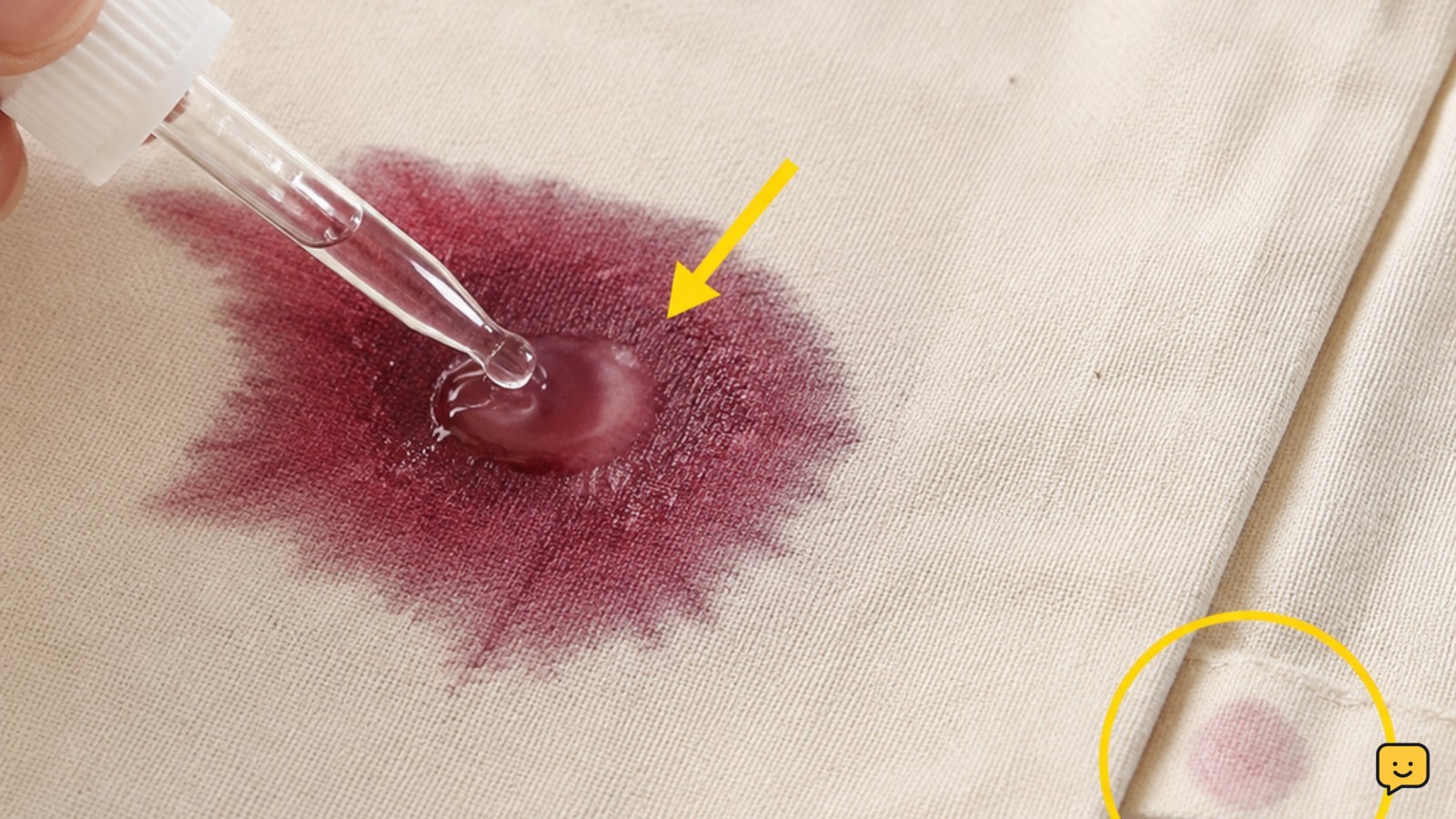
For washable, colorfast fabric, Tide recommends mixing equal parts clear dishwashing soap and hydrogen peroxide, then allowing the mixture to soak into the wine stain for at least 30 minutes.
- Combine a small amount of clear dish soap with an equal amount of hydrogen peroxide.
- Apply only enough to cover the mark.
- Leave it for at least 30 minutes.
- Rinse thoroughly with cold water.
Hydrogen peroxide can lighten some dyes, so test an inconspicuous area first and follow the garment or textile care label. Dirty Labs describes a milder alternative of diluting one part hydrogen peroxide in two parts water and applying it promptly. Choose one treatment, not both, and never mix peroxide with bleach or other cleaners.
Wash and verify before drying
After treatment, wash the item using the warmest setting permitted by its care label, then inspect the stain while the fabric is still wet.
If the mark has disappeared, dry the item according to the label. If a pink, purple or brown shadow remains, repeat the same suitable treatment once rather than applying more product or heat. A dryer can make a remaining stain harder to remove, so do not dry the fabric until the surface looks clean in good light.
Choose the method by surface
The safest wine-stain method depends on the material, not only on whether the wine is red or white.
- Washable clothing or linens: blot, rinse from the back, test a treatment, wash and inspect before drying.
- Dry-clean-only clothing: blot without rubbing and identify the spill to the cleaner; do not soak it at home.
- Finished leather upholstery: remove surface liquid with a dry microfiber cloth and use the material-specific care method in this leather couch cleaning guide.
- Finished hardwood: wipe the spill promptly with a barely damp cloth and dry the area instead of soaking the floor. See how to clean hardwood floors for finish-safe care.
For carpet, rugs, silk, velvet, untreated wood or upholstery with a manufacturer’s care code, follow the care instructions for that material and stop if the color changes during testing.
For wine on finished leather, use the material-specific advice in this leather couch cleaning guide: leather couch cleaning guide
What to do if the wine stain remains
A stain that remains after one careful treatment may have bonded to the fiber, been set by heat, or come from a material that should not be treated with peroxide.
- Rinse away all residue and let the item air-dry away from direct heat.
- Check the care label and compare the affected area with the hidden test area.
- For washable, colorfast fabric, repeat the approved treatment once.
- If the shadow remains, take the item to a professional cleaner and identify the wine spill and products already used.
Do not escalate to stronger chemicals, chlorine bleach or repeated scrubbing. The safest next action is professional cleaning when the fabric is valuable, delicate or visibly changing color.
Frequently asked questions
Does salt remove wine stains?
Salt is not the main treatment recommended by the supplied cleaning guidance. First blot the spill, rinse washable fabric with cold water, and use a tested fabric-safe treatment. Adding salt can make cleanup messier and does not replace washing or checking the care label.
Can baking soda remove a red wine stain?
Baking soda is not needed for the fabric method here. Use blotting, cold-water rinsing and one tested detergent-and-peroxide treatment for suitable washable fabric. Avoid layering several products, because extra residue can complicate rinsing and may affect the material.
Can I use hydrogen peroxide on colored clothes?
Only use hydrogen peroxide on colored clothing after testing a hidden area and confirming that the care label permits the treatment. It may lighten some dyes. If the test changes the color or the fabric is delicate, stop and use a professional cleaner.
How do you remove an old, dried wine stain?
Soak the washable fabric in cold water first to loosen dried residue, then blot or gently work the fibers rather than scrubbing. Apply one tested treatment suitable for colorfast fabric, rinse, wash and inspect before drying. Professional cleaning is safer if the stain remains.