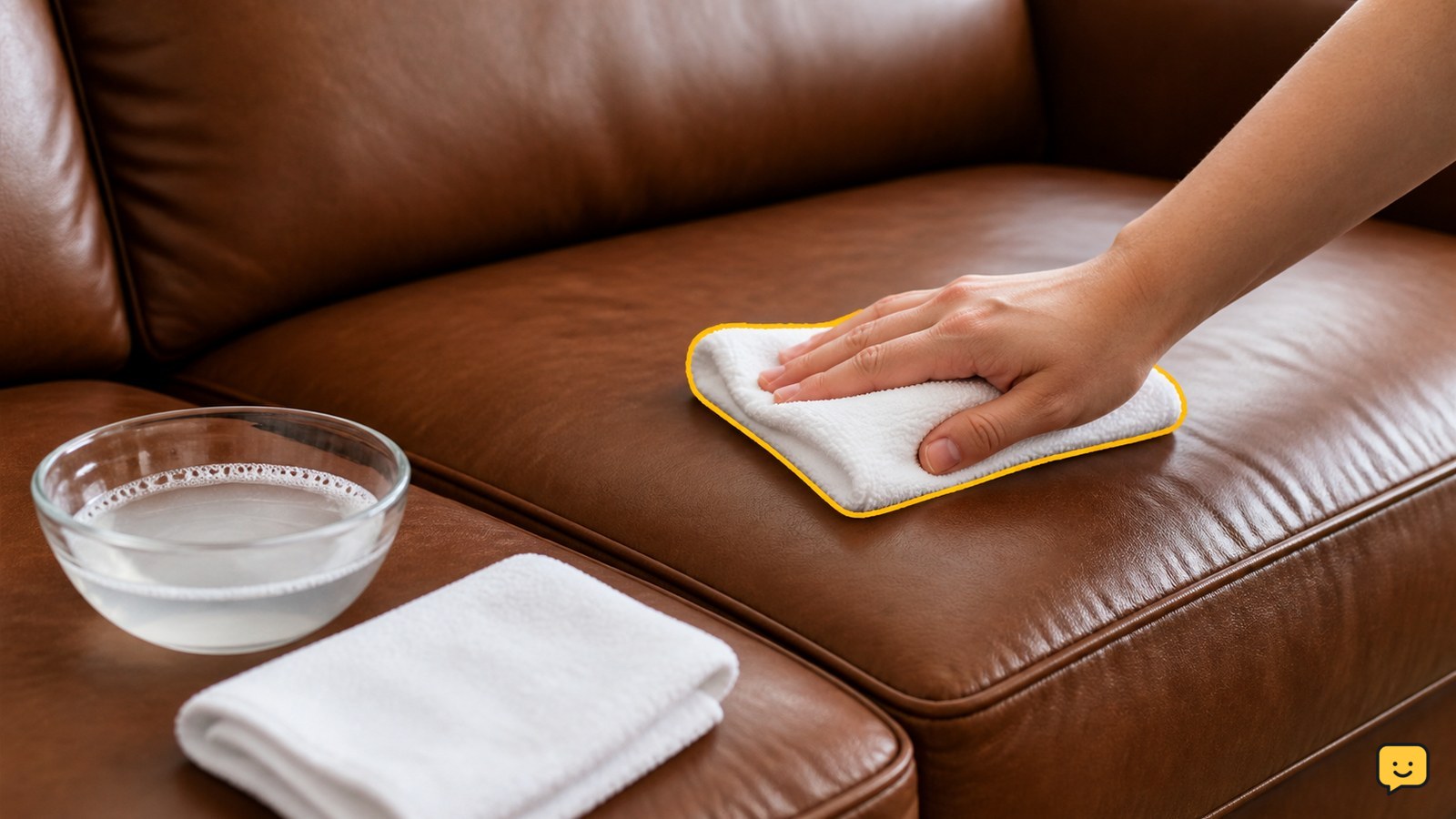
To clean a leather couch, remove loose grit, then test a hidden spot. Wipe small sections with a barely damp microfiber cloth and a little mild, non-detergent soap mixed with lukewarm water. Remove soap with a second damp cloth, dry immediately, and use only manufacturer-approved conditioner. Stop if color transfers, the finish becomes tacky or the leather darkens unevenly.
For more help with this topic, use the Cleaning Stain Removal guides.
Check the leather finish and test the cleaner
A finished leather couch should be tested in a hidden area before its visible surfaces are cleaned.
Look under a cushion or along the back edge for care instructions. If the material is labeled aniline, nubuck or suede, do not use the damp-cloth method below unless its care instructions specifically allow it.
Mix a small amount of mild, non-detergent soap with lukewarm water. Moisten a white or light-colored microfiber cloth, then wring it until it is barely damp. Rub a small hidden area lightly and wait for it to dry.
Verify: The test area should keep its color and finish, with no tacky film, water ring or rough texture. If any of those changes appear, stop and use the manufacturer’s recommended cleaner instead.
Remove dust, crumbs and grit before adding moisture
A leather couch should be cleared of loose grit before wet cleaning because particles can drag across the finish and leave fine marks.
- Remove cushions if they lift out easily and check the gaps, seams and edges.
- Use a vacuum’s soft brush attachment to collect crumbs and dust. Keep hard plastic tools from scraping the leather.
- Wipe the entire surface with a clean, dry microfiber cloth, including arms, back cushions and the front of the couch.
Verify: No loose particles should come away when you make a second dry pass. If debris remains in a seam, lift it with the soft brush rather than forcing a sharp object into the gap.
Clean small leather sections with minimal moisture
A leather couch is safest to clean in small sections with a barely damp cloth and very little mild soap.
- Dip the cloth into the diluted soap solution and wring it thoroughly. The cloth should feel damp, not wet.
- Wipe one cushion or panel at a time using light, overlapping passes. Work from cleaner areas toward visibly dirty areas so soil is not spread across the couch.
- Rinse and wring the cloth often. Replace the cleaning solution when it becomes visibly dirty.
American Leather recommends a soft cloth or sponge with mild non-detergent soap and lukewarm water for soiled portions of leather furniture. Avoid scrubbing, soaking, spray application directly onto the couch and repeated passes over one spot.
Verify: Surface dirt should lift without a spreading wet edge. If the leather becomes very dark, slippery or saturated, stop cleaning that section and move to the drying step.
For a similar mild-cleaning approach on a hard surface, see quartzite-safe soap cleaning for soap control and residue removal.
Remove soap residue and dry the couch fully
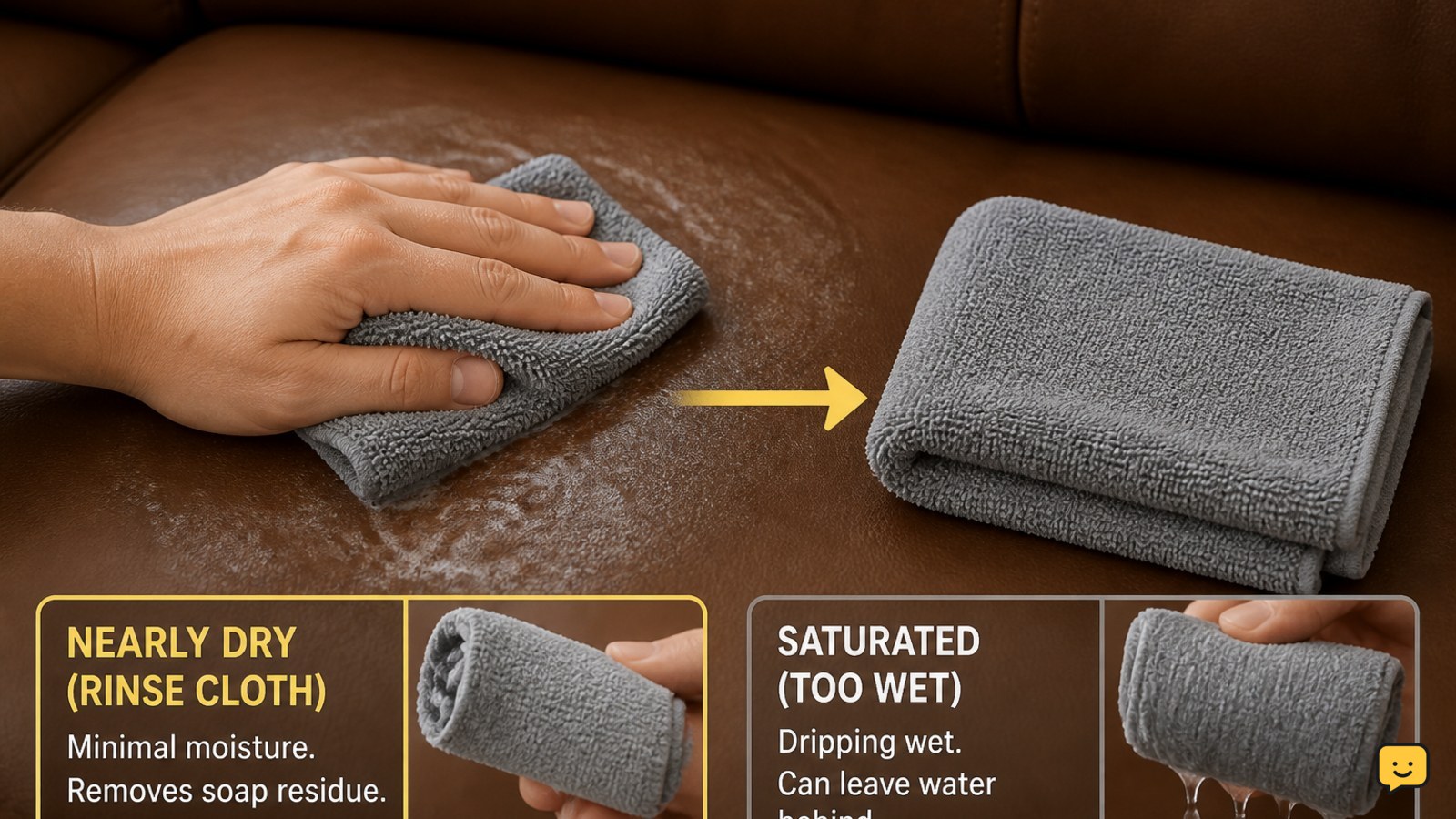
After cleaning, a leather couch needs a separate lightly damp wipe to remove soap residue, followed by immediate drying.
- Use a second microfiber cloth dampened with clean lukewarm water and wrung nearly dry.
- Wipe the cleaned section once or twice without pressing hard. Rinse the cloth frequently.
- Buff the area gently with a dry microfiber cloth.
- Leave cushions separated, if practical, so air can reach seams and edges. Keep the couch away from direct heat, hair dryers and strong sunlight.
American Leather advises removing soap lather and drying the furniture after cleaning. A dry surface should not feel greasy, tacky or cool from trapped moisture.
What to do if residue remains: Make one more pass with the nearly dry clean-water cloth, then dry again. If the finish stays sticky or cloudy, stop rather than adding more soap or water.
Treat grease and set-in stains separately
Leather couch grease and set-in stains should be handled according to the stain type instead of being scrubbed with stronger household chemicals.
For a fresh liquid spill, blot with a clean, dry cloth. Do not rub, because rubbing can enlarge the mark and work it into seams. Once the surface is dry, use the tested cleaning method on the surrounding area if the care instructions permit it.
For oil or grease, Klaussner recommends covering the mark with talcum powder, baking soda or cornstarch, leaving it for several hours or overnight, then gently brushing or wiping away the powder. Test this approach on an inconspicuous area first and follow the couch maker’s instructions if they differ.
Failure path: If a stain remains after one careful treatment, do not repeat increasingly aggressive applications. Ink, paint, transferred dye and large or old grease marks are safer for a leather specialist or the furniture manufacturer.
Verify the finished surface and condition only if approved
A clean leather couch should look even, feel dry and smooth, and have no visible soap film or damp patches.
Inspect seams, corners and cushion edges in good light. Compare cleaned areas with an untouched section. A temporary darker appearance while leather is damp is not a success check; wait until the surface is fully dry.
Apply conditioner only when the manufacturer recommends it for that leather finish. Use a product intended for leather, test it first and apply a thin amount with a clean cloth. More conditioner is not better: excess product can leave the surface greasy or tacky.
For routine care, remove spills promptly and dust with a dry microfiber cloth rather than repeatedly wet-cleaning the entire couch.
Frequently asked questions
Can you clean a leather couch with dish soap?
Only use it if the couch manufacturer allows it and the soap is mild and non-detergent. Dilute a small amount in lukewarm water, test a hidden spot and apply it with a nearly dry cloth. Avoid concentrated soap, direct spraying and soaking, since residue or excess moisture can change the finish.
How do you clean a leather couch without damaging it?
Remove grit first, test every cleaner in a hidden area and work in small sections with minimal moisture. Use soft microfiber cloths, light pressure and a separate clean-water wipe to remove residue. Dry each section promptly and stop if color transfers, the leather darkens unevenly or the surface becomes sticky.
Can baking soda remove grease from leather?
Baking soda can be used as an absorbent powder for some grease marks, but it should be tested first and removed gently after several hours. Do not scrub the powder into the leather or use it on an incompatible finish. For a large, old or persistent grease stain, contact a leather-care professional.
How often should a leather couch be cleaned?
Dust and wipe spills as needed, but reserve damp cleaning for visible soil or residue. Frequent wet cleaning can add unnecessary moisture and wear to the finish. Follow the furniture maker’s care schedule for conditioning, because different leather finishes do not all need the same products or frequency.