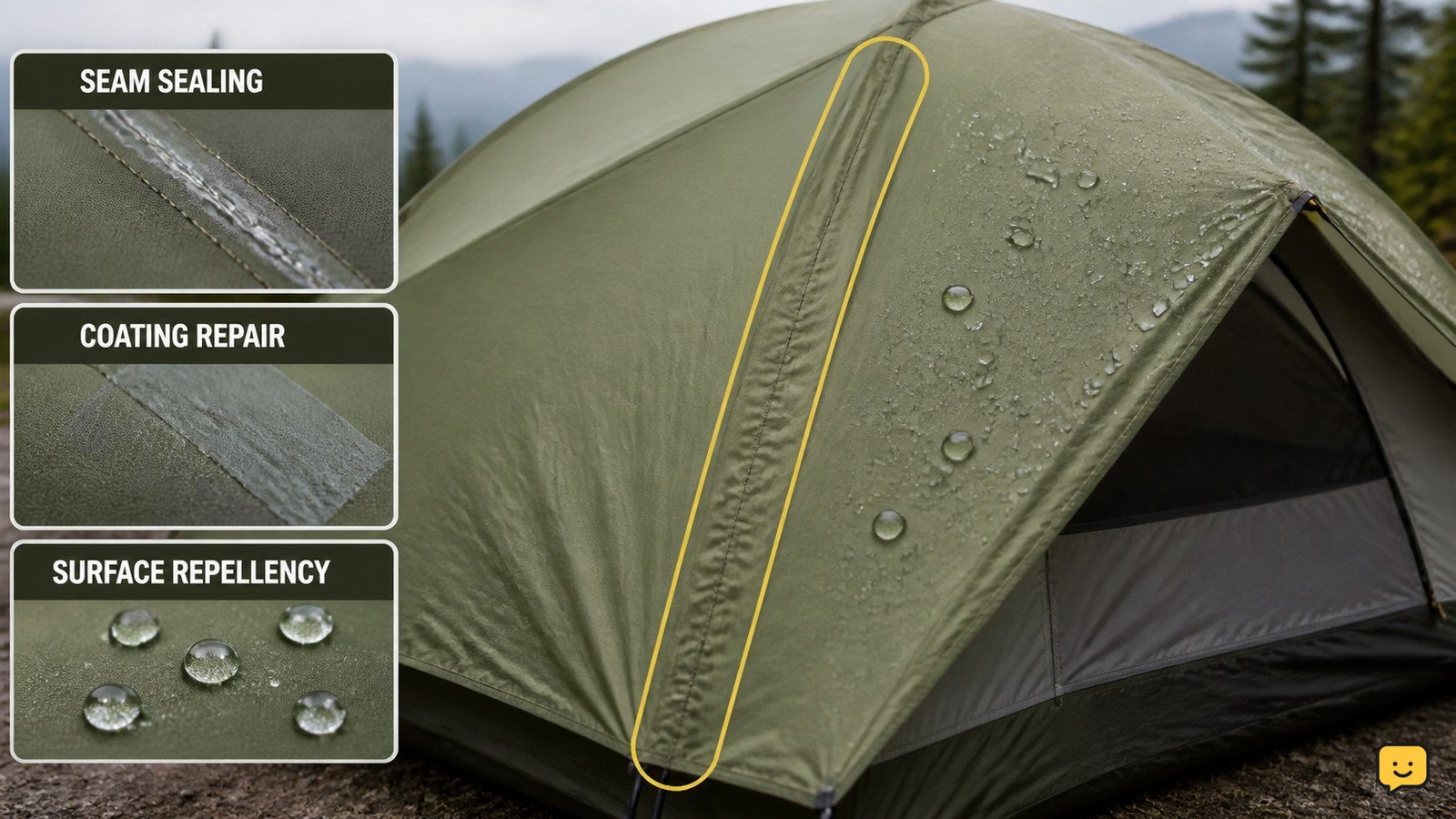
To waterproof a tent, clean and fully dry it first, then treat the actual failure: seal leaking seams, renew a peeling or sticky urethane coating, and refresh the rainfly’s DWR when water no longer beads. Use products made for the tent fabric, follow the label, and test every repair before relying on the tent in rain.
For more help with this topic, use the Camping Outdoors guides.
Check what is actually leaking
A tent needs different treatment for leaking seams, worn fabric coating and failed water beading, so identify the symptom before applying anything.
- Water enters along a stitched line: the seam seal or seam tape may be failing.
- Water passes through broad fabric areas: the urethane coating may be worn, peeling or contaminated.
- Water spreads across the rainfly instead of forming beads: the outer DWR has weakened, even if the fabric coating is still intact.
- Water appears at the floor edge: check that the groundsheet does not extend beyond the tent, where it can collect runoff beneath the floor.
Use the rainfly and floor separately during inspection. Mark each failure with removable tape so you can treat only the affected areas.
Clean and dry the tent before treatment
Clean, dry fabric gives seam sealers and water-repellent treatments a better surface to bond to and prevents dirt from being trapped under the repair.
- Set up the tent and remove loose grit with a soft brush or cloth.
- Wipe dirty areas with clean water and a mild cleaner approved for outdoor fabrics. Avoid harsh detergents, bleach and fabric softener.
- Rinse away cleaner residue without scrubbing aggressively.
- Let the tent, rainfly and footprint dry fully in shade with good airflow.
Do not start coating or sealing while the fabric is damp. If mildew, a strong odor or embedded contamination remains after gentle cleaning, stop and follow the manufacturer’s care instructions rather than sealing over it.
Seal leaking seams and small pinholes
Seam sealing blocks water at needle holes and joins where separate fabric panels are stitched together.
- Pitch the tent or lay the rainfly flat so the target seam is supported and easy to reach.
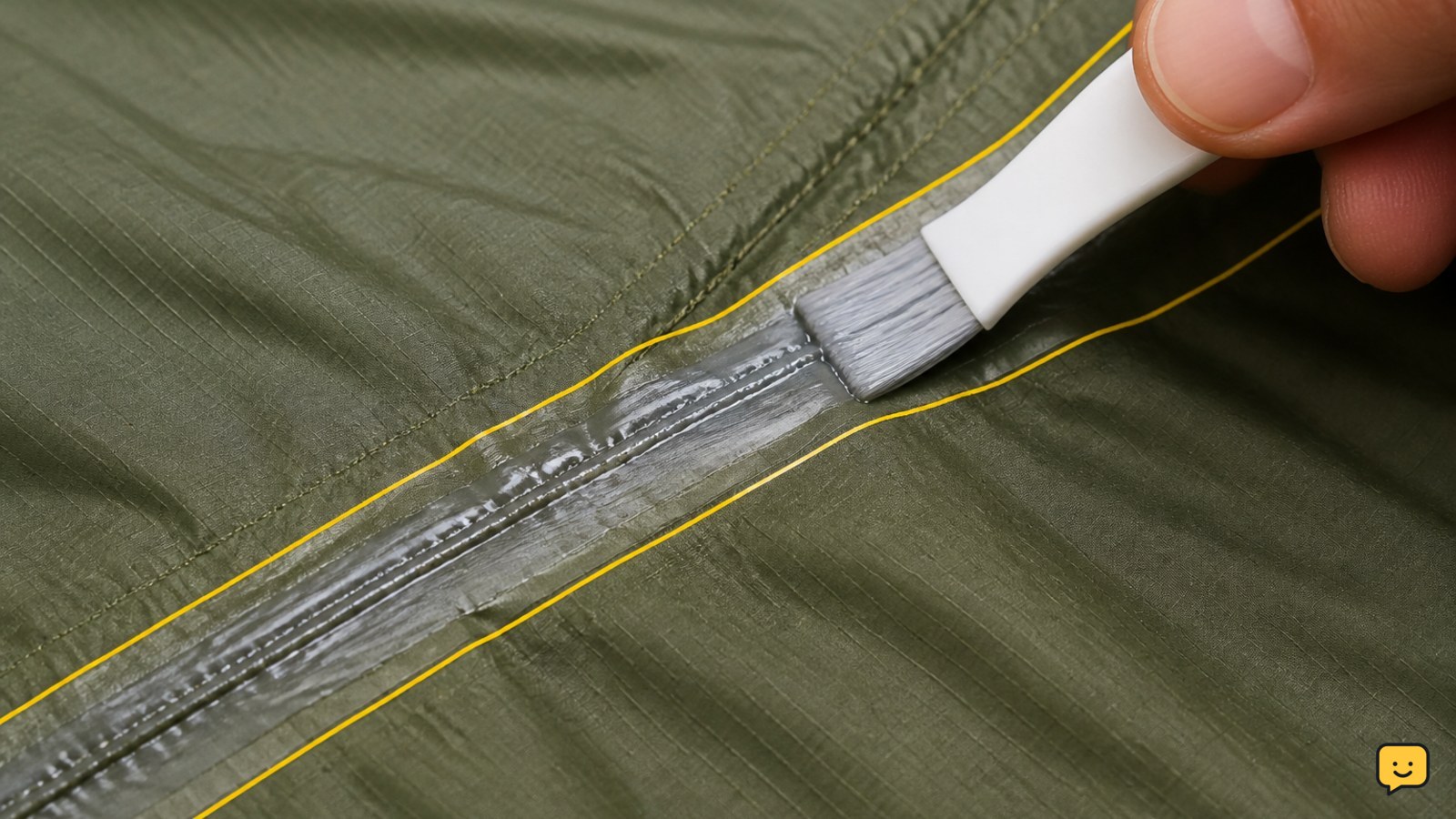
- Apply a thin, even line of tent-compatible seam sealer to the leaking seam and any small pinholes identified during inspection.
- Spread the sealer only as far as needed to cover the stitching and surrounding fabric specified by the product label.
- Allow the repair to dry for the label’s full curing period before folding the fabric.
GEAR AID’s tent-repair guidance recommends a thin, even coat and checking dryness after about four hours, with a full 24-hour wait before use for the cited repair process. Follow the specific product label if it gives different times.
Check: the seam should have continuous coverage with no open stitch holes, bubbles or tacky areas. If water still appears on the same line after testing, clean and dry it again, then add only the amount of compatible sealer needed to close the visible gap.
Renew a worn urethane coating
A failing urethane coating needs a compatible coating repair rather than a DWR spray because DWR changes surface wetting but does not replace a missing waterproof film.
- Look for flaking, peeling, cracking or sticky coating on the tent floor or rainfly.
- Remove loose coating carefully with a soft cloth or the method stated by the coating manufacturer. Do not scrape hard enough to damage the base fabric.
- Apply the compatible replacement coating to the affected side and fabric area specified on its label.
- Use a thin, even layer; heavy application can remain tacky and add unnecessary weight.
- Let the coating cure completely in a ventilated area before packing the tent.
Test a hidden area first if the product is not supplied by the tent maker. Stop if the fabric discolors, softens, becomes unusually sticky or separates from the coating. A widespread coating failure, brittle fabric or large delamination area can be a replacement decision rather than a practical home repair.
Refresh the rainfly’s water beading
DWR treatment restores the rainfly’s outer water-shedding surface when clean water no longer beads and rolls off, but it cannot repair holes or replace a failed inner coating.
- Apply the DWR only to clean, dry exterior rainfly fabric unless the product instructions say otherwise.
- Keep treatment off mesh panels, clear windows, interior fabric and seam-repair areas that the label excludes.
- Spray or spread one thin, even coat over the affected exterior fabric.
- Allow it to dry and cure as directed, then remove any residue from hardware or windows.
CORE Equipment specifically cautions that tent treatments should be used on the rainfly and exterior fabric only, not on interior fabric, mesh or seam tape. If the coating underneath is peeling or water passes through the fabric, return to the coating-repair step instead.
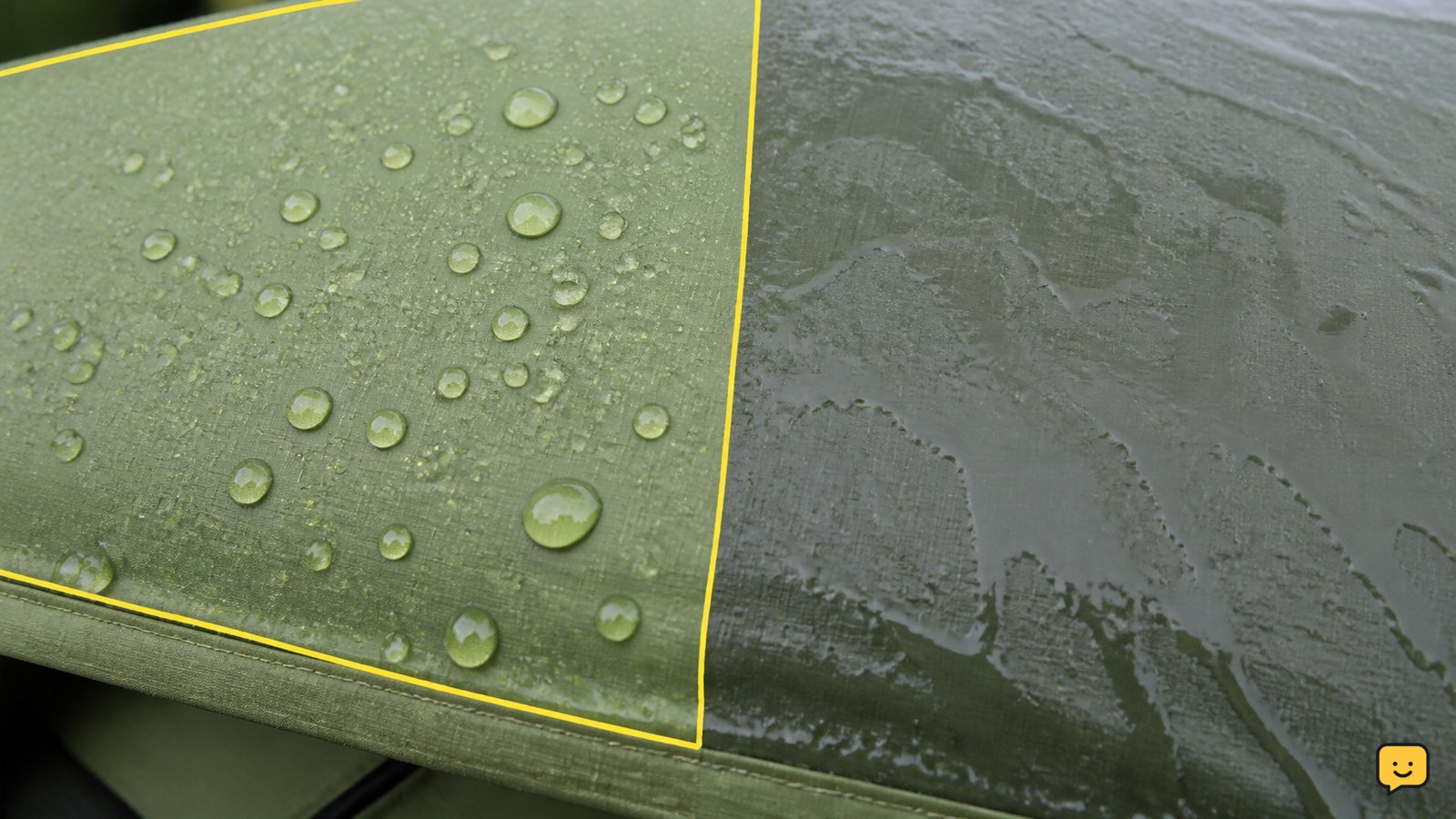
Check: sprinkle clean water over the dry rainfly. Successful DWR treatment leaves rounded beads or encourages water to run off rather than immediately darkening and spreading across the fabric.
Test the repaired tent before packing it
A repaired tent is ready only when the treatment has cured and a controlled water check shows no leakage at the repaired areas.
- Pitch the tent correctly with the rainfly taut, doors closed and ventilation open.
- Use a gentle shower from a hose or watering can; do not use a high-pressure jet that can force water through fabric or seams.
- Inspect the interior, floor edges, seam lines and any previously marked spots.
- Dry the tent fully, then repeat treatment only where water still penetrates.
Water that beads on the rainfly confirms surface repellency, while a dry interior confirms the more important waterproofing result. If leaks remain widespread after compatible repairs, replace the failed component or have the tent assessed by the manufacturer instead of adding repeated layers.
Frequently asked questions
Can you waterproof any tent with spray?
No. A spray may refresh DWR on suitable exterior rainfly fabric, but it will not fix open seams, holes or a peeling urethane coating. Check the tent and product instructions first, then match the treatment to the failure.
Should tent waterproofing be applied inside or outside?
It depends on the treatment. DWR is generally applied to the exterior rainfly fabric, while some urethane coating repairs are applied to the coated side identified by the product instructions. Keep treatments off mesh, windows, interior fabric and seam tape unless the label specifically allows them.
How do I know if my tent needs seam sealing?
Inspect for water entering directly along stitched joins, especially where panels meet or the floor connects to the walls. If the broad fabric wets through instead, investigate the urethane coating. If water only fails to bead on the fly, DWR may be the relevant treatment.
Can I waterproof a tent while it is wet?
No. Clean and dry the tent completely before applying sealer, coating repair or DWR. Damp fabric can prevent an even application and trap moisture beneath the treatment. Let every product cure for the time on its label before packing or camping.