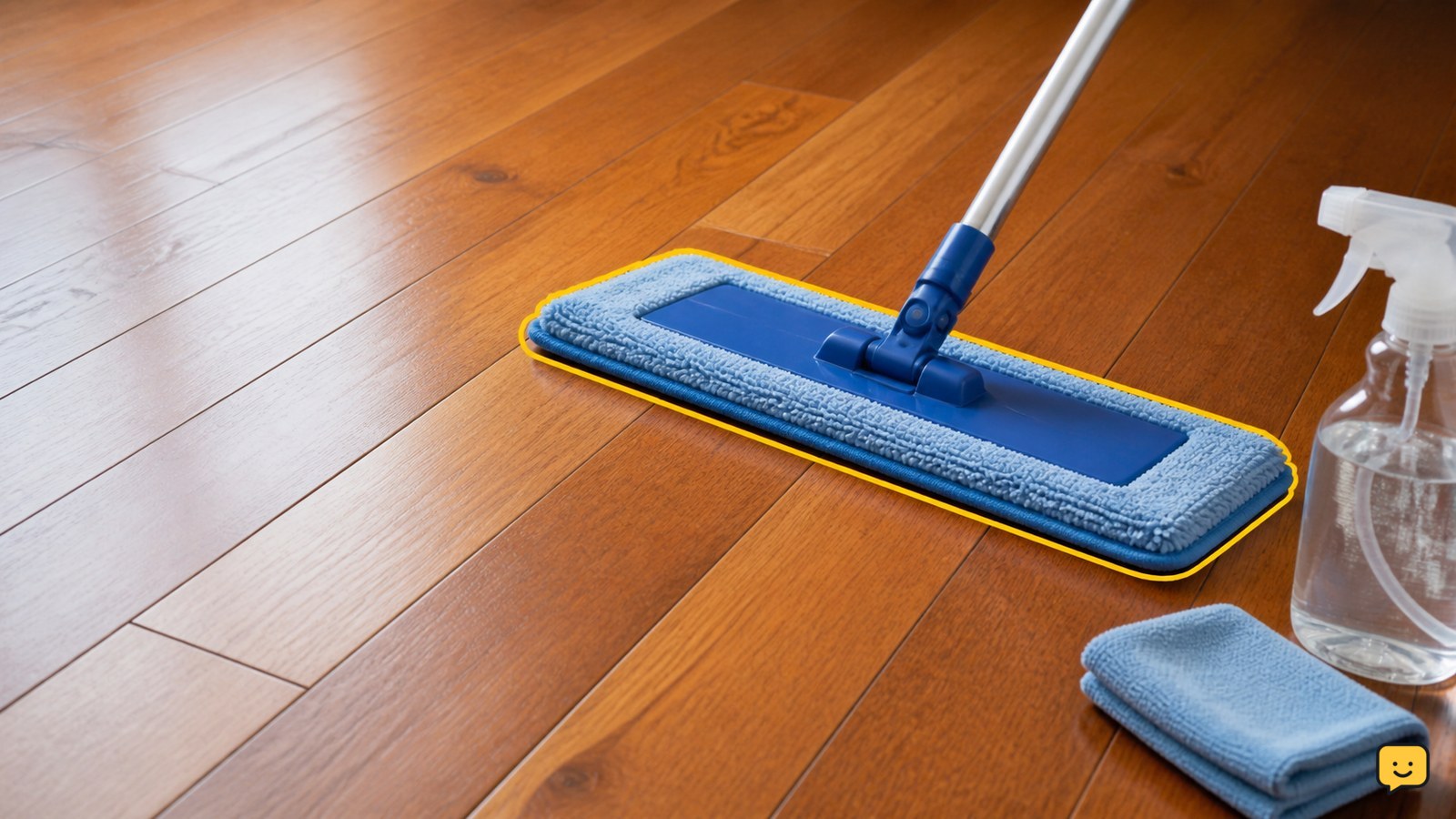
Start by removing loose grit with a soft broom, dry microfiber dust mop, or vacuum set for hard floors without a beater bar. Then clean small areas with a barely damp microfiber mop and a cleaner approved for your floor’s finish. Wipe spills promptly, leave no standing water, and stop if boards swell, the finish turns cloudy, or a stain does not lift easily.
For more help with this topic, use the Cleaning Stain Removal guides.
Check the hardwood floor before adding moisture
Finished hardwood floors can usually tolerate controlled damp cleaning, but the correct method depends on the finish and the manufacturer’s instructions. Unfinished, waxed, oiled, antique, and recently refinished floors may need different care.
Look for peeling finish, open joints, swollen edges, deep scratches, or areas where the wood looks porous. If you cannot identify the finish, use a dry microfiber dust mop and spot-clean only with a nearly dry cloth until a flooring professional or manufacturer confirms the care method.
If the surface is cork rather than hardwood, use the separate care method for clean cork flooring safely instead.
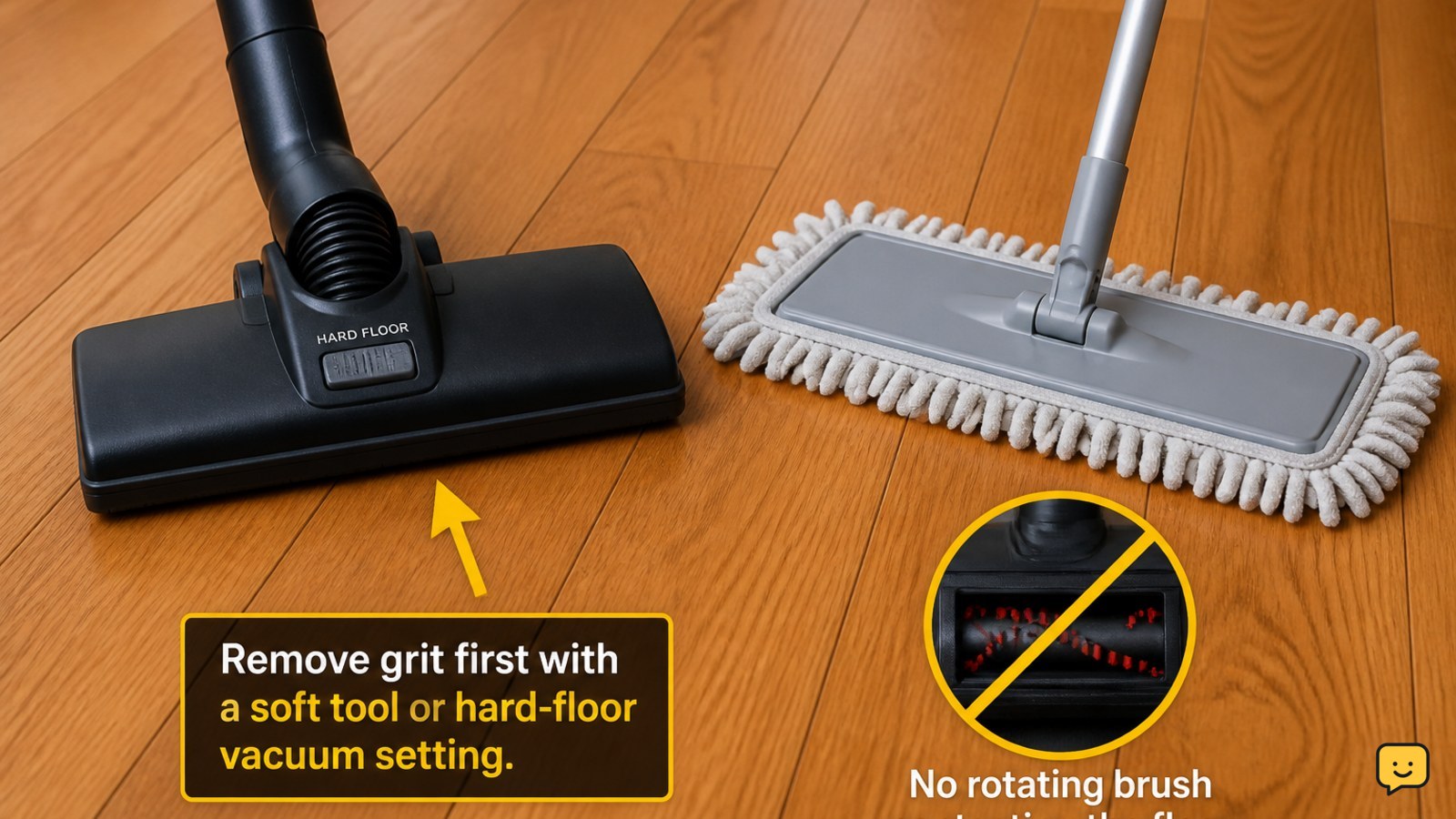
Remove grit with a soft broom, dust mop, or hard-floor vacuum
Remove loose dirt and grit from hardwood flooring before damp cleaning because particles can scratch the finish as they move under a mop. Bona recommends daily dust mopping or sweeping and weekly vacuuming or spray mopping as a routine for wood floors.
- Move the cleaning tool in the direction of the boards where practical.
- Use a soft-bristled broom or dry microfiber dust mop.
- Alternatively, vacuum with the hard-floor setting and the beater bar or rotating brush switched off.
- Pay attention to entryways, under tables, and along baseboards where grit collects.
Check: Run a clean, dry microfiber cloth over a representative area. It should pick up little or no loose grit before you introduce cleaner.
Spot-clean sticky marks with minimal water
Small spills and sticky spots are safest to handle with a clean microfiber cloth that is lightly damp, not wet. Blot or wipe the mark with gentle pressure, then dry the area with a second cloth.
- Remove food, mud, or other residue without dragging it across the floor.
- Dampen the cloth with a small amount of water or a finish-compatible wood-floor cleaner.
- Wipe the spot in the direction of the grain.
- Dry the surface immediately.
If the residue remains after one gentle pass, repeat once with a clean section of cloth. Do not scrape with a blade or use a scouring pad. A mark that stays in place may be a finish defect or a stain below the finish rather than removable surface dirt.
Mop hardwood floors with a barely damp microfiber pad
Clean the remaining hardwood floor with a microfiber mop that has been thoroughly wrung out or designed for controlled spray cleaning. The floor should look lightly damp for a short time, never wet or reflective with standing liquid.
- Apply a small amount of hardwood-floor cleaner according to its label and your flooring manufacturer’s instructions. Do not flood the floor or pour cleaner directly onto it.
- Work in manageable sections so the solution does not sit on the boards.
- Mop with the grain using overlapping passes.
- Rinse or replace the pad when it becomes visibly dirty; a dirty pad can spread residue.
- Use a dry microfiber cloth on any area that remains visibly damp.
Bona’s current homeowner routine separates dry dust removal from weekly spray mopping. Wirecutter also identifies a suitable specialized cleaner or a simple mild-soap-and-water solution as options, but the floor and finish manufacturer’s directions take priority.
Check: After cleaning, the surface should look evenly clean without streaks, tackiness, cloudy patches, or pooled water.
Dry the floor and check for residue or finish changes
Allow the cleaned hardwood floor to dry fully before replacing furniture or allowing normal traffic. Ventilation can help, but do not use high heat directly on the boards.
- Inspect the floor from several angles in normal light.
- Feel a small area with a clean, dry hand for stickiness or cleaner buildup.
- Buff a small streaked area with a dry microfiber cloth.
- If the streak remains, change to a clean pad and use less product on the next section rather than adding more cleaner.
Recheck the floor after it has dried. Swelling, raised edges, new cloudy areas, or persistent tackiness means the method or product may not suit the finish. Stop rather than repeating wet passes.
Prevent new scratches, water marks, and dull spots
Hardwood floors stay cleaner when grit and liquid are controlled before they become floor damage. Place mats at exterior entrances, remove abrasive debris promptly, and use furniture pads where items contact the floor.
- Wipe tracked-in water, pet accidents, and spills as soon as you notice them.
- Lift furniture instead of dragging it across the boards.
- Use the dry dust-mop routine regularly and damp-clean only when the floor needs it.
- Do not add polish, wax, or refresher unless it is compatible with the existing finish and approved by its manufacturer.
If the floor is still dull after it is clean and dry, the issue may be worn or damaged finish rather than dirt. Stop cleaning and ask a flooring professional about maintenance or refinishing.
What to do if the floor still looks dirty
Persistent marks on hardwood flooring need to be separated into surface residue, finish damage, and wood damage before you try a stronger method.
| What you see | Likely issue | Safest next action |
|---|---|---|
| Sticky film across a broad area | Cleaner residue or too much product | Stop adding cleaner; use a manufacturer-approved method with a clean, barely damp pad, then dry. |
| White or cloudy patch | Finish reaction, moisture, or product incompatibility | Stop wet cleaning and contact the flooring or finish manufacturer. |
| Dark mark that remains after gentle spot cleaning | Stain below the finish or damaged wood | Do not sand or use a solvent without finish-specific guidance; seek professional advice. |
| Raised, cupped, or separated boards | Moisture damage | Stop, remove nearby moisture, and arrange an inspection. |
Frequently asked questions
Can you clean hardwood floors with water?
Yes, but use very little water: a microfiber cloth or mop should be barely damp, not dripping. Clean a small section, prevent liquid from pooling in seams, and dry any remaining moisture promptly. Unfinished, waxed, oiled, antique, or recently refinished floors may not be suitable for ordinary damp cleaning, so check the manufacturer’s instructions first.
Is vinegar safe for hardwood floors?
Do not assume vinegar is safe for every hardwood finish. A finish manufacturer’s approved wood-floor cleaner is the safer choice because household finishes vary. If the care instructions do not specifically allow vinegar, avoid it and use a compatible product as directed. Stop if a test area becomes cloudy, dull, sticky, or discolored.
How often should hardwood floors be cleaned?
Remove dust and grit as needed, with daily dust mopping or sweeping in busy areas. Bona describes weekly vacuuming or spray mopping as a general homeowner routine. Damp-clean more often when spills or tracked-in soil require it, but avoid wet-mopping on a schedule if the floor is already clean.
Why are my hardwood floors streaky after mopping?
Streaks usually come from too much cleaner, a dirty mop pad, uneven drying, or a product that does not suit the finish. Stop adding product, switch to a clean microfiber pad, use less solution, and work in smaller sections. Once dry, buff lightly with a clean, dry microfiber cloth. Persistent streaks or cloudiness require finish-specific advice.
Can a steam mop be used on hardwood floors?
Use a steam mop only if the flooring and finish manufacturer explicitly approves that model and method. Heat and moisture can affect wood and finishes, particularly where boards have open joints or damaged coating. If approval is unclear, choose dry dust removal followed by a barely damp microfiber mop and dry spills immediately.